SELF-CARE CORNER
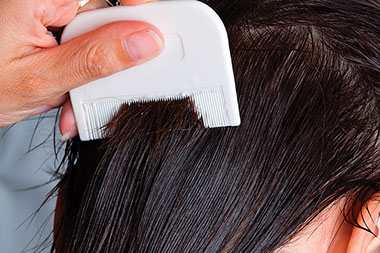
Lice aren’t vampires, but they hold onto hair and bite into your scalp (or more likely into your children’s scalps) and feed on blood, according to Dr. Andrew Bonwit, a pediatric infectious disease expert at Loyola University. Usually, bites aren’t painful, he says, but they may itch.
According to the CDC, an estimated 6 to 12 million lice cases occur each year among children 3 to 11 years old.
“Parents and school staff may become understandably upset by outbreaks of head lice, but it is important to remember that if the problem occurs, it is treatable, although repeat applications of medicine are usually needed,” said Dr. Bonwit.
Contrary to what you may think: Anyone can get head lice. It’s not a sign of uncleanliness. Pets don’t carry lice or spread them to you. And although you don’t want to use anyone else’s hairbrush, lice seem to be transmitted from head-to-head contact from one person to another. Lice don’t carry serious diseases, and kids with lice at school should see a doctor for treatment with shampoos.

© American Institute for Preventive Medicine