Systematic Stress Management Program
Step 6: Time Management Section
Introduction
Does Time Get the Best of You?
Defining Your Life Goals
Activity Worksheet
Activity Log
Time Management Techniques
Action Plan for Improving Time Usage
Procrastination Quiz
How Do I Procrastinate?
One Dozen Ways to Overcome Procrastination
Should You Delegate?
Delegation Caddy
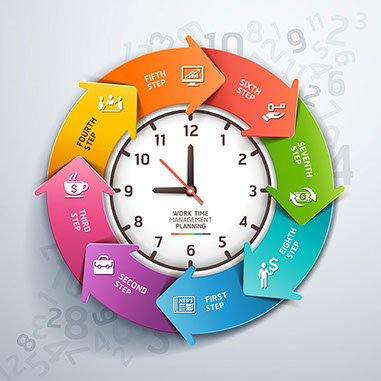
Everyone has the same 24 hours in a day, yet some people get so much more out of them than others. Good time management is the reason.
Each day, people make big and small decisions that shape their lives. Some decisions are satisfying and produce good results. Others create frustration and stress. Using time effectively involves making choices that produce positive results, increase good feelings, and reduce the potential for stress. In other words, when people manage time well, they can also improve their management of stress.
It’s easy to recognize poor use of time. People rush, feel overwhelmed, miss deadlines, and have difficulty making choices. They neglect personal time needed for rest and relaxation. They confuse “keeping busy” with truly being productive and getting results.
To improve how time is used, goals must be set, priorities arranged, and time wasters eliminated. All this requires a plan of action. The exercises in this unit provide the guidance needed to get the most out of 24 hours.
© American Institute for Preventive Medicine
Step 1: Understanding Stress
Step 3: Type A & B Behavior Patterns
Step 5: Thinking Differently
Step 7: Communication & Stress
Step 2: Stress Management at Work
Step 4: Biofeedback Training & Relaxation
Step 6: Time Management
Steps to Systematic Stress Management™
RELATED ARTICLES
© American Institute for Preventive Medicine – All Rights Reserved.Disclaimer|www.HealthyLife.com