Systematic Stress Management Program
Step 1: Understanding Stress Section
Introduction
Common Symptoms of Distress
Life Events Questionnaire
Types of Stressors
Daily Hassles and Uplifts
Identification of Stressors
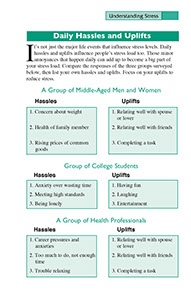
It’s not just the major life events that influence stress levels. Daily hassles and uplifts influence people’s stress load too. Those minor annoyances that happen daily can add up to become a big part of your stress load. Compare the responses of the three groups surveyed below. Print the download and list your own hassles and uplifts. Focus on your uplifts to reduce stress.
A Group of Middle-Aged Men and Women
Hassles:
1. Concern about weight
2. Health of family member
3. Rising prices of common goods
Uplifts:
1. Relating well with spouse or lover
2. Relating well with friends
3. Completing a task
Group of College Students
Hassles:
1. Anxiety over wasting time
2. Meeting high standards
3. Being lonely
Uplifts:
1. Having fun
2. Laughing
3. Entertainment
A Group of Health Professionals
Hassles:
1. Career pressures and anxieties
2. Too much to do, not enough time
3. Trouble relaxing
Uplifts:
1. Relating well with spouse or lover
2. Relating well with friends
3. Completing a task
© American Institute for Preventive Medicine
Step 1: Understanding Stress
Step 3: Type A & B Behavior Patterns
Step 5: Thinking Differently
Step 7: Communication & Stress
Step 2: Stress Management at Work
Step 4: Biofeedback Training & Relaxation
Step 6: Time Management
Steps to Systematic Stress Management™
RELATED ARTICLES
© American Institute for Preventive Medicine – All Rights Reserved.Disclaimer|www.HealthyLife.com