Nutrition
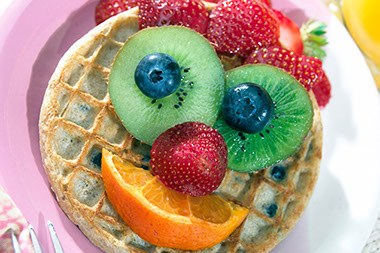
Did you know that about 70% of adults in the U.S. wait until 4:00 p.m. to decide what they’ll eat for dinner that day? Planning foods to eat for a day, a week, etc. is very helpful, because it:
* Saves time and effort. It means fewer trips to the grocery store. It also helps you make good use of leftovers which can be called “planned overs.”
* Saves money. Pre-planned, quick meals can replace more costly convenience items and restaurant meals.
* Saves calories. It helps keep you from impulse buying, especially high calorie snacks. It also helps with portion control.
* Saves you from eating the same foods over and over again. Eat a variety of foods so you get a variety of nutrients. Variety can also make eating more enjoyable.
When You Plan Your Meals, Refer to These Items
* Your calendar, weekly planner, etc. These can help you know who will be home at mealtimes, whether you are eating out in a restaurant or at a relative’s or friend’s house, if you need to pack lunches, etc.
* Your grocery store ads which advertise weekly specials. Buy special items that fit in with your food budget and eating plan. It is not wise to buy ice cream that is “buy one” “get one free.” You’d be better off saving the fat and calories than buying a half-gallon of ice cream. Also, only use manufacturers’ “cents-off” coupons when the item is on your list and works within your eating plan.
* Make a grocery list from your menus. This includes the menus you use from this book and menus you plan on your own.
Plan Breakfast
Breakfast Is Important!
* It “breaks the fast” from sleeping.
* It helps give you energy to start your day.
* It is a way to get dietary fiber.
* It doesn’t take a lot of time.
What To Eat
* When you plan your own breakfast, choose whole grain cereals and breads, fresh fruits, fruit juices, frozen, and canned fruits (in water or its own juice), skim, nonfat, or low-fat milks (regular or soy) and yogurts made from these. Add calorie-free items, such as coffee, tea, seasonings, spices (e.g., cinnamon for hot cereal).
Breakfast Menu Makeover
A breakfast of eggs, meat, hash browns, and toast and butter…should be eaten only occasionally. If eaten every day, the calories, fat, and cholesterol add up.
Plan Lunch
Suggestions For “Brown Bagging It”
* Fresh fruits
* Fresh vegetables or vegetable juices
* Whole wheat breads
* Lean meat, poultry, fish, dry beans, peas, lentils, hard-cooked eggs (especially egg whites), low-fat cheeses (2 to 6 grams of fat per ounce)
* Skim milk, low-fat (1%) milk, or nonfat or low-fat yogurt (regular or soy)
* Minimal fats, including margarine or salad dressings. Opt for low-fat or fat-free salad dressings, “butter”-type sprinkles and other no fat condiments, such as mustard, ketchup, or fat-free margarines
Suggestions for Vegetables
* Large green salad with a mixture of greens and raw vegetables, such as cucumbers, green pepper, onions and broccoli. These could be “planned overs” from last night’s dinner salad.
* Raw vegetables, such as carrot sticks, celery sticks, broccoli, cauliflower, cucumbers, tomato slices, and/or beets. Keep these cut up and ready-to-eat in your refrigerator. They will be easy to grab when making your lunch.
* Ready-to-eat vegetables, such as peeled baby carrots; fresh, bagged salads, spinach, etc.
* Chopped raw vegetables for sandwich garnishes or stuffed in pita bread
* Soup or casserole dishes with vegetables. These could be “planned overs” from last night’s dinner.
Suggestions for Fruits
* Keep fresh fruit in a fruit basket on the table or counter at home. Eat the fruit with the skin, if edible. This adds dietary fiber.
* Buy individual fruit cups (packed in water or in fruit juice) or buy larger cans and portion out the fruit in “keep cold” containers.
Suggestions for Sandwiches
* Choose breads with dietary fiber, such as whole-wheat, multi-grain, Boston brown, rye, oatmeal, and pumpernickel.
* Choose from many shapes, such as pita (pocket), sub roll, bagel, soft tortilla, rice cakes, and lavash.
* Make a sandwich with lettuce leaves in place of bread.
For Sandwich Fillings, Choose
* “Planned over” roast meats, turkey, chicken, or pork loin
* Lean deli and pre-packaged meats, such as turkey and chicken breast, or ham
* Flaked, cooked fish, or water packed tuna mixed with chopped, cooked, or raw vegetables and plain low-fat or fat-free dressings
* Mashed, cooked beans flavored with: A creole sauce made with tomatoes, onions, celery, green peppers
* Chopped onion and parsley, garlic powder, rosemary, thyme, and pepper
* Chopped cooked lean pork, celery, onions, and plain nonfat yogurt
* Low-fat cheeses that list no more than 6 grams of fat per ounce
Other Bagged Lunch Suggestions
* Large salad with greens, chopped vegetables, lean meats, low-fat cheese, beans, such as garbanzo and kidney. Use a nonfat, no-oil, low-fat or regular salad dressing. Use serving sizes allowed in your food budget.
* Soup, such as vegetable or reduced fat cream of broccoli, with a whole grain muffin, fruit, and nonfat yogurt.
* “Planned overs” from the previous night’s dinner (e.g., lean meat, vegetable, rice, a casserole serving, chili, etc.)
Plan Dinner
* Plan foods that you and your family and/or guests enjoy eating and that can be made in the time you have to prepare the meal.
* Choose foods that vary in flavor, color, texture, and temperature. The combination of foods should blend well together and look appealing.
* Make efficient use of your kitchen equipment. (For example, make baked potatoes with a roasted entree.)
* Focus on entrees that have whole grains and vegetables and less meat. Examples are stir-fry dishes, pasta dishes, chilis, soups, and stews.
* Add items to the entree (if they are not already part of it). Examples are potatoes, rice, pasta, couscous, and beans. Opt for whole grain products (bread, pasta, brown rice, etc. instead of white, enriched products), whenever possible.
Lean (Fresh) Meat Suggestions
* Beef – round, sirloin, flank, lean tenderloin
* Veal – all trimmed cuts, except commercially ground
* Pork – tenderloin, leg (fresh), shoulder (arm or picnic), lean ham
* Lamb – leg, arm, loin
* Poultry – turkey, chicken, cornish hens
* Fish and shellfish – all, except fried
* Meat counter pre-portioned items – shish-kebobs or skewers of city chicken
Meatless Main Dish Suggestions
* Dry beans, kidney beans, black beans, pinto beans, peas, lentils, garbonzo beans (chick peas), split peas, and lentils in soups, stews, and pasta sauces
* Vegetarian burgers and entrees
* Low-fat cheeses
* Tofu (soy bean curd)
Convenience Food Items Suggestions
* Frozen dinners – Choose ones with less than 300 calories and less than 1000 mg of sodium.
* Frozen entrees – Look for ones with 15 grams of fat or less per serving.
* Prepared entrees in the meat section – Examples are pre-roasted, heat and serve chicken or turkey.
* Deli pre-cooked items – Choose barbecued chicken, broasted chicken breasts, and baked fish (available at some supermarkets with fish counters, cooked while you shop).
* Fast-food items – Choose pizza (without extra cheese and fatty meats); broiled and rotisserie chicken and broiled chicken sandwiches; quarter pound or 2 oz. hamburgers without cheese and mayonnaise; regular or junior sized shaved roast beef sandwiches; broiled and baked fish; soft tacos, burritos, tostadas, and chili; plain baked potatoes and vegetables; salads and salad bar (omit high fat items like regular dressing, creamy dressed salads, such as potato salad, etc.).
* Items usually served at breakfast – Have bagels, pancakes, English muffins, juice, fruits, fat-free muffins, cereal, skim and 1% milk, etc.
Vegetable Suggestions
Vegetables add color, texture, fiber, vitamins and minerals without adding a lot of calories. Choose good sources of carotene and vitamin C, often.
Good Sources of Carotene
(the form of vitamin A found in fruits and vegetables)
* Apricots
* Broccoli
* Cantaloupe
* Carrots
* Collard greens
* Peas
* Spinach
* Sweet potatoes
* Tomatoes
* Turnip greens
* Winter squash
Tips for Vegetables
* Steam vegetables, cook them in the microwave or in a small amount of water to the “tender-crisp” stage. More nutrients will be retained.
* Add herbs, spices, wine, or de-fatted chicken stock to the water when steaming vegetables. These will add flavor.
* Use the liquid that the vegetables are cooked in to sauté foods or in soups and stews.
* Keep a supply of cut-up vegetables in the refrigerator. Cut vegetables into serving-sized snack pieces when you bring them home from the store. You will be more likely to eat them when they are ready-to-eat. Add them to fast-food meals that you bring home.
* Add imitation butter sprinkles or lemon juice and herbs to steamed vegetables instead of butter, margarine, honey, salt, and soy sauce. This will keep down the extra calories, fat, sugar, and sodium.
Good Sources of Vitamin C
* Broccoli
* Brussels sprouts
* Cabbage
* Cantaloupe
* Citrus fruits & juices
* Strawberries
* Cauliflower
* Collard greens
* Green and red peppers
* Kiwi fruit
* Peas
* Tomatoes
Plan Snacks
Snacks can be part of healthy eating. Count them in your daily eating plan, not as “extras.” With planning, you can be prepared for “snack attacks.” This could help keep you from getting high fat, high salt items from vending machines, etc. Keep items that won’t spoil in a desk drawer at work, in your purse, briefcase, locker, etc.
What to Eat
* Free items listed on page 18 and raw vegetables from the vegetable group.
* Foods from breakfast, lunch, or dinner menus. For example, save your serving of fruit from lunch and eat it between lunch and dinner.
* Any item(s) that total your daily “Extra Calories” budget. Read food labels for information. See the lists below for examples.
Other Tips
* If it is hard for you to avoid eating high fat, high salt and high sugar snacks, don’t buy them. If you have a hard time stopping at one small serving, buy single-serving items.
* Eat snacks slowly. Use utensils to eat them.
* After you eat your planned snack, drink water and/or brush or floss your teeth.
Sample 60 Calorie Snacks
* 1 small apple, orange, or pear
* 3 cups “light” microwave popcorn
* 2 Tofutti fudge treat bars
* 5-6 animal crackers
* 2 fortune cookies
* 1 fruit roll snack
* 2 gingersnaps
* 24 thin pretzel sticks
* 1 Jell-O gelatin bar
* 1 Dole Fruit ‘n Juice bar
* 1-1/4 cups V-8 juice
* 1/2 cup sorbet
* 4 small shrimp
* 4 ounces “lite” wine
Sample 90 Calorie Snacks
* 1 cup nonfat, plain yogurt
* 1/2 cup fat free ice cream
* 1/2 cup nonfat frozen yogurt
* 2 ounces fat-free cheddar cheese
* 1/2 cup fat-free pudding
* 1 cup sugar-free yogurt with fruit
* 1 Rice Krispies Treats bar
* 1 thin slice banana bread
* 1 rice cake with 1/2 Tbsp. peanut butter
* Low fat fruit smoothie drink
* 8 ounces sugar-free hot cocoa
* 4 ounces regular wine or 12 ounces “lite” beer
Sample 120 Calorie Snacks
* 1 cup nonfat, plain yogurt + 1/2 cup strawberries
* 1 ounce dry roasted soy nuts
* 4 mini Chips Ahoy cookies or 7 mini Oreo cookies
* 2/3 cup Chex Mix
* 3 rice cakes or 2 rice cakes with 1/2 Tbsp. peanut butter
* 6 cups “lite” microwave popcorn
* 11 animal crackers
* 2 plain donut holes
* 12 ounces regular beer
Behavior Change Tip
If you don’t have time to make a lunch in the morning, make it the night before. Put “planned overs” in controlled serving sizes in portable containers. Refrigerate items as needed. The next morning, your lunch is ready-to-go.
© American Institute for Preventive Medicine