SleepWell® Program
Week 5
Passive
* You lack expression for yourself.
* You do not stand up for your rights and needs.
Result: You usually do not achieve your goal.
Aggressive
* You stand up for your rights and needs, but at the expense of someone else.
Result: You usually put down or hurt someone else. You gain no respect.
Assertive
* You stand up for your rights and needs without putting down or hurting someone else.
* You increase the chance of achieving your goals.
* You express your feelings without becoming victim to them.
Result: You build self-respect and feel good about yourself.
What Assertive Looks Like
Body Posture: Be relaxed and natural. Avoid slouching, putting your hands in your pockets, and facing away from the person you are speaking with.
Eye Contact: Good eye contact is vital to convey self-confidence and interest. Don’t stare at the other person; this comes across as a challenge.
Voice, Tone, and Quality: Use a strong, varied tone. Speak clearly and firmly. Don’t shout or speak too softly. Don’t whine.
Distance from the Person: Don’t position yourself too far or too close.
Facial Expression: Let your face convey the same message as what you are saying.
Content: Use short sentences. Be specific, clear, and firm.
Benefits of Being Assertive
* You can feel comfortable saying “no.”
* You have more confidence to ask others for help.
* You gain more respect from others.
* You feel less angry with yourself and with others.
* You feel justified to say what you want to say.
* You feel comfortable to request clarification.
* You accept compliments graciously.
* You can change your mind without feeling guilty.
Practice First
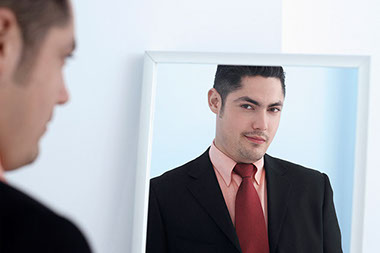
Plan or write down what you want to say. Have responses ready ahead of time to deal with questions and comments. Reinforce your remarks by saying what positive outcomes will occur for you and the other person. Practice in front of a mirror or with a friend.
Use the L.A.D.D.E.R. Technique
This is a step-by-step way to be more assertive.
*Look at your needs, wants, rights, and feelings about the situation.
*Arrange a meeting that is convenient for you and the other person to talk.
*Define the problem or issue clearly to the other person.
*Describe your feelings using “I messages.” I messages let you take charge of your feelings.
*Express your needs and desires in an assertive manner using a few clear sentences. Be aware of your eye contact, hand gestures, posture, voice and facial expression.
*Reinforce your remarks by saying what positive outcomes will occur for you and the other person.
Example:
L – I wish my partner would help with household chores so I don’t stay up so late at night finishing what needs to get done.
A – I’ll plan to talk with him or her after dinner tomorrow.
D – Tell your partner, “When I stay up late doing household chores, I do not get enough sleep at night. I don’t have enough energy to be alert and productive at work the next day.”
D – “I feel I could get more sleep with your help.”
E – “I would like to divvy up household to-dos between us. I know we are each better at different tasks.
R – “This change would help me get more sleep at night and I will have more energy when we spend time together.”
© American Institute for Preventive Medicine