Author: AIPM

  • Be Smart About Credit Card Offers

    FINANCIAL HEALTH

    Image of man getting mail from mailbox.

    Offers in the mail

    Credit card companies, auto loan companies and other lenders can get a list of names for their credit card offers. They get information from credit reporting agencies about people who have a minimum credit score. Then, they use that list to send out offers for a new card.

    Saying “no” to mail offers

    If you are receiving credit card offers in the mail and don’t want them, there are two things you can do.

    You can opt out of credit card offers for five years. Call 1-888-5-OPTOUT  (1-888-567-8688) or visitoptoutprescreen.com. To opt out forever, you must download and mail a signed paper form. You can get the form on the opt-out website.

    Beware – the opt-out feature only works for certain credit card offers, though. Companies may get your name if they have done business with you before. They may also get your name from other sources that aren’t connected to the credit reporting agencies, such as memberships or subscriptions.

    Why is my child getting a credit card offer?

    Sometimes, a person under 21 years of age gets a credit card offer in the mail. This may happen if the company purchased a list of names and didn’t know that the person was not an adult. But, credit card companies cannot intentionally send their offers to people under 21 years old without permission.

    Phone calls

    Like mail offers, credit card companies can get your name from credit agencies and call you with an offer. You can register your number with the National Do Not Call Registry to stop these calls. Visitwww.donotcall.govor call 1-888-382-1222 to put your phone number on the do not call list.

    What is a prescreened credit card offer?

    Credit card companies can find out if you have a certain credit score. Then, they can offer you a credit card based on that information. This is known as a prescreened offer because they already have some information about your credit. It is not a guarantee that you will get the card. You still have to apply for it and be approved.

    Source: Consumer Financial Protection Bureau

    © American Institute for Preventive Medicine

  • Be More Tech-Savvy

    WORK LIFE

    Man on laptop with thumbs up.

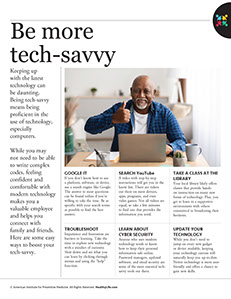
    Keeping up with the latest technology can be daunting. Being tech-savvy means being proficient in the use of technology, especially computers.

    While you may not need to be able to write complex codes, feeling confident and comfortable with modern technology makes you a valuable employee and helps you connect with family and friends. Here are some easy ways to boost your tech-savvy.

    Google it

    If you don’t know how to use a platform, software, or device, use a search engine like Google. The answer to most questions can be found online if you’re willing to take the time. Be as specific with your search terms as possible to find the best answer.

    Search YouTube

    A video with step-by-step instructions will get you in the know fast. There are videos out there on most devices, apps, programs, and even video games. Not all videos are equal, so take a few minutes to find one that provides the information you need.

    Take a class at the library

    Your local library likely offers classes that provide hands-on instruction on many new forms of technology. Plus, you get to learn in a supportive environment with others committed to broadening their horizons.

    Troubleshoot

    Impatience and frustration are barriers to learning. Take the time to explore new technology with a mindset of curiosity. Slow down and see what you can learn by clicking through menus and using the “help” function.

    Learn about cyber security

    Anyone who uses modern technology needs to know how to keep their personal information safe online. Password managers, updated software, and email security are some of the most essential tech-savvy tools out there.

    Update your technology

    While you don’t need to jump on every new gadget or device available, keeping your technology current will naturally keep you up-to-date. Newer technology is more user-friendly and offers a chance to gain new skills.

    © American Institute for Preventive Medicine

  • You’re Built For Rest

    Sleep Well

    Man resting in circle chair.

    Stress and anxiety can make life hectic and harder to keep a consistent sleep schedule. Try keeping a daily journal. Note how stress in life may impact your sleep at night.

    You can’t hope to succeed in other areas of health, if you neglect your nightly rest. Most adults need 7-9 hours of quality sleep each night. That means your body should move through the various sleep stages, including REM sleep. Here are four tips to get started:

    1. Maintain a consistent sleep and wake schedule – even on weekends.

    2. Make sure your mattress supports you well. Replace your pillow every year.

    3. Remove all electronic devices from your room. That includes your phone. Use an old-school alarm clock to wake up.

    4. Talk to your doctor about any sleep issues you have. They may point to other health problems.

    © American Institute for Preventive Medicine

  • Be Ready To Donate Blood

    WELL-BEING

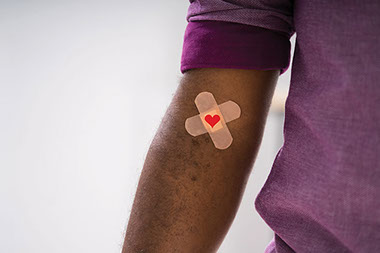
    Arm with bandaid and heart where he gave blood.

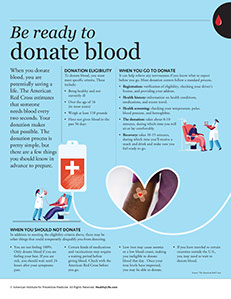
    When you donate blood, you are potentially saving a life. The American Red Cross estimates that someone needs blood every two seconds. Your donation makes that possible. The donation process is pretty simple, but there are a few things you should know in advance to prepare.

    Donation eligibility

    To donate blood, you must meet specific criteria. These include:

    *  Being healthy and not currently ill

    *  Over the age of 16 (in most states)

    *  Weigh at least 110 pounds

    *  Have not given blood in the past 56 days

    When you go to donate

    It can help relieve any nervousness if you know what to expect before you go. Most donation centers follow a standard process.

    *Registration:verification of eligibility, checking your driver’s license, and providing your address.

    *Health history:information on health conditions, medications, and recent travel.

    *Health screening:checking your temperature, pulse, blood pressure, and hemoglobin.

    *The donation:takes about 8-10 minutes, during which time you will sit or lay comfortably.

    *Recovery:takes 10-15 minutes, during which time you’ll receive a snack and drink and make sure you feel ready to go.

    When You Should Not Donate

    In addition to meeting the eligibility criteria above, there may be other things that could temporarily disqualify you from donating.

    *  You are not feeling 100%. Only donate blood if you are feeling your best. If you are sick, you should wait until 24 hours after your symptoms pass.

    *  Certain kinds of medications and vaccinations may require a waiting period before giving blood. Check with the American Red Cross before you go.

    *  Low iron may cause anemia or a low blood count, making you ineligible to donate blood that day. Once your iron levels have improved, you may be able to donate.

    *  If you have traveled to certain countries outside the U.S., you may need to wait to donate blood.

    Source: The American Red Cross

    © American Institute for Preventive Medicine

  • Be Kind To Your Voice

    WORK LIFE

    Man smiling.

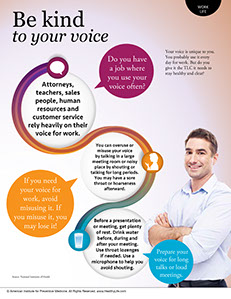
    Your voice is unique to you. You probably use it every day for work. But do you give it the TLC it needs to stay healthy and clear?

    Do you have a job where you use your voice often?

    Attorneys, teachers, sales people, human resources and customer service rely heavily on their voice for work.

    If you need your voice for work, avoid misusing it. If you misuse it, you may lose it!

    You can overuse or misuse your voice by talking in a large meeting room or noisy place by shouting or talking for long periods. You may have a sore throat or hoarseness afterward.

    Prepare your voice for long talks or loud meetings.

    Before a presentation or meeting, get plenty of rest. Drink water before, during and after your meeting. Use throat lozenges if needed. Use a microphone to help you avoid shouting.

    © American Institute for Preventive Medicine

  • Be Strong At Any Age

    BE FIT

    Older man using weights.

    When you think of exercise, do you think of going for a run or taking an aerobics class? Those are great cardio workouts. But there is more to fitness than just cardio.

    Strong is healthy

    Strength training or lifting weights is a big part of being healthy and fit. Many people don’t do strength training because they don’t want to “bulk up.” Older adults might skip it because they think it’s only for younger people who are more muscular.

    You won’t get big bodybuilder muscles from doing strength training. That is, unless you train hard with that goal in mind. And many older adults can safely do strength training and find that they love how it makes them feel.

    If you do regular strength exercises, you will get a stronger body and better quality of life at any age. No bodybuilder is needed!

    Research shows that strength training can lower the risk of heart disease and other health conditions. It also helps you stay independent as you get older. Older adults who do strength training may find that everyday tasks are much easier. This can include things like getting out of a chair or climbing stairs.

    Strong is good for the mind

    The benefits of a strong body don’t stop at the muscles. Research also shows that strength training may reduce the effects of post traumatic stress disorder (PTSD). It can also help boost self-esteem.

    You can start today

    If you don’t have equipment, like weights, you can use things around the house, like soup cans. You can also use your own body weight. Think push-ups, planks and other similar exercises. They use your body weight and gravity to build muscles.

    A good way to start is with an exercise video or online class. You don’t have to go to a gym. But before you start, talk to your doctor. Ask if a new exercise program is safe for you. Talk about things you should or should not do to stay safe and help avoid injury.

    Give strength training a chance. You may find that it makes you feel better than you thought possible! A diet with adequate protein can help build muscle at any age and even promote healing. Talk to your doctor if you plan to make major diet changes.

    Source: National Institutes of Health

    © American Institute for Preventive Medicine

  • Be Kind To Your Kidneys

    MEDICAL NEWS

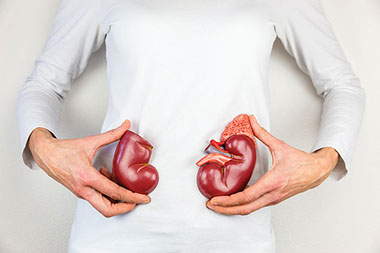
    Image of person holding plastic kidneys.

    Did you know that your kidneys are responsible for many important body functions? Kidneys are designed to:

    *  Keep the body’s fluid levels in check

    *  Remove extra fluid and waste from the blood, which exits the body as urine

    *  Activate vitamin D for healthy bones

    *  Balance minerals in the blood

    *  Direct the making of red blood cells

    *  Make a hormone that keeps blood pressure within a normal range

    Kidney disease: a hidden danger

    Chronic kidney disease, sometimes called CKD, can interfere with the kidneys’ important jobs. It can lead to heart attack, stroke, weak bones, anemia and other life-threatening problems.

    One of the problems with CKD is many people don’t find out that they have it until the later stages. Then, there could be more severe kidney damage and complications. About 1 in 7 people have some form of CKD.

    But there is good news. Getting treated early means kidney damage can be slowed or even stopped. That’s why it’s important to see your doctor and get kidney tests if needed.

    Know your risk

    If you have one of the following conditions, it means you may have a higher chance of getting CKD. Talk with your doctor about your kidney health if you have diabetes, heart disease, high blood pressure, or a family history of kidney problems.

    Tests are best

    If you have one of the risk factors listed below, your doctor may want to perform one or more of these tests:

    *  Blood pressure check: High blood pressure can damage the blood vessels in the kidneys.

    *  Protein in urine test: If a person’s urine contains a certain type of protein, it may be an early sign of CKD.

    *  Creatinine in blood test: If the kidneys aren’t working well, they can’t take a waste product called creatinine out of the blood.

    *  Glomerular filtration rate (GFR) test: This measures creatinine levels and calculates other CKD risk factors too.

    What to do

    If you find out you have CKD, your doctor may recommend:

    *  Lowering high blood pressure

    *  Keeping blood sugar under control if you have diabetes

    *  Eating less sodium (salt)

    *  Not taking NSAID pain relievers like ibuprofen and naproxen

    *  Eating only a moderate amount of protein

    *  Getting a flu shot each year

    Even if your kidneys are healthy, you can help keep them that way by:

    *  Not smoking or getting help to quit

    *  Working toward a healthy weight

    *  Getting blood pressure and cholesterol checked regularly

    *  Annual blood sugar testing

    *  Eating plenty of fruits and vegetables

    *  Seeing your doctor as recommended

    *  Knowing your family medical history

    Sources: Centers for Disease Control and Prevention, National Kidney Foundation
    © American Institute for Preventive Medicine