Author: AIPM

  • Day 1

    Healthylife® QuitWell™

    Part 6

    Reflection in mirror of three friends.

    Mirror Talk

    Stand in front of a mirror and be your own cheerleader. “I am tobacco free. I want to be a healthy dad/mom/grandma/grandpa/friend (say an important role you have). I am going to succeed!”

    What you say to yourself is powerful. These strong statements are called affirmations. You may not strongly believe it at first, but keep going.

    1. State your affirmation in the present tense.

    2. Say what you want, rather than what you don’t want.

    3. Include feeling words that add positive emotion.

    4. Be specific about what you want, rather than being vague.

    5. Make the words simple and easy to remember.

    Here Are a Few Affirmation Ideas

    I am special and unique.

    I take care of my body.

    I am thankful for my life.

    I am a good friend.

    I am courageous.

    I am strong.

    I choose to respect myself.

    I am proud to be me.

    I trust myself.

    I love to play and have fun.

    I love to learn.

    I am lovable.

    I am learning from this experience.

    I choose to be in control.

    Write today’s affirmation, using the tips and examples above. Write this statement on a sticky note and put it where you will see it, like the bathroom mirror or in your wallet. Create a reminder on your phone that will pop-up during the day. Say it out loud or repeat it to yourself.

    © American Institute for Preventive Medicine

  • Day 12

    Healthylife® QuitWell™

    Part 6

    Man on computer.

    Now Awareness

    Where your mind goes, you will go too. You can redirect your mind when you get an urge. Now Awareness is a simple, powerful tool to help you do this.

    When an urge (or any unwanted thought) comes to mind, say to yourself, “Now I am aware of ____________.” Finish the sentence by naming objects you can see. For example, if you are sitting in your kitchen, you might say: “Now I am aware of the stove”; Now I am aware of the clock”; “Now I am aware of the sink”, etc. Keep this up until your urge passes.

    Keep your thoughts focused. You are flexing the muscle of awareness and mind control when you do this. This tool can also be used to get through a stressful situation or when you feel your thoughts spiraling out of control.

    Come back to the present. You can use your own body for Now Awareness as well. Notice your hands. Notice your arms. Notice your shoulders. Notice any tension in your body and try to release it. Notice your breath.

    When you are able to bring your mind under control, solutions to problems you may not have noticed before may appear. You may feel that something that seemed hard is now easier. You may feel more at peace. Try it!

    Today’s Affirmation:

    I will direct my mind to calm, present thoughts when I have an urge.

    © American Institute for Preventive Medicine

  • Day 13

    Healthylife® QuitWell™

    Part 6

    Man with arms up.

    You can be very proud of your success so far. But, don’t be so secure that you drop your guard. It can set you up for “just that one.” In the next few days and weeks, resisting “just that one” will make the difference between long-term quitting and a cycle of relapse. Keep in mind, one smoke, one smoker. Or, one chew, one chewer. Or, insert whatever your habit was before quitting.

    The first month of quitting is the “crawling” stage. Most people who return to tobacco do it during the first few weeks after stopping.

    Cautious Optimism

    You should be hopeful, yet careful, about the fact you have quit. Feel proud of yourself for having quit, but don’t let your guard down.

    Continue to use the urge tamers and other strategies in this guide. You may find that what will help you now is different than what helped you get started.

    The program works when you make it work for you!

    Today’s Affirmation:

    I choose to be on this path to quitting for good.

    © American Institute for Preventive Medicine

  • Day 2

    Healthylife® QuitWell™

    Part 6

    Man smiling with a cup of coffee and his phone.

    Unscramble Slowly

    If you enjoy your new tobacco-free routines, keep doing them. If you want to go back to your old triggers, do so slowly, one trigger at a time. For example, if it has been awhile since you went out to the bar with smoking friends, plan to go briefly and only drink a little.

    Events in your life that you linked with tobacco may trigger new urges: meeting a deadline, having a few drinks, golfing, a hunting trip, or coping with loss.

    What new triggers have already arisen since you started quitting?

    What new triggers do you anticipate in the coming weeks or months?

    Use creative imagination to picture yourself going through these situations without your old habit. If this trigger involves others, make sure at least one person knows you have quit and you can count on them to help you.

    Today’s Affirmation:

    I don’t have to do this alone- others will support me, if I ask them to.

    © American Institute for Preventive Medicine

  • Day 3

    Healthylife® QuitWell™

    Part 6

    Women giving high-five while walking with friends.

    Note Positive Changes & Celebrate Success

    Make a list of the good things you have noticed since you stopped using tobacco/nicotine products:

    *  Easier breathing

    *  Better sense of taste

    *  Better sense of smell

    *  More money in my pocket

    What are you especially proud of?

    What situations have you gotten through that would have led to tobacco/nicotine use in the past?

    What daily habits have changed for you?

    Today’s Affirmation:

    I am taking care of my body by quitting.

    © American Institute for Preventive Medicine

  • Day 7

    Healthylife® QuitWell™

    Part 6

    Women who's depressed.

    Post-Quitting Depression

    Some people feel mildly depressed after they have quit. You may feel a letdown when such a major goal has been reached. You may also find that the people around you are taking less notice of the fact you’ve quit. This is why self-rewards are more long-lasting than those given to you by others.

    *  Acknowledge that you had a relationship with cigarettes, dip, or your e-cig. It may have been long or short, but due to the nature of nicotine and the habits that form, it was probably a powerful relationship for you.

    *  Try to see your experiences through a different perspective:

    – Missing out on times with family & friends while going outside to use

    – Worrying about the smell on your clothes or breath

    – The mess of cigarette butts or a spit bottle

    – The nagging cough that took weeks to go away (if at all)

    – Guilt, fear, anxiety, or other negative emotions using tobacco/nicotine stirred up in the moment or right after

    – The cost that just kept going up

    *  Look at the gains you’ve already made

    – More free time

    – Easier to breathe

    – Money saved

    – Freedom to go anywhere not worrying about when the next opportunity to smoke, dip or vape might be

    Be cautious of the nostalgia that may come with old, unhealthy habits. It may have felt like a friend, but tobacco/nicotine products are like a friend that stabs you in the back down the road. The tobacco companies are not trying to be your friend-they just want your money.

    Today’s Affirmation:

    Tobacco is a bad friend I have left behind.

    © American Institute for Preventive Medicine

  • Day 8

    Healthylife® QuitWell™

    Part 6

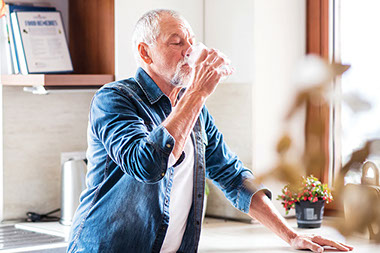
    Man drinking a glass of water.

    Shake a Stale Feeling

    Smoking, dipping, vaping, or whatever habit you left behind may have given you something to do when you were bored. Perhaps it filled the gap between activities and responsibilities.

    In the next ten minutes, pick one of the following to do:

    *  Get up and move. Stretch, go for a short walk, do bodyweight squats, or walk up and down a flight of stairs.

    *  Get a drink of water.

    *  Eat a healthy snack, if you are hungry.

    *  Close your eyes and take a few deep breaths. The next few moments belong to you.

    *  Call a friend or write a card.

    *  Find something funny and laugh.

    A few minutes may seem like a really small part of your life. However, success is built on what you do in short amounts of time-or right now. Don’t take the present for granted.

    Today’s Affirmation:

    I choose my own adventure, even in the small parts of the day.

    © American Institute for Preventive Medicine

  • Deep Natural Breathing

    Healthylife® QuitWell™

    Part 4

    Man with eyes closed taking deep breaths.

    This skill is very much like Smokeless Inhalation, but it takes 3 to 5 minutes. It involves both your abdomen and your chest. You will focus on the sound and feel of your breathing.

    1. Sit in a chair. Put your arms at your sides and uncross your legs and feet. Or, lay down on a bed or couch.

    2. Note any tension in your muscles.

    3. Put one hand on your chest and the other hand on your abdomen.

    4. Take a slow, deep breath through your nose. The hand on your abdomen should rise first. When your abdomen is full of air, the hand on your chest should rise.

    5. Hold the air for 3 seconds.

    6. Purse your lips and blow out through your mouth, making a whooshing sound.

    7. Keep taking long, slow deep breaths in through your nose and letting long slow breaths out through your mouth.

    8. Focus on the sound and feel of your breathing. Do this for 3 to 5 minutes. After a while, you can lower your hands.

    When I will try this?

    (After) How did your body feel after this activity?

    (After) How did your stress level change after this activity?

    © American Institute for Preventive Medicine

  • E-Cigarettes & Your Health

    Healthylife® QuitWell™

    Part 1

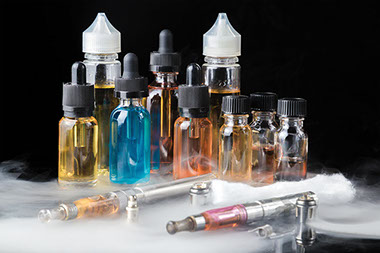
    Variety of vape equipment.

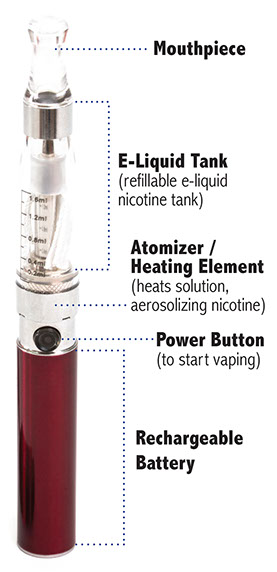
    Electronic cigarettes, or e-cigarettes, are battery-powered nicotine delivery systems. They have a cartridge that contains a liquid, an atomizer to heat the liquid, a power source, and a mouthpiece. The liquid contains a chemical mix of nicotine, propylene glycol, glycerin, and flavorings. The heat source and atomizer turn the liquid into a vapor, and the mouthpiece delivers the vapor to your lungs. That’s why it’s also called vaping.

    Chart showing the different parts of an e-cigarette.

    E-cigarettes go by lots of other names: vapes, vape pens, mods, hookah pens, e-hookahs, e-cigs, e-juice, e-liquid, smoke juice, juuls, and more. While some are made to look like regular cigarettes, others look more like pens or flash drives. Some larger devices look very different and bear little resemblance to cigarettes at all. There are hundreds of different e-cigarettes on the market.

    E-cigarettes don’t contain tobacco and don’t produce smoke. Those are the only good things you can say about e-cigs! Most still contain nicotine, and all have toxic chemicals. Like cigarettes, e-cigarettes are harmful to your lungs and addictive. Nobody has invented a healthy e-cigarette yet!

    The FDA regulates the production of e-cigarettes by licensed manufacturers, but there are many unlicensed cartridges being sold from pop-up shops or on the street. These black-market cartridges can contain additional dangerous additives like solvents or pesticides. These products should be avoided at all times.

    Can they hurt if they’re not “real” cigarettes?

    It may seem like e-cigarettes are a safer option because they don’t contain tobacco or because they are available with different amounts of nicotine. Even though they do not have tobacco, e-cigarettes still contain addictive nicotine and toxic chemicals just like “real” cigarettes. Heating these chemicals and inhaling the vapor brings dangerous substances into your body. Some of these can cause cancer. Some of these may cause serious lung injury.

    In the summer of 2019, the rapid rise of hospitalizations and deaths among e-cigarette users prompted emergency action by the Centers for Disease Control & Prevention (CDC) and many state governments. While many health issues from smoking cigarettes do not show up until many years of use, serious lung illness and death has occurred in relatively young, short-term users of e-cigarettes. Long-term problems are still unknown, as e-cigarettes are new and researchers do not know what will happen to the body after 20 or 30 years of usage.

    If you use e-cigarettes and have any of the following symptoms, ask your healthcare provider to check for lung injury. Vaping-associated pulmonary illness is very serious and can be deadly.

    *   Cough, shortness of breath, or chest pain

    *   Nausea, vomiting, or diarrhea

    *   Fatigue, fever, or abdominal pain

    “Fun-flavored” Danger: E-Cigarettes and Teens

    E-cigarettes have quickly become popular with teenagers, partly due to e-juice that comes in “fun” flavors like cinnamon roll and bubble gum. These flavors, the myth that vaping is harmless, and the lack of lasting odors, create the perfect storm for teens who want to experiment or “fit in” without the stigma of smoking cigarettes. What they don’t realize is the danger of addiction and health problems.

    Can E-Cigarettes Help You Quit Regular Cigarettes?

    Some people have used e-cigarettes to cut back on the amount of nicotine they smoke until they are ready to quit entirely. The FDA has not approved this method of quitting, as there is no evidence that it leads to long-term cessation. Some studies have shown that adults who used vaping to quit cigarettes were more likely to relapse.

    Nicotine is a highly addictive substance that can damage the cardiovascular system. The narrowing of coronary arteries and breakdown of heart tissue can increase the risk for hypertension, increase inflammation in the body, and complicate existing heart conditions. If you previously smoked cigarettes, the heart is already damaged and additional use of nicotine could worsen this damage. Continued nicotine use also complicates diabetes management and associated conditions, such as eye health, risk for stroke, weight management and circulation problems.

    If you are using an e-cigarette to quit smoking, it is important to reduce the amount of nicotine you are consuming and plan to quit using the device completely. Continuing to use an e-cigarette will increase your risk of returning to regular cigarettes, along with all the problems that come with the e-cigarette itself.

    Relying on the e-cigarette as a way to cope with stress, as entertainment when bored, or to mimic smoking while driving in the car, does not change much about your smoking habit. Without making changes to your routines or learning to cope with challenges, it may make it easy to have a cigarette when the e-cigarette is unavailable, needs a re-fill, or a cigarette is offered.

    If you are looking for a way to step down nicotine safely and feel a little better when quitting, the QuitWell™ program recommends FDA-approved options in addition to support:

    *Nicotine Replacement Therapy (NRT):FDA approved, can safely be used by most people, available in a patch, gum, lozenge, nasal spray, or inhaler

    *Pharmaceutical Aid (e.g. Chantix, Zyban):Requires a prescription from your doctor, does not contain nicotine

    © American Institute for Preventive Medicine

  • Get Enough Sleep 2

    Healthylife® QuitWell™

    Part 5

    Women sleeping.

    Not getting enough sleep can affect nearly every aspect of your day:

    *  Less energy and desire to work on your goals

    *  Feeling down, anxious, or other negative feelings

    *  Decreased creativity, making it harder to solve problems or imagine doing things differently

    *  Increased cravings for tobacco/nicotine to stay alert

    *  More unstable blood sugar levels, leading to less healthy eating and stronger cravings for nicotine

    Tips for Improving Sleep

    *  Get to bed a little earlier than normal when quitting. This may help cut out an evening cigarette and can help your body recover.

    *  Create a comfortable place to sleep. Make sure your bed, pillows, and bedding are comfortable.

    *  Maintain a slightly cooler temperature in the bedroom.

    *  Avoid looking at a screen (TV, laptop, smartphone, tablet, etc.) 30 minutes before bed.

    *  Create a bedtime and waketime routine.

    *  Reserve the bed for sleep and sex. Avoid doing other activities in bed, like work or having a tough discussion.

    *  Have a small snack before bed if you are hungry.

    * Avoid foods high in sugar or refined carbohydrates just before bed. The rise in blood sugar can provide a burst of energy that keeps you alert and makes it difficult to fall asleep.

    *  Avoid foods that are likely to cause acid reflux (heartburn), gas, cramping, or indigestion if you are prone to these problems. Fatty or spicy foods, beans, garlic, peanuts, and dairy cause discomfort for some people.

    What action can you take tonight to improve your sleep?

    © American Institute for Preventive Medicine