Author: AIPM

  • Debt-To-Income Ratio: Faqs

    FINANCIAL HEALTH

    Young couple looking over bills together.

    A healthy debt-to-income ratio is an indicator of financial stability. Just as the term implies, this ratio compares the amount of money you pay toward debt against your income.

    A stable debt-to-income ratio is anything 43% and lower. Someone with a higher percentage may struggle to make ends meet and keep up with their payments.

    When applying for a mortgage, lenders will use this number as a determining factor, so it’s essential to know where you stand. In most cases, you must have a debt-to-income ratio under 43% to get a qualified mortgage when buying a home.

    Calculate debt-to-income ratio

    The equation looks like this: Total monthly debt payments ÷ monthly gross income (before taxes) = debt-to-income ratio

    Here’s an example: Let’s say you make $6000 each month before taxes, and you have an $1800 mortgage, $300 car payment, $150 student loans, and $50 credit card payment.

    ($1800 + $300 + $150 + $50) ÷ $6000 = debt-to-income ratio

    $2300 ÷ $6000 = 0.38

    Your debt to income ratio is 38%.

    Bills as debt

    *  Monthly rent or house payment

    *  Auto, student, or other monthly loan payments

    *  Monthly alimony or child support

    *  Monthly credit card payment

    *  Any other debt

    © American Institute for Preventive Medicine
  • Different Shoes For Different Sports

    BE FIT

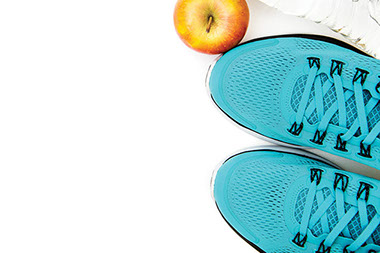
    Pair of shoes with apple and water bottle.

    If you play sports, shoes are important. Wearing the wrong shoes can sideline you with foot injuries and pain. Follow these guidelines to keep feet happy.

    Basketball, tennis and volleyball shoes should have:

    *  A thick, stiff sole that absorbs impact

    *  High ankle construction for quick changes in direction

    *  Lighter weight with a sole designed for quick starts and stops

    Soccer shoes should have:

    *  A good quality footbed to support your arch type

    *  The correct stud type for the ground you play on: soft, hard, firm or turf

    *  Molded rubber cleats

    Football and lacrosse shoes should have:

    *  High ankle support, especially for linemen and players who move side to side

    *  Good traction on a grassy field in wet and dry conditions

    *  Proper fit – don’t use hand-me-downs

    Baseball and softball shoes should have:

    *  Support to prevent arch pain

    *  No metal baseball spikes for athletes younger than 13

    *  Multi-cleats for children ages 11-15

    Running shoes should have:

    *  Good shock absorption for high-impact forward motion (not side motion)

    *  The right arch type for you (high, medium, low)

    Source: American Podiatric Medical Association

    © American Institute for Preventive Medicine
  • Digging Into Detox Diets

    HEALTHY EATING

    Image of different berries.

    The word “detox” is a popular term in diets today. Many detox diets and plans promise to help your body flush out toxins and get you healthier.

    Some detox diets follow extreme guidelines like:

    *  Fasting (not eating) for long periods

    *  Drinking only special detox drinks or juices

    *  Using supplements or products that claim to detox your body

    *  Using laxatives, enemas or other products to empty the colon

    Safety concerns

    Many detox plans haven’t been proven to be safe. Supplements and extreme diets can cause health problems. The Food and Drug Administration (FDA) has taken action against detox products that are dangerous or contain illegal ingredients.

    Don’t assume that a “natural” detox plan is safe. It may be risky because:

    *  Drinking large quantities of juice can be dangerous for people with kidney disease.

    *  Drinking juices that are “raw” or unpasteurized can cause serious illnesses from bacteria.

    *  People with diabetes often need to eat a healthy diet and need to eat at regular times. Fasting or drinking juice instead of meals can cause dangerous blood sugar levels.

    *  Using too many laxatives can cause dehydration, severe diarrhea and an imbalance in minerals and vitamins.

    *  Fasting for long periods can cause headaches, dehydration and fainting.

    Your body’s own detox

    The human body is already designed to get rid of toxins. Most of this is done by the liver, which processes and removes chemicals, toxins and other unwanted things.

    Supporting your liver is a healthy and safe way to “detox” without extreme or dangerous diets. You can support your liver by:

    *  Eating a healthy diet rich in fruits, vegetables, lean protein and whole grains

    *  Working toward a healthy weight if you’re overweight

    *  Avoiding or limiting processed foods

    *  Drinking plenty of water

    *  Avoiding or limiting alcoholic drinks

    *  Getting exercise regularly

    *  Following directions on medicines and take medicines as your doctor prescribes

    *  Getting vaccines for hepatitis A and B, which are diseases that affect the liver

    Not all diets are safe. Before you start any detox or diet plan, ask your doctor.

    Sources: American Liver Foundation, National Center for Complementary and Integrative Health

    © American Institute for Preventive Medicine

  • Disinfecting Your Home Safely

    WELL-BEING

    Bucket with cleaning supplies.

    It’s a good idea to regularly disinfect surfaces in your home. This can help prevent you or others from getting sick. Here’s how to do it safely:

    *  Check that your disinfectant is EPA-approved. Look for an EPA registration number on the product.

    *  Read all the directions and warnings on the package.

    *  Use soap and water first if the surface is dirty. Then apply your disinfectant.

    *  Let it sit for the “contact time” listed on the package. Make sure the surface stays wet for the whole time.

    *  Wear disposable gloves when using disinfectants. Throw them away after each use.

    *  Wash your hands when you’re done.

    *  Keep all disinfectants out of reach of children and pets.

    Source: Environmental Protection Agency

    © American Institute for Preventive Medicine

  • Do Cell Phones Cause Cancer?

    WELL-BEING

    Women holding cell phone with head phones on.

    Many people have their phones in pockets or purses all the time.

    Is this safe?

    Cell phones and RF waves

    When they are turned on, cell phones give off radiofrequency (RF) waves. When a person holds a cell phone up to their ear, they are exposed to the RF waves from the phone.

    At very high levels, RF waves can cause heat. This is how microwave ovens heat food. But the energy given off by a cell phone isn’t enough to cause a person’s body to heat up.

    Most stuides say “NO”

    Studies on rats have found that exposing their entire bodies to RF waves for long periods of time may increase the risk of a certain type of tumor. The levels used in this study were much higher than what a person would experience from normal everyday cell phone use.

    Most studies on humans have found that people who have brain tumors do not use cell phones more than people who don’t have tumors. Other human studies have found that brain tumors don’t happen more on the side of the head where people hold their cell phones. Both results seem to suggest that cell phones do not cause brain tumors.

    But a few studies have found an increased tumor risk on the side of the head where a person usually holds their cell phone.

    Researchers believe we need more studies to find out for sure whether cell phones could be linked to cancer.

    What should I do?

    The American Cancer Society says RF waves are not as strong as different types of radiation like x-rays and UV light. X-rays and UV light can damage DNA. RF waves from cell phones are much weaker and don’t cause DNA damage. This means they would not make changes that could cause a tumor to form.

    But, if you want to avoid exposure to RF waves, you can:

    *  Keep your phone away from your body. Don’t keep it in your pocket when it’s turned on.

    *  Use the speaker function or an earpiece when talking on the phone.

    Source: American Cancer Society

    © American Institute for Preventive Medicine
  • Don’t Get Scammed

    FINANCIAL HEALTH

    Money locked in chains.

    Banks, government and companies will not ask you to pay a bill on the phone. Don’t send money or give out personal information over the phone or by text.

    Scammers can put up fake caller ID information. It may look like it’s from someone you know when it’s not. Don’t believe caller ID.

    These methods of payment don’t provide fraud protection. Real companies won’t ask you to do this. Know the risks of wiring money and gift cards.

    © American Institute for Preventive Medicine

  • Don’t Let Fomo Hold You Hostage

    SUCCESS OVER STRESS

    Man on phone late into the night.

    Social media has many potential benefits. It can foster connection, share information, and build social networks. However, the WAY you use social media can determine if it has a good or bad influence on you.

    If you feel that you are spending too much time on social media or that your time on social media leaves you feeling unhappy or anxious, this could be a sign that you are experiencing FOMO.

    What is FOMO?

    FOMO, or fear of missing out, is a common negative side effect of too much social media. FOMO occurs when you consciously or unconsciously worry things are happening on social media that you will miss if you are absent.

    This fear of missing out can lead you to spend too much time on social media. You might check it frequently throughout the day and think about what might be happening when you are not present.

    The problem with FOMO

    The truth is, FOMO doesn’t make you feel good. It may create a state of anxiety where you are constantly distracted. You are always wondering what new information might be available on social media.

    If you experience a compulsive need to check your social media accounts multiple times a day, it may interfere with other aspects of your life.

    Other side effects may include:

    *  Trouble sleeping

    *  Emotional tension

    *  A decline in physical  well-being

    *  Difficulty with emotional control

    Ways to manage

    Be honest with yourself. Pay close attention when you are tempted to reach for your device to log on and scroll. Ask yourself some questions:

    *  Why do I need to get on at this moment?

    *  How many times a day am I checking?

    *  What do I feel like when I engage on social media?

    Set limits.It’s easy to fall into the rhythm of checking your social media accounts any time you have a free moment. Instead, plan specific times of the day to check in. Once in the morning and once in the evening might be enough to get the benefits social media can provide without letting it take over too much.

    Turn off notifications.Once you set a limit on how often you check in, turn off social media’s power to trigger your FOMO. All the information will be there waiting when you do log in.

    Choose one social media platform.As you re-evaluate your social media use, you may find you really aren’t missing out on much. In fact, narrowing down your social media to just one account could help you feel free and less worried about what you might miss.

    © American Institute for Preventive Medicine

  • E-Cigarettes: Are They Safer?

    MEDICAL NEWS

    Man with hoodie vaping.

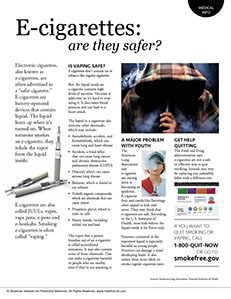
    Electronic cigarettes, also known as e-cigarettes, are often advertised as a “safer cigarette.” E-cigarettes are battery-operated devices that contain liquid. The liquid heats up when it’s turned on. When someone smokes an e-cigarette, they inhale the vapor from the liquid inside.

    E-cigarettes are also called JUULs, vapes, vape pens, e-pens and e-hookahs. Smoking e-cigarettes is often called “vaping.”

    Is vaping safe?

    E-cigarettes don’t contain tar or tobacco like regular cigarettes.

    But, the liquid inside an e-cigarette contains high levels of nicotine. Nicotine is addictive, so it’s hard to stop using it. It also raises blood pressure and can lead to a heart attack.

    The liquid in e-cigarettes also contains other chemicals, which may include:

    *  Acetaldehyde, acrolein, and formaldehyde, which can cause lung and heart disease

    *  Acrolein, a weed killer that can cause lung cancer and chronic obstructive pulmonary disease (COPD)

    *  Diacetyl, which can cause serious lung disease

    *  Benzene, which is found in car exhaust

    *  Volatile organic compounds, which are chemicals that can cause cancer

    *  Propylene glycol, which is toxic to cells

    *  Heavy metals, including nickel, tin and lead

    The vapor that a person breathes out of an e-cigarette is called secondhand emissions. It may also contain some of these chemicals. This can make e-cigarettes harmful to people who are nearby, even if they’re not smoking it.

    A major problem with youth

    The American Lung Association says e-cigarette use among teens is becoming an epidemic. E-cigarette fruit and candy-like flavorings often appeal to kids and teens. They may think that e-cigarettes are safe. According to the U.S. Institutes of Health, most kids believe the liquid inside is for flavor only.

    Nicotine contained in the vaporized liquid is especially harmful to young people. Nicotine can damage a teens’ developing brain. It also makes them more likely to smoke regular cigarettes later.

    Get help quitting

    The Food and Drug administration says e-cigarettes are not a safe or effective way to quit smoking. Instead, you may be replacing one unhealthy habit with a different one.

    If you want to quit smoking or vaping, call 1-800-QUIT-NOW or go tosmokefree.gov

    Sources: American Lung Association, National Institutes of Health

    © American Institute for Preventive Medicine

  • Easy Food Swaps For A Healthy Heart

    HEALTHY EATING

    Image of a healthy vegetable wrap.

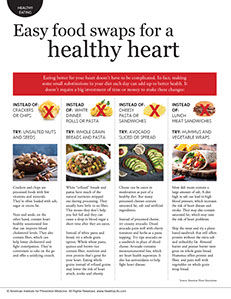
    Eating better for your heart doesn’t have to be complicated. In fact, making some small substitutions in your diet each day can add up to better health. It doesn’t require a big investment of time or money to make these changes:

    Instead of: Crackers or chips

    Try: Unsalted nuts and seeds

    Crackers and chips are processed foods with few vitamins and minerals. They’re often loaded with salt, sugar or excess fat.

    Nuts and seeds, on the other hand, contain heart healthy unsaturated fats that can improve blood cholesterol levels. They also contain fiber, which can help lower cholesterol and fight constipation. They’re convenient to take on the go and offer a satisfying crunch.

    Instead of:  White dinner rolls or pasta

    Try: Whole grain breads and pasta

    White “refined” breads and pastas have much of the natural nutrients stripped out during processing. They usually have little to no fiber. This means they don’t help you feel full and they can cause a drop in blood sugar a short time after they are eaten.

    Instead of white pasta and bread, try a whole grain option. Whole wheat pasta, quinoa and brown rice contain fiber, nutrients and even protein that’s great for your heart. Eating whole grains instead of refined grains may lower the risk of heart attack, stroke and obesity.

    Instead of: Cheesy pasta or sandwiches

    Try: Avocado sliced or spread

    Cheese can be eaten in moderation as part of a healthy diet. But many processed cheeses contain saturated fat, salt and artificial ingredients.

    Instead of processed cheese, try creamy avocado. Diced avocado pairs well with cherry tomatoes and herbs as a pasta topping. Try ripe avocado on a sandwich in place of sliced cheese. Avocado contains monounsaturated fats, which are heart health superstars. It also has antioxidants to help fight heart disease.

    Instead of:  Lunch meat sandwiches

    Try: Hummus and vegetable wraps

    Most deli meats contain a large amount of salt. A diet high in salt can lead to high blood pressure, which increases the risk of heart disease and stroke. They may also contain saturated fat, which may raise the risk of heart problems.

    Skip the meat and try a plant-based sandwich that still offers protein without the extra salt and unhealthy fat. Almond butter and peanut butter taste great on whole grain bread. Hummus offers protein and fiber, and pairs well with vegetables on whole grain wrap bread.

    Source: American Heart Association

    © American Institute for Preventive Medicine
  • Eat Your Vitamins For Good Health

    HEALTHY EATING

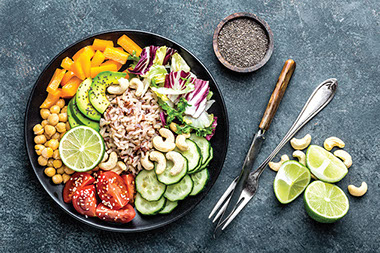
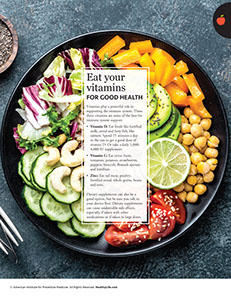
    Bowl of vegetables with rice and chickpeas.

    Vitamins play a powerful role in supporting the immune system. These three vitamins are some of the best for immune system support:

    *  Vitamin D: Eat foods like fortified milk, cereal and fatty fish, like salmon. Spend 15 minutes a day in the sun to get a good dose of vitamin D. Or take a daily 1,000-4,000 IU supplement.

    *  Vitamin C: Eat citrus fruits, tomatoes, potatoes, strawberries, peppers, broccoli, Brussels sprouts and kiwifruit.

    *  Zinc: Eat red meat, poultry, fortified cereal, whole grains, beans and nuts.

    Dietary supplements can also be a good option, but be sure you talk to your doctor first. Dietary supplements can cause undesirable side effects, especially if taken with other medications or if taken in large doses.

    © American Institute for Preventive Medicine