Author: AIPM

  • Gout: Relief At Last

    Abdominal & Urinary Conditions

    If you wake up in the middle of the night with excruciating pain in your big toe, you could have gout. Or perhaps your instep, heel, ankle, or knee hurts. How about your wrists and elbows? Your joints can become so inflamed that even rubbing against the bed sheet can be torture. You may even experience fever and chills.

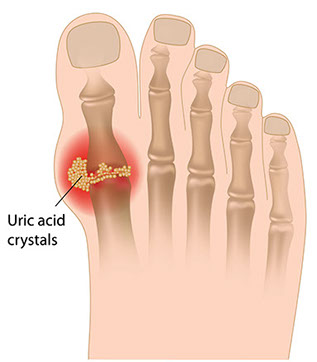
    Gout is a form of arthritis most common in men in their fifties. It is caused by increased blood levels of uric acid, produced by the breakdown of protein in the body. When blood levels of uric acid rise above a critical level, thousands of hard, tiny uric acid crystals collect in the joints. These crystals act like tiny, hot, jagged shards of glass, resulting in pain and inflammation. Crystals can collect in the tendons and cartilage, in the kidneys (as kidney stones), and in the fatty tissues beneath the skin.

    A gout attack can last several hours to a few days and can be triggered by:

    *  Mild trauma or blow to the joint.

    *  Drinking alcohol (beer and wine more so than distilled alcohol).

    *  Eating a diet rich in red meat (especially organ meats such as liver, kidney, or tongue).

    *  Eating sardines or anchovies.

    *  Taking certain drugs, such as diuretics.

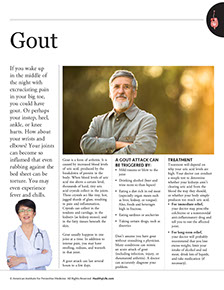
    Illustration of gout.

    Don’t assume you have gout without consulting a physician. Many conditions can mimic an acute attack of gout (including infection, injury, or rheumatoid arthritis). A doctor can accurately diagnose your problem.

    If you do have gout, treatment will depend on why your uric acid levels are high. Your doctor can conduct a simple test to determine whether your kidneys aren’t clearing uric acid from the blood the way they should, or whether your body simply produces too much uric acid.

    The first goal, then, is to relieve the acute gout attack. The second goal is to normalize the uric acid levels to prevent a recurrence.

    *  For immediate relief, your doctor may prescribe colchicine or a nonsteroidal anti-inflammatory drug and tell you to rest the affected joint.

    *  For long-term relief, your doctor will probably recommend that you lose excess weight, limit your intake of alcohol and red meat, drink lots of liquids, and take medication (if necessary).

    A Year of Health Hints book by the American Institute for Preventive Medicine. www.HealthyLife.com. All rights reserved.

    © American Institute for Preventive Medicine

  • Guard Against Macular Degeneration

    Mature Health: Over Age 50

    Image of mature women receiving an eye exam.

    Macular degeneration is the leading cause of central vision loss for those over 55 years of age. The central part of the retina (the macula) deteriorates, leading to loss of “straight ahead” vision. One or both eyes can be affected. If you are 50 years of age or older, ask your eye doctor to check for macular degeneration at routine vision exams. Ask, too, for a simple home screening device that lets you check for signs of macular degeneration on your own.

    To reduce the risk for macular degeneration:

    *  Keep your blood pressure at a normal level.

    *  Maintain a healthy weight.

    *  Don’t smoke. If you smoke, quit.

    *  Protect your eyes from the sun’s harmful ultraviolet rays. Wear sunglasses with UV block. Wear a wide-brimmed hat.

    *  Talk to your doctor about taking a high dose vitamin and mineral supplement to reduce the risk of advanced age-related macular degeneration.

    A Year of Health Hints book by the American Institute for Preventive Medicine. www.HealthyLife.com. All rights reserved.

    © American Institute for Preventive Medicine

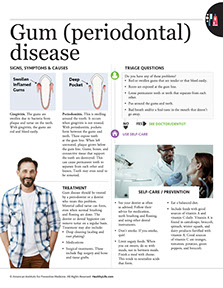
  • Gum (Periodontal) Disease

    Dental & Mouth Concerns

    Image of women sitting in dental chair shaking hands with the dentist.

    Signs, Symptoms & Causes

    Gum (periodontal) diseases include:

    Gingivitis. The gums are swollen due to bacteria from plaque and tartar on the teeth. With gingivitis, the gums are red and bleed easily.

    Periodontitis. This is swelling around the tooth. It occurs when gingivitis is not treated. With periodontitis, pockets form between the gums and teeth. These expose teeth at the gum line. When left untreated, plaque grows below the gum line. Gums, bones, and connective tissue that support the teeth are destroyed. This can cause permanent teeth to separate from each other and loosen. Teeth may even need to be removed.

    Treatment

    Gum disease should be treated by a periodontist or a dentist who treats this problem. Material called tartar can form, even when normal brushing and flossing are done. The dentist or dental hygienist can remove tartar on a regular basis. Treatment may also include:

    *  Deep cleaning (scaling and root planing).

    *  Medications.

    *  Surgical treatments. These include flap surgery and bone and tissue grafts.

    Questions to Ask

    Self-Care / Prevention

    *  See your dentist as often as advised. Follow his or her advice for medication, teeth brushing and flossing and using other dental instruments.

    *  Don’t smoke. If you smoke, quit.

    *  Eat a balanced diet.

    *  Limit sugary foods. When you eat sweets, do so with meals, not in between meals. Finish a meal with cheese. This tends to neutralize acids that form.

    *  Include foods with good sources of vitamin A and vitamin C daily. Vitamin A is found in cantaloupe, broccoli, spinach, winter squash, and dairy products fortified with vitamin A. Good sources of vitamin C are oranges, tomatoes, potatoes, green peppers, and broccoli.

    Healthier at Home book by the American Institute for Preventive Medicine. www.HealthyLife.com. All rights reserved.

    © American Institute for Preventive Medicine

  • When To See A Gynecologist

    Women’s Health

    Image of female doctor with female patient.

    If you experience any of these symptoms, see a gynecologist.

    *  Heavy, painful, irregular, or missed menstrual periods. Bleeding between menstrual periods.

    *  Lower abdominal pain or cramping.

    *  Vaginal irritation, discharge, or painful intercourse. Bleeding after intercourse.

    *  Lumps, thickening, or tenderness in the breasts.

    Also see a gynecologist for a yearly checkup even if you have no symptoms. Have a checkup more often if you are at high risk for cervical cancer.

    A Year of Health Hints book by the American Institute for Preventive Medicine. www.HealthyLife.com. All rights reserved.

    © American Institute for Preventive Medicine

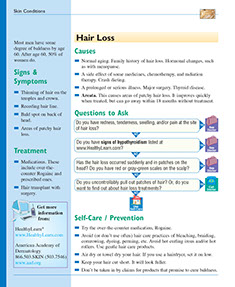
  • Hair Loss

    Skin Conditions

    Most men have some degree of baldness by age 60. After age 60, 50% of women do.

    Signs & Symptoms

    *  Thinning of hair on the temples and crown.

    *  Receding hair line.

    *  Bald spot on back of head.

    *  Areas of patchy hair loss.

    Causes

    *  Normal aging. Family history of hair loss. Hormonal changes, such as with menopause.

    *  A side effect of some medicines, chemotherapy, and radiation therapy. Crash dieting.

    *  A prolonged or serious illness. Major surgery. Thyroid disease.

    *  Areata. This causes areas of patchy hair loss. It improves quickly when treated, but can go away within 18 months without treatment.

    Treatment

    *  Medications. These include over-the- counter Rogaine and prescribed ones.

    *  Hair transplant with surgery.

    Questions to Ask

    Self-Care / Prevention

    *  Try the over-the-counter medication, Rogaine.

    *  Avoid (or don’t use often) hair care practices of bleaching, braiding, cornrowing, dyeing, perming, etc. Avoid hot curling irons and/or hot rollers. Use gentle hair care products.

    *  Air dry or towel dry your hair. If you use a hairdryer, set it on low.

    *  Keep your hair cut short. It will look fuller.

    *  Don’t be taken in by claims for products that promise to cure baldness.

    Resources

    American Academy of Dermatology

    866.503.SKIN (503.7546)

    www.aad.org

    Healthier at Home book by the American Institute for Preventive Medicine. www.HealthyLife.com. All rights reserved.

    © American Institute for Preventive Medicine

  • Plan For A Healthier, Happier Menopause

    Women’s Health

    Image of two mature women laughing.

    Some women dread menopause, associating the change of life with hot flashes, painful intercourse, mood swings, and the specter of old age. As with menstruation and childbearing, menopause is a rite of passage that has some discomforts. But you can help to prevent or alleviate many of them.

    *  To maintain a positive outlook, share your feelings with friends, stay active, and take an interest in others in your community.

    *  To lessen mood swings, cut down on caffeine, alcohol, and sweets.

    *  To help maintain hormonal balance, do regular exercise. Lose weight if you are overweight.

    Kegel exercises (named for the individual who invented them) can help to keep your pelvic and vaginal muscles toned, preventing a prolapsed uterus or poor bladder control, both of which sometimes accompany menopause. To feel these muscles at work, stop and start your urine flow in midstream the next time you use the toilet. Then practice the two exercises that follow.

    *  Squeeze the pelvic/vaginal muscles for 3 seconds, then relax them for 3 seconds. Do this ten times, three times a day.

    *  Squeeze and relax the same muscles as quickly as possible. Repeat ten times, three times a day.

    A Year of Health Hints book by the American Institute for Preventive Medicine. www.HealthyLife.com. All rights reserved.

    © American Institute for Preventive Medicine

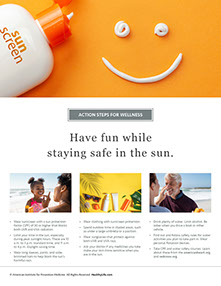
  • Have Fun While Staying Safe In The Sun

    Skin Conditions

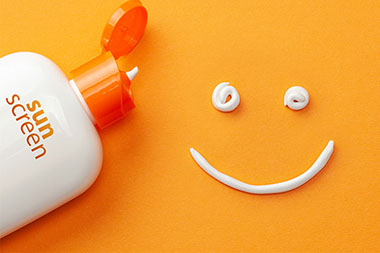
    Open bottle of sun screen with lotion making smiling face.

    *  Wear sunscreen with a sun protection factor (SPF) of 30 or higher that blocks both UVB and UVA radiation.

    *  Limit your time in the sun, especially during peak sunlight hours. These are 10 a.m. to 3 p.m. standard time, and 11 a.m. to 4 p.m. daylight saving time.

    *  Wear long sleeves, pants, and wide-brimmed hats to help block the sun’s harmful rays.

    *  Wear clothing with sunscreen protection.

    *  Spend outdoor time in shaded areas, such as under a large umbrella or a pavilion.

    *  Wear sunglasses that protect against both UVB and UVA rays.

    *  Ask your doctor if any medicines you take make your skin more sensitive when you are in the sun.

    *  Drink plenty of water. Limit alcohol. Be sober when you drive a boat or other vehicle.

    *  Find out and follow safety rules for water activities you plan to take part in. Wear personal flotation devices.

    *  Take CPR and water safety courses. Learn about these from theamericanheart.organdredcross.org.

    Health at Home Lifetime book by the American Institute for Preventive Medicine. www.HealthyLife.com. All rights reserved.

    © American Institute for Preventive Medicine

  • Hay Fever

    Ear, Nose & Throat Conditions

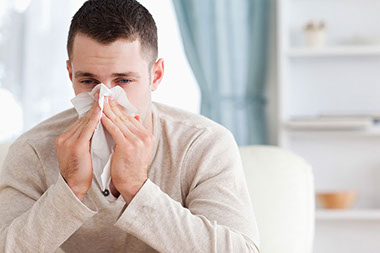
    Image of man blowing nose with tissue.

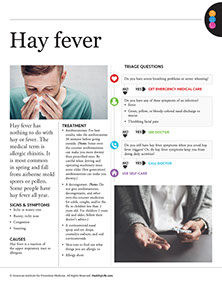
    Hay fever has nothing to do with hay or fever. The medical term for hay fever is allergic rhinitis. It is most common in spring and fall when a lot of ragweed is in the air. Some people have hay fever all year, though.

    Signs & Symptoms

    *  Itchy or watery eyes.

    *  Runny, itchy nose.

    *  Congestion.

    *  Sneezing.

    Causes

    Hay fever is a reaction of the upper respiratory tract to allergens.

    Treatment

    Talk to your doctor if self-care measures do not help. He or she may prescribe:

    *  Antihistamines. For best results, take the antihistamine 30 minutes before going outside. {Note: Some over-the-counter antihistamines can make you more drowsy than prescribed ones. Be careful when driving and operating machinery since some antihistamines can make you drowsy.}

    *  A decongestant. {Note: Do not give antihistamines, decongestants, and other over-the-counter medicines for colds, coughs, and/or the flu to children less than 2 years old. For children 2 years old and older, follow their doctor’s advice.

    *  A corticosteroid nasal spray and eye drops, cromolyn sodium, and oral corticosteroids.

    *  Skin tests to find out what things you are allergic to.

    *  Allergy shots.

    It is best to take what your doctor advises instead of testing over-the-counter products on your own.

    Questions to Ask

    Self-Care / Prevention

    *  If you are allergic to pollen and molds, let someone else do outside chores. Mowing the lawn or raking leaves can make you very sick.

    *  Keep windows and doors shut and stay inside when the pollen count or humidity is high. Early morning is sometimes the worst.

    *  Avoid tobacco smoke and other air pollutants.

    *  Don’t have pets. If you have a pet, keep it out of the bedroom. When you can, keep the pet outdoors.

    *  Use an air conditioner or air cleaner in your house, especially in the bedroom. Electronic air filters are better than mechanical ones. Clean the filter often. Or, try a doctor-approved air purifier, especially in the bedroom. Devices with HEPA filters can be very effective in cleaning indoor air.

    To limit dust, mold, and pollen:

    *  Put a plastic cover on your mattress or cover it completely with an allergen-free mattress cover.

    *  Sleep with no pillow or with the kind your doctor or health care provider recommends. If you use a pillow, cover it with an allergen-free cover.

    *  Don’t dry sheets and blankets outside.

    *  Try not to have stuffed animals kept in the bedroom. If you must, have only one that can be washed. Wash it in hot water once a week.

    *  Use curtains and rugs that can be washed often. Don’t use carpeting.

    *  Dust and vacuum often. Wear a dust filter mask when you do.

    *  Put an electronic air filter on your furnace or use portable air purifiers.

    *  Shower or bathe and wash your hair after heavy exposure to pollen, dust, etc.

    Resources

    Asthma and Allergy Foundation of America

    800.7.ASTHMA (727.8462)

    www.aafa.org

    Healthier at Home book by the American Institute for Preventive Medicine. www.HealthyLife.com. All rights reserved.

    © American Institute for Preventive Medicine

  • High Blood Pressure

    Heart & Circulation Problems

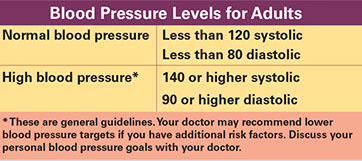
    The medical name for high blood pressure is hypertension (hy-puhr-TEHN-shun). High blood pressure (HBP) is when blood moves through the arteries at a higher pressure than normal. The heart strains to pump blood through the arteries.

    Signs & Symptoms

    High blood pressure (HBP) is a “silent disease.” Often there are no signs or symptoms. A lot of adults with HBP do not know they have it. So, get your blood pressure checked at each doctor’s office visit, at least every 2 years, or as often as your doctor advises. When blood pressure is 180 or higher (top number) or 120 or higher (bottom number), these signs of a hypertensive crisis may occur:

    *  Severe chest pain

    *  Severe headache with confusion and blurred vision

    *  Severe anxiety

    *  Shortness of breath

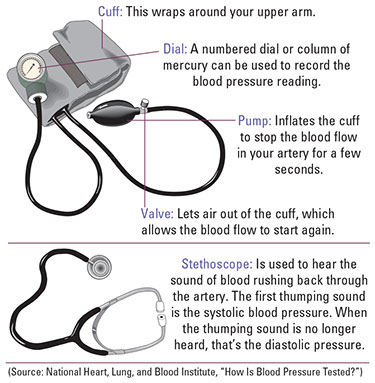
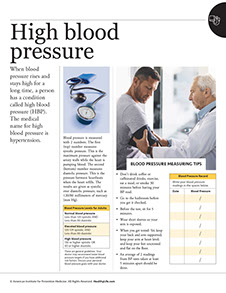
    Blood pressure is measured with 2 numbers. The first (top) number measures systolic pressure. This is the maximum pressure against the artery walls while the heart is pumping blood. The second (bottom) number measures diastolic pressure. This is the pressure between heartbeats when the heart refills. The results are given as systolic over diastolic pressure, such as 120/80 millimeters of mercury (mm Hg).

    Tips When You Have Your BP Measured

    *  Don’t drink coffee or smoke 30 minutes before having your BP read. (Don’t smoke at all!)

    *  Go to the bathroom before you get it checked.

    *  Before the test, sit for 5 minutes.

    *  Wear short sleeves so your arm is exposed.

    *  When you get tested: Sit; keep your back and arm supported; and keep your arm at heart level.

    *  An average of 2 readings from BP tests taken at least 5 minutes apart should be done.

    Causes, Risk Factors & Care

    The exact cause is not known.

    Risk factors include:

    *  Family history of HBP

    *  Aging. More than half of older adults have HBP.

    *  Smoking cigarettes

    *  Race. African Americans are more likely to have HBP than Caucasians.

    *  Gender. Men are more likely to have HBP than women (until women reach menopause).

    *  Being inactive. Obesity. Sleep apnea.

    *  Drinking too much alcohol

    *  Too much sodium intake in some persons

    *  Emotional distress

    High blood pressure could be caused by another medical problem or be a side effect of some medicines. This is called secondary hypertension. This can usually be reversed when the problem is treated.

    Diagnosis

    Blood pressure readings tell if your blood pressure is high. A health care professional measures blood pressure during an office visit with a manual or automated device called a sphygmomanometer (sfig’-mo-ma-nom-e-ter). The numbers on the gauge measure your blood pressure in millimeters of mercury (mm Hg).

    You should get 2 or more readings at different times. To confirm a diagnosis of HBP, your doctor may have you wear a device that records your blood pressure every 20-30 minutes over a period of 24 to 48 hours. This is called ambulatory blood pressure monitoring (ABPM).

    Note: Sometimes just being at the doctor’s office is enough to raise some people’s blood pressure. This is called “white-coat hypertension.” If you think this affects you, tell your doctor. You may be advised to check your blood pressure with a home testing device. Your doctor may have you wear a device that records your blood pressure for 24 hours. This will give accurate readings of your blood pressure.

    Health Problems Related to HBP

    High blood pressure plays a major role in these health problems:

    *  Stroke. Dementia. Brain damage.

    *  Heart disease. A person with HBP is 5 times more likely to have a heart attack than a person without HBP. It can also cause the heart to enlarge. This could cause (congestive) heart failure.

    *  Chronic kidney disease

    *  Kidney failure

    *  Vision loss. This includes blindness.

    Why is ambulatory blood pressure monitoring (ABPM) done?

    During an office visit, a short-term rise in blood pressure can be due to:

    *  Emotions or stress

    *  Pain or physical activity

    *  Caffeine or nicotine

    *  “White-coat hypertension.” With this, just being at a doctor’s office or in the presence of medical staff is enough to raise blood pressure.

    Getting blood pressure readings over 1-2 days during normal activity and sleep gives a more accurate measurement of your blood pressure.

    Self-Care / Prevention

    For blood pressure control, follow a healthy lifestyle.

    *  Get your blood pressure checked at each office visit, at least every 2 years, or as often as your doctor advises.

    *  Get to and/or stay at a healthy weight. Aim for a body mass index (BMI) between 18.5 and 24.9. Find your BMI using the table below or from:www.nhlbisupport.com/bmi.

    *  Don’t smoke. If you smoke, quit.

    *  Limit alcohol to 2 drinks or less a day if you are male and 1 drink or less a day if you are female or age 65 or older.

    *  Limit caffeine.

    *  Exercise. Try to do at least 60 minutes a day.

    *  Learn to handle stress. Take classes. Learn relaxation techniques, etc.

    *  Take medicine as prescribed. Tell your doctor if you have any side effects, such as dizziness, faintness, or a dry cough without having a cold. Don’t stop taking your prescribed medicine or change the dose(s) unless your doctor tells you to.

    *  Talk to your doctor or pharmacist before you take antihistamines and decongestants. Discuss all prescribed and over-the-counter medicines with your doctor and pharmacist before you take them to avoid harmful drug interactions. Find out about drug and food interactions, too. Ask if grapefruit juice can cause harmful effects with the medicine(s) you take.

    *  Keep track of your blood pressure using a home testing device. Do this if advised by your doctor.

    Medical Care

    High blood pressure usually lasts a lifetime, but can be treated and controlled. If you are diagnosed with high blood pressure, follow your doctor’s advice. Medical treatment includes:

    *  A physical exam and lab tests. These check for damage to your heart, kidneys, and other organs. They also identify risk factors you have for heart, kidney, and other diseases. Your treatment plan is based on your needs.

    *  Follow-up blood pressure checks and other tests as needed.

    *  Healthy lifestyle changes.

    *  Medications. Most persons need more than 1 medicine to treat high blood pressure.

    Your doctor will decide if and what medication(s) you need. This is based on your blood pressure level, age, race, other conditions you have, heart disease risk factors, etc. Common medicines used to treat HBP are:

    *  Diuretics (water pills)

    *  Calcium channel blockers

    *  ACE inhibitors

    *  Angiotensin II receptor blockers

    *  Beta-blockers

    *  Alpha blockers. Alpha-beta blockers.

    *  Nervous system inhibitors

    *  Vasodilators

    Reasons to Get Medical Care

    *  You have signs or symptoms of a hypertensive crisis. Get medical care right away.

    *  You need to schedule office visit appointments to get your blood pressure checked. Do this as often as your doctor advises.

    *  You have adverse side effects from taking medicine(s) to lower blood pressure. Examples are:

    – You feel lightheaded or dizzy.

    – You feel weak, sleepy, and/or drowsy.

    – Your heart races.

    – You get a skin rash.

    Resources

    American Heart Association

    800.242.8721

    www.heart.org

    National Heart, Lung, and Blood Institute

    www.nhlbi.nih.gov
    High Blood Pressure brochure by the American Institute for Preventive Medicine. www.HealthyLife.com. All rights reserved.

    © American Institute for Preventive Medicine

  • Head/Neck/Spine Injuries

    First Aid

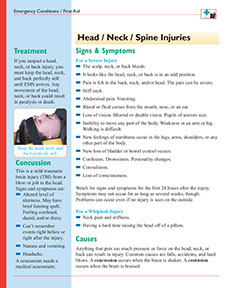
    Signs & Symptoms

    For a Severe Injury

    *  The scalp, neck, or back bleeds.

    *  It looks like the head, neck, or back is in an odd position.

    *  Pain is felt in the back, neck, and/or head. The pain can be severe.

    *  Stiff neck.

    *  Abdominal pain. Vomiting.

    *  Blood or fluid comes from the mouth, nose, or an ear.

    *  Loss of vision. Blurred or double vision. Pupils of uneven size.

    *  Inability to move any part of the body. Weakness in an arm or leg. Walking is difficult.

    *  New feelings of numbness occur in the legs, arms, shoulders, or any other part of the body.

    *  New loss of bladder or bowel control occurs.

    *  Confusion. Drowsiness. Personality changes.

    *  Convulsions.

    *  Loss of consciousness.

    Watch for signs and symptoms for the first 24 hours after the injury. Symptoms may not occur for as long as several weeks, though. Problems can occur even if no injury is seen on the outside.

    For a Whiplash Injury

    *  Neck pain and stiffness.

    *  Having a hard time raising the head off of a pillow.

    Causes

    Anything that puts too much pressure or force on the head, neck, or back can result in injury. Common causes are falls, accidents, and hard blows. A concussion occurs when the brain is shaken. A contusion occurs when the brain is bruised.

    Treatment

    If you suspect a head, neck, or back injury, you must keep the head, neck, and back perfectly still until EMS arrives. Any movement of the head, neck, or back could result in paralysis or death.

    Questions to Ask

    Self-Care / Prevention

    First Aid for a Severe Injury

    *  Do not move the person unless his or her life is in danger. If so, log roll the person, place tape across the forehead, and secure the person to a board to keep the head, neck, and back areas from moving at all.

    *  Call 9-1-1!

    *  CHECK for a response. If giving rescue breaths, do not tilt the head backward. Pull the lower jaw open instead.

    To Immobilize the Head, Neck, and/or Back

    *  Tell the person to lie still and not move his or her head, neck, back, etc.

    *  Log roll as listed above or place rolled towels, etc. on both sides of the neck and/or body. Tie in place, but don’t interfere with the person’s breathing. If necessary, use both of your hands, one on each side of the person’s head to keep the head from moving.

    *  Monitor for Bleeding and Shock. Keep the person warm with blankets, coats, etc.

    Move Someone You Suspect Has Injured His or Her Neck in a Diving or Other Water Accident

    Before emergency care arrives:

    *  Protect the neck and/or spine from bending or twisting. Place your hands on both sides of the neck. Keep it in place until help arrives.

    *  If the person is still in the water, help the person float until a rigid board can be slipped under the head and body, at least as far down as the buttocks.

    *  If no board is available, get several people to take the person out of the water. Support the head and body as one unit. Make sure the head does not rotate or bend in any way.

    First Aid For Traffic Accidents

    *  If the person was in a motorcycle accident, do not remove the helmet. Call 9-1-1 to do this.

    *  Don’t move the person. He or she may have a spinal injury. Call 9-1-1 to do this.

    First Aid for Minor Head Injuries

    *  Put an ice pack or bag of frozen vegetables in a cloth. Apply this to the injured area. Doing this helps reduce swelling and bruising. Change it every 15 to 20 minutes for 1 to 2 hours. Do not put ice directly on the skin. Cover an open, small cut with gauze and first- aid tape or an adhesive bandage.

    *  Once you know there is no serious head injury, do normal activities again. Avoid strenuous ones.

    *  Take an over-the-counter medicine for pain as directed.

    *  Don’t drink alcohol or take any other sedatives or sleeping pills.

    *  During the next 24 hours, monitor the person. While asleep, wake the person every 2 hours to check alertness. Ask something the person should know, such as a pet’s name, an address, etc. If the person can’t be roused or respond normally, get immediate medical care.

    First Aid for Bleeding from the Scalp

    *  To control bleeding, put pressure around the edges of the wound. Make a ring pad (shaped like a doughnut) out of long strips of cloth to apply pressure around the edges of the wound. If this doesn’t control bleeding, put direct pressure on the wound. Don’t poke your hand into the person’s brain, though.

    *  Don’t wash the wound or apply an antiseptic or any other fluid to it.

    *  If blood or pink-colored fluid is coming from the ear, nose, or mouth, let it drain. Do not try to stop its flow.

    If You Suspect a Whiplash Injury

    *  See your doctor, as soon as you can, to find out the extent of injury. If your arm or hand is numb, tell your doctor.

    *  For the first 24 hours, apply ice packs to the injured area for up to 20 minutes every hour.

    *  After 24 hours, use ice packs or heat, whichever works best, to relieve the pain. There are many ways to apply heat. Take a hot shower for 20 minutes a few times a day. Use a hot-water bottle, heating pad (set on low), or heat lamp directed to the neck for 10 minutes, several times a day. (Use caution not to burn the skin.)

    *  Wrap a folded towel around the neck to help hold the head in one position during the night.

    Concussion

    This is a mild traumatic brain injury (TBI) from a blow or jolt to the head. Signs and symptoms are:

    *  Altered level of alertness. May have brief fainting spell. Feeling confused, dazed, and/or dizzy.

    *  Can’t remember events right before or right after the injury.

    *  Nausea and vomiting.

    *  Headache.

    A concussion needs a medical assessment.

    Healthier at Home book by the American Institute for Preventive Medicine. www.HealthyLife.com. All rights reserved.

    © American Institute for Preventive Medicine