Author: AIPM

  • Irritable Bowel Syndrome (Ibs)

    Abdominal & Urinary Conditions

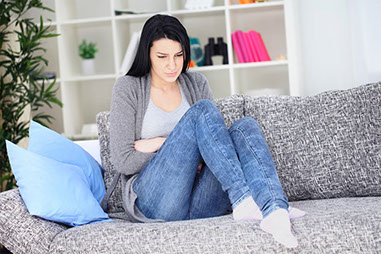
    Image of women sitting holding stomach in pain.

    Irritable bowel syndrome (IBS) is a problem that mostly affects the bowel (the large intestine) and is not caused by any other bowel disease. It can be painful, does not damage the colon or lead to other health problems.

    Signs & Symptoms

    *  Gas, bloating, pain, or discomfort in the abdomen.

    *  Chronic diarrhea, constipation (or both).

    *  Mucus in the stool.

    Causes

    The cause is not known. A person with IBS has an extra sensitive colon. Muscles in the intestines go into spasm, causing symptoms.

    Treatment

    Changes in eating habits, stress relief, and medications treat IBS.

    Questions to Ask

    Self-Care / Prevention

    *  Don’t smoke. If you smoke, quit. Avoid secondhand smoke.

    *  Maintain a healthy diet. Lose weight if you are overweight.

    *  Avoid constipation. Don’t strain to pass stool.

    *  Exercise to keep abdominal muscles strong. Follow your doctor’s advice.

    *  When you do sit ups, keep your knees bent and your feet flat on the floor.

    *  Follow proper lifting techniques.

    *  Wear a weight lifting belt to support the back when lifting.

    *  Wear a truss. This is a device that holds a hernia in place.

    *  For mild pain, take an over-the-counter medicine for pain. If even mild pain lasts longer than a week, see your doctor.

    Resources

    National Institute of Diabetes and Digestive and Kidney Diseases (NIDDK)

    www.niddk.nih.gov

    Healthier at Home book by the American Institute for Preventive Medicine. www.HealthyLife.com. All rights reserved.

    © American Institute for Preventive Medicine

  • Improve Ventilation To Limit Covid-19 Spread

    Respiratory conditions

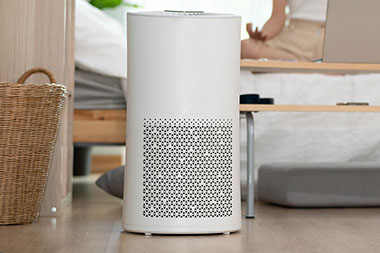
    Air purifier sitting on floor.

    One important way to limit the spread of COVID-19 (COVID) in your home is to improve ventilation or air flow. This helps prevent virus particles from building up in the air if virus particles are present. Increasing ventilation can be part of a plan to protect you and your family from COVID. Here are five ways to improve ventilation in your home to help clear out virus particles.

    1. Fresh is Best

    Bring as much fresh outdoor air into your home as possible.

    *  Open doors and windows if it is safe to do so. Use screens when possible. Even having them opened a crack can help. Open more than one to move more outside air inside.

    *  If it is unsafe to open windows, consider other options. Unsafe conditions may include having young children and pets, risk of falling or triggering asthma symptoms, and high levels of air pollution.

    *  Caution: Avoid ventilation with outdoor air when it makes your home too cold, hot, or humid.

    2. Filter for Trapping

    If your home has a central heating, ventilation, and air conditioning system (HVAC system) that has a filter, it can be used to help trap virus particles.

    *  If your HVAC fan can be controlled by a thermostat, set the fan to the “on” position instead of “auto” when you have visitors. The fan will run continuously, even if the heat or air conditioning is not on.

    *  Use pleated furnace filters, which are more efficient than ordinary furnace filters. Every three months, change the filter according to the manufacturer’s instructions.

    *  Have the ventilation system inspected and adjusted yearly.

    *  If you don’t have a HVAC system, or you just want extra filtration, consider using a portable high-efficiency particulate air (HEPA) cleaner. They are the most efficient filters available to trap virus particles. Check that its Clean Air Delivery Rate (CADR) meets or exceeds the square footage of the room where it will be used. For more information, see EPA’s Guide to Air Cleaners in the Home.

    3. Use Fans for Better Air Flow

    Fans help improve air flow inside your home, even if you don’t have windows open.

    *  Use a window exhaust fan that fits securely in the window. Some window air conditions have an outdoor air intake or vent to bring more outside air in.

    *  Place a box fan or tower fan as close as possible to an open window or door. Use ceiling fans as well.

    *  Operate a whole house fan or an evaporative cooler (or “swamp cooler”) if your home has one.

    *  Always point fans away from people to avoid blowing air directly at them.

    4. Turn On Exhaust Fans

    Other exhaust fans in your house can also help move air outside.

    *  Turn on exhaust fans located above your stovetop and in your bathroom when you have visitors. Even if they don’t vent to the outside, they can still help keep virus particles from being concentrated in one place.

    *  Keep exhaust fans turned on for an hour after visitors leave to help clear out virus particles that may have accumulated in the air.

    5. Limit Visitors

    *  When you have visitors, try to gather in larger rooms where you can stay 6 feet apart.

    *  When you have visitors, have everyone wear a mask, including the people who usually live in your home. Do not put a mask on children younger than 2 years old.

    *  Try to keep visits as short and as small as possible.

    *  Learn more ways to stay safe while doing indoor and outdoor activities with others and safer ways for hosting gatherings at:cdc.gov/coronavirus/2019-ncov/daily-life-copingandcdc.gov/coronavirus/2019-ncov/daily-life-coping/holidays/celebrations.

    Remember, the more ways you use to ventilate, the faster you can clear out COVID virus particles from your home if they are present.

    Healthier at Home book by the American Institute for Preventive Medicine. www.HealthyLife.com. All rights reserved.

    © American Institute for Preventive Medicine

  • Ingrown Toenails

    Skin Conditions

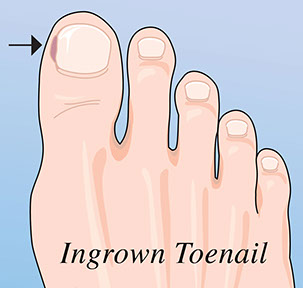
    An ingrown toenail digs into the skin next to the side of the nail. The most common site is the big toe. Other toes and even fingernails can be affected.

    Signs & Symptoms

    *  Redness.

    *  Tenderness.

    *  Discomfort or pain.

    Illustration of an ingrown toenail.

    Causes

    *  Jamming your toes.

    *  Wearing shoes or socks that fit too tight.

    *  Clipping toenails too short. The corners can penetrate the skin as the nail grows out.

    *  Having wider-than-average toenails.

    Treatment

    Self-care usually treats ingrown toenails. If this fails to work, a doctor or podiatrist may have to remove a portion of the nail.

    Questions to Ask

    Self-Care / Prevention

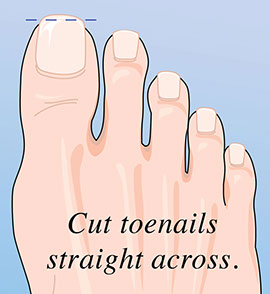
    *  Cut nails straight across. Don’t cut the nails shorter at the sides than in the middle. {Note: If you have diabetes or circulation problems, follow your doctor’s advice about clipping your toenails.}

    *  File the nails if they’re sharp after clipping them.

    *  Wear shoes and socks that fit well.

    To Treat an Ingrown Toenail

    *  Soak your foot in warm, soapy water for 5 to 10 minutes, 1 to 3 times a day.

    *  Gently lift the nail away from the reddened skin at the outer corners with the tip of a nail file.

    *  Soak a small piece of cotton in an antiseptic, such as Betadine. Place it just under the outer corners of the toenails, if you can.

    *  Repeat the previous 3 steps, daily, until the nail begins to grow correctly and pressure is relieved. Wear roomy shoes during this time.

    Illustration on cutting toenails straight across to prevent ingrown toenails.

    Resources

    American Academy of Dermatology

    866.503.SKIN (503.7546)

    www.aad.org

    Healthier at Home book by the American Institute for Preventive Medicine. www.HealthyLife.com. All rights reserved.

    © American Institute for Preventive Medicine

  • Insect Stings

    Skin Conditions

    Signs & Symptoms

    *  Quick, sharp pain.

    *  Swelling.

    *  Itching.

    *  Redness at the sting site.

    *  Hives.

    Insect stings can even result in a severe allergic reaction.

    Causes

    Insect stings come from bumblebees, honeybees, hornets, wasps, yellow jackets, and fire ants.

    Treatment

    Self-care treats mild reactions to insect stings. A severe allergic reaction needs immediate care. Symptoms of a severe allergic reaction usually happen soon after or within an hour of the sting.

    If you have had a severe allergic reaction to an insect sting, you should carry an emergency insect sting kit, prescribed by your doctor. You should also wear a medical alert tag that lets others know that you are allergic to insect stings. Persons who have had severe reactions to bee or wasp stings should ask their doctor about allergy shots.

    Questions to Ask

    Self-Care / Prevention

    To Avoid Insect Stings

    *  Keep food and drink containers tightly covered. (Bees love sweet things, like soft drinks.)

    *  Don’t wear perfume, colognes, or hair spray when you are outdoors.

    *  Don’t wear bright colors, like white or yellow. Choose neutral colors, like tan or khaki. Wear snug clothing that covers your arms and legs.

    *  Don’t go barefoot. If camping, look for insects in your shoes before you put them on.

    *  Wear an insect repellent, especially if you are sensitive to insect stings.

    *  Be careful when you work outdoors, pull weeds, mow tall grass, and work around shutters. Bees often build hives behind shutters.

    *  If an insect that stings gets in your car, stop the car. Put the windows down. Once the insect leaves, resume driving.

    *  Check for and repair openings in your window screens.

    To Treat an Insect Sting Without a Severe Allergic Reaction

    *  For a bee sting, gently scrape out the stinger as soon as possible. Use a blunt knife, credit card, or a fingernail. Yellow jackets, wasps, and hornets don’t lose their stingers.

    *  Don’t pull the stinger out with your fingers or tweezers. Don’t squeeze the stinger. It contains venom. You could re-sting yourself.

    *  Clean the sting area with soapy water.

    *  Remove jewelry from bitten fingers, wrists, etc. It may be difficult to remove jewelry once swelling occurs.

    *  Put a cold compress (ice in a cloth, etc.) on the sting. Don’t put ice directly on the skin. Hold the cold compress on the site for 10 to 15 minutes.

    *  Keep the sting area lower than heart level.

    *  Take an over-the-counter medicine for pain as directed on the label.

    *  For itching and swelling, apply a topical 1% hydrocortisone cream and/or take an over- the-counter antihistamine, such as Benadryl, if okay with your doctor. Follow directions on the labels.

    Signs of Severe Allergic Reaction

    *  Fainting or decreasing level of consciousness.

    *  Shortness of breath or difficulty breathing or swallowing.

    *  Severe swelling all over or of the face, lips, tongue, and/or throat.

    *  Pale or bluish lips, skin, and/or fingernails.

    *  Wheezing.

    *  Dizziness, weakness, and/or numbness.

    *  Cool, moist skin or sudden onset of pale skin and sweating.

    Healthier at Home book by the American Institute for Preventive Medicine. www.HealthyLife.com. All rights reserved.

    © American Institute for Preventive Medicine

  • Insomnia

    Women’s Health

    Insomnia is having trouble falling asleep. It can last from a single night to a few weeks. It can occur from time to time or be a chronic problem.

    Signs & Symptoms

    *  Waking up during the night and not being able to get back to sleep.

    *  Waking up too early.

    *  Not getting enough sleep or getting poor quality sleep.

    *  Fatigue or feeling drowsy during the day because of lack of sleep.

    Causes

    *  Too much caffeine or having it before bedtime.

    *  Changes in sleep/wake schedules, such as work shift changes and jet lag.

    *  Going to bed with a full bladder or any problem that causes you to urinate or have a bowel movement during the night.

    *  Too much noise when you fall asleep. This includes a snoring partner.

    *  Menopausal symptoms, such as hot flashes.

    *  A lack of physical exercise.

    *  Lack of a sex partner.

    *  Side effects of some medicines, such as decongestants, corticosteroids, and stay-awake pills.

    *  Emotional stress. Depression. Anxiety.

    *  Posttraumatic Stress Disorder (PTSD).

    *  Fibromyalgia.

    *  Any condition, illness, injury, or surgery that causes pain and/or discomfort which interrupts sleep.

    *  Asthma, allergies, and early-morning wheezing.

    *  An overactive thyroid gland.

    *  Heart or lung conditions that cause shortness of breath when lying down.

    Treatment

    *  Self-care and prevention measures.

    *  Treating the problem.

    *  Prescribed short-acting sleeping pills.

    Questions to Ask

    Self-Care / Prevention

    *  Avoid caffeine for 8 hours before bedtime. Caffeine is in coffee, tea, chocolate, colas, and some other soft drinks. Check labels for caffeine content in over-the-counter medicines.

    *  Avoid long naps during the day.

    *  Have no more than 1 alcoholic drink with or after dinner. Even though alcohol is a sedative, it can disrupt sleep. Check with your doctor about using any alcohol if you are taking medicines.

    *  An hour or two before going to bed, dim the lights in the house.

    *  Before you go to bed, have food items rich in the amino acid L-tryptophan, such as milk, turkey, or tuna fish. Do not take L-tryptophan supplements, though. Eating foods with carbohydrates, such as cereal, breads, and fruits, may help as well.

    *  Do regular exercise, but not within a few hours of going to bed.

    *  Before bedtime, take a warm bath or read a book or do some type of repetitive, calm activity. Avoid things that hold your attention, such as watching a suspense movie.

    *  Keep your bedroom quiet, dark, and comfortable. Use clean, fresh sheets and pillows. Keep the room temperature neither too warm nor too cool.

    *  Ban worry from the bedroom. Don’t rehash the mistakes of the day as you toss and turn.

    *  Follow a regular bedtime routine. Lock or check doors and windows, brush your teeth, etc.

    *  Count sheep! Picturing a repeated image may bore you to sleep.

    *  Listen to recordings that help promote sleep. Look for them at a library or bookstore.

    *  If you’ve tried to fall asleep, but are still awake after 30 minutes, get out of bed. Read a relaxing book or sit quietly in the dark. Do this for about 20 minutes. Then go back to bed. Repeat this as many times as you need to until you are able to fall asleep.

    *  Take over-the-counter sleep aids (e.g., melatonin, Tylenol PM, etc.) as advised by your doctor. Don’t take anyone else’s sleeping pills.

    Resources

    National Center on Sleep Disorders Research

    www.nhlbi.nih.gov/about/ncsdr

    National Sleep Foundation

    www.sleepfoundation.org

    Women's Self-Care book by the American Institute for Preventive Medicine. www.HealthyLife.com. All rights reserved.

    © American Institute for Preventive Medicine

  • Insomnia 2

    General Health Conditions

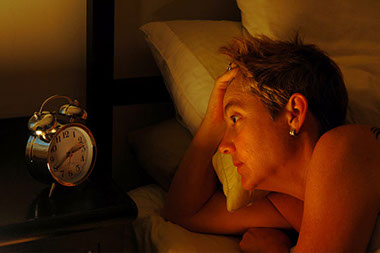
    Image of woman in bed awake at 2:40am.

    Do You Have Insomnia?

    Answer these questions:

    1. Do you have trouble falling asleep?

    2. Do you have problems staying asleep?

    3. Do you wake up too early and can’t get back to sleep?

    4. Do any of these problems last at least 3 weeks?

    If you answered yes to number 4, answer these questions about problems that occur when you are awake:

    5. Do you feel like you do not get enough refreshing sleep?

    6. Do you yawn and feel tired?

    7. Do you lack energy or have fatigue?

    8. Do you have a hard time concentrating?

    9. Do you feel depressed and/or cranky?

    If you answered yes to question number 4 and yes to any question from number 5 through 9, you could have insomnia.

    Why You Need Sleep

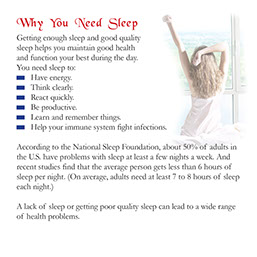
    Getting enough sleep and good quality sleep helps you maintain good health and function your best during the day. You need sleep to:

    *  Have energy.

    *  Think clearly.

    *  React quickly.

    *  Be productive.

    *  Learn and remember things.

    *  Help your immune system fight infections.

    According to the National Sleep Foundation, about 50% of adults in the U.S. have problems with sleep at least a few nights a week. And recent studies find that the average person gets less than 6 hours of sleep per night. (On average, adults need at least 7 to 8 hours of sleep each night.)

    A lack of sleep or getting poor quality sleep can lead to a wide range of health problems.

    Health Problems from a Lack of Sleep

    *  Anxiety, depression, and alcohol abuse.

    *  Obesity.

    *  Heart disease.

    *  High blood pressure.

    *  Diabetes.

    *  Stroke.

    *  Gum disease.

    *  Accidents and an increased risk for injury and death. About 20% of all serious car crashes are linked to driver sleepiness. Also, workers with severe insomnia make 2½ times more serious work errors than persons who get proper sleep.

    Getting enough, quality sleep is as vital to good heath and long life as are healthy eating and regular exercise.

    Do’s & Don’ts for Insomnia

    Do’s

    *  Do regular exercise daily. Physical activity releases muscle tension, relieves anger, and improves mood.

    *  Do mild exercises four or more hours before bedtime.

    *  Do relaxation exercises as needed throughout the day and before you go to bed.

    *  Follow a regular daily schedule for meals and snacks.

    *  Choose larger meals at breakfast and lunch than at dinner. At each meal, have complex carbohydrate foods, such as whole-grain breads and cereals, fruits and vegetables.

    *  Limit caffeine to 300 milligrams (mgs.) a day. More than 500 to 600 mgs. a day may cause you to be anxious, nervous, and makes it harder to sleep well.

    *  Cut down on caffeine gradually. Daily usage of caffeine can result in physical dependence. If caffeine is stopped abruptly, withdrawal symptoms can occur. These include headache, feeling down, having a hard time concentrating, and fatigue.

    Don’ts

    *  Don’t do vigorous exercise within six hours of going to bed.

    *  Don’t have large meals near bedtime. These may keep you awake, especially if you have heartburn or a similar problem.

    *  Don’t have caffeine for 6 hours before bedtime.

    HealthyLife SleepWell by the American Institute for Preventive Medicine. www.HealthyLife.com. All rights reserved.

    © American Institute for Preventive Medicine

  • Eye Irritations & Injuries

    Eye Conditions

    As you age, your eyes can get irritated more easily because they make less tears. Poorer vision increases the risk for eye injuries.

    Signs & Symptoms

    You feel burning, dryness, itching, and/or pain and swelling in one or both eyes.

    Causes

    For Eye Irritation:

    Causes include particles in the eye; too much sun exposure, low humidity; strong wind; and scratches from contact lenses. Other causes are allergies, infections, and conditions that make your eyes dry.

    For Eye Injuries:

    Causes include a physical blow to the eye; harsh chemicals; and a foreign body that is stuck in the eye.

    Mild eye irritations and injuries can be treated with self-care. More serious problems need medical care.

    Treatment

    *  Wear safety glasses for activities that expose your eyes to sawdust, etc.

    *  When using harsh chemicals, wear rubber gloves and protective glasses. Don’t rub your eyes if you’ve touched harsh chemicals. Turn your head away from chemical vapors.

    *  To help prevent dry eyes, use a humidifier and limit exposure to smoke, dust, and wind. Avoid alcohol.

    *  Use artificial tear drops with your doctor’s okay.

    *  Don’t stare directly at the sun, especially during a solar eclipse.

    *  Wear sunglasses that block UV rays.

    *  Don’t use eye makeup when an allergy or chemical irritant bothers your eye(s).

    Self-Care / Prevention

    To Ease the Discomfort of Dry Eyes:

    With your doctor’s okay, use over-the-counter artificial tear drops, such as Ocu-Lube. Read the label. Refrigerate the solution, if needed. Wash your hands before using.

    To Treat an Insect Bite Without a Severe Allergic Reaction:

    *  Wash the eye(s) with warm water.

    *  Take an antihistamine if okay with your doctor.

    To Remove a Foreign Particle On the White of the Eye or Inside the Eyelids:

    *  Do not remove an object imbedded in the eye, a metal chip, or a foreign body over the colored part of the eye. (See “First Aid for Foreign Body Sticking Into the Eye” on this page.)

    *  Wash your hands.

    *  If the foreign object is under the upper lid, have the person look down and pull the upper lid away from the eyeball by gently grabbing the eyelashes. Press a cotton-tipped swab down on the skin surface of the upper eyelid and pull it up and toward the brow. The upper lid will invert. Touch and remove the debris with the tip of the tissue.

    *  Twist a piece of tissue, moisten the tip with tap water (not saliva) and gently try to touch the speck with the tip. Carefully pass the tissue over the speck, which should cling to the tip.

    *  Do not rub the eye or use tweezers or anything sharp to remove a foreign object.

    *  Gently wash the eye with cool water.

    To Treat a Bruise from a Minor Injury that Surrounds the Eye but Does Not Damage the Eye Itself:

    *  Put a cold compress over the injured area right away. Keep doing this for 15 minutes, every hour, for 48 hours.

    *  Take an over-the-counter medicine

    *  After 48 hours, put a warm compress over the injured area.

    *  Seek medical attention if these measures do not help.

    First Aid for Foreign Body Sticking Into the Eye Before Immediate Care:

    *  Do not remove the object.

    *  Don’t press on, touch, or rub the eye.

    *  Cover the injured eye with a paper cup or other clean object that will not touch the eye or the foreign object. Hold the paper cup in place with tape without putting pressure on the eye or the foreign object.

    *  Gently cover the uninjured eye with a clean bandage and tape, too, to keep the injured eye still.

    First Aid for Harmful Chemicals in the Eye(s) Before Immediate Care:

    *  Flush the eye(s) with water immediately!

    *  Hold the injured eye open with your thumb and forefinger.

    *  At the faucet or with a pitcher or other clean container, flush the eye with a lot of water. Start at the inside corner and pour downward to the outside corner. This lets the water drain away from the body and keeps it from getting in the other eye.

    *  Keep pouring the water for 10 to 30 or more minutes. Flush the eye with water until you get medical help.

    *  If both eyes are injured, pour water over both eyes at the same time or quickly alternate the above procedure from one eye to another. Or, place the victim’s face in a sink or container filled with water. Tell the victim to move his or her eyelids up and down and remove the face from the water at intervals in order to breathe. Use this method on yourself if you are the victim and are alone.

    *  Loosely bandage the eye with sterile cloth and tape. Don’t touch the eye.

    When to Seek Medical Care

    Contact Doctor When:

    You have any of these problems:

    *  Eye pain with eye irritation

    *  An eye that is red and/or swollen

    *  Yellow-green pus is under the eyelid or drains from the eye.

    Get Immediate Care When:

    *  Harmful chemicals have gotten into the eye(s). {Note: Before you get immediate care, give “First Aid for Harmful Chemicals in the Eye(s) Before Immediate Care” on this page.}

    *  A foreign body sticks into the eye. {Note: See “First Aid for Foreign Body Sticking Into the Eye Before Immediate Care” on this page.}

    *  A cut to the eye or eyelid occurs.

    *  Any of these problems occurs with a blow to the eye or other eye injury:

    – Loss of vision

    – Blurred or double vision

    – Blood in the pupil
    Healthier at Home book by the American Institute for Preventive Medicine. www.HealthyLife.com. All rights reserved.

    © American Institute for Preventive Medicine

  • Jock Itch

    Men’s Health

    Jock itch is an infection of the skin on the groin and upper inner thigh areas.

    Signs & Symptoms

    *  Redness.

    *  Itching.

    *  Raised red rash with borders. Center areas of the rash are dry with small scales.

    Causes

    Jock itch is usually caused by a fungus. It can also result from garments that irritate the skin. Jock itch is more likely to occur after taking antibiotics or steroids, or in persons who have diabetes or a weakened immune system.

    Treatment

    Over-the-counter antifungal creams treat most cases of jock itch. Stronger creams or an oral medicine can be prescribed, if needed.

    Questions to Ask

    Self-Care / Prevention

    To Treat Jock Itch

    *  Use over-the-counter antifungal cream, powder, or lotion for jock itch. Follow package directions.

    To Prevent Jock Itch

    *  Don’t wear tight, close-fitting clothing. Wear boxer shorts, not briefs. Put socks on before underwear. Fungus on the feet, such as from athlete’s foot can transfer to the groin. Change underwear often, especially after tasks that leave you hot and sweaty.

    *  Bathe or shower right after a workout. Don’t use antibacterial soaps. Dry the groin area well.

    *  Apply talc or other powder to the groin area to help keep it dry. If you sweat a lot or are very overweight, use a drying powder with miconazole nitrate.

    *  Wash workout clothes after each wearing. Don’t store damp clothing in a locker or gym bag.

    *  Sleep in the nude or in a nightshirt.

    *  Don’t share towels or clothes that have come in contact with the rash.

    Healthier at Home book by the American Institute for Preventive Medicine. www.HealthyLife.com. All rights reserved.

    © American Institute for Preventive Medicine

  • Kidney Stones

    Abdominal & Urinary Conditions

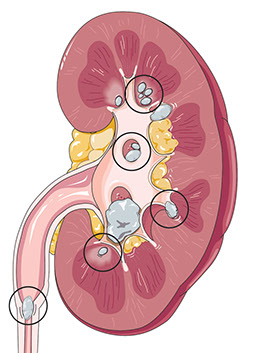
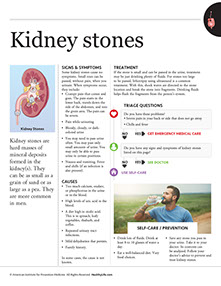
    Kidney stones are hard masses of mineral deposits formed in the kidney(s). They can be as small as a tiny pebble or an inch or more across. They are more common in men.

    Illustration of kidney stones.

    Kidney Stones

    Signs & Symptoms

    Some kidney stones cause no symptoms. Small ones can be passed, without pain, when you urinate. When symptoms occur, they include:

    *  Crampy pain that comes and goes. The pain starts in the lower back, travels down the side of the abdomen, and into the groin area. The pain can be severe.

    *  Bloody, cloudy, or dark-colored urine.

    *  You may need to pass urine often. You may pass only small amounts of urine. You may only be able to pass urine in certain positions.

    *  Nausea and vomiting. Fever and chills (if an infection is also present).

    Causes

    *  Too much calcium in the urine or in the blood.

    *  High levels of uric acid in the blood.

    *  A diet high in oxalic acid. This is in spinach, leafy vegetables, rhubarb, and coffee.

    *  Repeated urinary tract infections.

    *  Mild dehydration that persists.

    *  Family history of kidney stones.

    *  Living in certain parts of the U.S. Areas of the southeast have the highest rates.

    In some cases, the cause is not known.

    Treatment

    If the stone is small and can be passed in the urine, treatment may be just drinking plenty of fluids. For stones too large to be passed, lithotripsy using ultrasound is a common treatment. With this, shock waves are directed to the stone location and break the stone into fragments. Drinking fluids helps flush the fragments from the person’s system.

    Questions to Ask

    Self-Care / Prevention

    *  Drink lots of fluids. Drink at least 8 to 10 glasses of water a day.

    *  Eat a well-balanced diet. Vary food choices.

    *  Save any stone you pass in your urine. Take it to your doctor. Its contents can be analyzed. Follow your doctor’s advice to prevent and treat kidney stones.

    Healthier at Home book by the American Institute for Preventive Medicine. www.HealthyLife.com. All rights reserved.

    © American Institute for Preventive Medicine

  • Know Your Health Numbers

    General Health Conditions

    Stethoscope shaped into a heart.

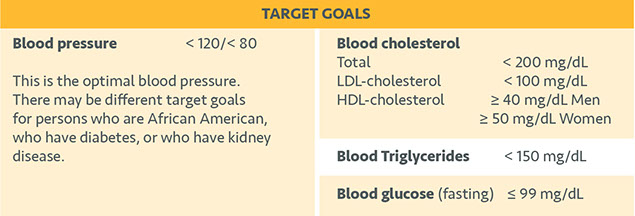
    Track and control your blood pressure and blood levels for cholesterol, triglycerides, and glucose. Discuss with your doctor what your target numbers should be based on your personal health and risk factors.

    Health at Home Lifetime book by the American Institute for Preventive Medicine. www.HealthyLife.com. All rights reserved.

    © American Institute for Preventive Medicine