Author: AIPM

  • Labor And Delivery

    Pregnancy & Prenatal Care

    There are two ways a baby may be born:

    *  Through the vagina (vaginal birth). Contractions of the uterus push the baby out through the cervix into the vagina. The baby passes through the vagina to enter the world.

    *  Cesarean section (C-section). This is a surgical method. The baby is taken directly from the uterus.

    The type of delivery you have will depend on your needs. Discuss the options with your health care provider.

    Vaginal Births

    Natural childbirth means that no medication is given to induce (bring on) labor. Little or no medicine is given to relieve pain. The mother uses various methods to aid the delivery process, like special breathing. Her “coach” provides support.

    Vaginal births can also involve medicines. Some of these are:

    *  Misoprostal. This tablet is put in through the vagina to help dilate the cervix.

    *  Pitocin. This is a hormone that causes the uterus to contract. It helps to start or speed up labor. It is given through an IV (intravenous drip).

    *  Prostaglandin gel. This is a gel that is put in through the vagina. It goes right on the cervix. It can help dilate the cervix. It also causes the uterus to contract. This helps to start labor.

    *  Narcotic pain relievers. Example: Demerol. These can be given with a shot or an IV. They take the edge off pain. But they can also cause you to feel drowsy or dizzy. They can cause an upset stomach or throwing up. Other medicines may be given with narcotic pain relievers. These help them have a stronger effect.

    *  Tranquilizers. These relax you if you are tense and anxious. They can be given in pills or with a shot. Tranquilizers are sometimes used with pain relievers.

    *  Anesthetics. Anesthetics cause a loss of feeling. They are usually given after labor has been in progress. There are two main types:

    *  General anesthesia. This puts the mother to sleep. It is used most often for emergency C-sections. But it can be used in a vaginal birth when the baby is in a breech position. That’s when the baby’s bottom or one or both feet reach the cervix before the head does.

    *  Local anesthetics. These affect only the area where they are applied. Common examples:

    – Pudendal block. A shot numbs the nerves in the vaginal area. It is usually given when the cervix is fully dilated (opened). It may be used with a pain reliever or tranquilizer.

    – Epidural block. This is the most popular anesthetic used for labor. The mother lies on her left side or she sits up and leans forward. A shot is given in the back to numb the area. A thin plastic tube is put into the epidural space of the spine. Medicine is given through the tube. This causes some loss of feeling from the waist down. How much numbness occurs depends on the drug and dose used. An epidural block can have other effects. It can lower the mother’s blood pressure. It can make her unable to pass urine on her own. In that case, a tube called a Foley catheter is used to empty urine from the bladder. An epidural block can also increase the chance that forceps will be used at delivery. {Note: Just pain medicine can be given through the tube. It does not cause a loss of feeling from the waist down. If this is done, the mother may be able to get out of bed and walk. But an adult should be with her.}

    Whether or not pain medicine is used is not what matters most. The goal in labor and delivery is to have a healthy baby and a healthy mother.

    Cesarean Births

    A C-section requires anesthetics. Either an epidural block or spinal is used. General anesthesia is rarely used. C-sections are usually done with a low, left-to-right incision (cut) near the line of pubic hair. This is called a lower-segment incision or a “bikini” cut. An up-and-down incision is rare these days. But it may be used in an emergency. The type of incision in the skin may be different from the one made in the uterus.

    C-sections may or may not be planned. Here are some reasons for doing one:

    *  The baby (or babies) or mother is not doing well

    *  The baby is too big for the mother’s pelvis

    *  The mother has placenta previa or placenta abruptio.

    *  The mother had a past C-section with an up-and-down incision on the uterus.

    *  The baby is lying in a way that makes it hard to deliver.

    *  The mother has an active outbreak of genital herpes.

    *  Labor does not progress the way it should.

    *  The umbilical cord is wedged between the cervix and the baby. This cuts off blood flow to the baby.

    *  The mother is not strong enough for a vaginal delivery.

    *  The mother has health problems, like diabetes, high blood pressure, kidney disease, or preeclampsia.

    *  The baby is more than 2 weeks late and the placenta does not nourish the baby well.

    Vaginal Births after C-Section (VBAC)

    Some pregnant women have already had a C-section delivery. Of this group, some might be able to have a safe vaginal delivery. Some might not for the next baby.

    A vaginal delivery after a C-section may be possible if:

    *  The incision for the C-section was the left-to-right, lower-segment type.

    *  Your pelvis is normal size.

    *  Reasons for the past C-section are not present now. Examples:

    – Breech baby

    – Separation of the placenta (placenta abruptio)

    – More than one baby

    – Baby in distress

    Signs of Prelabor

    Prelabor is the period just before labor begins. Call your health care provider if any of these signs of prelabor happen more than one month before your due date:

    *  The baby begins to settle into your pelvis. It looks and feels as if the baby has “dropped.” This process is called lightening and engagement. It’s easier for you to breathe after it happens.

    *  You feel more pressure on the pelvis and rectum (rear end). The pressure can cause a dull ache in the pelvic area or lower back. It feels like menstrual cramps.

    *  Vaginal discharge may increase and thicken.

    *  Your energy level changes. Some women feel less energy. Others feel more. They want to clean the whole house. The “nesting instinct” is a way of getting ready for the new baby.

    *  You lose the mucus plug. That’s a blob of thick stuff that blocks the cervix. You can lose it several days before labor starts. Or you can lose it just as labor starts.

    *  You may see the bloody show. When the cervix opens, small blood vessels often break. The blood colors the mucus plug pink. Or it may streak the mucus plug with red. When the mucus plug falls out, you may see the blood. You may pass a big clump that looks like a wet cotton ball. Some women don’t notice the bloody show. Bloody show usually means that labor will start within 24 hours. But sometimes labor could still be a few days away.

    *  You have diarrhea. Some women get this just before labor starts.

    *  The “bag of waters” (or your “water”) breaks. That’s the sac inside the uterus. It holds the amniotic fluid. The baby grows there. About 15 percent of the time, the water breaks before labor starts. More often, this happens during labor. The fluid can come out in a gush or a slow trickle. Call your provider right away if this happens.

    1st Stage of Childbirth

    The First Stage of Childbirth: Labor

    Labor has three parts:

    *  The first part is called early or latent labor. This is usually the longest part. It’s usually the least painful, too.

    – Real contractions begin. Contractions are when the muscles of the uterus tighten and then relax. The feelings usually start in the lower back and travel to the belly. Some contractions are felt only in your back. Others are felt only in your belly. Contractions usually start about 15 to 20 minutes apart and last 30 to 45 seconds.

    – The cervix dilates to open 3 centimeters across. That’s about the size of a silver 50¢ piece. It gets thinner. This can happen over a period of days or weeks. You may not even be aware of it. Or it can happen with stronger contractions over a period of 2 to 6 hours. Rarely, it could take up to 24 hours with the stronger contractions.

    – Call your health care provider during the first part of labor. Your provider may tell you to go to the hospital or birthing center. Make sure you’re packed!

    *  The second part is called active labor. This part of labor is usually shorter than the first part. On average, it lasts 2 to 3  hours. But its length can vary greatly. If you’re not already at the hospital or birthing center, you should get there early in this part of labor. Signs of this part of labor:

    – Contractions are stronger. They come more often, usually every 3 to 4 minutes. They last longer, from 40 to 60 seconds each.

    – The cervix dilates to 7 centimeters. That’s about the size of the rim of a coffee mug.

    *  The third part is called advanced active labor or transition. It is the most tiring part. But it is also the shortest. The average length is 15 to 60 minutes. Here are signs that you are in transition:

    – Contractions are even stronger. They come every 2 to 3 minutes. Each lasts 60 to 90 seconds.

    – The cervix dilates fully. It opens 7 to 10 centimeters. That’s about the size of a small grapefruit.

    2nd Stage of Childbirth

    The Second Stage of Childbirth: Delivery

    During delivery, you push the baby down the birth canal and out into the world.

    *  Contractions continue. They are usually more regular than before. They come less than two minutes apart. Each lasts about 60 to 90 seconds. You only push when you have contractions. Your health care provider will tell you when to push.

    *  Most babies come out head first. Then the shoulders. After this, the rest of the baby’s body slips out with ease. Your baby may be placed on your tummy.

    *  The umbilical cord is clamped and cut.

    *  The time for this stage varies greatly. It can take from 10 minutes to 3 hours or more.

    3rd Stage of Childbirth

    The Third Stage of Childbirth: Delivery of the Placenta

    Delivery of the placenta usually lasts from about 5 to 30 minutes. Delivery takes place through mild contractions. You might not even feel them. One more push from you can help the placenta come out. Or a nurse or your health care provider may gently press down on your abdomen. This, too, can help the placenta come out.

    {Note: The total time for labor varies from woman to woman. It also varies from pregnancy to pregnancy for the same woman. First babies tend to take longer than later ones. This is not always the case, though.}

    During Labor

    Things Your Health Care Provider May Do During Labor

    Your health care provider and his or her staff may do any of the things below during labor. What they will do depends on your special needs. But find out ahead of time which ones the provider is sure to do.

    *  Do a physical exam.

    – Your provider feels your belly. This helps the provider know how big the baby is. It helps the provider to know how the baby is lying.

    – Your provider gives you a pelvic exam. This shows how open and thin your cervix is. Your “bag of waters” could break by itself during this exam.

    *  Put an IV (intravenous drip) in a hand or arm vein. Here are reasons why this may be done:

    – To give you fluids. This keeps you from getting dehydrated (dried out or without enough body fluids).

    – To give you glucose. Glucose is a type of sugar. It gives you energy. This will help if you have a long labor.

    – To provide a way to give you medicine quickly, if you need it.

    *  Use a fetal monitor to check the baby. This small machine can check your baby’s heartbeat before the baby is born. It can also record your contractions. There are 2 kinds of fetal monitors:

    – External monitor. This kind has two wide straps. The straps go over your belly. One strap picks up your baby’s heartbeat by ultrasound. The other connects to a pressure gauge. The gauge records your contractions on a printout.

    – Internal monitor. This kind has a small tube that goes inside the uterus. The “bag of waters” must be broken before this monitor can be used. It gets there through the vagina and cervix. A small electrode goes on the baby’s head. This monitor gives more detail than the external one. It is used when the baby doesn’t seem to be doing well. It may also be used when the external monitor is not giving an accurate reading. This can happen if the baby is very active. It can happen when the mother is obese.

    *  Break your “bag of waters.” Your provider pricks the “bag of waters” with a small tool. The tool enters through the opened cervix. The provider looks at the color of the fluid. Clear is a good sign. Yellow or green could signal a problem.

    *  Use forceps to help the delivery. Forceps are metal tongs. They are cradled around the baby’s head. They help ease the baby out of the birth canal if the mother can’t push.

    *  Use vacuum extraction to help the delivery. A suction cup is put on the baby’s head in the birth canal. This helps the baby come out if the mother can’t push. The suction cup is attached to a vacuum pump. Your doctor uses this to pull the baby gently with each contraction. Many doctors prefer this method to forceps. {Note: Forceps and vacuum extraction are not used until the baby’s head can be seen at the vaginal opening.}

    *  Do an episiotomy. This is a surgical cut. It is made in the skin between the vagina and the anus just before the baby is born. The purpose is to widen the vaginal opening. That helps the baby come out. It also helps keep the skin in the vaginal area from tearing. After the baby is born, the cut is stitched.

    How long you stay in the hospital or birthing center will depend on:

    *  The type of delivery you have and where you give birth. You may go home within 12 to 24 hours in a birthing center. You may be able to stay in a hospital for up to two days. Both of these are with normal vaginal deliveries without problems. C-section stays vary. They usually last 2 to 3 days.

    *  Your health insurance. Find out what your insurance pays for.

    *  Your medical needs. You or your baby may need to stay in the hospital longer than usual if you have special medical needs. Sometimes you and your baby get home health care. Your hospital or health insurance may provide this.
    Prenatal Self-Care book by the American Institute for Preventive Medicine. www.HealthyLife.com. All rights reserved.

    © American Institute for Preventive Medicine

  • Lactose Intolerance

    Abdominal & Urinary Conditions

    Image of various of different dairy products.

    Lactose is the natural sugar in milk. A person with lactose intolerance lacks enough of the enzyme, lactase, to digest this sugar.

    Signs & Symptoms

    *  Nausea.

    *  Cramps.

    *  Bloating.

    *  Gas.

    *  Diarrhea.

    These symptoms start about 30 minutes to 2 hours after you eat or drink foods with lactose.

    Causes

    *  The body can’t make the enzyme lactase. This can occur from birth or over time.

    *  Digestive diseases.

    *  Injury to the small intestine.

    Asian Americans, African Americans, and American Indians are more prone to lactose intolerance.

    Treatment

    Symptoms can be controlled with self-care measures.

    Questions to Ask

    Self-Care / Prevention

    *  Eat fewer dairy foods. Some people with lactose intolerance can tolerate dairy foods if they have small amounts at a time.

    *  Have lactose-free dairy products. Have ones that reduce lactose with bacterial cultures. Examples are buttermilk, yogurt, and acidophilus milks.

    *  Take over-the-counter drops or pills that have the enzyme lactase when you have dairy foods.

    *  If the above measures don’t help, don’t have products with milk, milk solids, and dairy whey. Have soy milk instead. Products marked “parve” are milk free.

    *  Read food labels. Many food products contain small amounts of lactose. These include bread and other baked goods, instant mashed potatoes, breakfast and diet drinks and bars, and mixes for biscuits, cookies, and pancakes.

    Healthier at Home book by the American Institute for Preventive Medicine. www.HealthyLife.com. All rights reserved.

    © American Institute for Preventive Medicine

  • Laryngitis

    Ear, Nose & Throat Conditions

    Laryngitis is when your larynx (voice box) is irritated or swollen.

    Signs & Symptoms

    *  Hoarse, husky, and weak voice or loss of voice.

    *  Cough.

    *  Sore throat, fever, and/or trouble swallowing.

    Causes

    Common causes are allergies and irritants like smoke; bacterial or viral infections; and strained vocal cords. Smoking, drinking alcohol, breathing cold air, and using already distressed vocal cords can make the problem worse. Growths on the vocal cords or nerve damage to the vocal cords can also cause hoarseness.

    Treatment

    Self-care treats most cases of laryngitis. If needed, your doctor may prescribe an antibiotic for a bacterial infection.

    Questions to Ask

    Self-Care / Prevention

    *  Don’t smoke. Avoid secondhand smoke.

    *  Don’t talk if you don’t need to. Write notes, instead.

    *  Use a cool-mist humidifier in your bedroom.

    *  Drink a lot of fluids. Drink warm drinks, such as weak tea, with honey and/or lemon juice.

    *  Gargle every few hours with warm salt water (1/4 teaspoon of salt in 1 cup of warm water).

    *  Run hot water in the shower to make steam. Sit in the bathroom and breathe the moist air.

    *  Suck on cough drops, throat lozenges, or hard candy. (Don’t give to children under age 5.) Take an over-the-counter medicine for pain as directed on the label.

    Resources

    American Academy of Otolaryngology –

    Head and Neck Surgery

    www.entnet.org

    Healthier at Home book by the American Institute for Preventive Medicine. www.HealthyLife.com. All rights reserved.

    © American Institute for Preventive Medicine
  • Learn Cpr. It Could Help Save A Life!

    First Aid

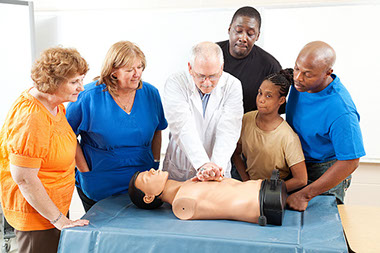
    An image of a class learning CPR.

    Knowing how to perform cardiopulmonary resuscitation (CPR) can mean the difference between life and death. CPR can restore the flow of oxygen to the brain if the heart has stopped beating due to heart attack, drowning, electrical shock, suffocation, or a drug overdose. Learn to perform CPR correctly. Take a CPR training course to learn:

    *  How to contact emergency medical help.

    *  How to use an automated external defribrillator (AED).

    *  How to give rescue breaths, compress the person’s chest and when and how to do chest-compression only CPR. (It is important to push hard and push fast, giving 100 compressions a minute in cycles of 30 compressions for every 2 breaths.) {Note: Guidelines for CPR may change. Get updates for CPR and find out where you can learn how to perform it from the American Heart Association atwww.americanheart.org.}

    You can also call your local chapter of the Red Cross or your local hospital to find out where you can learn CPR.

    A Year of Health Hints book by the American Institute for Preventive Medicine. www.HealthyLife.com. All rights reserved.

    © American Institute for Preventive Medicine
  • Learn For Brain Health

    Brain & Nervous System

    Illustration of person standing with arms open holding large puzzle piece with brain.

    As adults grow older, it’s important for brain health to have new learning challenges, and to improve problem-solving and reasoning skills.

    Endless possibilities: Choose a subject or a skill you are curious about or wished you explored when you were younger. Want to learn a musical instrument? Become more computer-savvy? Improve car maintenance skills?

    Local learning: Take a course at a library, community college, or recreation center.

    Online and free: Check out the wide variety of free, online courses atedx.orgorcoursera.org.

    Health at Home Lifetime book by the American Institute for Preventive Medicine. www.HealthyLife.com. All rights reserved.

    © American Institute for Preventive Medicine
  • Leg Pain & Ankle Pain

    Bone & Muscle Problems

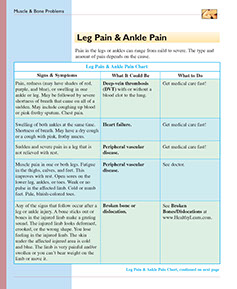
    Pain in the legs or ankles can range from mild to severe. The type and amount of pain depends on the cause.

    For Pain, in General

    *  Take an over-the-counter medicine for pain as directed on the label. If the pain is not better after a few doses, call your doctor.

    *  Use a heating pad (set on low), a hot pack, or a moist, warm towel on the area of pain. If the pain is due to an injury, don’t use heat for 48 hours. Use R.I.C.E.

    To Help Prevent Leg Pain & Ankle Pain

    *  Get to and stay at a healthy weight.

    *  Get regular exercise. This helps to keep ankle and leg muscles strong.

    *  Before you exercise, stretch and warm up your muscles. When you are done, cool them down.

    *  Protect your knees. Use knee pads when you garden or kneel. Always land on bent knees when jumping. Avoid deep knee bend exercises.

    *  Don’t wear high-heeled shoes. Keep your shoes in proper shape.

    *  Take good care of your feet.

    R.I.C.E.

    *  Rest the injured area for 24 to 48 hours.

    *  Ice the area as soon as possible. Keep doing this for 10 minutes every 2 hours for the first 48 hours. Use an ice pack, ice in a heavy plastic bag with a little water, a bag of frozen vegetables, etc. Put a thin towel between the ice pack and the skin.

    *  Compress the area. Wrap with an elastic bandage. Do not cut off circulation. Remove the bandage every 3 to 4 hours, for 15 to 20 minutes each time.

    *  Elevate the area above heart level, if possible. Place it on a pillow, folded blanket, stack of newspapers, etc.

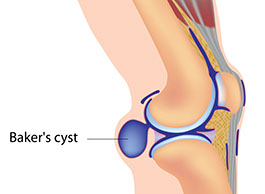
    Baker’s Cyst

    Illustration of baker's cyst.

    Signs & Symptoms

    Painless or painful swelling behind the knee. May feel like a water-filled balloon.

    What to Do

    Call doctor.

    Broken Bone or Dislocation

    Image of broken foot bone.

    Signs & Symptoms

    Any of the signs that follow occur after a leg or ankle injury. A bone sticks out or bones in the injured limb make a grating sound. The injured limb looks deformed, crooked, or the wrong shape. You lose feeling in the injured limb. The skin under the affected injured area is cold and blue. The limb is very painful and/or swollen or you can’t bear weight on the limb or move it.

    Bursitis

    Signs & Symptoms

    Pain and swelling around a knee or hip joint. The pain gets worse with movement. Fever (maybe).

    What to Do

    See doctor.

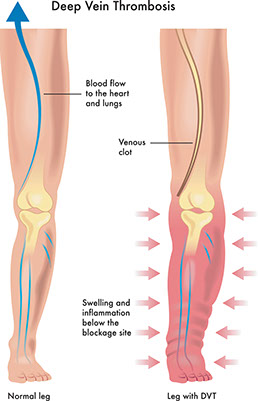
    Deep-vein thrombosis (DVT) with or without a blood clot to the lung

    Illustration of deep vein thrombosis.

    Signs & Symptoms

    Pain, redness (may have shades of red, purple, and blue), or swelling in one ankle or leg. May be followed by severe shortness of breath that came on all of a sudden. May include coughing up blood or pink-frothy sputum. Chest pain.

    What to Do

    Get medical care fast!

    Flu

    Signs & Symptoms

    Aches in leg muscles and joints with fever and/or chills. Headache. Dry cough. Sore throat. Fatigue.

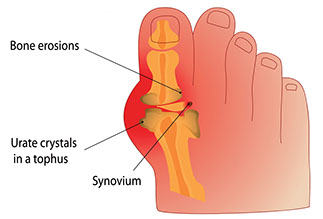
    Gout

    Illustration of gout.

    Signs & Symptoms

    Sudden, severe pain in a toe, knee, or ankle joint. The pain can be felt even when clothing is rubbed against the joint. The joint area is swollen, red, or purplish in color. It also feels warm, and is very tender to the touch.

    What to Do

    See doctor.

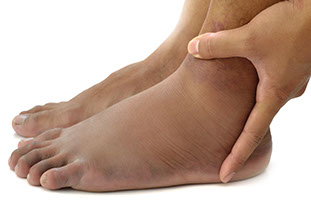
    Heart Failure

    Image of swollen feet.

    Signs & Symptoms

    Swelling of both ankles at the same time. Shortness of breath. May have a dry cough or a cough with pink, frothy mucus.

    What to Do

    Get medical care fast!

    Infection. Could also be Cellulitis.

    Signs & Symptoms

    Pain with fever, redness, tenderness, warmth and pus at a wound site. A red streak up the leg (rarely).

    What to Do

    See doctor.

    Leg Cramp

    Signs & Symptoms

    Sudden, sharp, tightening pain in the leg, often the calf. The muscle feels hard to the touch. The pain subsides after a minute or so and the muscle relaxes.

    Self-Care

    *  Walk on the leg.

    *  Shake the leg and then elevate it.

    *  Sit with your leg flat on the floor. Flex your foot upward, then toward your knee. Reach for your toes and pull them toward your knee. This stretches the calf muscles.

    *  Have someone massage the cramped muscle gently, but firmly.

    *  Apply a heating pad (set on low), a hot pack, or moist, warm towel to the muscle cramp.

    *  Rub the muscle that is cramping. Rub upward from the ankle toward the heart.

    (Note: Do not rub a leg if you suspect phlebitis or thrombosis.)

    To Prevent Leg Cramps

    *  Get good sources of calcium, potassium, and magnesium. See lists at left. Take calcium, potassium, and magnesium as advised by your doctor.

    *  Drink plenty of water and other fluids. Limit drinks with caffeine. Avoid drinks with alcohol. Doing these things can help prevent dehydration which could cause leg cramps.

    *  Warm up your muscles before you exercise. Cool down your muscles when you are done.

    *  With your doctor’s okay, wear elastic stockings while you are awake.

    *  Another way to stretch your calf muscles is to ride a stationary bicycle for a few minutes.

    *  Take a warm bath before bedtime.

    *  Sleep with loose-fitting blankets and night clothes. Keep your legs warm.

    *  If you have severe leg cramps or get them often, tell your doctor. Ask if any medication you take could cause your leg cramps. Ask for ways to treat your leg cramps.

    *  Before you go to bed, stretch your calf muscles. Here’s one way to do this:

    – Stand an arm’s length away from a wall. Lean against it with the palms of your hands.

    – Bend your left knee. Keep your right leg straight behind you. Keep both feet flat on the floor and your back straight.

    – Lean forward. Feel your right calf muscle stretch. Hold the stretch as you count to 10 slowly.

    – Repeat, switching leg positions.

    Lyme Disease

    Signs & Symptoms

    Muscle or joint pain and chronic swelling of the knee joints. These problems develop months or years after a deer-tick bite and a bulls-eye red rash with pale centers.

    What to Do

    See doctor.

    Osteoarthritis

    Signs & Symptoms

    Pain, stiffness, and sometimes swelling of the knee or ankle joints. Often, the joint has gotten tender over months or years and may look enlarged or deformed.

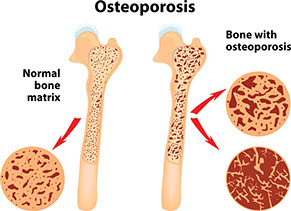
    Osteoporosis

    Illustration of osteoporosis.

    Signs & Symptoms

    Leg or ankle pain with gradual loss of height; stooped posture; backache; and/or past bone fractures, especially in the wrists and hips.

    Paget’s Disease

    This is a bone disorder that progresses slowly. Most persons with this disease do not develop symptoms.

    Signs & Symptoms

    Leg pain that radiates from the lower back. Pain or stiffness in the knees. Bowing of the legs or other bone deformity. Unexplained bone fractures. May have headache, dizziness, hearing loss, and/or ringing in the ears.

    What to Do

    See doctor.

    Self-Care / Prevention

    *  If needed, take an over-the-counter medicine for pain as directed on the label.

    *  Take other medicines as prescribed by your doctor.

    *  Get regular checkups to detect hearing loss.

    Peripheral Vascular Disease

    Signs & Symptoms

    Sudden and severe pain in a leg that is not relieved with rest.

    What to Do

    Get medical care fast!

    Signs & Symptoms

    Muscle pain in one or both legs. Fatigue in the thighs, calves, and feet. This improves with rest. Open sores on the lower leg, ankles, or toes. Weak or no pulse in the affected limb. Cold or numb feet. Pale, bluish-colored toes.

    What to Do

    See doctor.

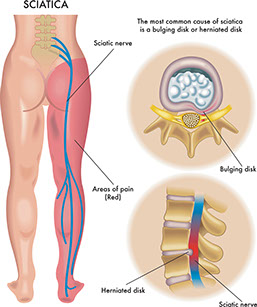
    Sciatica

    Illustration of sciatica.

    Signs & Symptoms

    Sharp pain from the buttocks down the leg. Numbness and tingling in the leg.

    Sprain, Strain, or Sport Injury

    Signs & Symptoms

    Pain in the leg or ankle after an injury that does not keep you from moving the limb.

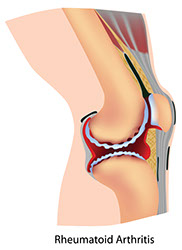
    Rheumatoid Arthritis

    Illustration of rheumatoid arthritis.

    Signs & Symptoms

    Pain, stiffness, and swelling, usually in both knees or ankle joints. The joint looks deformed. Weakness and fatigue. Dry mouth and dry, painful eyes.

    Varicose Veins

    Signs & Symptoms

    Pain or itching in the legs with swollen and twisted veins that look blue and are close to the surface of the skin. The veins bulge and feel heavy. Swelling in the legs and ankles.

    Healthier at Home book by the American Institute for Preventive Medicine. www.HealthyLife.com. All rights reserved.

    © American Institute for Preventive Medicine

  • Lessen Environmental Connections To Cancer

    Cancer

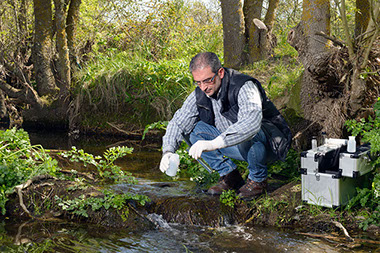
    Man collecting water samples from a water creek.

    *  Don’t smoke. Avoid secondhand smoke.

    *  Get your house tested for radon – the number 2 cause of lung cancer after smoking. You can buy a radon test kit from a hardware store.

    *  Take harmful waste products, such as empty aerosol cans; leftover paint, paint chips and thinners; and unused fertilizers and pesticides to a local hazardous waste drop-off site. Search for one near you atearth911.org.

    *  Restrict the use of pesticides, which are all toxic to some degree. Use nontoxic products to treat and maintain your lawn. Find ways to greenscape your lawn and yard fromepa.gov.

    *  Wear sunscreen (SPF of 30 or higher) and clothing to protect your skin from harmful UV rays.

    *  Get to and stay at a healthy weight. Eat plenty of plant-based foods: vegetables, fruit, whole grains, beans, lentils, nuts, and seeds. Avoid or limit alcohol to 1 drink a day (women and over 65) or 2 drinks a day (men).

    Health at Home Lifetime book by the American Institute for Preventive Medicine. www.HealthyLife.com. All rights reserved.

    © American Institute for Preventive Medicine

  • Lice

    Children’s Health

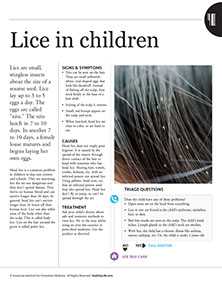
    Lice are small, wingless insects about the size of a sesame seed. Lice lay up to 3 to 5 eggs a day. The eggs are called “nits.” The nits hatch in 7 to 10 days. In another 7 to 10 days, a female louse matures and begins laying her own eggs.

    Head lice is a common problem in children in day- care centers and schools. Head lice only affect humans. They thrive on human blood and can survive longer than 30 days. In general, head lice can’t survive longer than 24 hours off their human host. Lice can also infest areas of the body other than the scalp. This is called body lice. Lice on the hair around the groin is called pubic lice.

    Signs & Symptoms

    For Head Lice

    *  Nits can be seen on the hair. They are small yellowish-white, oval-shaped eggs that look like dandruff. Instead of flaking off the scalp, they stick firmly to the base of a hair shaft.

    *  Itching of the scalp is intense.

    *  Small, red bumps appear on the scalp and neck.

    *  When hatched, head lice are clear in color, so are hard to see.

    Causes

    Head lice does not imply poor hygiene. It is caused by the spread of the insects through direct contact of the hair or head with someone who has head lice. Sharing hats, towels, combs, helmets, etc. with an infected person can spread lice. Using pillows, head rests, etc. that an infected person used may also spread lice. Head lice don’t fly or jump, so can’t be spread through the air.

    Treatment

    Ask your child’s doctor about safe and nontoxic methods to treat lice. He or she may advise using an over-the-counter or prescribed medicine. Use the product as directed.

    Questions to Ask

    Self-Care / Prevention

    Check everyone in your home for lice and nits. Treat only those who have lice. Lice-killing products won’t prevent lice.

    *  Use an over-the-counter shampoo, lotion, or cream made to get rid of lice and nits. Follow the directions on the package.

    *  Wear plastic or latex gloves. Don’t use too much shampoo. Doing this will make the child’s head too dry.

    Things to Tell Your Child

    *  Don’t share hats, brushes, or combs. If you must share helmets, wipe them with a damp towel and wear a baseball cap under the helmet.

    *  Don’t lie on a pillow that another child uses.

    *  Wash your hair and bathe often.

    To Remove the Nits

    *  Shine a flashlight on the hair roots. Nits are gray and hard to see, especially in blond hair.

    *  Start at one spot and go row by row or even strand by strand. Use the nit comb that comes in the package. Dip the comb in vinegar first. This will help loosen the nits.

    *  Comb the hair from the roots to the ends. Check the comb for nits after each pass, or, break the hair up into 4 or 5 sections with hair clips. Lift about an inch of hair up and out. Put the comb against your child’s head. Comb all the way to the tips of the hair. Keep going until you’ve done the whole head.

    *  Soak all combs, brushes, hair clips, and barrettes for 1 to 2 hours in the insecticidal shampoo. Or, soak them for 1 hour in soap and water, rubbing alcohol, or Lysol.

    *  Check for nits every 2 to 3 days for 2 to 3 weeks until all lice and nits are gone.

    *  A week to 9 days later, use the shampoo for lice again to kill any newly hatched nits. You don’t have to remove nits after treatment is finished except for cosmetic reasons.

    Other Things You Should Do

    *  Vacuum all mattresses, pillows, rugs, and furniture made of cloth, especially where children play. Use the long, thin attachment to suck the lice or nits out of car seats, toys, etc. Put the vacuum cleaner bags outside in the trash.

    *  Wash bedding and clothes right away in water 130ºF or hotter. Put them in the dryer on high for 30 minutes. Heat kills the lice and nits. Dry-clean clothes and hats that you can’t wash.

    *  Don’t use bug spray on lice, furniture, stuffed animals, etc.

    *  As soon as you know your child has lice, call your child’s school, child-care center, parents of your child’s friends, etc.

    *  Check your children for head lice and nits once a week. Check more often if your child scratches his or her head. Look for nits behind the ears and on the back of the neck. Spread hairs apart using a nit comb to look for the nits on the hair shafts.

    Resources

    National Pediculosis Association

    www.headlice.org

    Healthier at Home book by the American Institute for Preventive Medicine. www.HealthyLife.com. All rights reserved.

    © American Institute for Preventive Medicine
  • What To Do About Liver Spots

    Mature Health: Over Age 50

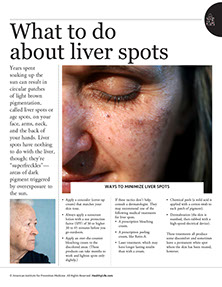
    Image of women looking in a mirror examing her face.

    Years spent soaking up the sun can result in circular patches of light brown pigmentation, called liver spots or age spots, on your face, arms, neck, and the back of your hands. Liver spots have nothing to do with the liver, though; they’re “superfreckles”-areas of dark pigment triggered by overexposure to the sun. Here’s what you can do to minimize liver spots.

    *  Apply a concealer (cover-up cream) that matches your skin tone.

    *  Always apply a sunscreen lotion with a sun protection factor (SPF) of 15 or higher 30 to 45 minutes before you go outdoors.

    *  Apply an over-the-counter bleaching cream to the discolored areas. (These products can take months to work and lighten spots only slightly.)

    If these tactics don’t help, consult a dermatologist. He or she may recommend one of the following medical treatments for liver spots.

    *  A prescription bleaching cream.

    *  A prescription peeling cream, like Retin-A.

    *  Chemical peels (a mild acid is applied with a cotton swab to each patch of pigment).

    *  Dermabrasion (the skin is numbed, then rubbed with a high-speed electrical device).

    These treatments all produce some discomfort and sometimes leave a permanent white spot where the skin has been treated, however.

    A Year of Health Hints book by the American Institute for Preventive Medicine. www.HealthyLife.com. All rights reserved.

    © American Institute for Preventive Medicine
  • Love Is Healthy For Your Heart

    Heart & Circulation Problems

    Couple on beach making heart shape with their arms.

    Heart health isn’t just about not smoking and controlling cholesterol and blood pressure.

    *  Loving and feeling loved is vital to a healthy heart, as well as your overall well-being.

    *  Studies have consistently shown that:

    – Negative relationships raise the risk of heart problems.

    – Marriage lowers the risk of heart attack in both men and women of all ages.

    – People who hugged often showed lowered blood pressure and levels of stress hormones.

    Plan to spend time with loved ones. Go on a date with your partner once a week. Have a weekly family outing or game night.

    Say, “I love you,” “I care about you,” and “You mean a lot to me.” Give hugs. Cuddle a pet.

    Don’t spend too much time on your smart phone and other devices if it leads to neglecting loved ones.

    Health at Home Lifetime book by the American Institute for Preventive Medicine. www.HealthyLife.com. All rights reserved.

    © American Institute for Preventive Medicine