Author: AIPM

  • Enhance Your Sense Of Taste

    Mature Health: Over Age 50

    Image of fresh foods and herbs, such as potatos, tomatoes, onions, etc.

    Adding a lot of salt to foods, eating more sweets, and finding meals less enjoyable are signs that your sense of taste is fading. As you age, you may lose up to 50 percent of your taste buds. But you don’t have to resign yourself to a diet that tastes dull and bland. You can take the following steps to perk up your sense of taste.

    *  Eat fresh foods instead of canned or processed items. Fresh-cooked foods are more flavorful and have more texture, which adds to the enjoyment of food.

    *  Pep up your vegetables with flavor enhancers like savory herbs, lemon juice, slivered almonds, and sliced onions instead of extra salt.

    *  Marinate meats and fish in salad dressings or fruit juices before cooking.

    *  Include tart foods and beverages like salt-free pickles, oranges, and lemonade in your meals.

    *  Think visually. Colorful foods, garnishes, and an attractive table setting make meals more appetizing.

    *  Bring chilled foods to room temperature before serving. Flavors are more pronounced when food is warm.

    A Year of Health Hints book by the American Institute for Preventive Medicine. www.HealthyLife.com. All rights reserved.

    © American Institute for Preventive Medicine

  • Set Up Good Sleep Habits

    Student Health

    *  Plan ahead. Don’t start writing a paper the night before it is due or cram for a test the night before you have it. Doing these things starts a cycle of staying up all night and never catching up on sleep.

    *  Get at least 30 minutes of sunlight exposure daily.

    *  Get regular exercise, but not within a few hours of going to bed.

    *  If you have a roommate, discuss and decide when your room will be used for studying, socializing, and sleep.

    *  If your dorm is too noisy to sleep, talk to your resident advisor and/or learn to tune out the noise in order to get to sleep. If it helps, listen to soft music with earphones when you fall asleep. Wear earplugs, if necessary.

    *  Make your dorm room or bedroom as comfortable as possible. Create a quiet, dark atmosphere. Keep the room temperature comfortable (neither too warm nor too cold). Don’t wait longer than a week to change the sheets on your bed.

    *  Have food items rich in the amino acid  L-tryptophan, such as milk, turkey, or tuna fish, before you go to bed. Eating foods with carbohydrates, such as cereal, breads, and fruits may help as well. (Do not, however, take L-tryptophan supplements.)

    *  Develop a regular bedtime routine. Brush your teeth, lock or check doors and windows, get your backpack ready for the next day, etc. Try to go to bed and get up at the same time every day.

    *  Take a long, warm bath or shower before bedtime.

    *  Read a book or do some repetitive, calm activity. Avoid distractions that may hold your attention and keep you awake, such as watching a suspenseful movie.

    *  Avoid caffeine in all forms after lunchtime. Caffeine is in coffee, tea, chocolate, colas, other soft drinks, such as Mountain Dew, and some bottled water, such as Cup of Joe.

    *  Don’t take No-Doz. Avoid alcoholic beverages at dinnertime and during the rest of the evening, too. Even though alcohol is a sedative, it can disrupt sleep.

    *  Don’t take over-the-counter sleeping pills or friends’ or relatives’ sleeping pills. Only take sleep medicine with your health care provider’s permission.

    *  Count sheep! Picturing a repeated image may bore you to sleep.

    Student Self-Care book by the American Institute for Preventive Medicine. www.HealthyLife.com. All rights reserved.

    © American Institute for Preventive Medicine

  • Sexual Assault

    Sexual Health

    Sexual assault is an unlawful act that may involve the touching of intimate body parts, sexual intimidation, or forced sexual penetration. This includes sexual intercourse, oral sex, and digital penetration. Rape is forced sexual intercourse. Force may be by verbal threats, physical restraint, or violence. Stalking is defined as repeated, obsessive, fear-inducing behavior that makes the victim afraid or concerned for his or her safety.

    A study funded by the Department of Justice found that sexual assault and stalking of college females are widespread and grossly underestimated. U.S. statistics report:

    *  About 3% of coeds are raped during each academic year. Over the course of 5 calendar years, including summers and vacations, 20- 25% may be raped.

    *  Nationally, an additional 15.5% of college females are sexually victimized (e.g., sexual contact is completed with force or threat of non-physical force, threat of rape, or threat of contact).

    *  Nationally, 13.1% of coeds are stalked an average of 60 days during an academic year.

    *  Nationally, less than 5% of completed and attempted rapes of college females are reported to the police or campus officials. About 67% of the victims tell a friend.

    *  Nine out of 10 victims knew their assailant. {Note: Almost all sexual assaults on college campuses are acquaintance rapes and, in most cases, at least one of the persons involved is under the influence of alcohol or another drug.}

    *  Between 3 and 6% of male university students reported being raped and up to 25% reported being sexually assaulted. Only about 1% of male rape victims reported it to the police.

    Safety Tips to Reduce the Chances for Sexual Assault

    Be aware of the risks of date rape with drinking alcohol. About 75% of male students who take part in acquaintance rape had been drinking; about 55% of female students had.

    *  The best defense is to not drink. If you drink, limit alcohol intake.

    *  Don’t drink anything you have not brought or opened yourself. Don’t drink from another person’s container, from a punch bowl, beer bong, etc. When at a bar or club, accept drinks only from a bartender or waiter.

    *  Keep your drink in your hand and under your watch at all times. If needed, have a friend watch your drink. Do the same for your friend(s).

    *  Don’t drink alcohol in a high-risk setting for sexual assault (e.g., frat house or team parties or with persons you don’t know and/or trust).

    Be aware of these “date-rape” drugs, which have no odor or color when mixed with drinks:

    *  Rohypnol. The effects of this drug can last 6 to 8 hours. This drug is added to drinks and punches at parties, raves, etc., usually to lower sexual inhibitions in females. When mixed with alcohol or other drugs, Rohypnol can cause death.

    *  GHB and GLB. The effects of this drug can last about 8 hours. If you have had this drug, you may wake up partially clothed with no recollection of a sexual assault. GHB is often made in homes with recipes and ingredients found and purchased on the Internet. GHB can cause death.

    Consider using a coaster or test strip made to detect date rape drugs in drinks before you take a sip. An example is Drink Safe Coaster™ by Drink Safe Technology. For information, contactwww.drinksafetech.com. If you suspect you have been drugged, keep a sample of your drink. Get help immediately. Have a friend help you get medical care. Call EMS, if necessary. Get tested for the drug within 12 hours of the suspected incident at a hospital emergency department.

    Do not have sex with a person who is under the influence of alcohol and/or drugs which compromise consent. Also, look out for the safety of your friends and yourself and don’t put yourself in vulnerable situations.

    *  Alert your female friends (and the authorities)to rumors of guys using date-rape drugs.

    *  Don’t assume that anyone under the influence is “too nice a guy” to commit sexual assault. Intervene on a friend’s behalf (e.g., walk her out of a party, take her to a safe place, etc.).

    *  Know your sexual limitations and communicate them both verbally and nonverbally. If you sense you are being pressured to have sex and don’t want to, state your position clearly. Say “NO” emphatically when you mean “NO!” Be aware, too, that a female/partner does not need to say the word “NO” to mean “NO.” Listen for words like, “I’m just not ready,” “We’re going too fast,” etc. The female/partner may be afraid to say “NO.”

    *  Attend your school’s classes, etc. on preventing acquaintance rape, sexual assault, etc. Take a class in self-defense.

    *  Carry a cell phone with you to call for help, if needed.

    *  Avoid being alone, especially in unsafe situations and with strangers and persons you don’t know well or feel safe with.

    *  Keep the doors to your home and car locked. Don’t open doors to strangers. Don’t tell strangers that you are alone.

    If Rape Occurs

    *  Do not shower, clean or wash up in any way, or change clothing before you go to the hospital emergency department. Doing so could destroy evidence (e.g., blood type, hair samples, etc.) which may not be legally acceptable if collected later than 72 hours after the rape. If you have removed clothes worn at the time of the rape, put them in a paper bag and take them with you to the E.R.

    *  Get medical or police help right away. (Date-rape drugs may not be detectable after 12 hours.) Go to the E.R. Recall and write down as many details as you can. Report the rapist’s age, height, weight, race, hair color, clothing worn, noticeable body marks, tattoos, etc. If a vehicle was involved, report its type, color, license plate, etc. Take a friend with you for comfort and support. At the E.R., you will get information about health care providers in your area who can help you after the E.R. visit. You will likely need their services at some point.

    *  Talk to the emergency care provider about emergency contraception and tests for STIs.

    *  Contact your campus Sexual Assault Crisis Center or call the Rape Crisis Hotline at 800.656.HOPE (4673).

    Healthier at Home book by the American Institute for Preventive Medicine. www.HealthyLife.com. All rights reserved.

    © American Institute for Preventive Medicine

  • Sexual Changes With Aging

    Sexual Health

    Physical Changes

    Sexual health can be affected by many conditions. These include:

    *  Certain medicines. Ask your doctor if medicines you take affect your sexual response.

    *  Alcohol

    *  Heart attack

    *  Stroke

    *  Diabetes

    *  Arthritis

    *  HIV and STIs

    *  Multiple sclerosis

    *  Parkinson’s disease

    *  Cancer and side effects of cancer treatment

    *  Surgery that involves the sex organs, such as a hysterectomy

    Physical Changes For Men:

    *  It may take longer to get an erection and to ejaculate.

    *  Erections may not be as hard or as large as in earlier years.

    *  The feeling that an ejaculation is about to happen may be shorter.

    *  After an ejaculation, more time needs to pass to get a second erection.

    *  Some males find they need more manual stimulation.

    *  The chances for erectile dysfunction (ED) increase.

    Physical Changes For Women:

    *  The vagina is drier. The walls of the vagina get thinner and less elastic. These can make sex uncomfortable.

    *  It may take longer to feel aroused.

    *  Orgasms can be shorter or less intense than in years past.

    Emotional Changes

    How people feel can affect what they are able to do.

    *  As persons age, they may feel more anxious about their appearance or ability to perform. This can interfere with the ability to enjoy sex.

    *  Not having a partner through choice, divorce, or death may make it difficult to deal with sexual feelings. Masturbation can bring sexual pleasure, but persons who have been taught that it is wrong are reluctant to do it.

    *  A lack of sexual desire can result in having sex less often. This may be due to lower hormone levels or having an illness or a disability.

    Some changes that come with aging can result in positive emotional changes:

    *  After menopause, both men and women may feel less anxious about having sex because they don’t have to worry about a pregnancy.

    *  A woman may get more sexual pleasure due to having a drier, thinner, and smaller vagina which allows her to feel more friction and stimulation during sex.

    *  A couple may have more time and privacy for sex if their children are grown and spend less time at home.

    Self-Care

    Tips for Sexual Health:

    *  Have sex often. Have sex when you are less tired, such as in the morning.

    *  Express your needs. Let your partner express his or her needs, too. Talk about your fears, fantasies, etc.

    *  Spend more time on foreplay. Let your partner know where and how you want to be touched.

    *  Take the pressure off your partner. Tell him or her that you know sex can take longer. Express your need for intimacy, not just performance.

    *  Avoid or limit alcohol. A little alcohol can act as an aphrodisiac. Too much can interfere with sex and lead to unsafe sex.

    *  Ask your doctor or pharmacist if any medicines you take can affect your sex life. Find out if another medicine can be used without this side effect.

    *  Stay as physically fit as you can. This allows more energy for sex.

    *  To help prevent possible problems with sexual satisfaction, follow your doctor’s advice for a chronic illness.

    *   Give each other a massage or take a shower together.

    *  Keep the T.V. out of the bedroom.

    *  Plan time to be alone together and for sex. This promotes intimacy.

    – Make a point to spend at least 15 minutes of uninterrupted time with your partner each day.

    – Express your affection for each other every day.

    – Spend part of a day alone together at least once a week. Make a date to take a walk in the park, go out for dinner, or share other activities you both enjoy. Schedule time away together when you can.

    – Go to bed at the same time.

    Tips for Men:

    *  See “Causes” and “Self-Care/Prevention” for “Erectile Dysfunction (ED)”.

    *  Talk to your doctor about your concerns. Be open and honest.

    Tips for Women:

    *  Discuss hormone therapy with your doctor. Estrogen can help with vaginal dryness. It can help thicken the walls of the vagina.

    *  Use a water-soluble lubricant, such as K-Y Jelly, Replens, etc. Don’t use oil or petroleum-based products. These encourage infection.

    *  Remain sexually active. Having sex often may lessen the chance of having the vagina constrict, helps keep natural lubrication, and maintains pelvic muscle tone. This includes reaching orgasm with a partner or alone.

    *  If you can, avoid using antihistamines. They dry mucus membranes in the body.

    *  Don’t use deodorant soaps or scented products in the vaginal area.

    When to Seek Medical Care

    Contact Doctor When:

    *  You have pain or bleeding during sex.

    *  You have signs and symptoms of an STI.

    *  You have sexual problems due to an illness, surgery, injury, or erectile dysfunction.

    *  You continue to have sexual problems after using self-care.

    Health at Home Lifetime book by the American Institute for Preventive Medicine. www.HealthyLife.com. All rights reserved.

    © American Institute for Preventive Medicine

  • Sexual Concerns

    Sexual Health

    Signs & Symptoms

    A lot of people have concerns about their sex life. Common concerns and problems that affect one or both sex partners include:

    *  Little or no desire for sexual relations

    *  Different levels of desire for sex between partners

    *  Disgust or distress with having sex or even thinking about it

    *  Failure to become aroused before sex and/or the inability to stay aroused until the sex act is completed

    *  Impotence in males. This means not being able to sustain an adequate erection.

    *  Premature ejaculation in males. Ejaculation comes too quickly and both partners are not satisfied.

    *  Delay in or absence of orgasm in either the female or male

    *  Pain during intercourse

    *  Painful, sustained erection

    Psychological factors.

    *  Sexual trauma from things, such as rape, incest, past sexual embarrassments or failures

    *  Worry or anxiety about sexual performance

    *  Guilt or inner conflicts about sex, such as when a person’s sexual needs, wishes or thoughts go against family, religious or cultural teachings

    *  Depression

    *  Relationship problems and/or lack of communication of wants and needs between sex partners

    Physical conditions that affect a person’s sexual response. Examples include disorders that involve:

    *  The heart and blood vessels. Less blood can flow to the genitals. Even the arteries and veins in the penis can be involved.

    *  The nervous system, with a condition like multiple sclerosis

    *  The body’s glands, such as with diabetes and/or any that alter the making or release of sex hormones

    *  The use of any substance that alters the sexual response. These include some medications including some anti-depressants, drugs, alcohol and/or smoking. For example, some anti-depressants may lead to impotence or failure to achieve orgasm.

    *  Surgery. For example, prostate surgery can  result in impotence.

    *  Injuries, such as ones that cause damage to nerves used in the sexual response or that result in scar tissue that interferes with sensations felt during sex.

    Treatment

    A medical evaluation is the first step. It can determine if physical conditions, medications, etc. are the cause of the problem(s). A physical exam and certain tests can be done. These include:

    *  Hormonal studies

    *  Ones that check for neurological problems

    *  Ones that measure the flow of blood and the conditions of the veins and arteries in the penis

    *  Blood and urine tests to detect diabetes, urinary tract infections, etc.

    *  X-rays and/or ultrasound, if needed, which can help detect endometriosis, vaginal scar tissue, ovarian tumors, etc. in women

    When a physical condition is found that causes the sexual concern or problem, treating it can get rid of or help with the problem. For example, several treatments exist for impotence. These include:

    *  Oral medications, such as Viagra, Levitra, and Cialis

    *  Special vacuum devices

    *  Self-injections of a prescription medicine and penile implant surgery for men

    If no physical condition is found to be at fault, measures to deal with psychological causes can help. These include therapies of many kinds:

    *  Individual counseling

    *  Counseling with both partners

    *  Sex therapy

    Questions to Ask: MEN ONLY

    Questions to Ask: WOMEN ONLY

    Questions to Ask: MEN & WOMEN

    Self-Help

    *  Follow your doctor’s advice for a chronic illness, if you have one, to help prevent possible problems with sexual satisfaction.

    *  Practice safe sex to prevent sexually transmitted diseases.

    *  Limit alcohol and other drugs. A little alcohol can act as an aphrodisiac. Too much, however, can lead to unsafe sex, an inability to become aroused, violent behavior, etc.

    The following things can help enhance the desire for sex. This is especially important for couples who both work outside the home and also have children. By the time they get into bed each night, sex seems like too much bother.

    *  Make a point to spend at least 15 minutes of uninterrupted time with your partner each day. If you can’t meet face to face, call each other on the telephone.

    *  Remember to express your affection for each other every day.

    *  Plan to spend part of a day alone together at least once a week. Make a date to take a walk in the park, go out for dinner or share other activities you both enjoy.

    *  Schedule a weekend away together every two months or so.

    *  Go to bed together at the same time. Tell yourself that what you haven’t accomplished by 11:00 p.m. can wait until the next day.

    *  Relax by giving each other a massage or taking a shower together.

    *  Keep the television out of the bedroom. Watching TV can be sexual suicide.

    Don’t worry if your sexual encounters occasionally fail. Fatigue and stress are known to cause temporary impotence, a decrease in vaginal lubrication or the inability to have an orgasm. Don’t let yourselves become preoccupied with performance; just take pleasure in being together. Enjoy hugging, kissing and caressing.

    For Premature Ejaculation

    *  The squeeze technique. If a man feels he’s about to ejaculate prematurely, he firmly pinches the penis directly below the head using the thumb and first two fingers of one hand and squeezes for 3 to 4 seconds.

    *  The start/stop method. The couple should abstain from intercourse for two weeks, but focus on touching. The man concentrates on the sensations in his penis as his partner touches his genitals and brings him to an erection. The man asks his partner to stop just before ejaculation. After a few minutes, his partner continues to arouse him, then stops again. This sequence is repeated two more times with ejaculation occurring the fourth time. Then each time the couple has sex, foreplay is prolonged.

    For Lack of Sexual Response in Women

    Couples can practice certain techniques to address sexual unresponsiveness in a woman. A few simple methods follow:

    *  For the first week, limit lovemaking to cuddling, kissing and nuzzling. Don’t touch the genitals or breasts.

    *  During the second week, the partner should gently touch the female’s vaginal area during lovemaking, but stop before she reaches orgasm to increase vaginal lubrication.

    *  During the third week, repeat the first two phases, then proceed with intercourse. If the vagina isn’t adequately lubricated, apply a water-soluble lubricant, such as K-Y Jelly to the penis to facilitate penetration. (Penetration may also be easier if the woman is on top.)

    If a tight vaginal opening still makes penetration painful or impossible, the following exercise may help:

    *  The woman should gently place the tip of her partner’s little finger against her vagina and gently push his finger into her vagina. If this feels uncomfortable, she should stop and wait a few minutes.

    *  The couple should continue this exercise until the partner can insert two fingers in their partner’s vagina without causing pain or discomfort. (It may take several attempts over a period of weeks for this technique to work.)

    (Note: The above techniques do not guarantee success. If they do not help improve your sexual concerns, consider professional help from a sex therapist.)


    Minding Your Mental Health Book. Published by the American Institute for Preventive Medicine. www.HealthyLife.com. All rights reserved.

    © American Institute for Preventive Medicine

  • Shingles

    Skin Conditions

    Shingles (herpes zoster) is a skin condition. It is triggered by the chicken pox virus, which is thought to lie dormant in the spinal cord until later in life. Most often, shingles occurs in people over 50 years old.

    Signs & Symptoms

    *  Pain, itching, or a tingling feeling before a rash appears.

    *  A rash of painful red blisters. These later crust over. Most often, the rash appears in a band on one side of the body or in a cluster on one side of the face.

    *  Fever and general weakness can occur.

    *  The crusts fall off, usually within 3 weeks.

    *  Pain can persist in the area of the rash. This usually goes away within 1 to 6 months. Chronic pain called postherpetic neuralgia (PHN) can last longer, even for years. The older you are, the greater the chance that this is the case. The recovery time may also take longer.

    *  Blindness can occur if the eye is affected.

    *  Most cases of shingles are mild.

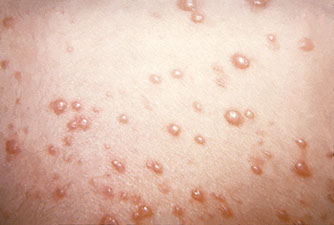
    Image of the shingles.

    Causes

    The virus that causes chicken pox – varicella zoster virus (VZV) causes shingles. To get shingles, you must have had chicken pox. You are more likely to get shingles after an illness or taking medicine that lowers the immune system. Stress or trauma can also increase the risk for shingles.

    Treatment

    If you think you might have shingles, see your doctor right away! He or she can prescribe:

    *  An oral antiviral medicine. This can make symptoms less severe and help you get better sooner. To help, this medicine needs to be started within 24 to 72 hours after the rash first appears.

    *  Medicine for pain. This includes over-the-counter pain relievers and capsaicin topical cream. Prescribed medicine may be needed for pain. A skin patch called Lidoderm may be helpful for PHN.

    *  Other medicines to treat symptoms.

    Questions to Ask

    Self-Care / Prevention

    *  A Zoster vaccine may help prevent getting shingles. It can also reduce the pain due to shingles. The vaccine is advised for persons age 60 and older.

    *  Unless your doctor has prescribed pain medicine, take an over-the-counter one as directed.

    *  Don’t wear clothing that irritates the skin area where sores are present.

    *  Keep sores open to the air. Until the blisters are completely crusted over, do not go near children or adults who have not yet had chicken pox. Do not go near persons who have a condition which weakens their immune system. Examples are cancer, HIV/AIDS, and chronic illnesses. They could get chicken pox from exposure to shingles.

    *  Wash blisters. Don’t scrub them.

    *  To relieve itching, apply calamine lotion to the affected area. You can also use a paste made of 3 teaspoons of baking soda mixed with 1 teaspoon of water.

    *  Avoid drafty areas.

    *  Put a cool compress, such as a cold cloth dipped in ice water, on the blisters. Do this for 20 minutes at a time.

    *  Drink lots of liquids.

    Resources

    National Institute of Allergy and Infectious Diseases (NIAID)

    www.niaid.nih.gov

    National Shingles Foundation

    212.222.3390

    www.vzvfoundation.org

    Healthier at Home book by the American Institute for Preventive Medicine. www.HealthyLife.com. All rights reserved.

    © American Institute for Preventive Medicine

  • Shock

    First Aid

    Shock occurs when the circulation system fails to send blood to all parts of the body. With shock, blood flow or blood volume is too low to meet the body’s needs. Areas of the body are deprived of oxygen. The result is damage to the limbs, lungs, heart, and brain.

    Signs & Symptoms

    *  Weakness. Trembling.

    *  Feeling restless. Confusion.

    *  Pale or blue-colored lips, skin, and/or fingernails. Cool and moist skin.

    *  Rapid, shallow breathing. Weak, but fast pulse.

    *  Nausea. Vomiting. Extreme thirst.

    *  Enlarged pupils.

    *  Loss of consciousness.

    Causes

    *  A heart attack.

    *  Severe or sudden blood loss from an injury or serious illness. Bleeding can occur inside or outside the body.

    *  A large drop in body fluids, such as following a severe burn.

    Treatment

    Shock requires emergency medical care.

    Questions to Ask

    Self-Care / Prevention

    First Aid for Shock Before Emergency Care

    *  CHECK for a response. Give Rescue Breaths or CPR as needed.

    *  Lay the person flat, face-up, but do not move him or her if you suspect a head, back, or neck injury.

    *  Raise the person’s feet about 12 inches. Use a box, etc. Do not raise the feet or move the legs if hip or leg bones are broken. Keep the person lying flat.

    *  If the person vomits or has trouble breathing, raise him or her to a half-sitting position (if no head, back, or neck injury). Or, turn the person on his or her side to prevent choking.

    *  Loosen tight clothing. Keep the person warm. Cover the person with a coat, blanket, etc.

    *  Monitor for a response. Repeat the steps listed above, as needed.

    *  Do not give any food or liquids. If the person wants water, moisten the lips.

    *  Reassure the person. Make him or her as comfortable as you can.

    Healthier at Home book by the American Institute for Preventive Medicine. www.HealthyLife.com. All rights reserved.

    © American Institute for Preventive Medicine

  • Shoulder Pain & Neck Pain

    Bone & Muscle Problems

    Signs & Symptoms

    *  The pain can be mild to severe. It can be felt in one spot, in a large area, or travel to another area. Movement can cause the pain or make it worse.

    *  Stiffness and/or swelling may occur.

    Causes

    *  Overuse and wear and tear on neck and shoulder muscles and joints.

    *  Strains. Broken or dislocated shoulder.

    *  Poor posture. Awkward sleeping positions. Sleeping on a soft mattress.

    *  Pinched nerve. Pain from a pinched nerve usually runs down one side of the arm.

    *  Frozen shoulder. This can result from lack of use due to pain from an injury. At first, pain occurs with movement. Over time, the pain gets better, but stiffness remains.

    *  Torn rotator cuff. This is a tear in a ligament that holds the shoulder in place. Symptoms are pain at the top and outer sides of the shoulders, especially when you raise or extend your arm. You may also feel or hear a click when the shoulder is moved.

    *  Tendinitis. This is swelling of a tendon (tissue that connects a muscle to bone). Left untreated, tendinitis can turn into “frozen shoulder.” “Wry” neck is a similar problem.

    *  Bursitis. This is swelling of the sac (bursa) that surrounds the shoulder joint. Bursitis can be caused by injury, infection, overuse, arthritis, or gout.

    *  A whiplash injury.

    *  Osteoarthritis.

    *  Infections that cause swollen lymph nodes in the neck.

    Treatment

    Treatment for shoulder pain and/or neck pain depends on the cause. Emergency medical care is needed for:

    *  A serious injury.

    *  A broken bone.

    *  A heart attack.

    *  Meningitis. This is an infection of the membranes that surround the brain.

    Self-care can treat less serious causes of shoulder pain and/or neck pain.

    Questions to Ask

    Self-Care / Prevention

    For Pain

    *  Take an over-the-counter medicine for pain and/or swelling.

    *  To relieve tension and improve circulation, take walks. Start with 3 to 5 walks a day, each lasting 5 to 10 minutes. Gradually increase walking times.

    For Bursitis, Tendinitis, or an Injury That Does Not Appear Serious

    *  Use R.I.C.E.

    *  Try liniments and balms. These provide a cooling or warming sensation, but only mask the pain. They do not promote healing.

    To Treat Neck Pain from a Whiplash Injury or Pinched Nerve

    See a doctor anytime your motor vehicle is hit from the rear because the accident can cause a whiplash injury. After first checking with your doctor, do these things to ease neck discomfort:

    *  Rest as much as you can by lying on your back.

    *  Use cold and hot packs.

    *  Improve your posture. When you sit, use a chair with a straight back. Make sure your buttocks go all the way to the chair’s back. When you stand, pull in your chin and stomach.

    *  Use a cervical (neck) pillow or a rolled hand towel under your neck.

    *  Avoid activities that may aggravate your injury.

    *  Cover your neck with a scarf if you go outside when the weather is cold.

    Ways to Prevent Shoulder Pain & Neck Pain

    *  Avoid repeated activities that twist or put strain on the neck and shoulders. When you do repeated tasks, use proper posture, equipment, and techniques.

    *  Wear seat belts in vehicles. Use protective gear when you take part in sporting events.

    *  If you are out of condition, strengthen your muscles gradually.

    *  Don’t sleep on your stomach. You may twist your neck in this position. Use a firm polyester pillow, a neck (cervical) pillow, or a rolled towel under your neck.

    *  Practice good posture. Stand straight. Don’t let your shoulders slump, your head droop, or your lower back slouch.

    *  When you carry things, such as a shoulder bag, switch from one shoulder to the other.

    *  Don’t prop a telephone between your ear and shoulder.

    *  Stretch and warm up before activities that require joint movement, such as sports.

    *  Do stretching and strengthening exercises to keep your shoulder, neck, and arm muscles strong and flexible.

    – Shoulder Stretch: Reach your right arm across your chest. With your left hand, grasp your arm just above the elbow. Gently pull your arm farther across your body until you feel a stretch in the back of your shoulder. Hold for 30 seconds. Rest and repeat. Do the same with your left arm.

    – Neck and Shoulder Stretch: Tilt your head forward and let it hang. Relax your neck and shoulders. Slowly, roll your head to one side then back to the front and then slowly roll it to the other side. (Do not roll your neck backward.) Repeat 10 times.

    Resources

    National Institute of Arthritis and Musculoskeletal and Skin Diseases (NIAMS)

    877.22.NIAMS (226.4267)

    www.niams.nih.gov

    Healthier at Home book by the American Institute for Preventive Medicine. www.HealthyLife.com. All rights reserved.

    © American Institute for Preventive Medicine

  • Sickle Cell Anemia

    Bone & Muscle Problems

    Red blood cells are normally round. In sickle cell anemia, the red blood cells take on a sickle shape. This makes the blood thicker and doesn’t let oxygen get to the body’s tissues like it should. When sickled cells get stuck in the blood vessels, they cut off the blood supply. With no oxygen, pain occurs. The result is a “Sickle Cell Crisis.”

    Signs & Symptoms

    *  Bone and joint pain. This is the most common complaint. The pain can also be in the chest, back, or abdomen.

    *  Shortness of breath and a hard time breathing.

    *  Swollen hands and feet.

    *  Jaundice. The whites of the eyes and/or the skin looks yellow.

    *  Paleness.

    *  Repeated infections, especially pneumonia or meningitis.

    *  Kidney problems. Leg ulcers. Gallstones (at an early age). Gout.

    *  Seizures.

    *  Strokes (at an early age).

    Causes

    Sickle cell anemia is inherited. In the U.S., it mostly affects African Americans, but can occur in other ethnic groups. Examples are persons whose ancestors are from Cuba, Central and South America, Greece, Italy, Turkey, and Saudi Arabia. About 1 in 12 African Americans carries the gene for the sickle cell trait. If both parents carry the trait, the chance of having a child with sickle cell anemia is 1 out of 4. About 1 in 375 African Americans and about 1 in every 1,000 Latin Americans are born with sickle cell anemia. Signs of the disease aren’t noticed until the end of the infant’s first year. All hospitals in the U.S. screen newborns for sickle cell disease.

    To prevent sickle cell anemia in offspring, couples, especially African American couples, should have a blood test to see if they are carriers for the sickle cell trait. Genetic counseling can help them decide what to do.

    Treatment

    Medical treatment is needed. Painful episodes are treated with painkillers, fluids, and oxygen. Other treatments:

    *  Hydroxyurea medicine.

    *  Blood transfusions.

    *  Stem cell transplant. This may be an option for children who have a brother or sister without sickle cell disease that is a matched donor.

    In the U.S., the life span for a person with sickle cell disease is 40-60 years.

    Questions to Ask

    Self-Care / Prevention

    *  Follow your doctor’s treatment plan. Wear a medical alert tag.

    *  Avoid physical stress and high altitudes.

    *  Discuss airplane travel with your doctor.

    *  Ask your doctor what over-the- counter medicines you can use before you try any.

    *  Drink at least 8 glasses of water a day. Get the rest you need.

    *  Follow a balanced diet. Have at least 5 servings of fruits and vegetables a day. Take folic acid (a B vitamin) supplements and other vitamins and minerals, as advised by your doctor.

    *  Don’t wear tight clothing.

    *  If at home and in a “sickle cell crisis:”

    – Stay warm. Apply warm compresses to painful parts of your body.

    – Rest in bed.

    – Take pain medication, as prescribed.

    Healthier at Home book by the American Institute for Preventive Medicine. www.HealthyLife.com. All rights reserved.

    © American Institute for Preventive Medicine

  • Signs Of Pregnancy

    Pregnancy & Prenatal Care

    What to Look For

    Do you think you might be pregnant? Here are some signs to look for:

    *  You have missed a menstrual period. You are at least 2 weeks late. {Note: Stress or illness can cause your period to be late, too. And, some women do not have regular periods. It may be hard for them to know if their period is  2 weeks late. Other women can have a light menstrual period or spotting and still be pregnant. So watch for other signs also listed here.}

    *  You feel tired. This is the most common sign.

    *  You feel sick to your stomach. You may even throw up. This is called “morning sickness.” But it can occur any time of day or night.

    *  You need to pass urine more often.

    *  You have food cravings.

    *  Your taste for certain foods changes.

    *  You have a metallic taste in your mouth.

    *  There are changes in your breasts.

    – They feel tender.

    – They feel tingly.

    – They are swollen.

    – The dark areas around your nipples are darker than before.

    – The tiny glands around your nipples stick up.

    Prenatal Self-Care book by the American Institute for Preventive Medicine. www.HealthyLife.com. All rights reserved.

    © American Institute for Preventive Medicine