Author: AIPM

  • Eating Right With Gout

    SELF-CARE CORNER

    Variety of leaft greens.

    Gout is a type of arthritis. It can develop if a person has high levels of a substance called uric acid in their blood. Uric acid can form sharp crystals in the joints. This can cause severe pain, redness, warmth and swelling. Gout often affects the big toe, but it can affect other joints.

    Sometimes gout doesn’t cause any pain for a while. Then, a person may get severe pain in the affected joint. This is called a gout attack. When a gout attack happens, uric acid levels go up or the crystals in the joint cause irritation. A gout attack is very painful.

    In addition to pain, gout can cause heart problems. People who have gout may be more likely to have heart failure, a heart attack or stroke. Eating certain foods can help keep uric acid levels low. This can help a person prevent gout attacks.

    What to eat with gout

    If you have gout, you may want to eat more of the following foods:

    *  Leafy green vegetables

    *  Other green vegetables like green beans and peas

    *  Legumes like beans and lentils

    *  Tofu

    *  Low-fat or fat-free milk and dairy products

    *  Whole grain breads and cereals

    *  Vegetable oils like olive oil

    *  Coffee (if you already drink it)

    *  Citrus fruits like grapefruit and oranges

    *  Pineapple

    *  Strawberries

    *  Cherries

    In addition, drink at least eight glasses of water a day.

    Skip these foods & drinks

    Certain foods and beverages can trigger gout attacks. Avoid the following:

    *  Beer (alcoholic and  non-alcoholic)

    *  Alcoholic drinks

    *  Soda, fruit juice, and foods with high-fructose corn syrup

    *  Organ meats like liver and sweetbreads

    *  Cold water fish like tuna, salmon and trout

    *  Shellfish like mussels, scallops, squid, shrimp, oysters, crab and lobster

    Eating a healthy diet is a great way to manage gout and help avoid attacks. It also helps to get regular exercise. Be sure to see your doctor as recommended. Your doctor may prescribe gout medication if needed and will discuss your heart disease risk.

    Sources: American Heart Association, Arthritis Foundation

    © American Institute for Preventive Medicine

  • Encourage Exercise In Others

    BE FIT

    Image of man and women doing pushups.

    Sticking to an exercise routine can be hard. But sometimes getting support from another person can help you get started. If you’ve been able to work out regularly, you can help a loved one do the same. Be a positive force in their life by supporting them, not forcing them. Try these strategies that can encourage them without pressure.

    *  Make it doable. Don’t suggest signing up for difficult classes or workouts right away. A walk in the evening or doing push-ups while watching TV can be less overwhelming.

    *  Try something new. A new walking route, different stretches or a fun strength program may help them get motivated. Get away from the same old routine that may not have worked in the past.

    *  Let them pick. See if they are interested in any local exercise classes or programs – and go with them.

    *  Plan a meetup time. Many people find exercising right after work is helpful. This may be easier than trying to go back out after you’ve come home to relax. Some people are able to stick to a lunchtime walk if they work in the same place.

    *  Be consistent. Try to make your exercise routine a regular part of your week. For instance, two times each week is a doable but consistent way to start.

    *  Be an early riser. If the person lives with you, see if you both can get up 30 minutes earlier for a walk first thing in the morning.

    *  Ditch the car when you can. If the store or coffee shop is close by, you can walk or bike there together.

    *  See things from their point of view. It’s hard to get started with exercise. Try to understand how challenging it can be. Ask them how you can best support them.

    A positive mindset

    When it comes to exercise, the mind is as important as the body. When starting a new healthy habit or helping someone else, remember to:

    *  Celebrate small efforts. Be happy about seeing an improvement – no matter how small – in strength or fitness level.

    *  Don’t let setbacks take over. If you miss a week or even two, get back to it. Tell the person you’re not giving up, and help them try again.

    Remember that every little bit of exercise is a step in the right direction!

    Source: U.S. Department of Health and Human Services

    © American Institute for Preventive Medicine
  • Exercise Safely In The Heat

    BE FIT

    Man sitting on bench beside his bike.

    Summer seems like an ideal time to exercise. After all, you don’t have to worry about slipping on ice or wearing extra layers to keep warm.

    But summer comes with its own set of safety issues. Heat illness can affect anyone, even people who are in great shape and healthy.

    What is heat illness?

    Heat illness happens when a person’s body gets too hot. This often happens when a person exercises in high temperatures.

    Heat illness can be mild to severe. Sometimes it’s just a sign that you need to cool off and get out of the sun. But other times, it can be dangerous or life-threatening.

    Time to chill out

    Signs of a mild heat illness include heat rash and heat cramps. A heat rash may be red and look like pimples. Heat cramps are muscle cramps or spasms.

    If you notice either of these signs when exercising, seek some shade and cool off. These are not usually serious conditions.

    People who have heart conditions or who follow a low-salt diet should talk to a doctor if they notice muscle cramps or spasms with exercise. If your heat rash doesn’t go away within a couple of days, see your doctor.

    When the heat is an emergency

    Heat exhaustion may cause:

    *  Heavy sweating

    *  Cold or clammy skin

    *  Feeling weak

    *  Weak but fast pulse

    *  Feeling sick

    *  Headache

    *  Fainting

    *  Dizziness

    If you notice these signs in yourself or another person, don’t wait. Seek shade or go indoors. Put cool, wet cloths on the body and head or take a cool bath. Get medical help if it doesn’t get better within an hour or if the person is throwing up.

    Heat stroke is the most severe kind of heat illness.

    It may cause:

    *  Temperature over 103ºF

    *  Skin that is clammy, hot or red, and even dry to the touch.

    *  Fast and strong pulse

    *  Headache or confusion

    *  Dizziness and/or fainting

    *  Feeling sick

    If you suspect heat stroke, get emergency medical care. Call 911 right away. Move the person to a cooler place. Apply cool cloths to their body. Do not give them anything to drink.

    Sources: Centers for Disease Control and Prevention, American Academy of Family Physicians

    © American Institute for Preventive Medicine
  • Exercise When You Travel

    BE FIT

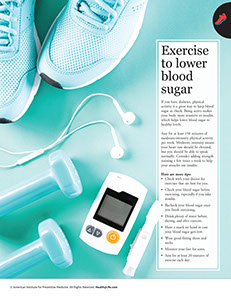
    Group of people hiking.

    How you exercise may look different when traveling, but it’s still worthwhile. In fact, mixing things up when you’re away from home keeps your workouts fresh and interesting. Try these tips:

    *Bring resistance bands along.Easily packable and super lightweight, resistance bands give you the flexibility to exercise anywhere. Bring a few different types for the most exercise options.

    *Book a hotel with a gym.Many hotels offer fitness rooms. The equipment is often fairly basic, but you can usually depend on a treadmill or bike and a set of free weights.

    *Use your bodyweight.All you really need for a good sweat session is your body! Movements like push-ups, tricep dips, squats, and lunges can be combined in a challenging circuit.

    *Get outside.What better way to get the most out of your travel than to explore on foot. And all that walking counts as exercise!

    © American Institute for Preventive Medicine
  • Feeding The Picky Eater

    FAMILY LIFE

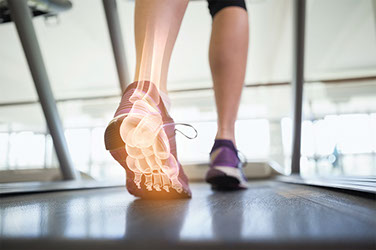
    Image of young girl excited to eat.

    Pre-dinner tips

    *  Get your child involved. Many kids can help with shopping and cooking. Being involved in the process may make them more likely to try new foods. Have them choose a favorite fruit or vegetable from the store. Younger children can help pour ingredients or cut soft foods, like bananas, with a butter knife. Older children can help with measurements.

    *  Get some exercise. Kids who have been actively playing may be hungrier when dinner comes. The hungrier they are, the more likely they may try new things.

    *  Turn off devices. Make family mealtimes relaxing and unplugged. Ban cell phones, television or other devices from the table.

    Size matters

    Don’t force your child to eat foods they don’t like. Rather, put a “sample size” on their plate. It can be just one bite of food. This may be less overwhelming than serving a large portion to them.

    Sanity-saving steps

    *  Make healthier snacks to fill the gaps. Serve fresh fruit or vegetables as a snack to get in extra nutrients. Skip the processed crackers and chips.

    *  Don’t have a battle. Forcing your child to eat could make them dislike their food even more.

    *  Don’t use bribes or rewards for eating. Rewards teach your child to expect something every time he/she tries a new food.

    *  Make one healthy meal for everyone. Don’t feel pressured to make “special meals” for picky eaters.

    *  Talk about your child’s eating habits with their doctor. Most picky eaters are getting enough of the foods they need. But, ask their pediatrician just in case. Some children need supplements to help get extra nutrients that they’re missing.

    Source: American Academy of Pediatrics

    © American Institute for Preventive Medicine
  • Filing For A Tax Extension

    FINANCIAL HEALTH

    Women on computer.

    A federal tax extension allows you extra time to file your taxes. You can request an extension for any reason and receive an additional six months to complete your return. Here’s what you need to know.

    *  You must request an extension before your filing deadline. Don’t delay or you risk a penalty.

    *  Submit the form via mail or electronically by your regular tax return deadline, usually April 15th.

    *  To avoid any potential penalties, pay estimated taxes at the time you submit the form.

    *  If you cannot pay what you owe, you can request a payment plan. Visit the IRS website to learn more.

    *  Use the extra time to file your return. The IRS does not allow a second extension, so don’t let the time slip away.

    *  Fill out the Application for Automatic Extension of Time To File U.S. Individual Income Tax Return available atirs.gov.

    © American Institute for Preventive Medicine

  • Find The Energy To Exercise

    BE FIT

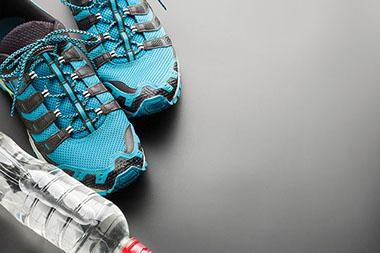
    Image of athletic shoes and a bottle of water.

    Too tired to work out? Try these tips to boost energy and get moving.

    1.  Move around. At work, try to switch between sitting and standing. Doing too much of one or the other may leave you feeling drained.

    2.  Sip lots of water. Starting in the morning, drink water and keep drinking it throughout the day. This can keep energy levels from sinking in the afternoon.

    3.  Eat healthy carbs. Choose whole grains, fruits and vegetables, such as carrots.

    4.  Watch your breathing. Slow, deep breaths can relax and energize you throughout the day.

    © American Institute for Preventive Medicine
  • First Aid Kits: Stay Up To Date

    SELF-CARE CORNER

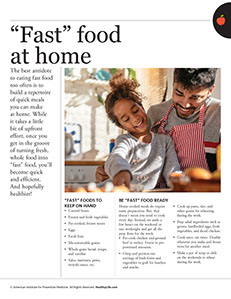
    Women helping wrap man's foot and ankle with sprain wrap.

    A first aid kit is an essential self-care item that should always be handy. A well-stocked kit prepares you for any situation or emergency that may arise.

    If you don’t have a first aid kit, you can purchase ready-made kits at most pharmacies. Ideally, you should have a kit for your home as well as your vehicle, so you’re covered anywhere you go.

    First aid kits should be updated every six months to keep supplies stocked and replace expired items. Now is a good time to go through your kits to ensure they are up to date and stocked with everything you need.

    What should be in your kit?

    *  2 absorbent compress dressings (5 x 9 inches)

    *  25 adhesive bandages (assorted sizes)

    *  1 adhesive cloth tape (10 yards x 1 inch)

    *  5 antibiotic ointment packets

    *  5 antiseptic wipe packets

    *  2 packets of aspirin (81 mg each)

    *  1 emergency blanket

    *  1 breathing barrier (with one-way valve)

    *  1 instant cold compress

    *  2 pairs of nonlatex gloves (size: large)

    *  2 hydrocortisone ointment packets

    *  1 3-inch gauze roll (roller) bandage

    *  1 roller bandage (4 inches wide)

    *  5 3 x 3-inch sterile gauze pads

    *  5 sterile gauze pads (4 x 4 inches)

    *  A thermometer (non-mercury/non-glass)

    *  2 triangular bandages

    *  Tweezers

    *  A first aid guide or reference book

    Personalize your kit

    Depending on the needs of yourself and your family, you should add special items unique to your situation. For example:

    *  If someone in your family has diabetes, include glucose tabs/gels, quick glucose snacks, and a glucagon injection kit.

    *  If someone in your family has a severe allergy, include an epi-pen and some antihistamine medication.

    *  Include a list of medications that each family member takes, as well as contact information for their doctors.

    *  Include your address in a prominent place in your first aid kit. This will allow the person who is helping you in an emergency to give this information to first responders.

    © American Institute for Preventive Medicine

  • Foot Health Matters With Diabetes

    SELF-CARE CORNER

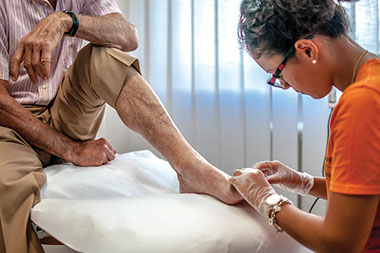
    Patient having his foot examined by a doctor.

    People with diabetes have a higher risk of getting certain foot problems. This usually happens because diabetes can cause nerve damage in the feet. This is known as diabetic neuropathy, which can lead to tingling, burning or weakness in your feet.

    Why does neuropathy matter?

    Diabetic neuropathy isn’t just painful. It also means that you may not feel things like cuts, injuries or heat or cold on your feet. Your feet could get hurt or burned and you wouldn’t know it. Then, with reduced blood flow, your body may not be able to heal the skin very well.

    Keeping skin healthy

    Wash, dry and moisturize the skin on your feet every day. Also, check for problems. Here’s how:

    *  After bathing, dry your feet gently with a towel.

    *  Look for corns, calluses, blisters or cuts. If you notice any of these, call your health care provider. Don’t try to remove corns or calluses yourself.

    *  If your skin looks healthy, you can moisturize. Apply a skin cream to dry areas.

    *  Don’t apply cream between your toes. This can cause fungus to grow. Keep the area between toes clean and dry.

    *  If you can’t trim your toenails easily, have this done by a podiatrist or other health provider.

    Good shoes are your friend

    Poorly fit shoes can cause sores, or ulcers, on your feet. These can lead to infection. Even if you don’t feel pain, see your doctor about any sores on your feet. You should also stay off your feet until your doctor says it’s ok. Don’t walk in your bare feet because this can put your feet at risk.

    You can avoid many foot ulcers by getting comfortable, supportive shoes. A podiatrist or foot specialist may help you find a pair that fits your feet well without rubbing. Wearing socks that wick moisture, such as wool socks, can also help. Wearing wet socks or shoes can lead to fungal infections.

    Helpful ways to avoid foot problems with diabetes:

    1.  Go to regular checkups.

    2.  See your doctor if you have any foot injuries or skin changes on your feet.

    3.  Follow your diabetes plan to keep blood sugar under control.

    4.  Check your feet every day.

    Source: American Diabetes Association

    © American Institute for Preventive Medicine