Author: AIPM

  • Wheezing

    Respiratory conditions

    Wheezing means you are having a problem with breathing. Air is flowing through swollen or tight breathing tubes.

    Signs & Symptoms

    *  A high-pitched squeaky or whistling sound. This is heard more on breathing out than in.

    *  Chest tightness.

    Causes

    *  Asthma (the main cause).

    *  Allergic reactions.

    *  Congestive heart failure.

    *  Respiratory infections.

    *  Something caught in the windpipe.

    *  Smoking, air pollution, etc.

    Treatment

    Treatment depends on the cause. Medication to relieve narrowing of the airways is usually given for acute attacks of wheezing.

    Questions to Ask

    Self-Care / Prevention

    *  Take prescribed medicines as directed.

    *  Drink plenty of fluids.

    *  Use a cool-mist vaporizer.

    *  Don’t smoke. Avoid secondhand smoke.

    *  Chew foods well before swallowing. When you eat, try not to laugh and swallow at the same time.

    *  Keep small objects that can easily be inhaled away from children under age 5.

    Healthier at Home book by the American Institute for Preventive Medicine. www.HealthyLife.com. All rights reserved.

    © American Institute for Preventive Medicine

  • When To Consider Crowns

    Dental & Mouth Concerns

    Crowns can restore teeth that are broken, chipped, missing, or damaged by decay or disease. A crown is a tooth-shaped porcelain cap that fits over the natural tooth. Crowns improve your appearance, but they also protect your teeth and prolong their useful life.

    Ask your dentist about crowns if you have any of the following dental problems.

    *  Badly decayed and damaged teeth.

    *  Stained, chipped, or cracked teeth.

    *  Noticeable spaces or gaps between teeth.

    *  Teeth loosened by periodontal (gum) disease.

    *  Teeth that have undergone root canal therapy.

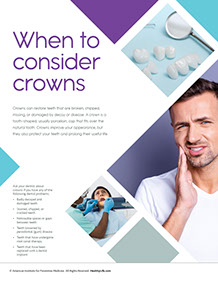
    image of dentist with patient.
    A Year of Health Hints book by the American Institute for Preventive Medicine. www.HealthyLife.com. All rights reserved.

    © American Institute for Preventive Medicine

  • Depression 2

    Women’s Health

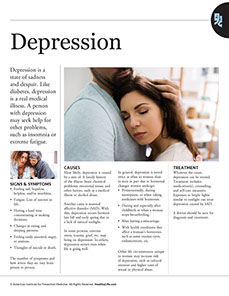
    Close up of women's face as she leans on man chest for support.

    Depression is a state of sadness and despair. Like diabetes, depression is a real medical illness. A person with depression may seek help for other problems, such as insomnia or extreme fatigue.

    Signs & Symptoms

    *  Feeling sad, hopeless, helpless, and/or worthless.

    *  Fatigue. Loss of interest in life.

    *  Having a hard time concentrating or making decisions.

    *  Changes in eating and sleeping patterns.

    *  Feeling easily annoyed, angry, or anxious.

    *  Thoughts of suicide or death.

    The number of symptoms and how severe they are vary from person to person.

    Causes

    Most likely, depression is caused by a mix of: A family history of the illness; brain chemical problems; emotional issues; and other factors, such as a medical illness or alcohol abuse.

    Another cause is seasonal affective disorder (SAD). With this, depression occurs between late fall and early spring due to a lack of natural sunlight.

    In some persons, extreme stress, trauma, grief, etc. may bring on depression. In others, depression occurs even when life is going well.

    In general, depression is noted twice as often in women than in men in part due to hormonal changes women undergo:

    *  Premenstrually, during menopause, or when taking medicines with hormones.

    *  During and especially after childbirth or when a woman stops breastfeeding.

    *  After having a miscarriage.

    *  With health conditions that affect a woman’s hormones, such as some ovarian cysts, endometriosis, etc.

    Other life circumstances unique to women may increase risk of depression, such as cultural stressors and higher rates of sexual or physical abuse.

    Treatment

    Whatever the cause, depression can be treated. Treatment includes medication(s), counseling, and self-care measures. Exposure to bright lights similar to sunlight can treat depression caused by SAD.

    A doctor should be seen for diagnosis and treatment.

    Questions to Ask

    Self-Care / Prevention

    *  Take medications as prescribed. Get your doctor’s advice before you take over-the-counter herbs, like St. John’s Wort, especially if you take other medications.

    *  Don’t use illegal drugs. Limit alcohol. These can cause or worsen depression. Drugs and alcohol can also make medicines for depression less effective. Harmful side effects can happen when alcohol and/or drugs are mixed with medicine.

    *  Eat healthy foods. Eat at regular times. Don’t skip meals or binge on junk food. Limit caffeine and sugary foods.

    *  Try not to isolate yourself. Be with people you feel safe with even though you feel down.

    *  Do something you enjoy. Do things that let you express yourself. Write, paint, etc.

    *  Exercise regularly.

    *  Relax. Listen to soft music, take a warm bath or shower. Do relaxation exercises. Meditation can help you deal with depression.

    *  Keep an emergency number handy (e.g., crisis hotline, trusted friend’s number, etc.) in case you feel desperate.

    Resources
    Women's Self-Care book by the American Institute for Preventive Medicine. www.HealthyLife.com. All rights reserved.

    © American Institute for Preventive Medicine

  • Women’s Health

    Women’s Health

    Women at home, exercising with a fitness ball.

    Ask your doctor about the benefits and risks of current recommended screening tests for certain cancers and other health problems.

    Most often, ovarian cancer has no symptoms or only vague ones until the cancer is in an advanced stage. Tell your doctor if pain in your lower abdomen or pelvis lasts or if you feel full, even after a light meal.

    Menopause occurs when menstrual periods have stopped for one whole year. Hot flashes and other symptoms usually occur several years before menopause.

    Many over-the-counter products, such as black cohosh, soy items, vitamin and other supplements, etc. claim to relieve symptoms of menopause. Ask your doctor what products are okay for you to take on your own.

    Health at Home Lifetime book by the American Institute for Preventive Medicine. www.HealthyLife.com. All rights reserved.

    © American Institute for Preventive Medicine

  • You’re Built For Breathing

    Respiratory conditions

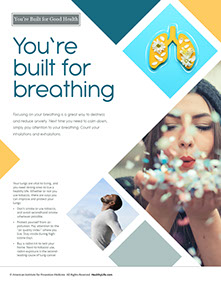
    Women blowing a handful of paper confetti.

    Focusing on your breathing is a great way to destress and reduce anxiety. Next time you need to calm down, simply pay attention to your breathing. Count your inhalations and exhalations.

    Your lungs are vital to living, and you need strong ones to live a healthy life. Whether or not you use tobacco, there are ways you can improve and protect your lungs:

    *  Don’t smoke or use tobacco, and avoid secondhand smoke whenever possible.

    *  Protect yourself from air pollution. Pay attention to the “air quality index” where you live. Stay inside during high-ozone days.

    *  Buy a radon kit to test your home. Next to tobacco use, radon exposure is the second-leading cause of lung cancer.

    Health at Home Lifetime book by the American Institute for Preventive Medicine. www.HealthyLife.com. All rights reserved.

    © American Institute for Preventive Medicine

  • A Case For More Time In The Kitchen

    Healthylife® Weigh

    Part 3

    Couple cooking in the kitchen.

    While this section gives lots of tips for saving time, you may not want to speed through food preparation! Here are some reasons to allow extra time in your day or week for food preparation:

    *  Making more recipes from scratch will give you more control over what is in your food. You can also experiment with more flavors.

    *  Time in the kitchen can be a special time to connect with family and friends after a busy day or week. Turn the TV off and share tasks, like tossing a salad or setting the table.

    *  Many traditions are based around food. Cook old recipes or prepare a meal with an older family member. Sharing stories around food preparation can help you feel connected to your heritage. You may even create new traditions for the next generation of cooks!

    *  Cooking can be an enjoyable hobby. Searching for new recipes, getting creative with modifications, and sharing with others can help you manage stress and bring joy to your day.

    © American Institute for Preventive Medicine

  • A Changing Food Label

    Healthylife® Weigh

    Part 3

    Man reading food label.

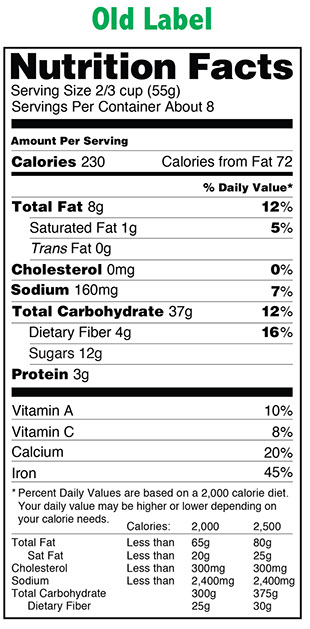
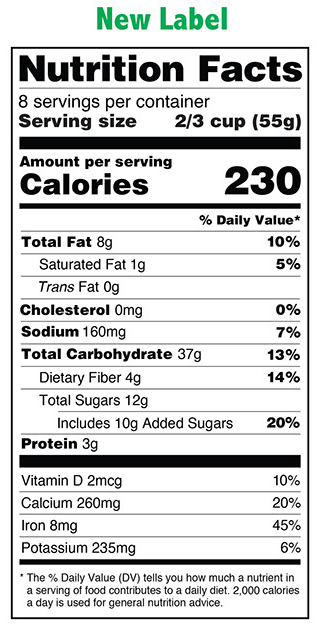
    In 2016, the FDA approved a new food label. The new food label is already on many foods. By mid-2021, all food labels will look like the new label. The new label will help you make more informed choices about what you eat. The changes are shown in the graphic below.

    Graphic of old and new food labels.
    Graphic of old and new food labels.

    © American Institute for Preventive Medicine

  • Add A Stress-Busting Food To Your Day

    Healthylife® Weigh

    Part 6

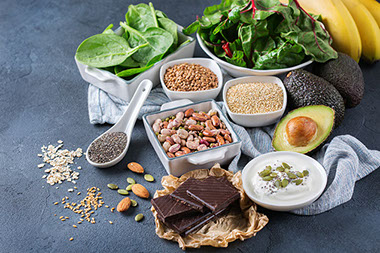
    Variety of food items high in magnesium.

    What you eat may impact your mood. Make sure you are eating a balanced diet with nutrient-dense foods. B vitamins and magnesium can be helpful for managing anxiety and boosting your mood. Avoid foods and drinks high in sugar that can cause mood swings and fatigue.

    B Vitamins

    B vitamins can stimulate the brain’s production of serotonin. This helps you relax and feel good.

    Good Sources of B Vitamins

    *  Animal products: fish, poultry, meat, eggs, or dairy

    *  Whole grains, beans and lentils

    *  Fruits and vegetables, especially leafy greens, papayas, oranges, and cantaloupe

    *  Fortified breakfast cereals and enriched soy or rice milk

    *  Nuts, such as almonds, pistachios, and walnuts

    Magnesium

    Magnesium has a calming effect on the brain. It can help relax muscles, blood vessels, and the gastrointestinal tract. Magnesium can also boost serotonin and reduce mood swings.

    Good Sources of Magnesium:

    *  Dark leafy greens

    *  Nuts, seeds, and dried fruit

    *  Beans and lentils

    *  Whole grains

    *  Avocados and bananas

    *  Dark chocolate

    *  Yogurt

    *  Fish

    © American Institute for Preventive Medicine

  • Add Fruits And Vegetables To Your Current Foods

    Healthylife® Weigh

    Part 2

    Tortilla with grilled chicken fillet, peppers, tomato, and lettuce.

    Try to include a fruit or vegetable with most snacks and all meals. Here are a few ideas to get you started.

    Add to Foods You Already Eat:

    *  Add an extra cup (or two!) of chopped veggies into your favorite omelet, soup, casserole, or whole grain pasta or brown rice dish.

    *  Add slices of cucumber, peppers, or onions to a sandwich.

    *  Add veggies as a filling in a burrito or quesadilla. Top a pizza with veggies.

    *  Shred carrots, zucchini, or an apple into muffins or other baked goods. Search for recipes that include crushed pineapple, avocado, and other produce as baking ingredients. Many fruits and vegetables can be used to replace some of the saturated fat and sugar in a recipe.

    *  Blend greens into a smoothie. Remove the stems first. If juicing, use the whole vegetable or fruit when possible. Juices are “sometimes” foods, as they don’t contain as much fiber or nutrients as the whole fruit or vegetable. The whole vegetable or fruit is more filling due to the fiber content and how much longer it takes to chew versus drink.

    © American Institute for Preventive Medicine

  • Address Anger

    Healthylife® Weigh

    Part 6

    Women with hands on head screaming.

    Ways you can deal with anger, without eating:

    *  Count to ten at the first twinge of anger. Then count back down to zero.

    *  Take three or four slow, deep breaths. Picture the angry impulse passing you by.

    *  Take a walk until you can calm down. Or, do some other form of exercise. If you cannot exercise right away, plan to do it as soon as possible. Look forward to this opportunity to blow off some steam.

    *  If someone says or does something that bothers you, discuss it calmly or wait until you feel you can discuss it calmly. Use assertive communication tools.

    *  Distract yourself. Do a task that has to get done today or in the near future.

    *  Repeat to yourself or out loud, “I’m angry because: ____.” List what is making you angry. Ask yourself, “Are these rational thoughts?”

    *  Listen to music. Make a playlist of songs you know help to calm you down. Or, turn to a radio station that plays soothing music or music you can sing to.

    *  Help someone in need.

    © American Institute for Preventive Medicine