Author: AIPM

  • Balance Of Choice

    Healthylife® Weigh

    Part 1

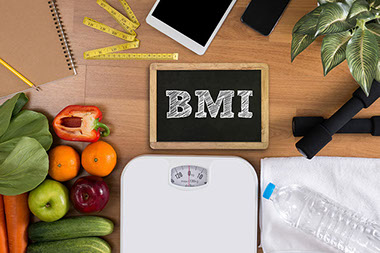
    Dumbbells, scale, towel, fruit, BMI body mass index formula rate formula in a board.

    Learn what is pulling you toward your goal and what is holding you back. All thoughts and feelings are valid. Is your goal more important to you than the challenges to achieve it? Are you pursuing this goal just because someone said you “should” do it? If you think of something later, come back to this to add another point.

    Benefits – “Pros” vs Costs-“Cons”

    Making a change.

    Pro Example: I will have more energy.

    Con Example: I won’t be able to have sweets as often as I do now.

    Not changing.

    Pro Example: I can keep all of my current habits.

    Con Example: I could keep putting on more weight.

    © American Institute for Preventive Medicine

  • Banish Black & White Thoughts

    Healthylife® Weigh

    Part 4

    Three friends enjoying lunch at rooftop restaurant.

    Consider a thought that you tend to see as black and white. Consider some alternative thoughts or ideas you could have instead. Or, when one comes to mind, return to this page and complete the following chart to practice banishing black and white thinking.

    Black & White Thought

    Example: I can’t go to restaurants because I always overeat and ignore my healthy goals.

    Alternative Thoughts

    I can choose restaurants that have healthy choices that I find tasty. I can have a healthy snack before I go out to eat to help prevent overeating at the restaurant.

    As you make changes to your way of thinking, be self-kind, not self-critical. Thinking rationally is like putting on a new, clear pair of glasses. What looked blurry or confusing before may seem more clear. New solutions to a challenge may appear once you look at it differently.

    © American Institute for Preventive Medicine

  • Be A Wary Weight Loss Consumer

    Healthylife® Weigh

    Part 7

    Pills in glasses with tape measure.

    Be wary of miracle pills and quick fixes, even if offered by a “doctor” or someone claiming to be an expert. At many commercial weight loss centers, the staff may not have medical credentials or any advanced training in nutrition. They are often salespeople calling themselves “counselors,” without any medical training. Be wary of any center that pushes products and supplements over real food.

    Avoid injections or pills that advertise being able to block certain nutrients, like fat or carbohydrates. Avoid “fat burners” and anything claiming to target specific parts of your body for fat loss. These are likely a waste of money and can be dangerous.

    Having someone create your meal plan for you may help you get started, but be sure to learn how to do it yourself. Learn to make your own healthy choices. Avoid weight loss programs and schemes that encourage dependence on special products.

    © American Institute for Preventive Medicine

  • Be Persistent

    Healthylife® Weigh

    Part 7

    Man at gym holding a water bottle and apple.

    You may be reading this page well before you reach your goal. That’s okay. Understand that weight loss takes time. Continue to build on what you do each day. Remember, it isn’t a single healthy meal or workout that will get you to your goal. It’s also not a single poor choice or skipped workout that will derail you.

    *  Build trends of healthy choices.

    *  Know and live your values.

    *  Treat your thoughts and actions with compassion.

    *  Don’t settle with just what you know now. Keep learning.

    *  Create a web of support.

    © American Institute for Preventive Medicine

  • Befriend Healthy Fats

    Healthylife® Weigh

    Part 2

    Bottles of olive oil.

    Fats and oils do not have a separate section on MyPlate. Many foods that are sources of healthy fats are part of other groups. For example, nuts and seeds are part of the protein group. Avocados are part of the vegetable group.

    Fat has 9 calories per gram, making it a concentrated form of energy. Fat has more than twice the calories per gram that protein and carbohydrates have. That means there is a lot of energy (calories) in just one spoonful! It is important to select fats that are giving you the most nutritional value for those calories.

    Fats:

    *  Provide energy, especially long-term energy

    *  Transport fat-soluble vitamins (A, D, E, and K)

    *  Help the body make hormones

    *  Help you feel satisfied and full longer

    *  Make up cell structures in body tissues

    *  Cushion vital organs

    *  Support healthy skin and hair

    Chooseplant-based sources of fat most often. Healthy choices are nuts, seeds, nut and seed butters, canola oil, olives, olive oil, and avocado. These foods contain more unsaturated fats (monounsaturated and polyunsaturated fats). Salmon is also a good source of healthy omega-3 fats. While some research suggests that coconut and coconut oil contain a healthy form of saturated fat, there is still much debate in the scientific community about any health benefits.

    Even with healthy fats… Appropriate serving sizes for these foods are small. A small amount will help you feel full and provide many nutrients!

    Limitanimal sources of fat (red meat, processed meats, butter, whole-milk dairy). These foods contain more saturated fat. Saturated fat raises low-density lipoprotein (LDL) (“bad” cholesterol). This increases the risk for heart disease, especially when combined with a higher sugar diet.

    Avoidtransfats in any amount.Transfats are made when manufacturers add hydrogen to vegetable oil. This process gives foods a longer shelf life and adds flavor.Transfats raise your LDL cholesterol and lower your high-density lipoprotein (HDL) (“good” cholesterol). Eatingtransfats increases your risk of developing heart disease, stroke, and type 2 diabetes. Avoid products that contain “hydrogenated oils” or “partially hydrogenated oils.” These ingredients are not considered safe by the U.S. Food and Drug Administration (FDA).

    © American Institute for Preventive Medicine

  • Build On Your Current Habits

    Healthylife® Weigh

    Part 4

    Group of friends sitting at table full of healthy snacks, salads and organic dishes.

    Your day-to-day activities include hundreds of habits. Some may be second nature or automatic, like reaching for your seatbelt when you get in a car. Some may be weaker and subject to change, like including fruits or vegetables with your meals and snacks. Be patient. It can take several weeks to form a new habit.

    As you went through Parts 1 to 3 of this online guide, you may have noticed differences between your habits and the healthy ones suggested. As you start to make changes, first focus on a habit that you do every day. Or, think of a habit that you do many times a day. Changes to everyday habits are going to make a big difference, as they are repeated more.

    Using the examples below, compare the impact of making changes to occasional habits versus making changes to everyday habits.

    *  Example A: Change an occasional habit, such as choosing healthy snacks at the airport.

    *  Example B: Change an everyday habit, such as having a glass of water with meals and snacks.

    Breaking old habits is not easy. It takes more than willpower. It takes a plan.

    © American Institute for Preventive Medicine

  • Build Support At Home

    Healthylife® Weigh

    Part 4

    Mature couple talking together on sofa.

    Talk to the people you live with about what you are doing. Let them know why you are making these changes. Ask for their support and say “thank you” for things they do that help you.

    *  Set food rules for everyone in the family to follow. This may include eating together at the table and keeping the TV off. Keep phones in another room.

    *  Keep unhealthy snacks in dark containers, out of plain sight.

    *  Encourage positive talk about new meals and snacks in the house. If a new food is disliked, talk about why. A food can be prepared in a different way.

    *  Involve others in meal planning, especially if everyone will be eating the same meals.

    *  Prepare meals together. Adults and children can learn valuable lessons in the kitchen, from math skills to building self-confidence.

    *  Be active together. Make this time more about shared family joys than weight loss. Stretch together in the morning or go for a walk after dinner. Plan family picnics that involve a hike or bike ride.

    © American Institute for Preventive Medicine

  • Build Support At Work

    Healthylife® Weigh

    Part 4

    Employees talking over a coffee break.

    *  Find out about your company’s wellness program.

    – Participate in challenges, such as a step contest, offered through your wellness program. There may be rewards for participation or winning the challenge.

    – Join the wellness committee and participate in surveys that give you a chance to share your opinion. Let your company know what policies will help you be healthy. Your employer wants you to be healthy, as this helps their health care costs and helps you be productive at work.

    – Volunteer to be a wellness champion. Sharing your journey with others may help give your goals a bigger purpose.

    *  Organize walk times with coworkers at work. If you can, spend part of your lunch break going for a walk around the building or outside.

    *  If you are going out to eat with coworkers, suggest you go somewhere that offers healthy options.

    *  Celebrations at work should include healthy options and limit unhealthy options. Encourage the person who organizes these events to make healthier options available.

    *  Split meal prep with a coworker. Bring a healthy lunch or snack to share for the first half of the week. For the second half of the week, your coworker brings a healthy lunch or snack to share.

    © American Institute for Preventive Medicine

  • Cardio Training

    Healthylife® Weigh

    Part 5

    Man swimming.

    Short for cardiovascular training, “cardio” helps strengthen your heart and other muscles. Cardio also causes the brain to release natural substances, called endorphins, that give you a natural “high.” Aerobic exercise also promotes brain health and challenges your mind.

    Cardio training uses large movements that involve multiple muscle groups, such as your legs, buttocks, and abdominals, all at once. Popular aerobic activities are brisk walking, running, cycling, swimming, and low-impact aerobic dancing.

    Low-Intensity, Steady-State (LISS) Cardio

    Do this type of cardio at a low-to-moderate intensity level. With LISS cardio, you should be breathing at a rate that still allows you to be able to talk to someone. Some examples are walking around your neighborhood or riding a bike at a moderate pace. This type of cardio is most helpful when maintained for 30-45 minutes. Work up to this length of time.

    Group Exercise Classes (e.g., Zumba®, step, kick-boxing, spin)

    *  Find a class through your local community center, YMCA, or another fitness center. Many classes are offered in the mornings and evenings and on weekends to accommodate busy work schedules.

    *  Find an instructor who teaches in a style and tempo you feel comfortable with.

    *  For your first class, arrive early and let the instructor know it is your first time. They may help you set up your equipment or introduce you to someone else in the class who can help you.

    *  High-impact aerobics can strain the knees, hips, and ankles. Step aerobics is lower-impact but should still be avoided by anyone with knee problems.

    *  Modify exercises to a level that you can do comfortably. Ask the instructor for advice.

    Walking

    *  Find a safe place to walk. Your neighborhood, a large shopping mall, or local park may offer safe options. Many fitness centers also have indoor walking tracks or treadmills.

    *  Hold your head up and keep your back straight.

    *  Bend your elbows as you swing your arms.

    *  Take long, easy strides.

    Swimming

    *  Swim in a pool or lake supervised by a lifeguard. If the area is unsupervised, do not swim alone.

    *  Take lessons to learn to swim safely and to improve your technique.

    *  Rest frequently and drink water. It can be harder to notice that you are sweating in the pool and becoming dehydrated.

    *  Wear goggles to protect your eyes.

    *  Wear a swim cap if you have long hair. This will help keep hair out of your face and reduce drag.

    *  Rinse off after swimming and use lotion to keep your skin from drying out.

    High-Intensity Interval Training (HIIT)

    LISS is a good place to start with cardio training. Within a few weeks, start to incorporate HIIT training as well. This type of cardio is much more effective at boosting your metabolism and helping with fat loss.

    To do HIIT, alternate between longer periods of low-intensity exercise and shorter bursts of high-intensity exercise. The high-intensity parts should be short, such a walking as fast as you can for 30 seconds, to get your heart rate up. You should feel like you are working at 90% of your maximum effort. Immediately switch to low-intensity exercise, like walking at a medium pace, for a minute or two to bring your heart rate down. Repeat this pattern several times. Work up to 15 to 20 minutes of HIIT. You can also do intervals of 30 seconds of high-intensity exercise and 30 seconds of low-intensity exercise.

    HIIT revs up your metabolic furnace and you can burn a lot of calories in a short period of time. This may be more interesting and enjoyable than exercising at the same rate for your entire workout.

    You can use the same types of exercises that you enjoy for LISS (like running or biking). Or, you can use other full-body exercises, such as jumping jacks and push-ups. Search “HIIT ideas” online or download an app that provides workouts on a timer.

    Plan a HIIT Workout with Popsicle Sticks

    1. Get at least a dozen popsicle sticks.

    2. Write one short exercise on each popsicle stick. Write exercises you know how to do and enjoy. Ideas:

    – Jumping jacks – Push-ups

    – Lunges – Bicep curls

    – Squats – Side leg lifts

    – Front leg lifts – Mountain climbers

    – Bicycle kicks  – Tricep dips

    – Reverse lunges – Jumping rope (or pretending to)

    3. Put the sticks in a cup or a jar.

    4. Pull out 4 sticks. You will be doing these activities after a short warm up.

    5. Warm up for 5 minutes by briskly walking or doing jumping jacks. Notice that your heart rate is higher.

    6. Set a timer for 15 minutes.

    7. Do the 1st activity as many times as you can in one minute.

    8. Walk for one minute.

    9. Do the 2nd activity as many times as you can for one minute.

    10. Walk for one minute.

    11. Do the 3rd activity as many times as you can for one minute.

    12. Walk for one minute.

    13. Do the 4th activity as many times as you can for one minute.

    14. Walk for one minute.

    15. Repeat steps 7 through 14.

    Ideas Using Your Popsicle Sticks

    Keep your jar of exercise ideas out where you can see it. Pull a stick:

    *  When a commercial break comes on TV or the radio.

    *  In the morning after you wake up.

    *  While studying or reading and you need a break.

    *  When you feel anxious or overwhelmed.

    Do the activity on the stick for one minute. Or, set a goal to do a certain number of that exercise. For example, 25 jumping jacks. Keep your popsicle sticks fresh! Add new ideas and things you like to do. Remove sticks that you dread pulling.
    © American Institute for Preventive Medicine

  • Causes Of Weight Gain

    Healthylife® Weigh

    Part 1

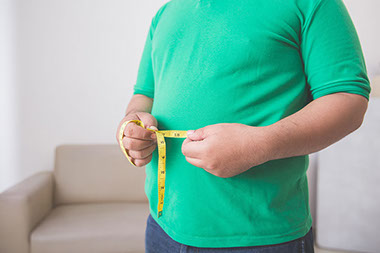
    Overweight man measuring his belly at home.

    In general, taking in more calories than you use up causes weight gain. It’s like using a credit card to pay for things and not being able to pay the balance in full each month. When this happens, you have to pay extra money in interest. With excess calories, the “interest” is in the form of body fat. The more it collects, the harder it is to get it off. This guide will help you to tip the scales in your favor.

    Eating large portions both at home and at restaurants and not being active enough are major reasons people gain weight and why they do not keep lost weight off. Demands of work and life, hormone imbalances, and illness can all make managing weight more difficult. Other factors that can affect a person’s ability to lose and/or gain weight include:

    *  Weight cycling or repeated weight loss. This may slow the body’s metabolic rate, making it easier to gain weight. A drastic reduction in calorie intake signals the body to think it is starving. The body’s natural defense against starvation is to conserve energy. It does so by slowing down and preserving fat. Weight gain in the form of fat makes it more difficult to lose in the future. Extra fat cells created by weight gain never go away. With weight loss, they get smaller, but they don’t disappear.

    *  Stress, anxiety, and depression. High levels of cortisol, a stress hormone, can trigger fat storage and may make it harder to pursue stress-relieving, healthy behaviors like exercise.

    *  Shortage of sleep. Not getting enough sleep may change the body’s metabolism, making it harder to lose weight. Also, less sleep leads to less energy to exercise and craving more sweets for a “pick-me-up.”  It also means more time for snacking.

    *  Medications. Corticosteroids, blood pressure medicines, and antidepressants can contribute to weight gain. Hormone medications, such as insulin, birth control pills, and hormone therapy, can also cause weight gain.

    *  Genetics or inherited family traits. These may make it easier for some people to store excess energy as fat. Also, the ability to release stored energy from fat may be low or inhibited. People with this tendency have trouble getting stored energy from their fat cells, causing them to eat more.

    © American Institute for Preventive Medicine