Author: AIPM

  • Dairy 2

    Healthylife® Weigh

    Menus & Recipes

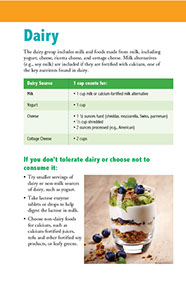
    Dairy products.

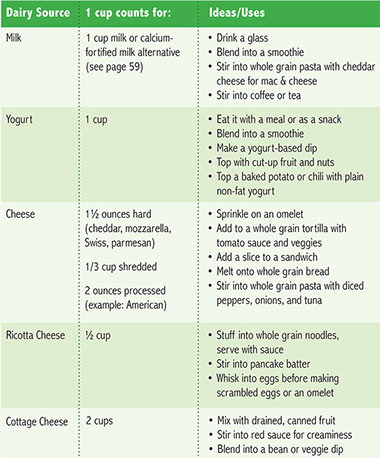
    The dairy group includes milk and foods made from milk, including yogurt, cheese, ricotta cheese, and cottage cheese. Milk alternatives  (e.g., soy milk) are included if they are fortified with calcium, one of the key nutrients found in dairy.

    Chart showing dairy sources and ideas.

    If you don’t tolerate dairy or choose not to consume it:

    *  Try smaller servings of dairy or non-milk sources of dairy, such as yogurt.

    * Take lactose enzyme tablets or drops to help digest the lactose in milk.

    * Choose non-dairy foods for calcium, such as calcium-fortified juices, tofu and other fortified soy products, or leafy greens.

    © American Institute for Preventive Medicine

  • Deep Breathing

    Healthylife® Weigh

    Part 6

    Women doing deep breathing exercises outdoors.

    An increased amount of oxygen allows your heart rate to slow down. This produces a calming effect.

    1. Sit in a chair, arms at your sides, with your legs uncrossed. Or, lie down on a comfortable surface, like a bed or couch.

    2. If you are able, close your eyes. Do not close your eyes while driving or operating machinery.

    3. Note any tension in your muscles.

    4. Slowly inhale through your nose, expanding your abdomen first. Fill your lungs next.

    5. Hold your breath for 2 to 4 seconds.

    6. Slowly exhale.

    7. Repeat this exercise for several minutes.

    Your chest should feel less constricted. You should feel less stress and tension physically and mentally. Problems haven’t gone away, but you may feel more ready to tackle them or cope with a negative emotion.

    Practice Deep Breathing: Take a Rest from Your Emotions

    Detach yourself from your thoughts and emotions. Imagine sitting on a hill and viewing your thoughts and feelings at the bottom of the hill. Observe your thoughts as they pass by. Or, you can stop and think about them. Tell yourself: “I have control over when and how I think about a situation.”

    Put your emotional reactions to a situation or issue to rest for awhile. This helps your mind use logical thinking.

    © American Institute for Preventive Medicine

  • Dispute Unhelpful Thoughts

    Healthylife® Weigh

    Part 4

    Man thinking in front of black chalk board with arrows pointing.

    Thinking in all-or-nothing terms using words like “always,” “never,” and “every” can make it difficult to see options. Avoid thinking about people or situations using absolute terms. Logical thinking looks at more than one option. People can act in different ways. Situations can have many outcomes.

    Have you had any of the unhelpful thoughts below:

    *  Gaining weight and moving less is just part of getting older.

    *  Taking care of myself is selfish.

    *  I weigh less than those around me. At least I am doing better than they are.

    *  My spouse does the grocery shopping and cooking so I have very little control over what I eat.

    *  Eating healthy is too expensive.

    Question your unhelpful thoughts. The strategies on the following pages help to break down thoughts that you may be using as excuses not to change. If you notice you are thinking in absolutes, identify alternatives to your black and white thoughts.

    © American Institute for Preventive Medicine

  • Do Activities You Enjoy

    Healthylife® Weigh

    Part 5

    Older couple riding bikes.

    Answer these questions.

    *  What activities have I been good at before?

    *  What activities do I enjoy doing?

    *  What equipment do I have or can I use?

    *  What outcomes do I want to achieve?

    *  What activities am I physically able to do?

    © American Institute for Preventive Medicine

  • Drink Water

    Healthylife® Weigh

    Part 3

    Elderly man drinking water.

    Water does many important jobs for your body:

    *  Transports nutrients

    *  Helps you digest food

    *  Carries waste from the body

    *  Regulates body temperature

    *  Gives a feeling of fullness

    *  Helps break down fat for energy

    *  Lubricates joints

    *  Helps prevent muscle cramps

    Action Steps:

    *  Drink a glass of water before meals and snacks. This may help you manage your appetite.

    *  Replace a sugar-sweetened drink with water.

    *  Eat foods that are high in water, like cucumbers, leafy greens, and watermelon.

    *  Drink water regularly throughout the day.

    *  Keep a water bottle handy that you can refill when needed.

    *  If you are increasing your fiber intake, also increase your water intake to reduce the risk of constipation.

    How much should I drink?

    Your water needs depend on your activity level and weight. A general rule of thumb is to drink 8 cups of water per day. You may need more if you are very active or sweat a lot.

    How do I know if I’ve had enough?

    Check your urine. When you are properly hydrated, your urine should be light yellow or clear. If it is a darker yellow, you need to drink more water.

    © American Institute for Preventive Medicine

  • Eat The Rainbow!

    Healthylife® Weigh

    Part 2

    Rainbow spectrum of healthy fresh fruit and vegetables.

    Choose a variety of colors when selecting fruits and vegetables. Different colors represent different phytonutrients. Phytonutrients are plant chemicals that have antioxidant and anti-inflammatory qualities. Every time you eat is an opportunity to strengthen your body and prevent disease.

    Red

    *  Improved memory

    *  A healthy heart

    *  Improved digestion

    *  Examples

    –  Tomatoes

    –  Beets

    –  Radishes

    –  Red peppers

    –  Red onions

    –  Rhubarb

    –  Cherries

    –  Red apples

    –  Red grapes

    –  Red pears

    –  Raspberries

    –  Strawberries

    –  Watermelon

    Orange/Yellow

    *  Good vision in low light

    *  A healthy heart

    *  Strength to fight off colds & illness

    *  Healthy skin

    *  Improved circulation

    –  Apricots

    –  Cantaloupe

    –  Nectarines

    –  Peaches

    –  Yellow apples

    –  Yellow pears

    –  Carrots

    –  Sweet potatoes

    –  Yellow peppers

    –  Yellow potatoes

    –  Yellow summer squash

    –  Sweet corn

    –  Yellow tomatoes

    –  Butternut squash

    White

    *  A healthy heart

    *  Lower risk for stroke

    *  Lower risk for some cancers

    –  Brown pears

    –  White peaches

    –  Cauliflower

    –  Kohlrabi

    –  Onions

    –  Garlic

    –  Potatoes

    –  White corn

    –  White nectarines

    Green

    *  Good vision in low light

    *  Strong bones & teeth

    *  Organ health

    –  Green apples

    –  Green grapes

    –  Green pears

    –  Honeydew

    –  String beans

    –  Spinach

    –  Broccoli

    –  Sugar snap peas

    –  Brussels sprouts

    –  Green cabbage

    –  Green onions

    –  Green peppers

    –  Cucumbers

    –  Leafy greens

    –  Lettuce

    –  Peas

    –  Asparagus

    –  Zucchini

    Blue/Purple

    *  Improved memory

    *  Healthy aging

    –  Blackberries

    –  Blueberries

    –  Dried plums

    –  Pitted prunes

    –  Purple asparagus

    –  Purple cabbage

    –  Eggplant

    –  Plums

    © American Institute for Preventive Medicine

  • Eating And Body Image Issues

    Healthylife® Weigh

    Part 5

    Group of friends eating at a resturant.

    Develop a healthy relationship with eating and your body image. Paying attention to your eating and exercise habits can be a positive step for your health, but you are also at risk for having a distorted body image, developing unhealthy eating patterns, and becoming preoccupied with food and body image.

    Healthy Concern

    *  I pay attention to what I eat in order to maintain a healthy body.

    *  I am flexible in my goals for eating well.

    *  I am not concerned what others think regarding what and how much I eat.

    *  Food only occupies a small part of my time.

    *  I balance my pleasure with eating with my concern for a healthy body.

    *  I feel no guilt or shame with what I eat.

    Food Pre-Occupied/Disruptive Eating

    *  It’s hard for me to enjoy eating with others.

    *  I think about food a lot.

    *  I feel ashamed when I eat more than others or more than what I feel I should be eating.

    *  I am afraid of gaining weight.

    *  Eating more than I wanted to makes me feel out of control.

    *  I feel strong when I can restrict how much I eat.

    Eating Disordered

    *  I am afraid to eat in front of others.

    *  When I eat, I have a hard time controlling the amount of food I eat.

    *  I regularly stuff myself and then exercise, vomit, or use diet pills or laxatives to get rid of the food or calories.

    *  I am terrified of gaining weight.

    *  My friends and family are concerned I am not eating enough.

    © American Institute for Preventive Medicine

  • Eating At A Restaurant

    Healthylife® Weigh

    Part 3

    Two people eating at a restaurant.

    Use the same guidelines for choosing food at the grocery store to help you make healthy choices at a restaurant. Compared to preparing food at home, you have less control over what is in your food, how it is prepared, and how much you are served. However, you DO have some control. Here are a few tips to help you follow your eating goals when you eat out:

    1. Choose a restaurant that offers healthy options.

    *  If you are dining with a group, offer to make the reservation.

    *  Read reviews to learn about experiences other people have had at the restaurant.

    *  Avoid all-you-can-eat buffets or anything that is offered in an “endless” supply.

    2. Look up menus ahead of time. Many restaurants, especially fast-food restaurants and other chain restaurants, offer nutrition information online for items on their menu.

    3. Look for clues in the menu. Menus can offer information about what is in the food and how it is made.

    *  Look for meat, poultry, and seafood that has been baked, broiled, steamed, poached, or grilled. Avoid fried choices. Or, ask if a fried food can be prepared with one of these healthier cooking methods.

    *  Pictures, if on the menu, can show you the size of the food groups on the plate. If you need more vegetables to meet your daily needs, ask for an extra serving or order a side salad.

    *  Choose from the “heart healthy” section of the menu, if available. These choices are usually lower in saturated fat and sodium.

    4. Ask for changes to an item, if needed. Menu items can usually be modified by the restaurant. Use the menu to learn what the restaurant has in the kitchen. Mix and match to create a meal that fits your goals. *Be kind and tip your wait staff generously if you are asking for a lot of changes to your order!

    5. Follow your healthy eating plan during the day. Skipping meals or ignoring hunger earlier in the day can lead to overeating or choosing foods higher in sugar, saturated fat, and salt at the restaurant.

    6. Choose your portion. Order your meal as a half-size order or split a meal with a friend. Take some of your food home for another meal.

    7. Set yourself up to be successful. Decline the bread basket, politely. If you are with a group that wants the basket on the table, keep it at the other end to avoid grabbing a piece out of habit. Or, share a piece.

    8. Limit alcohol. This can be a big source of added calories. Stick with one glass of wine or one beer. Or, avoid alcohol altogether.

    Most importantly, enjoy yourself!

    Restaurants can be places to try new foods and flavors and make wonderful memories with family and friends. Take your time. Use your napkin between bites and sip your water often. Engage in conversation. Appreciate the restaurant’s décor and the courtesy of the staff.

    © American Institute for Preventive Medicine

  • Eating Out

    Healthylife® Weigh

    Menus & Recipes

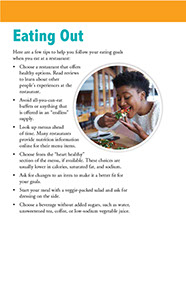
    Two people eating at a restaurant.

    Here are a few tips to help you follow your eating goals when you eat at a restaurant:

    *  Choose a restaurant that offers healthy options. Read reviews to learn about other people’s experiences at the restaurant.

    *  Avoid all-you-can-eat buffets or anything that is offered in an “endless” supply.

    *  Look up menus ahead of time. Many restaurants provide nutrition information online for their menu items.

    *  Choose from the “heart healthy” section of the menu, if available. These choices are usually lower in calories, saturated fat, and sodium.

    *  Ask for changes to an item to make it a better fit for your goals.

    *  Start your meal with a veggie-packed salad and ask for dressing on the side.

    *  Choose a beverage without added sugars, such as water, unsweetened tea, coffee, or low-sodium vegetable juice.

    If you are getting a fast food meal, here are some tips and some healthier options to order:

    Tips

    *  Choose grilled options over fried. This reduces saturated fat.

    *  Look for lower-sodium options.

    *  Order the smaller portions on the menu.

    *  Order water instead of 100% fruit juice. Order 100% fruit juice instead of soda.

    *  If you want a treat, choose a small portion, like a small ice cream.

    *  Eat half a portion and save the other half for later. Or, split a meal or menu item with a friend.

    Healthier Choices

    *  Regular burger, skip the fries and add a side salad with a vinaigrette dressing

    *  Grilled chicken wrap with apple slices and a side salad

    *  4-piece chicken nuggets, small fries, apples, yogurt

    *  Salad with chicken and a clementine

    *  Chili with a small salad

    *  Baked potato with plain yogurt

    © American Institute for Preventive Medicine

  • Energy, Learning, And Focus

    Healthylife® Weigh

    Part 5

    Senior couple exercising in gym.

    Improved Energy Levels

    Exercise helps transport oxygen and nutrients to your tissues. When your heart and lungs are working more efficiently, you have more energy to work, do daily chores, keep up with active kids, and have fun.

    Improved Ability to Learn

    Exercise increases production of cells in the brain responsible for memory and learning. Exercise can help with decision-making and higher-level thinking. Exercise also helps increase brain volume and reduce the number and size of age-related holes in the brain. This decreases the risk for dementia and Alzheimer’s.

    Improved Focus

    Exercise that requires hand-eye coordination or quick foot work helps your brain cells grow. These exercises, like tennis or basketball, may improve your concentration skills better than more simple exercises, like riding a stationary bike.

    © American Institute for Preventive Medicine