Author: AIPM

  • Get Enough Sleep

    Healthylife® Weigh

    Part 3

    Man sleeping.

    Not getting enough sleep can affect your appetite and make it harder to manage your blood sugar. A shortage of sleep also:

    *  Triggers ghrelin, a hunger hormone. Ghrelin increases appetite, especially for sweets, salty foods, and starches.

    *  Decreases another hormone, leptin. Leptin helps your body know when you are full.

    *  Increases anxiety and negative feelings, which can lead you to eat unhealthy snacks and overeat “comfort foods.”

    *  Decreases energy to exercise.

    Tips for Improving Sleep

    *  Create a comfortable place to sleep. Make sure your bed, pillows, and bedding are comfortable.

    *  Maintain a slightly cool temperature in the bedroom.

    *  Avoid looking at a screen (TV, laptop, smartphone, tablet, etc.) 30 minutes before bed.

    *  Create a bedtime and waking routine.

    *  Reserve the bed for sleep and sex. Avoid doing other activities in bed, like work or having an argument.

    *  Have a small snack before bed if you are hungry.

    *  Avoid foods high in sugar or refined carbohydrates just before bed. The rise in blood sugar can provide a burst of energy that keeps you alert and makes it difficult to go to sleep.

    *  Avoid foods that are likely to cause acid reflux (heartburn), gas, cramping, or indigestion if you are prone to these problems. Fatty or spicy foods, beans, garlic, peanuts, and dairy foods may cause discomfort for some people.

    © American Institute for Preventive Medicine

  • Getting Started With Menu Planning

    Healthylife® Weigh

    Menus & Recipes

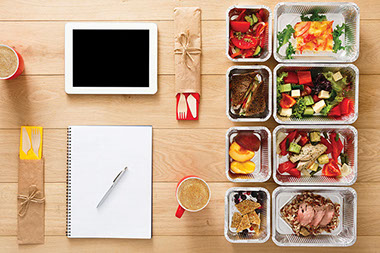
    Meal planning.

    Your work schedule, culture, travel, dietary restrictions, or preferences will influence your meal schedule. Generally, a daily schedule for eating includes:

    *  Breakfast: First meal after waking up

    *  Lunch: 3-4 hours later

    *  Dinner: 4-5 hours later

    *  Snacks: Smaller amounts of food between meals (optional)

    Goals for all meals & snacks

    *  Get enough energy and nutrients.

    *  Choose foods from the main food groups.

    *  Meet your daily goals for all food groups (on most days).

    *  Include tasty food.

    *  Avoid spikes or drops in blood sugar that can trigger overeating.

    Every meal does not have to include every food group.

    Do I have to eat breakfast?

    Breakfast is an important meal that you should not skip. Your body needs energy after a long break in eating. Breakfast kick-starts your metabolism and helps to burn energy during the day. Eating breakfast also helps improve your memory and focus and may lower your risk for heart disease, type 2 diabetes, and obesity.

    © American Institute for Preventive Medicine

  • Grains And Starches

    Healthylife® Weigh

    Part 2

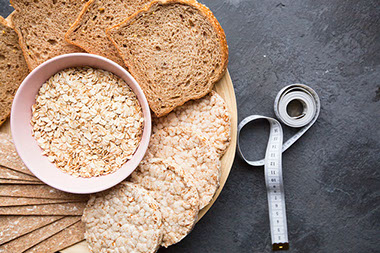
    A bowl of oat flakes, wholegrain bread, crisps and tape-measure.

    Grains & starches make up one quarter of MyPlate. This section includes foods made from grains, such as wheat, rice, quinoa, and oats. It also includes starchy vegetables like potatoes, winter squash, peas, and legumes.

    1 ounce of grains & starches counts as:

    *  1 slice of bread

    *  1 ounce ready-to-eat cereal (about 1 cup cereal flakes)

    *  ½ cup cooked rice, pasta, or cereal

    *  1 tortilla (6-inch diameter)

    *  1 pancake (5-inch diameter)

    *  ¼ cup cooked beans or lentils

    *  5 whole wheat crackers

    *  ½ English muffin

    *  1 small potato (2-3 inches in diameter)

    *  ½ cup mashed potatoes

    *  1 cup green peas

    *  3 cups popped popcorn

    Grains and starchy vegetables are a healthy source of carbohydrates. They provide important vitamins, minerals, dietary fiber, and phytochemicals (plant chemicals). Some are also good sources of protein.

    Limiting grains to a quarter of your plate may be a change for you.   Here are some tips to modify your favorite foods:

    *  Lose the top. Create an open-face sandwich or hamburger.

    *  Double the veggies. In a casserole, use a 2 to 1 or 3 to 1 ratio with vegetables to whole grain pasta or rice.

    *  Add extra veggies to a whole grain pizza crust. You’ll feel fuller with fewer slices of pizza.

    Choose Whole Grains

    Whole grains are nutrient-dense carbohydrates. Whole grains contain the entire grain kernel, including the endosperm, bran, and germ. The bran and germ contain vitamins, minerals, fiber, protein, antioxidants, and healthy fats. The endosperm contains carbohydrate, protein, and trace amounts of vitamins and minerals.

    When grains are processed, the bran and germ are removed. The endosperm by itself does not have as many nutrients as the whole grain.

    Enriched grains have nutrients added back into the food during processing. However, the vitamins and minerals that are added back in are only some of the nutrients lost during processing. Consuming the whole grain is the best way to obtain the nutrients originally found in that food.

    Make at least half of your grain choices whole grains.

    Look for “whole grain” on an ingredients label. For a grain product like bread, cereal, or pasta, this should be the first ingredient. If there is a blend of whole and enriched grains, the product may not have as much nutritional value as a product made with only whole grains.

    Try different whole grains. Each variety offers different nutrients and flavor. Swap out white pasta or rice for one with whole grains this week. Or, use half white and half whole grain choices. Work up to using all whole grains.

    *  Whole wheat, rye, or oats

    *  Millet

    *  Whole grain barley, flour, or cornmeal

    *  Oatmeal

    *  Bulgur

    *  Quinoa

    *  Buckwheat

    *  Brown rice

    Limit your intake of refined grains like white flour and white rice. These grains have been stripped of many nutrients and fiber. Limit foods made with refined grains like cookies, cakes, and some snack foods. These foods may be high in saturated and trans fats, added sugars, and sodium. For the calories those foods have, you may not be getting many nutrients. Eating these foods does not give you a “bang for your buck.”

    Eat Foods Rich in Fiber

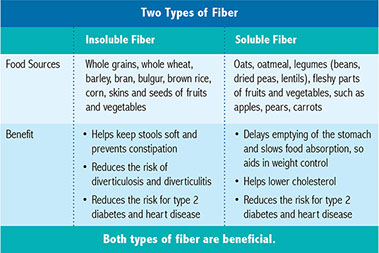
    Fiber is a carbohydrate. It does not provide 4 calories per gram that other carbohydrates do because the body does not break down fibers and absorb them. Foods with fiber do, however, have calories. Fiber is found in plant foods. Animal foods do not have fiber. Include fiber from a variety of sources. Include vegetables, fruits, seeds, nuts, legumes, and whole grains in your diet.

    How Much Fiber Do I Need Each Day?

    Men: About 38 grams daily

    Women: About 25 grams daily

    How Can I Meet this Goal?

    The average American consumes only 15 grams of fiber a day. Here are some easy meal and snack suggestions for increasing your fiber consumption.

    *  Make half of your plate fruits and vegetables.

    *  Add legumes (beans, lentils, etc.) to salads, soups, chili, etc.

    *  Snack on raw veggies.

    *  Choose whole fruits over fruit juices.

    *  Swap white and refined breads/cereals/pastas for whole grain breads/cereals/pastas.

    *  Add flaxseed meal to oatmeal, smoothies, yogurt, and baked goods.

    *  Add berries to salads, oatmeal, and yogurt.

    *  Purée cooked vegetables and add to sauces and stews.

    *  Slice or grate spinach and carrots to add to banana bread, shakes, eggs, or stir fry.

    *  Soak chia seeds in water for an hour or more. They will form a goopy gel that can be used for thickening smoothies, making pudding, or replacing eggs in baked goods.

    Increase your fiber intake gradually. Your digestive system needs time to catch up. Adding too much fiber too quickly can cause gas, bloating, cramps, and diarrhea. Add 5 grams of fiber a day at two-week intervals until you are meeting the Institute of Medicine goal (25 grams daily for women; 38 grams daily for men).

    As you increase your fiber intake, be sure to increase your water consumption as well. Fiber needs water to function properly and to comfortably clear your colon.

    Legumes (Beans and Peas)

    Legumes include all kinds of beans (kidney, pinto, white, black, garbanzo, lima), split peas, lentils, and edamame (green soybeans). Legumes are an excellent source of dietary fiber, protein, iron, zinc, potassium, and other important nutrients. Their nutrient profile puts them in the starchy vegetable group as well as in the protein group. They can be counted toward either of the MyPlate food groups.

    Ways to include legumes in your diet:

    *  Add different kinds of beans to a chili or soup. Each type of bean offers something different and helpful for your body.

    *  Pack edamame as a grab-and-go snack.

    *  Toss cooked, washed beans onto a salad for a filling meal with long-lasting energy.

    *  Add black or pinto beans to a burrito with grilled vegetables and brown rice. Top with salsa for an extra source of vegetables.

    Starchy Vegetables

    Include starchy vegetables to fulfill the grain/starch requirement. Aim for at least one of your daily starch choices to be from this group.

    Starchy Vegetables (1 serving = 1/2 cup to 1 cup)

    *  Corn

    *  Green peas

    *  White potatoes

    *  Parsnips

    *  Butternut squash

    *  Acorn squash

    *  Plantains

    *  Pumpkin

    *  Sweet potatoes

    Ways to include starchy vegetables in your diet:

    *  Use potatoes and squash as a thickener in soups.

    *  Add corn to a breakfast burrito with beans, eggs, and salsa.

    *  Cube peeled winter squash, such as butternut squash, and roast in the oven with oil and spices.

    *  Spiralize squash for a colorful cold salad.

    *  Blend pumpkin purée into muffins for a punch of vitamin A and fiber.

    © American Institute for Preventive Medicine

  • Grains And Starches 2

    Healthylife® Weigh

    Menus & Recipes

    A bowl of oat flakes, wholegrain bread, crisps and tape-measure.

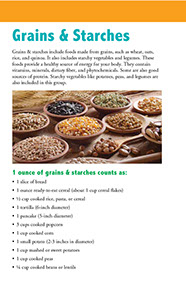
    Grains & starches include foods made from grains, such as wheat, oats, rice, and quinoa. It also includes starchy vegetables and legumes. These foods provide a healthy source of energy for your body. They contain vitamins, minerals, dietary fiber, and phytochemicals. Some are also good sources of protein. Starchy vegetables like potatoes, peas, and legumes are also included in this group.

    1 ounce of grains & starches counts as:

    *  1 slice of bread

    *  1 ounce ready-to-eat cereal (about 1 cup cereal flakes)

    *  ½ cup cooked rice, pasta, or cereal

    *  1 tortilla (6-inch diameter)

    *  1 pancake (5-inch diameter)

    *  3 cups cooked popcorn

    *  1 cup cooked corn

    *  1 small potato (2-3 inches in diameter)

    *  1 cup mashed or sweet potatoes

    *  1 cup cooked peas

    *  ¼ cup cooked beans or lentils

    Eat foods rich in whole grains & fiber

    Choose whole grains or grains with more fiber more often. Try to make at least half of your grain choices whole grains. Look for “whole grain” on the ingredients label. It should be the first ingredient for bread, cereal, or pasta. Here are some examples of whole grains:

    *  Whole wheat, rye, or oats

    *  Millet

    *  Whole grain barley, flour, or cornmeal

    *  Oatmeal

    *  Bulgur

    *  Quinoa

    *  Buckwheat

    *  Brown rice

    In addition to whole grains, fiber is found in fruits, vegetables, seeds, nuts, and legumes.

    © American Institute for Preventive Medicine

  • Grocery Shop With Confidence

    Healthylife® Weigh

    Part 3

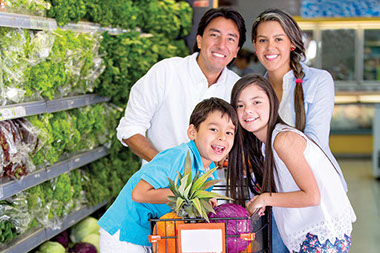
    Couple grocery shopping.

    Grocery stores can be wonderful places to explore new foods. The average grocery store has over 10,000 different items. Some of these foods are healthy “everyday” food choices. Add these more often to your cart. Others are “sometimes” or “once in a while” foods. Add these foods less often.

    Tips for Healthy Grocery Shopping:

    1. Choose a low-stress time to grocery shop, if possible. Make sure you have enough time to do your shopping. Stressed grocery shopping can make it harder to stick to your healthy list.

    2. Have a healthy snack before going to the grocery store. This will help you avoid buying less healthy foods on impulse.

    3. Shop the outer edges of the grocery store. This is where you will find fresh produce, dairy, eggs, meats/poultry/seafood, and frozen fruits and vegetables. Go into inner aisles for specific items on your list, but not to browse.

    4. Look for recipes or tips in the produce department. Stores often provide tips for cooking vegetables or a chart showing which fruits and vegetables are in season.

    5. Look for products locally grown or raised. Locally grown produce and livestock can be more nutritious and tasty. Nutrients and flavor can break down during storage and transport. Locally grown food may also be grown more sustainably and buying it supports the community.

    6. Sample healthy foods. Samples, such as cheese cubes or crackers with dip, can take the edge off in a portion-controlled serving. A bite-sized sweet treat can satisfy a craving and help you avoid picking up a larger version of that treat.

    7. Avoid your weak areas. Avoid an aisle that has many unhealthy foods that you have difficulty resisting. Or, keep your eyes forward when walking by these foods.

    8. Buy treats in small portions. Avoid the super-size trap of large portions of unhealthy food. Rather than buying a full tub of ice cream or a boxed brownie mix that will yield a full pan of brownies, get small-sized versions. Choose a single-serving ice cream or an individual brownie at the bakery.

    9. Read labels. Many of the healthiest foods, such as fruits and vegetables, won’t have food labels at all. If they do, they only give a snapshot of the true value of the food.

    © American Institute for Preventive Medicine

  • Grocery Shopping With Kids

    Healthylife® Weigh

    Part 3

    Family of four grocery shopping.

    Grocery stores can be full of education and adventure for kids. Including kids in grocery shopping-and every part of meal prep-helps set up kids to make healthier choices later in life.

    *  Show the variety of different foods, especially in the produce section and grain aisle.

    *  Let kids pick out something colorful from the produce section. You can look up online what to do with it later!

    *  Ask kids to help you decide between healthy options (apple vs. orange). This encourages kids to make healthy choices.

    *  Discuss why certain foods are stored in the freezer or on the shelf.

    *  Ask younger kids to describe the foods you pick out. Use shapes, colors, and counting to identify foods on the shelf or in your cart.

    *  Ask older kids to help you read labels and signs in the store. Explain what these labels mean.

    © American Institute for Preventive Medicine

  • Grow A Garden

    Healthylife® Weigh

    Part 7

    Family tending to backyard garden.

    Growing your own food is a great way to know where your food comes from. Garden-fresh vegetables and fruits can have more flavor and nutrients than what is at the supermarket. You can also skip the drive to a store and get some sunshine and fresh air!

    Tips for Growing a Garden:

    1.Keep It Small.Keep the size of your garden small and choose a few vegetables to grow. You’ll need fewer supplies to get started. It’ll also take less time to maintain and you’ll have fewer issues to troubleshoot. Pick foods you like. Buy small seed packets at a grocery or gardening store.

    2.Use Containers.Containers can be moved around as needed. Containers can be flower pots, buckets, wooden boxes, or leftover food containers. Cut off the top of a gallon milk jug and use the bottom for a planter. If you are starting from seeds, start plants indoors and move the containers outside when they have started to sprout. Many plants can also be planted directly in the ground outside.

    3.Allow Drainage.Make sure water can drain from the containers. Poke holes in the bottom of containers that don’t already have holes. If plants are indoors or on a patio, put a dish under the pot to catch the water.

    4.Use Quality Soil.Fill the pots with dirt. Use organic potting soil to avoid chemical add-ins. Mix in peat moss to help the soil drain. Go to a store that carries garden supplies. Ask for advice. Or, talk to neighbors who have gardens to learn what works well for them.

    5.Season + Sunlight.Read the label on the back of a seed packet. It will tell you the right time of year to start your seeds. It will also tell you how much sunshine is needed. Some plants may grow best in hot, direct sunlight. Others may prefer shade and cooler temperatures. Most vegetables, on average, need about 6 hours of sunlight per day.

    6.Give Plants Space.Read the back of your seed packet. Plant your seeds according to package directions. Be sure to leave enough space between seeds. This will give plants enough room to develop strong root systems and produce healthy, tasty crops. If you are planting more than one vegetable in a container, look at tips on the seed packet for companion planting. Companion planting is putting plants next to each other that grow well together. Some vegetables, like tomatoes and kale, don’t like sharing pots but tomatoes and spinach are quite happy sharing space.

    7.Water Regularly.Give your plants the right amount of water. Check by sticking your finger in the dirt about an inch. If it feels wet or damp, the plant is probably getting enough water. If it feels dry, add some water. Don’t leave your plants in standing water. If water came out the bottom into another container you’re using to catch the water, empty this out. If the leaves are wilting or drooping, water may perk them up!

    8.Harvest When Ready.Keep up the care of your seeds and plants and before you know it, you’ll be eating what you grow!

    Visit these websites for more information:

    National Agricultural Library (USDA)

    www.nal.usda.gov/topics/home-gardening

    Centers for Disease Control and Prevention (CDC)

    www.cdc.gov/family/gardening

    © American Institute for Preventive Medicine

  • Have Fun With Fruits And Vegetables

    Healthylife® Weigh

    Part 2

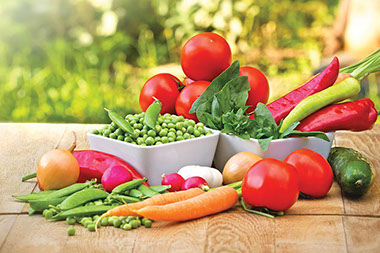
    A mix of colorful vegetables.

    Color

    *  Have color theme nights and plan a meal with foods of that color.

    *  Combine two brightly colored vegetables together (like vibrant red peppers and deep green broccoli).

    Shapes

    *  Cut fruits and vegetables into different shapes. Use a knife, cookie cutters, or a melon baller to cut stars, hearts, and other fun shapes into fruit.

    *  Use a knife or spiralizer to cut vegetables into strings, coins, or another shape.

    Texture & Temperature

    Serve fruits and vegetables at different temperatures and at different levels of “crunch.” Have raw carrots for lunch but soften celery in a soup at dinner. A salad can be hot. A soup can be cold.

    Pick a new way to prepare a vegetable this week. What best describe(s) how you plan to prepare it:

    *  Crunchy

    *  Soft

    *  Smooth

    *  Rough

    *  Jagged

    *  Al dente (firm in the middle)

    *  Hot

    *  Cold

    Toppings

    Add toasted nuts (flaked almonds, pine nuts, hazelnuts, or cashews), roasted garlic, crispy shallots, toasted seeds, or parmesan cheese to a vegetable-based salad, soup, or stir fry. Other flavorful additions include olives, chili, capers, anchovies, low-sodium soy sauce, and crumbled turkey bacon.

    Make it yours! Food can express your uniqueness.

    © American Institute for Preventive Medicine

  • Healthy Body Clues

    Healthylife® Weigh

    Part 1

    Adult woman smiling with arms crossed.

    As you explore the pros and cons of making changes, consider how eating and exercise habits affect your body on a daily basis. These can provide clues to how your system is working. A serious nutrition deficiency can only be determined by your doctor, but there are ways to assess your nutritional health on a day-to-day basis.

    Dry skin & hairmay be caused by a deficit of healthy fats or a lack of B vitamins.

    Premature aging(wrinkles, sagging, dark spots, and dull skin) can reveal the body’s natural repair processes are being overwhelmed by poor lifestyle habits.

    Urinecolor can reveal dehydration or other problems in your intestines and kidneys.

    Eczemamay be linked to food allergies and/or food sensitivities, microbial imbalances, or gut-level irritations. Some research suggests that eating processed foods can cause inflammation which may lead to inflammatory disorders, like eczema.

    Nailsthat are weak or splitting could be due to a deficiency in vitamin A, vitamin C, or biotin, a B vitamin.

    Eye healthcan be hurt by a deficiency in vitamins C and E, zinc, lutein, and omega-3 fatty acids.

    Mood & energymay suffer if you are not giving your body enough fuel. You may feel cranky and easily irritated. Eating very sugary foods can also trigger headaches, discomfort, and tiredness as blood sugar spikes and drops sharply.

    Regular bowel movementsmay be a worry for you. How easy or difficult it is for you to clear toxic waste from your body can reveal clues about your fiber intake, hydration, and absorption of nutrients. Certain foods may also be more difficult for you to digest, leading to stomach pain and problems going to the bathroom.

    Benefits to healthy eating and exercise go beyond reducing long-term health risks. What you put in your body affects how you look and feel right now!

    © American Institute for Preventive Medicine

  • Healthy Fats & Oils

    Healthylife® Weigh

    Menus & Recipes

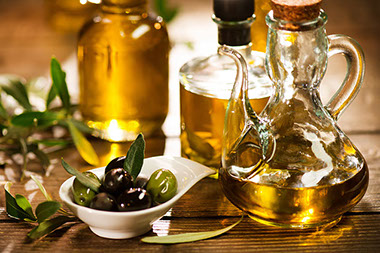
    Bottles of olive oil.

    Fats and oils are concentrated sources of energy (calories). That’s why it is important to choose small servings of fats with the most nutritional benefit.

    CHOOSEmostly plant-based fats, such as seeds, nuts, seed and nut butters, canola oil, olive oil, and avocado. These foods contain more healthy, unsaturated fats.

    LIMITanimal sources of fat (red meat, processed meats, butter, whole-milk dairy). These foods contain more unhealthy, saturated fats.

    AVOIDall trans fats. They are found in processed foods as “hydrogenated oils” and “partially hydrogenated oils” and are not considered safe.

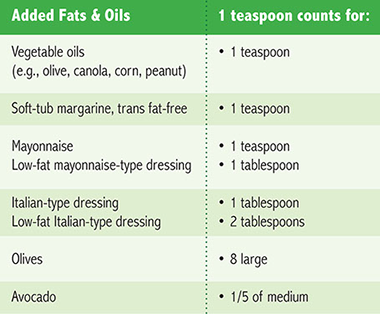
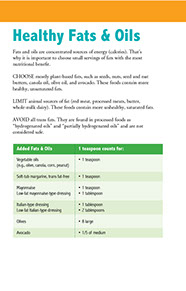
    Added fats and oils chart.

    © American Institute for Preventive Medicine