Author: AIPM

  • Keep It Going: Weight Maintenance

    Healthylife® Weigh

    Part 7
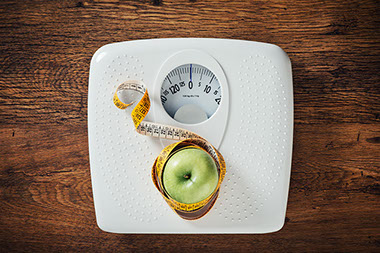
    Green apple wrapped in a tape measure on a white scale.

    This section will help you maintain a healthy lifestyle. The tools that got you to this point may be different than the tools you’ll need to keep going. Your body has physiologically changed during weight loss. Your mind has also changed. This section will help you to:

    *  Understand why weight maintenance is difficult.

    *  Modify the strategies and skills you use daily, if needed.

    *  Further improve your eating habits.

    *  Seek out long-lasting motivation and connection to others.

    HealthyLife® Weigh

    QUICK LINKS: PART 7

    Weight Loss & Metabolism

    Overcome a Plateau

    Other Eating Patterns

    Food Labels 2.0

    Supplements

    Be A Wary Weight Loss Consumer

    Visit Farmers’ Markets

    Grow a Garden

    Look Beyond Your Weight Goal

    Be Persistent
    © American Institute for Preventive Medicine

  • Physical Health

    Healthylife® Weigh

    Part 5

    Male jogger with earphones.

    Stronger Muscles and Bones

    Muscles let you move, lift, and stretch. When you use your muscles, they get stronger so you can do everything from opening a door to smiling, chewing, and talking! Weight-bearing exercises, in particular, help bones become stronger. This helps prevent osteoporosis and fractures.

    Stronger muscles and bones will help you have good posture and keep your joints and body more naturally aligned.

    Improved Cardiovascular Health

    Heart Strength: Exercise strengthens your heart muscle. This means the heart can pump more blood per stroke and doesn’t require as many heartbeats to pump the same amount of blood. This makes your heart more efficient and lessens your risk of having a heart attack or blood clots.

    Cholesterol Levels: Exercise boosts high-density lipoprotein (HDL), or “good,” cholesterol and decreases unhealthy triglycerides. This helps to keep your blood flowing smoothly, decreasing your risk of cardiovascular disease. The more you exercise, the more your cholesterol levels will improve.

    Blood Pressure Control: Hormones that are released during exercise make blood vessels more elastic. This helps lower blood pressure.

    Improved Breathing

    Exercise improves your body’s ability to take in oxygen and transport and use oxygen throughout the body. This helps your muscles get the oxygen they need to be more efficient during exercise. With improved lung function, your ability to exercise longer (stamina) can increase! You’ll also be able to think more clearly throughout the day.

    Improved Immune System

    Exercise improves the circulation of immune cells in your blood that fight off viruses and bacteria. Exercise also helps combat damage done to cells, tissues, and organs.

    © American Institute for Preventive Medicine
  • Physical Vs. Emotional Hunger

    Healthylife® Weigh

    Part 6

    Close up shot of pizza on table, with group of people sitting around and picking up a portion.

    Eat when you are physically hungry. Know the difference between physical and emotional hunger.

    Physical Hunger

    *  Your stomach feels empty.

    *  Comes on gradually and can be postponed.

    *  You feel sluggish and need energy.

    *  You haven’t eaten for several hours.

    * You are hungry enough to eat anything.

    Emotional Hunger

    *  You have a psychological desire to eat.

    *  Comes on suddenly and feels urgent.

    *  You only want certain foods.

    *  You eat something because it looks or smells good, even though your hunger is satisfied.

    *  You eat as a response to boredom, not the physical need to eat.

    Q: Is my hunger physical or emotional?

    A: Yes, I am physically hungry

    Ways to Manage Hunger

    *  Eat meals at regular times and intervals every day.

    *  Exercise regularly.

    *  Eat snacks that are high in fiber and/or protein:

    – Raw and cooked veggies

    – A piece of fruit

    – Unbuttered popcorn

    – Trail mix with nuts, seeds and  dried fruit

    *  Drink water throughout the day.

    A: No, I am emotionally hungry

    Ways to Manage a Craving

    *  Do an activity that takes your mind off of food. Walk to another room.

    *  Go for a walk or do your favorite exercise.

    *  Do a burst of exercise, like 10 jumping jacks, squats, or lunges.

    *  Take 10 deep breaths as you stretch.

    *  Drink a glass of water.

    *  Wait 10 minutes. Re-evaluate the hunger.

    *  Have a small amount of the specific food you are craving. If you are worried you can’t control your portion, skip this tip.

    *  Use the tips in this section for managing the emotion.

    © American Institute for Preventive Medicine

  • Picky Eaters

    Healthylife® Weigh

    Part 3

    Women having lunch.

    Perhaps you buy food or cook for a picky eater. Perhaps that picky eater is you! Vegetables tend to be one of the biggest sticking points with picky eaters, though picky eating can apply to all food groups. Don’t give up!

    Here are some tips for managing picky eating:

    *  Set an example by trying it yourself and using positive language. Even if you don’t like the taste, you can express gratitude or pat yourself on the back for trying a new food.

    *  Add the new food to a food you already like. For example, if peanut butter and jelly is a favorite, swap white bread for whole grain bread. This will add extra nutrients while keeping the preferred peanut butter & jelly filling!

    *  Stock up on healthy choices. Limit junk food and unhealthy options.

    *  Try new foods. Serve a variety of foods at meals to provide a choice. Encourage kids to pick out a new vegetable when grocery shopping. To make it fun, have a child pick a color first. Then, have the child pick out a vegetable that matches that color.

    *  Don’t force a food that is disliked. Part of managing weight is developing a healthy relationship with food.

    *  If it has been more than 6 months since you tried it, try it again! Tastes can change.

    Appreciate your own willingness and effort to try something new! If you have children, they are watching and learning the value of openness.

    © American Institute for Preventive Medicine
  • Plan A Balanced Day

    Healthylife® Weigh

    Part 2

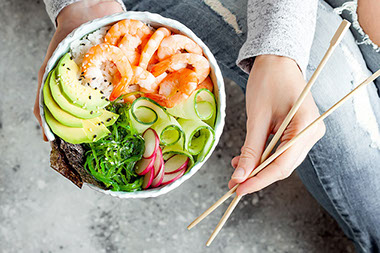
    Person holding a shrimp bowl with seaweed, avocado, cucumber, radish, sesame seeds.

    1. Select a healthy eating plan based on the calorie needs you identified. Or, follow these guidelines:

    – Plan A: best suited for women who are currently less active and want to lose more than 10-15 pounds. This calorie level is generally too low for men.

    – Plan B: best suited for women who are moderately active and for men who are less active and want to lose more than 10-15 pounds.

    – Plan C: best suited for men and for women who are very active and need to lose less than 10 pounds.

    2. Learn how much to eat from each food group. Meet, but don’t go over, your goals for each food group.

    3. Make healthier choices within each group. Choose nutrient-dense foods that meet your body’s needs.

    4. Make changes, as needed, to your plan. Meet your goals while having enough energy to do your favorite activities.

    5. Plan activity: Be physically active for at least 2 ½ hours (150 minutes) per week. You can do this for 5, 10, 15, 20, or 30 minutes at a time.

    © American Institute for Preventive Medicine

  • Plan A Balanced Day 2

    Healthylife® Weigh

    Menus & Recipes

    Person holding a shrimp bowl with seaweed, avocado, cucumber, radish, sesame seeds.

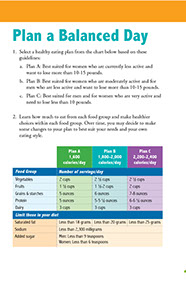
    1. Select a healthy eating plan from the chart below based on these guidelines:

    a. Plan A: Best suited for women who are currently less active and want to lose more than 10-15 pounds.

    b. Plan B: Best suited for women who are moderately active and for men who are less active and want to lose more than 10-15 pounds.

    c. Plan C: Best suited for men and for women who are very active and need to lose less than 10 pounds.

    2. Learn how much to eat from each food group and make healthier choices within each food group. Over time, you may decide to make some changes to your plan to best suit your needs and your own eating style.

    © American Institute for Preventive Medicine
  • Plan Myplate

    Healthylife® Weigh

    Menus & Recipes

    Woman reading shopping list, next to her on the kitchen counter is a burlap sac with a variety of fruits.

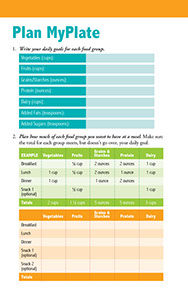
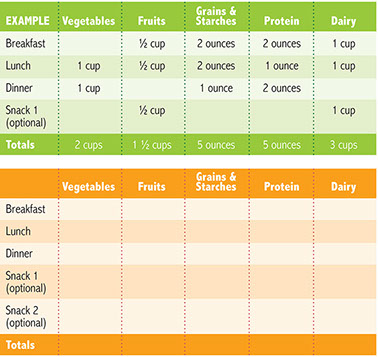
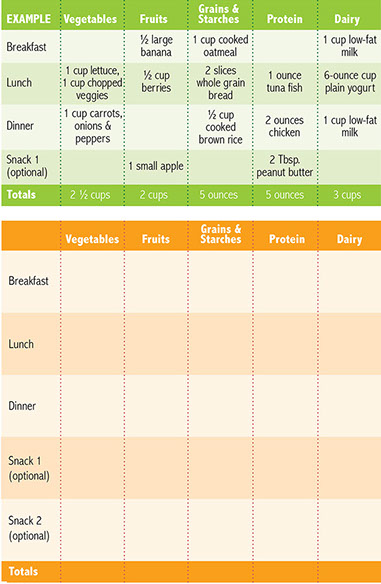
    1. Write your daily goals for each food group.

    *  Vegetables (cups)

    *  Fruits (cups)

    *  Grains/Starches (ounces)

    *  Protein (ounces)

    *  Dairy (cups)

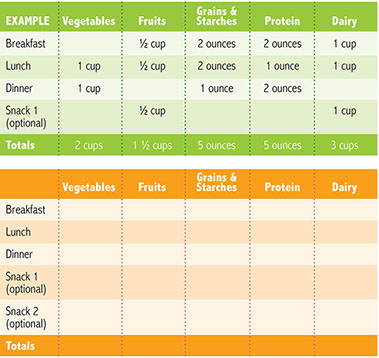
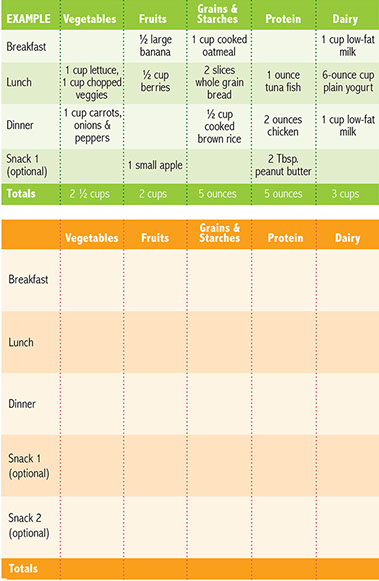
    2. Plan how much of each food group you want to have at a meal. Make sure the total for each group meets, but doesn’t go over, your daily goal.

    3. Select foods for each meal or snack. Refer to what counts as an ounce or a cup for each food group. Choose foods that you like to eat and that are convenient for you.

    © American Institute for Preventive Medicine
  • Plan Myplate 2

    Healthylife® Weigh

    Part 3

    Woman reading shopping list, next to her on the kitchen counter is a burlap sac with a variety of fruits.

    1. Write your daily goals for each food group.

    *  Vegetables (cups)

    *  Fruits (cups)

    *  Grains/Starches (ounces)

    *  Protein (ounces)

    *  Dairy (cups)

    2. Plan how much of each food group you want to have at a meal. Make sure the total for each group meets, but doesn’t go over, your daily goal.

    3. Select foods for each meal or snack. Refer to what counts as an ounce or a cup for each food group. Choose foods that you like to eat and that are convenient for you.

    © American Institute for Preventive Medicine

  • Plan Physical Activity

    Healthylife® Weigh

    Part 5

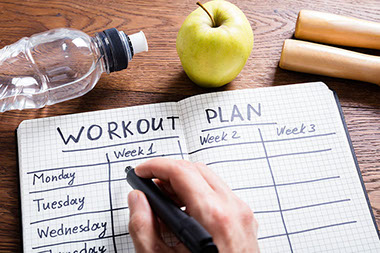
    Workout plan in notebook.

    *  What do you want to do?

    *  Are you doing this alone? Or, who will you do it with?

    *  Where and when will you do this?

    *  What do you need to wear? What do you need to bring?

    *  Write down your specific goals for this workout. If planning a HIIT or resistance training session, write down each part of your exercise plan. Bring this with you when you exercise.

    –  Warm-Up:

    –  Main Activity:

    –  Cool-Down/Stretching:

    © American Institute for Preventive Medicine
  • Plan Problem-Solving

    Healthylife® Weigh

    Part 6

    Problem, think, idea, solution diagram.

    Your worries and concerns take up time in your day. Many issues cannot simply be ignored or brushed aside. To avoid letting these thoughts trigger unhealthy eating habits, plan time to address them.

    Steps to Address Your Worries

    1. Write a worry at the top of a piece of paper.

    2. Divide the paper into three columns:

    a. What I can’t do. Recognize what is out of your control.

    b. What I can do. List possible actions that are within your control. Write things you know how to do and that are realistic actions for you to take.

    c. What I will do. Decide which action you are ready to take first. This action may not solve every part of the problem, but is a small step toward a solution. Write when you will do this.

    Mind Dump

    Use this tool when you feel you have too many thoughts to juggle and aren’t sure where to start. Use small pieces of paper or index cards to “mind dump” thoughts that come to mind. Write down concerns, ideas, and things you need to remember. Pull one card and use the steps above to address this worry. Don’t pull another card until you are satisfied with your plan to deal with the first worry.

    © American Institute for Preventive Medicine