Author: AIPM

  • Set A Weight Loss Goal

    Healthylife® Weigh

    Part 1

    Reflection of patient's face in the mirror and dietician measuring her body circuit.

    Long-term weight loss goal

    For my height, a weight of _______ lbs. would put me within a healthy BMI range. After subtracting this weight from my current weight, I know I need to lose _______ lbs. (SeeBMI chartfor an estimate of your healthy weight range.)

    Short-term weight loss goal

    My current weight (_______) x 0.10 (10%) = _______

    To lose 10% of my current weight, I would need to lose _______ lbs.

    A gradual weight loss of 1 to 2 pounds a week may be healthy. However, weight loss does not occur at a constant rate. Losing weight too quickly can be stressful for your system and can make it easier to re-gain lost weight. Also, losing weight very quickly, as well as repeated bouts of losing and gaining weight, increases the risks of gallstones.

    When should I weigh myself?

    There is no perfect answer. In general, you should weigh yourself without clothes at the same time of day (e.g., in the morning when you first wake up). Weigh yourself once a week to get a good idea about what direction your weight is going.

    You can also assess how your clothes fit, especially structured clothes like jeans or suit jackets. Even when overall weight is unchanged, your body composition may have improved. Lean body mass, especially muscle, takes up less space than fat tissue. Building lean body mass and reducing fat mass is important to overall health and will help you manage your weight over time.
    © American Institute for Preventive Medicine
  • Set Fitness Goals

    Healthylife® Weigh

    Part 5

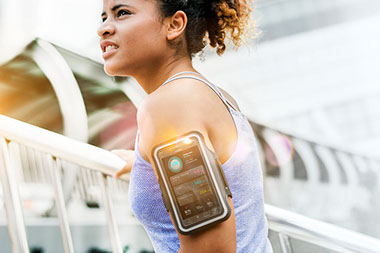
    Active women with armband to hold smartphone.

    Set your own fitness goals. Other people may have suggestions, but choose a goal that you want to go after. Other people’s fitness goals should not interfere with one you set for yourself.

    *  Write down your goals. This gives them more importance.

    *  Your goals should be within reach, but challenging. Make sure your goals are S.M.A.R.T. Does your goal meet the criteria?

    *  Know why you are setting each goal. For example, you may be doing this exercise for stress relief or to try something new. Or, you are meeting a friend and want to help them stick to their goal.

    *  Review and adjust your goals as needed. It takes practice to know how to set reasonable but challenging goals for yourself.

    *  Track your progress and reward yourself for successes.

    © American Institute for Preventive Medicine
  • Set Goals

    Healthylife® Weigh

    Part 3

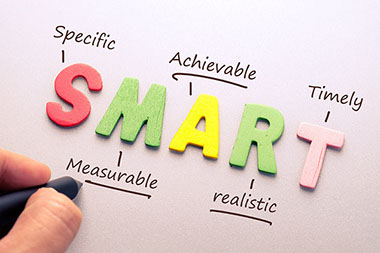
    The word Smart spelled out with wood lettering and hand writing definition for setting a smart goal.

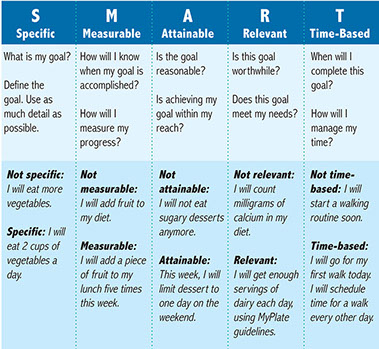
    Think of the actions you take on a daily basis as small steps toward your bigger goal. This guide has already given you many ideas for small steps, such as making half of your plate fruits and vegetables and choosing fewer sugar-sweetened drinks. Identify your next step and use the S.M.A.R.T. tool to improve the chances of reaching your goal.

    Stay motivated with the small successes you achieve along the way. Use yourEating & Exercise Tracker™every day for feedback on the effect your actions have on your energy level, mood, and weight.

    S.M.A.R.T. chart.

    © American Institute for Preventive Medicine
  • Set Yourself Up For Success

    Healthylife® Weigh

    Part 5

    Man running along hiking trail.

    Create a consistent routine for yourself. Reduce the number of excuses you can make. Tips for creating an exercise habit:

    *Seize your moment.Be aware of when your motivation to exercise is high. You may prefer mornings over evenings. Or, the opposite. Plan to exercise when you are more likely to be physically and mentally on board with it.

    *Get ready ahead of time.Pack a bag with clothes, shoes, deodorant, hair ties, a water bottle, a small towel, and other supplies you’ll need. When exercise comes up on your calendar, all you have to do is grab the bag.

    *Get ready for round 2 ahead of time.Have several days’ worth of workout clothes clean and ready to go. Store workout clothes together so it is easy to re-fill your gym bag. Make it easier to repeat your habit.

    *Commit to repeating your routine.Join a recreational sports team, sign up for a class, or pay for a personal training package. Even if you are not feeling up to it one day, having it on the schedule may get you there.

    *Be accountable to someone.Commit to meeting a friend for exercise at a certain time. Get a workout buddy and swap shoes. If you don’t show up, they won’t be able to work out either! Or, commit to logging your workout on social media or with a friend.

    *Be patient.It may take time to find an activity you like. It may take even longer to feel like it is a normal part of your day to exercise. Keep going. You’ll get there!

    © American Institute for Preventive Medicine
  • Sodium In Packaged Foods

    Healthylife® Weigh

    Part 3

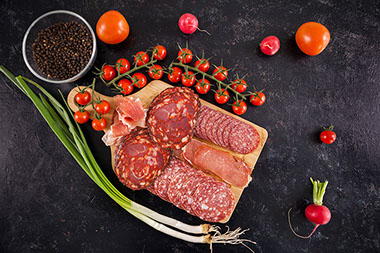
    Deli meat on cutting board with fresh tomatoes and green onions.

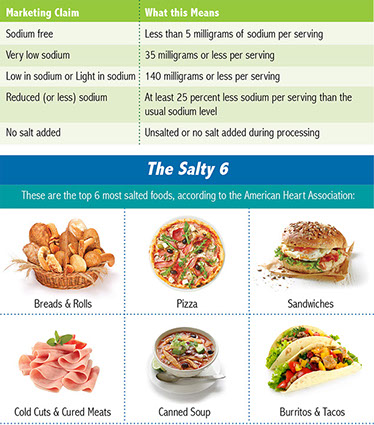
    Many packaged foods have sodium added. Use the food label to compare sodium content between products. Choose options lower in sodium. This chart shows what different sodium-related marketing claims mean.

    Chart of marketing claims and what they mean. And, the salty 6.

    For restaurant items, check the posted nutrition facts or go to the restaurant’s website. Learn more about making healthy choices while eating out and on the go inPart 4of this online guide.

    © American Institute for Preventive Medicine
  • Sporting Events And Concerts

    Healthylife® Weigh

    Part 3

    Couple enjoying snacks at an outdoor event.

    Food courts and concession stands usually have very limited menus. Stadiums or arenas may not allow you to bring your own food or drink into the venue. Here are some tips to help you stick to your healthy goals:

    *  Eat before you go.

    *  Order water.

    *  Follow the fast food guidelines.

    *  Split a meal or snack with a friend.

    *  Choose treats wisely.

    *  Limit alcohol.

    What to do when no healthy choices are available:

    1. If you are hungry, eat something small. It may not be the healthiest choice, but it is important to listen to your body’s physical hunger cues.

    2. Drink water.

    3. Chew on sugar-free gum with xylitol.

    4. Make your next meal or snack a healthy one.

    5. Plan ways to make healthy choices for future events. If possible, eat a meal or have a healthy snack before the event. Plan to limit how much you will eat of items sold at the event.

    © American Institute for Preventive Medicine

  • Stages Of Change

    Healthylife® Weigh

    Part 1

    Man expressing his success to lose weight.

    This guide does not assume you are ready to change. Or, you may be ready to make certain changes but not others. Other changes you may not have even thought of yet! The tools and strategies in this guide are designed to help you move forward through the stages of change. Using the diagram below, consider which stage you are at.

    1. Not Ready

    *  Unaware or in denial about behavior – “No, not me!”

    *  Unsure about changing

    2. Maybe

    *  Aware of problem

    *  Not quite ready

    *  Weighing pros and cons of change

    3. Yes, Let’s Go!

    *  Forming a plan

    *  Addressing strengths and barriers

    *  Set to take action

    4. Go! Doing It

    *  Putting the plan into action

    *  Bringing champions on board

    5. Keep it Going

    *  Change becomes part of habits

    *  Reflecting on change

    *  Facing challenges to new habit

    © American Institute for Preventive Medicine
  • Stretching And Rehabilitation

    Healthylife® Weigh

    Part 5

    Smiling women stretching.

    These exercises make your body more flexible. This helps you prevent injury during exercise and everyday activities. Stretching can also help you relax and is a tool for stress management. Tips:

    *  Stretch all muscle groups. Induce mild tension (not pain or burn) for 10 to 30 seconds.

    *  Don’t bounce while stretching. Make movements slow and controlled.

    *  Breathe slowly. Inhale while stretch is released. Exhale when moving into the stretch.

    *  Stretch after each cardio or resistance training workout.

    *  Stretch as a stand-alone workout or as a way to wind down at the end of the day.

    Examples of Stretching Exercises:

    Shoulder Shrug: Shrug your shoulders up toward your head. Then lower them. Repeat 4 times. Slowly circle your shoulders forward 8 times and then backward 8 times.

    Hamstring Stretch: Sit on the floor with your right leg straight. Bend your left leg and touch your foot against your straight leg. Stretch forward to touch the toes of your right foot. Hold for 4 counts. Then do this on the other side.

    © American Institute for Preventive Medicine
  • Suggestions For Meals & Snacks

    Healthylife® Weigh

    Menus & Recipes

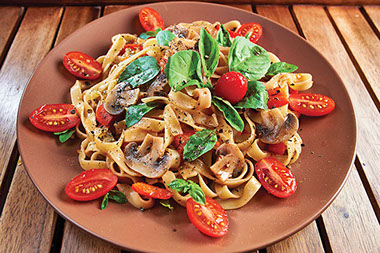
    Healthy meal with noodles and fresh vegetables.

    Breakfast basics

    Choose foods high in protein and nutrient-dense carbohydrates, such as whole grains, low-fat dairy and whole fruit. This could include re-heating leftovers.

    Adding more vegetables

    *  Add an extra cup of chopped veggies into your favorite omelet, soup, casserole, or whole grain pasta or brown rice dish.

    *  Add slices of cucumber, peppers, or onions to a sandwich.

    *  Add veggies as a filling in a burrito or quesadilla. Top a pizza with veggies.

    *  Shred carrots, zucchini, or an apple into muffins or other baked goods.

    *  Use fruits and vegetables, such as unsweetened apple sauce or avocado to replace some of the saturated fat and sugar in a recipe.

    *  Blend greens into a smoothie.

    *  Grill vegetable kabobs, such as tomatoes, green peppers, and mushrooms.

    Adding more fruits

    *  Fruit makes a great to-go snack. Pack a banana, apple or grapes, or any kind of dried fruit.

    *  Add crushed pineapple to coleslaw.

    *  Add fruit to your salad, such as dried cranberries, raisins, or chopped apple.

    *  Make fruit the center of dessert, such as cut-up or whole berries, chunks of citrus fruit, or sliced bananas.

    Meal ideas

    Focus on entrees with less meat, more vegetables and more whole grains.

    *  Pasta or rice with lean ground turkey or garbanzo beans, variety of chopped veggies and tomato sauce.

    *  Large salad with greens, chopped vegetables, lean meat or seafood, and legumes (e.g. garbanzo or kidney). Top with an oil and vinegar dressing.

    *  Stir-fry with 3-4 kinds of sliced vegetables, chicken breast or extra firm tofu, and brown rice or whole grain couscous. Season with garlic, ginger and low-sodium soy sauce.

    *  Soup with beans or lentils, chopped vegetables, and instant barley.

    Snack ideas

    *  Peanut butter + apple slices, celery sticks, or whole grain crackers

    *  Hummus + sliced veggies (carrots, cucumber, string beans)

    *  String cheese and whole grain crackers or fruit

    *  Homemade granola bars

    *  Homemade trail mix with whole grain cereal, seeds, nuts and dried fruit

    *  Plain yogurt with sliced fruit or berries

    *  Whole grain cereal with low-fat milk

    *  Homemade smoothie with whole fruit and plain yogurt

    © American Institute for Preventive Medicine

  • Supplements

    Healthylife® Weigh

    Part 7

    Doctor and patient talking.

    The term “dietary supplement” can be used for anything that you take orally to enhance your usual food intake. Dietary supplements include vitamins, minerals, amino acids, protein powders, and herbal products. Supplements do not have to be approved by the FDA.

    Reasons to Take a Supplement:

    *  Females who are pregnant or breastfeeding need more iron, folic acid, and calcium.

    *  Females with excessive menstrual bleeding may need to take an iron supplement.

    *  Some vegetarians may not get enough calcium, iron, zinc, and vitamin B12.

    *  Older adults and people with little exposure to sunlight may need a vitamin D supplement.

    *  People with certain disorders or diseases and people who take some medications may need a supplement. For example, people with high blood pressure who take a water pill may need to take a potassium supplement.

    Ask your doctor if you need any vitamin and/or mineral supplement due to a medical condition or any medication(s) you take. Supplements can interact with food and other medications.

    HealthyLife® Weigh Guidelines:

    1. Healthy adults and children can get the nutrients they need by choosing a variety of foods rather than taking supplements. This reduces the risk of deficiencies, as well as excesses.

    a. Do not take supplements that contain more than 10 times the Recommended Daily Intake (RDI) for a nutrient, particularly fat soluble vitamins (A, D, E, and K). The mineral selenium can also be harmful if taken in large amounts.

    b. The maximum value of vitamins is in food rather than supplements. It’s much better to get your vitamins and minerals from food rather than from pills. Unlike supplements, fruits, vegetables, and grains have dietary fiber that is beneficial, promotes regularity, and aids in the prevention of disease.

    2. Some supplement ingredients can be seriously harmful. Examples include high potency doses of some vitamins, such as niacin, amino acids (e.g., L-tryptophan) and herbs (e.g., chaparral, comfrey, and germander).

    3. Supplements may not be pure. If you have allergies, be sure to follow recommendations from your doctor or allergist before taking a supplement.

    Bottom Line: You should eat healthy foods to get needed nutrients. Consult your doctor or registered dietitian if you think taking vitamin/mineral supplements could benefit you.

    Resources for Supplement Information:

    Center for Food Safety and Applied Nutrition

    www.fda.gov/about-fda/fda-organization/center-food-safety-and-applied-nutrition-cfsan

    Food and Nutrition Information Center

    www.nal.usda.gov/fnic

    National Center for Complementary and Integrative Health (NCCIH)

    www.nccih.nih.gov

    National Institute of Health: Office of Dietary Supplements

    https://ods.od.nih.gov

    © American Institute for Preventive Medicine