Author: AIPM

  • How Walking Can Change Your Life

    BE FIT

    Image of couple and pet dog walking along beach.

    Many people don’t exercise because they believe it takes too much time or money. They may think they need to spend an hour at the gym each day to get healthier. These myths could be standing in the way of a healthier life.

    Exercise is a universal way to improve health. We know that physical activity can reduce the risk of heart disease, diabetes and even cancer. It also boosts energy levels and can help you sleep better. But there’s another benefit to exercise that many people may not know about: better mental health.

    If you are thinking about being more active, a walking program is a tried and true favorite form of physical activity. As an exercise, walking is easy to begin and maintain. Plus, it needs no special skills or expensive equipment, and can be done year-round, outdoors and indoors.

    For those who thought they didn’t have time to walk or exercise, there’s good health news. Even a small amount of exercise can help you feel better mentally by reducing feelings of depression and anxiety, and improving cognition.

    Getting a treadmill: Questions to ask

    Treadmills have been a mainstay in gyms for years. Many people also get one for their homes. They’re simple to use and can adjust to your fitness level. But should you buy one? Here’s what to consider:

    How much money do you want to spend?

    A new treadmill can cost hundreds – or even thousands – of dollars. But many people can get used treadmills for a fraction of the cost. If you buy a used one, make sure to test it first to be sure it works. Ask the seller if they have the instruction manual.

    Can you do other indoor exercise?

    You don’t need a treadmill to get a good workout inside. You can turn on music and dance or use a fitness video or interactive game. Consider how many days per year you would need the treadmill because of bad weather. Then, weigh that against the cost.

    Will it “work”  for you?

    Do your research before making the investment. Check out online reviews of the exact treadmill you’re considering. Find out if it’s good for running, walking or both. Will it work with your height? Taller people often need a longer treadmill belt.

    Source: Centers for Disease Control and Prevention

    © American Institute for Preventive Medicine

  • Bloated Belly: Ways To Get Relief

    SELF-CARE CORNER

    Image of tea and different tea leaves.

    Most people have felt a bloated stomach after a big meal. Usually, the belly feels overly full. It can make clothing feel tighter. The belly may look swollen. Bloating is usually caused by too much food or air and gas getting trapped in the intestines.

    But some people get bloated even when they didn’t eat too much. In some cases, it can be downright painful. The best way to address painful bloating is to find the cause and know how you can treat it.

    Bloating culprits

    The most common causes include:

    *  Dairy foods. If you notice bloating after eating cheese, ice cream, or drinking milk, you could have lactose intolerance.

    *  Gum. Swallowing air while chewing can cause bloating.

    *  Eating too much fiber at once. Fiber is great for you, but if your body isn’t used to it, you can get bloated and uncomfortable. Increase the amount you eat gradually.

    *  Bowel problems. Being constipated or having irritable bowel syndrome (IBS) can cause painful bloating. Drinking plenty of water can help with constipation and fiber absorption.

    *  Menstrual cycles. Some women get bloated because their body holds extra water before or during their periods.

    Treat bloating at home

    Many times, bloating can be managed at home. Here’s how:

    *  Write down what you eat and drink. Record when you get stomach pain or bloating.

    *  Cut back on gum.

    *  Avoid carbonated drinks.

    *  Drink plenty of water to keep the bowels moving. Don’t use a straw when drinking.

    *  Eat enough fiber. Start with fruits and vegetables. Eat only small amounts of beans, lentils and other gas-causing foods until you get used to them.

    *  Watch out for sugar-free foods. Some artificial sweeteners can cause bloating and gas.

    *  Ginger, peppermint, chamomile or fennel herbal teas may help. Always ask a doctor before using herbs if you have a health condition or take any medicines.

    *  Over-the-counter anti-gas medicines with simethicone help move gas bubbles out of the body.

    When to see your doctor

    Call a doctor or seek immediate medical care if you notice bloating with:

    *  Blood with bowel movements (stool)

    *  Losing weight without making an effort

    *  Nausea or vomiting

    *  For women: menstrual bleeding between periods or after menopause

    *  Fever

    *  Severe pain that won’t go away

    These could be signs of a serious health issue that needs treatment.

    Source: American Academy of Family Physicians

    © American Institute for Preventive Medicine

  • Be Smart About Credit Card Offers

    FINANCIAL HEALTH

    Image of man getting mail from mailbox.

    Offers in the mail

    Credit card companies, auto loan companies and other lenders can get a list of names for their credit card offers. They get information from credit reporting agencies about people who have a minimum credit score. Then, they use that list to send out offers for a new card.

    Saying “no” to mail offers

    If you are receiving credit card offers in the mail and don’t want them, there are two things you can do.

    You can opt out of credit card offers for five years. Call 1-888-5-OPTOUT  (1-888-567-8688) or visitoptoutprescreen.com. To opt out forever, you must download and mail a signed paper form. You can get the form on the opt-out website.

    Beware – the opt-out feature only works for certain credit card offers, though. Companies may get your name if they have done business with you before. They may also get your name from other sources that aren’t connected to the credit reporting agencies, such as memberships or subscriptions.

    Why is my child getting a credit card offer?

    Sometimes, a person under 21 years of age gets a credit card offer in the mail. This may happen if the company purchased a list of names and didn’t know that the person was not an adult. But, credit card companies cannot intentionally send their offers to people under 21 years old without permission.

    Phone calls

    Like mail offers, credit card companies can get your name from credit agencies and call you with an offer. You can register your number with the National Do Not Call Registry to stop these calls. Visitwww.donotcall.govor call 1-888-382-1222 to put your phone number on the do not call list.

    What is a prescreened credit card offer?

    Credit card companies can find out if you have a certain credit score. Then, they can offer you a credit card based on that information. This is known as a prescreened offer because they already have some information about your credit. It is not a guarantee that you will get the card. You still have to apply for it and be approved.

    Source: Consumer Financial Protection Bureau

    © American Institute for Preventive Medicine

  • Know Your Heart Risk

    MEDICAL NEWS

    Winter image of hands wearing red gloves making a heart shape.

    One reason heart disease is so deadly is due to its silent nature. Often, people do not know they have heart issues until they experience a heart attack or stroke.

    There’s plenty of good news, though. The risk factors for heart disease are fairly easy to spot. Taking steps to understand your heart numbers and manage your risk can decrease your chance of heart disease. And even if you already have heart disease, you can improve your odds by addressing your risk factors.

    Numbers to know

    Regular check-ins with your doctor are key to monitoring heart health. Your doctor will check your blood pressure, blood lipids, and overall health to determine your heart disease risk. Here are some numbers that could signal cause for concern:

    *  Blood pressure equal to or higher than 130/80 mm/Hg

    *  Total blood cholesterol ≥200 mg/dL

    *  LDL cholesterol  ≥100 mg/dL

    *  HDL cholesterol less than 40 mg/dL for men and 50 mg/dL for women

    *  Fasting blood sugar equal to or higher than 100 mg/dL

    *  Waist circumference greater than 40 inches for men and 35 inches for women

    Habits that put you at risk

    While the numbers your doctor tests for can indicate your heart disease risk, they are not the only factors to watch out for. Your lifestyle habits can tell you a lot about the health of your heart. Here are some habits that can increase your risk:

    *  Smoking

    *  Drinking more than 1 drink a day for women or 2 drinks a day for men

    *  Eating too much salty food

    *  Not eating enough fruits and vegetables

    *  Consuming a diet high in red meat and processed foods

    *  Being sedentary, or getting less than 150 minutes of exercise a week

    What to do next

    If any of these risk factors apply to you, talk to your doctor about your heart health. A long and healthy life requires a healthy heart.

    There are many effective treatments for heart disease, but the best plan is prevention. Taking steps to address your risk factors can make all the difference. Your doctor may recommend:

    *  Changes to your diet

    *  More exercise

    *  Cutting back on alcohol

    *  Quitting smoking

    *  Getting more sleep

    *  Medication

    © American Institute for Preventive Medicine

  • Know The Different Heart Disease Types

    MEDICAL NEWS

    Heart on a blue background.

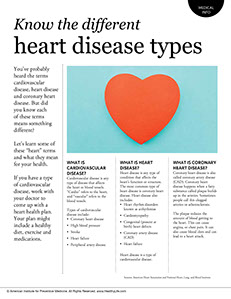
    You’ve probably heard the terms cardiovascular disease, heart disease and coronary heart disease. But did you know each of these terms means something different?

    Let’s learn some of these “heart” terms and what they mean for your health. If you have a type of cardiovascular disease, work with your doctor to come up with a heart health plan. Your plan might include a healthy diet, exercise and medications.

    What is cardiovascular disease?

    Cardiovascular disease is any type of disease that affects the heart or blood vessels. “Cardio” refers to the heart, and “vascular” refers to the blood vessels.

    Types of cardiovascular disease include:

    *  Coronary heart disease

    *  High blood pressure

    *  Stroke

    *  Heart failure

    *  Peripheral artery disease

    What is heart disease?

    Heart disease is any type of condition that affects the heart’s function or structure. The most common type of heart disease is coronary heart disease. Heart disease also includes:

    *  Heart rhythm disorders known as arrhythmias

    *  Cardiomyopathy

    *  Congenital (present at birth) heart defects

    *  Coronary artery disease (CAD)

    *  Heart failure

    Heart disease is a type of cardiovascular disease.

    What is coronary heart disease?

    Coronary heart disease is also called coronary artery disease (CAD). Coronary heart disease happens when a fatty substance called plaque builds up in the arteries. Sometimes people call this clogged arteries or atherosclerosis.

    The plaque reduces the amount of blood getting to the heart. This can cause angina, or chest pain. It can also cause blood clots and can lead to a heart attack.

    Sources: American Heart Association and National Heart, Lung, and Blood Institute

    © American Institute for Preventive Medicine

  • Keeping Your Brain Healthy

    WELL-BEING

    Elderly female painting.

    Brain health is your ability to learn, remember, plan and concentrate on things. Exercise is good for your brain – but it’s a different type of workout. Here are some things to know about boosting your own brain health.

    Puzzles are great – but they don’t fight dementia.

    There is no evidence that crosswords and sudoku puzzles can prevent Alzheimer’s disease. But they’re still great brain exercise, so keep doing them!

    Bring out your creative side.

    Recent studies show that doing a creative art can help improve memory, comprehension and problem-solving abilities as you age. So pick up that musical instrument, paintbrush or whatever is fun and creative for you to do.

    Talk to your doctor.

    If you’re worried about memory loss or brain changes, talk to your doctor. They can help you find out the cause of any brain changes and work toward a solution. For instance, lack of sleep and certain medications can cause changes in mood or memory.

    Source: National Institute on Aging

    © American Institute for Preventive Medicine

  • Keeping An Eye Out For Cataracts

    SELF-CARE CORNER

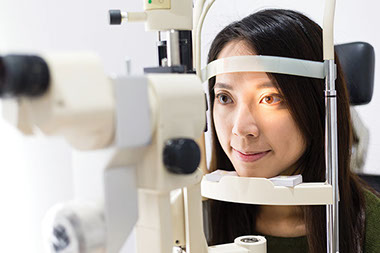
    Eye doctor examining patients eye.

    Most people will have cataracts by the age of 80. But they don’t have to mean loss of vision. They are treatable.

    What is a cataract?

    A normal lens inside the eye is clear. Cataracts happen when the proteins in the eye’s lens start to break down. Then they clump together. This causes cloudiness and problems with your vision.

    Cataracts may occur with normal aging. But they can also happen after an eye injury or if you had eye surgery.

    Signs of cataracts

    People often notice changes in vision when cataracts start to form. These changes include:

    *  Blurry or distorted vision

    *  Being sensitive to light

    *  Seeing a “halo” around lights

    *  Seeing double

    *  Trouble seeing at night or in dimly lit rooms

    *  Seeing colors as dull or yellow-tinted

    Prevention

    The best way to help prevent cataracts is with eye sun protection. Wear sunglasses that block out 100 percent of UV rays when you’re outside during the day. Not all sunglasses offer 100 percent UV protection. Check the packaging to be sure. Wear a wide-brimmed hat to keep sun off your face.

    Smoking increases the risk for cataracts, so quit smoking. Get help quitting if you need it.

    Finally, get a dilated eye exam regularly. Ask your eye care specialist or doctor how often you need one.

    Seeing a doctor

    If you think you might have cataracts, talk to a doctor. You may need an eye exam from an optometrist or ophthalmologist. During the exam, your eye care specialist can perform tests to look for cataracts.

    Treatment options

    If your doctor finds cataracts, don’t panic. There are ways to treat them.

    First, your doctor may recommend new glasses or contacts for mild symptoms. You may also find that using brighter lights or a magnifying lens is helpful for reading or working.

    If your cataracts are interfering with life, you may need surgery. Cataracts surgery involves putting a new artificial lens in the eye. It is a safe surgical procedure and works well for most people.

    Sources: American Academy of Ophthalmology, National Eye Institute

    © American Institute for Preventive Medicine

  • Is It Overactive Bladder Or Just ‘Normal’?

    MEDICAL NEWS

    Close up of hands holding toilet paper.

    Most of us don’t think about bladder health unless there’s a problem like an infection or leakage. Millions of people live with overactive bladder (OAB). OAB is not a disease. It’s a name for a group of symptoms that affect urination.

    What is OAB?

    Normally, a person might feel like they need to urinate, so they hold it until they reach the toilet. But with OAB, you suddenly feel like you have to go right now – you can’t hold it. This can happen even if your bladder isn’t full. The bladder muscles may be overactive, which leads to the urgent feeling.

    Some people with OAB may have to go to the bathroom too often during the day or at night. They may go more than once per night or more than 8 times during the day.

    OAB doesn’t always cause leaking or accidents, but it can. This is called urge incontinence, and about half of people with OAB have this bladder condition.

    Treatments for OAB

    Many people don’t get treatment for OAB because they are embarrassed. But talking with a doctor means you can get treatment. Many people are able to control OAB with one or more of the following:

    *  Diet changes

    *  Kegel exercises, pelvic floor physical therapy

    *  Medications

    *  Bladder Botox

    *  Nerve stimulation procedures

    Most people do not need surgery for OAB. But doctors may suggest it if other treatments didn’t work and your OAB is severe.

    Just a ‘weak bladder’?

    OAB becomes more common as we age. But this doesn’t mean it’s part of getting older and that we should ignore it. OAB can interfere with your social and professional life. You don’t have to live with it.

    Speak up about bladder problems

    If you notice bladder trouble, your doctor can help. Make an appointment to talk about your symptoms. It’s the first step to getting relief so you can get back to living your life.

    Sources: National Association for Continence, Urology Care Foundation

    © American Institute for Preventive Medicine

  • Infertility: When To See A Doctor

    MEDICAL NEWS

    Young couple talking to doctor.

    It is not uncommon for some couples to have trouble conceiving. If a couple has been trying for one year without success, they are said to be dealing with infertility.

    While infertility may be common, it is not hopeless. Many effective treatments are available. Knowing when to talk to your doctor about fertility can help you get closer to your goal of getting pregnant.

    What causes infertility?

    Infertility is not just a woman’s issue. It can affect one or both partners.

    Men require healthy sperm to be fertile. Anything that impacts the number, shape, and movement of sperm may cause infertility. These may include:

    *  Unhealthy habits

    *  Trauma to the testes

    *  Certain medications or supplements

    *  Cancer treatment

    *  Medical conditions

    Women need functioning ovaries, fallopian tubes, and a uterus to get pregnant. A condition that affects any one of these organs can cause infertility issues. These may include:

    *  Polycystic ovary syndrome (PCOS)

    *  Diminished ovarian reserve

    *  Blocked fallopian tubes

    *  Menopause

    *  Abnormal uterine shape

    When to see a doctor

    Every couple should talk to their doctor to let them know they are trying to get pregnant. Your doctor may have specific recommendations and screenings that would be of benefit.

    Some couples may be at a higher risk of infertility. If you have any of the following risk factors, you should talk to your doctor right away when trying to conceive:

    *  Irregular or no menstrual periods

    *  Painful periods

    *  Endometriosis

    *  Pelvic inflammatory disease

    *  History of miscarriage

    *  Any suspected male factors, such as cancer treatment, history of teste trauma, etc.

    Women over the age of 30 may experience age-related declines in fertility. Once a woman is over 35, infertility becomes more common. While this doesn’t mean someone at that age will not be able to conceive, it does mean you should talk to your doctor sooner if you do not become pregnant.

    Any couple who has been trying to conceive for one year without success should talk to their doctor. Couples over the age of 35 should talk to their doctor after six months of trying.

    Your doctor may refer you to a reproductive endocrinologist who specializes in infertility. Never hesitate to talk with your doctor if you have any questions or concerns about yourself or your partner’s fertility.
    © American Institute for Preventive Medicine