Author: AIPM

  • Coping With The Loss Of A Spouse

    FAMILY LIFE

    Image of sad, older female sitting on couch.

    Losing a husband or wife is devastating. A whirlwind of intense emotions-overwhelming sadness as well as shock, fear, guilt, anger, and numbness-make the days and weeks after a spouse’s death agonizing and confusing.

    It may be small comfort to know that these feelings are normal and will be temporary.

    “Sadness may never go away entirely,” said clinical psychologist Dr. Hayley Hirschmann of Morris Psychological Group, “but the pain of acute grief becomes less intense over time as the good days start to outnumber the bad.”

    Dr. Hirschmann offers this advice:

    *Accentuate the positive:Studies have shown that those who are able to draw on humor and pleasurable memories are happier and healthier than those whose thoughts of the deceased are mostly sad and focused on their loss.

    *Let others help:Don’t shy away from expressing your feelings to those close to you; you will feel less alone if you can share your grief with a sympathetic listener. Accept help with chores and legal and financial responsibilities. Consider joining a bereavement support group.

    *Take care of yourself:Eat well, exercise regularly, get enough sleep. Be alert to falling into bad habits.

    *Don’t make big changes right away:Wait a while before moving or changing jobs.

    © American Institute for Preventive Medicine

  • Create Family Ties

    FAMILY LIFE

    Image of three generational family.

    Families who spend time together as a cohesive unit are more likely to survive a crisis, such as an illness or job loss than those with poor coping skills.

    According to the CDC, good communication between parents and children is important for developing positive relationships.

    *  Teach active listening skills. Pay attention to what others say. Ask questions if you don’t understand what your spouse or children are trying to tell you.

    *  Hold regular family meetings to present complaints and set mutual goals and plans.

    *  Celebrate birthdays, holidays and other special occasions together.

    *  Learn the value of compromise.

    *  Be flexible. This is especially important if one parent returns to work or if one wage earner loses his or her job.

    *  Allow for individual strengths and interests. Don’t compare brothers and sisters. Allow family members to have “their own space.”

    © American Institute for Preventive Medicine

  • Create Your Ethical Will

    WELL-BEING

    Image of older man sitting at desk.

    You may not be able to take it with you, but you can let the generations to come know what you valued if you create an ethical will.

    An ethical will can be a vital component of an estate plan because it reflects your concerns and hopes for the next generation. Most wills mainly focus on distributing assets and deciding who gets what. An ethical will provides families with the chance to know their loved ones better and for the writer to express what often goes unsaid.

    1. What values or beliefs are of special significance to you? Why?

    2. What are your wishes and hopes for the generations that follow you?

    3. What are your greatest life lessons? How have they influenced you?

    4. Do you have any regrets?

    © American Institute for Preventive Medicine

  • Crowd Control

    MEDICAL NEWS

    Image of a crowd of people.

    Wherever there are crowds, such as at football games, conventions, or music concerts, there are germs. Mayo Clinic infectious diseases expert Dr. Gregory Poland tells how you can avoid illness when you’re in a large throng of people, even in subways and on airplanes.

    Whenever you’re in a venue with hundreds or thousands of people gathering, you automatically run increased risk for getting “something.” The people around you may not have the same immunization programs or the same standards of personal cleanliness or food safety, he said, especially if you’re in an international group.

    Besides illnesses such as whooping cough, measles, mumps, colds and flu, other heightened dangers in places with large numbers of people passing through include respiratory diseases such as tuberculosis; vermin such as head lice and bedbugs; food-borne sickness such as E. coli, salmonella, hepatitis A and traveler’s diarrhea; and skin conditions including athlete’s foot and staph infections.

    Dr. Poland offers these tips for sidestepping illness:

    *  Keep your vaccines up to date: The most important ones include the MMR vaccine for measles, mumps and rubella; the seasonal flu shot; and a relatively new vaccine called Tdap, for tetanus, diphtheria, and whooping cough.

    *  Wash your hands thoroughly with soap and hot water or an alcohol-based hand sanitizer.

    *  Dine carefully: If it’s not cooked well, boiled or peeled, forget it. Make sure food that is supposed to be hot is served hot and food that is supposed to be cold is served cold, and make sure dishes and utensils are clean.

    *  Wear shower/pool shoes when using the shower or pool in public places.

    *  Avoid swimming pools, hot tubs, or whirlpools unless you are certain they are properly maintained, and it’s hard to tell.

    *  Don’t smoke: It raises the odds you’ll get Legionnaires’ disease if you’re exposed to the legionella bacteria and can also make you more susceptible to respiratory illnesses in general.

    *  Don’t try on hats in stores to minimize the risk of getting head lice. If you buy a hat, seal it in a plastic bag to carry it home, then freeze it for several days or launder it before wearing.

    *  Scout for bedbugs in a hotel room, and once in a room, only place your luggage on wooden surfaces or in the bathtub, not on the floor, bed, chair or couch until you determine whether bedbugs are present.

    *  Be an advocate for your health: If someone near you is obviously ill, move away if you can, or ask to be reseated.

    © American Institute for Preventive Medicine

  • The Dangers Of Distracted Driving

    WELL-BEING

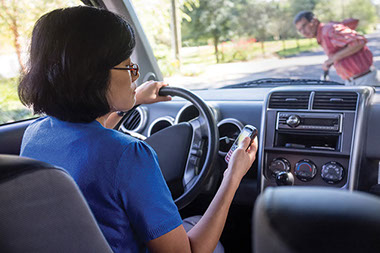
    Image of women driving while looking at her phone about to hit a pedestrian.

    Though driving a car may seem like a simple task, it requires quick reflexes, concentration and reasoning. When a driver is distracted, some – or all – of these important skills can be lost.

    Distracted driving means the driver is doing something other than focusing on the road ahead. It can be anything that takes the driver’s mind off of driving, hands off the wheel or eyes off the road. In the age of smartphones, tablets and other electronic devices, it’s easy to get distracted when driving – even for just a second.

    Though it seems harmless, a quick glance at a phone to read a text can be dangerous or even deadly. The National Highway Traffic Safety Administration (NHTSA) says sending or reading a text takes your eyes off the road for 5 seconds. That’s like driving the length of an entire football field with your eyes closed if you’re going 55 miles per hour. In that amount of time, a driver can hit a pedestrian, run a red light or stop sign, or crash into another vehicle.

    The NHTSA says nearly 3,500 people died and almost 400,000 were injured in 2015 due to distracted driving crashes. Here’s what we can do to help stop distracted driving:

    *  Never use a phone while driving. Put it in the back seat or out of reach to reduce the urge to look at it “just for a second.”

    *  Talk with your teens about distracted driving and tell them that the texts can wait. Lead by example.

    *  Sign a pledge to not drive distracted and stick to it. Ask family members and friends to sign it too. The “It Can Wait” pledge is available atitcanwait.usaa.com.

    Did you know?

    There are laws that prohibit distracted driving. Talking on a hand-held cellphone while driving is banned in 15 states and the District of Columbia. Text messaging is banned for all drivers in 47 states and the District of Columbia.

    To learn about your state laws, go towww.iihs.org/iihs/topics/laws/cellphonelaws.

    © American Institute for Preventive Medicine

  • Debt Consolidation – Does It Work?

    FINANCIAL HEALTH

    Image of two people reviewing debt consolidation on computer screen.

    Many people have a hard time paying off their credit cards. In fact, the Federal Reserve estimates that the average American household has more than $15,000 in credit card debt.

    When you’re trying to make payments and have multiple cards to pay off, it can feel overwhelming. In these situations, many people turn to debt consolidation. Consolidating debt means that all of your separate payments are lumped into one monthly payment.

    Some banks, credit unions, and other lenders offer debt consolidation loans. Having just one payment can alleviate some of the stress of paying off multiple debts. But there are some things you should know before you move forward:

    *Contact your individual creditors to see if they can lower your payments first.Some creditors are willing to allow you to pay a lower amount each month when you can’t afford the higher amount.

    *Ask about the interest rate of a consolidation loan.You don’t want to wind up paying more in interest, because this can make your debts even more difficult to pay off. It also adds up to more money out of your pocket.

    *Ask about balance transfer fees before you consolidate.Some loans and credit cards will charge you a fee if you’re transferring your other debts.

    *Be wary of 0% or low-interest credit cards.Many of these only offer this low rate for a certain amount of time. After that, you may be paying a much higher rate and could end up with even more debt than before. Some will raise your rate if you’re late on just one payment. Make sure you understand when this low rate will end, and whether your rate could be raised for late payments. Find out what the interest rate would be on new purchases. Keep in mind that many people who have lower credit scores can’t get the advertised low rates.

    *Make sure you’re getting a good deal.Add up all of your current payments you make. Include all of the fees and interest you pay now. Compare this total with the amount you’d pay with a consolidation loan. In some cases, you’re not getting a better deal by consolidating.

    *Be aware of the risks of home equity loans.These loans allow you to borrow against the value of your home. If you can’t pay it back, you could lose your home. These loans also decrease your home’s worth.

    Before you take out a new consolidation loan, you may wish to talk to a nonprofit credit counselor. He or she can help you figure out your options for paying off debt. To find one, contact your state attorney general’s office or visit:www.justice.gov/ust/list-credit-counseling-agencies-approved-pursuant-11-usc-111

    Source: Consumer Financial Protection Bureau

    © American Institute for Preventive Medicine

  • Decode The Mysteries Of Food Expiration Dates

    HEALTHY EATING

    Image of women at grocery store looking at a package of meat.

    Most U.S. food companies stamp lot codes and/or expiration dates on their products. But what do all these numbers really mean? The Institute of Food Technologists offers these answers. There are two types of codes:

    1.Lot Code:When manufacturers produce a product, they do so in batches. Each batch is given a unique series of numbers that makes it possible for manufacturers to track exactly when a problem occurred and which products need to be recalled.

    2.Expiration Dates:These are numbers represented in a date format that tells consumers when a food product is either no longer safe to eat or might not taste as good as it did when originally produced.

    There is little government regulation when it comes to expiration dates stamped on packages. According to the Department of Agriculture Food Safety and Inspection Service, there are a few different types of dates you should look for:

    *  Sell By is a guide for stores to know how long they can display a product before its quality begins to weaken. You can eat an item for some time after the “sell by” date.

    *  Best if Used By/Best Before is a guide to the quality or flavor profile of the food and does not refer to safety. For example, sour cream may grow increasingly sour over time, but it remains safe to consume.

    *  Use By is the closest to an expiration date. Using products after the date is not recommended. In some cases, food may lose nutrients, develop potentially harmful bacteria, and lessen in quality.

    © American Institute for Preventive Medicine

  • Decoding Sunscreen Labels

    MEDICAL NEWS

    Image of a man placing sunscreen on his face.

    You may already know you should wear sunscreen to decrease your risk of skin cancer and sun damage. In fact, the Skin Cancer Foundation says that wearing sunscreen regularly can decrease your chance of getting melanoma (the deadliest skin cancer) by 50 percent. Wearing sunscreen regularly will also help you avoid signs of aging like wrinkles and dark spots.

    But the sunscreen aisle at the store leaves many people feeling overwhelmed. There are so many choices, different labels, numbers and ingredients. How do you choose one?

    The best sunscreen is one you like, because you should use it every day, says the American Academy of Dermatology (AAD). Here’s how to narrow it down and choose the sunscreen that’s right for you:

    BROAD SPECTRUM

    Always look for the words “broad spectrum.” This means it protects against both kinds of UV rays, and it’s important for proper protection.

    SPF

    Choose an SPF of at least 30.

    SPF NUMBERS

    Don’t let high numbers fool you. The Skin Cancer Foundation says higher SPF sunscreens do protect more, but not by much. No matter what the SPF number says, you still need to reapply at least every two hours, and always after toweling off, sweating or swimming.

    WATER RESISTANT

    If you’re going to be sweating or swimming, choose one that says “water resistant.” There is no such thing as “waterproof” sunscreen. The bottle will say how long the sunscreen will remain water resistant. It may say “40 minutes” or “80 minutes.” That’s how often you need to reapply it when you’ve been in the water.

    LIPS

    Choose a sunscreen for your lips too. A lip balm with broad spectrum SPF 30 is also important. Skin cancer can – and does – affect the lips.

    GELS vs CREAMS

    Sunscreen gels are great for oily skin, while creams work well for dry skin.

    SENSITIVE SKIN

    If you have sensitive skin, consider a physical-only sunscreen. This means the active ingredients on the bottle will only include titanium dioxide or zinc oxide, or both. While chemical sunscreens work well, they can irritate some sensitive-skin types.

    PRICE TAG

    Expensive doesn’t always mean better. A higher price tag may be due to the brand name or certain extra ingredients that make it feel nicer or smell good. It doesn’t mean it will protect you more than a cheaper bottle.

    NO COMBINATION

    Don’t choose a combination sunscreen and insect repellant. The AAD says sunscreen should be reapplied liberally every two hours. But insect repellant should only be applied lightly every several hours as needed.

    BABIES

    Most sunscreens are only approved for babies over 6 months of age. Look for a physical-only sunscreen or one formulated for babies. Babies younger than 6 months should be kept in the shade and covered with lightweight protective clothing and hats, says the American Academy of Pediatrics.

    © American Institute for Preventive Medicine