Author: AIPM

  • Do You Need Property Insurance?

    FINANCIAL HEALTH

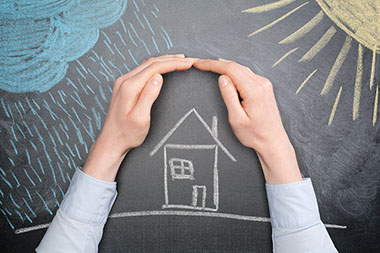
    Image of chalkboard drawing of house with hands protecting it from weather elements.

    Homeowner’s and renter’s insurance are types of property insurance. Although property insurance offers important coverage, many people don’t have it or don’t understand why it’s needed.

    Each policy is always somewhat different. But, both homeowner’s and renter’s insurance may cover:

    *  Damage to your house, garage or other buildings on your property

    *  Loss of furniture or other property due to theft

    *  Additional living costs if you have to move out during repairs

    *  Liability for accidents and injuries that happen on your property (for people other than you or your family)

    *  Coverage for special valuables, such as jewelry, collector’s items and other items that would be costly to replace

    Renters should not assume that the landlord carries insurance for them. Often, this is not the case. Most people who get a mortgage for a home will be required to purchase homeowner’s insurance.

    Property insurance policies can vary widely in cost and coverage. It pays to spend some time shopping around to different companies. Find the coverage you need at a price that works for you.

    Find out more about how much coverage you might need. Visit the National Association of Insurance Commissioners website atwww.naic.org.

    © American Institute for Preventive Medicine

  • Do You Want To Create A Stressed-Out Child?

    SUCCESS OVER STRESS

    Image of stressed out boy sitting in front a a lapout with hands on head.

    You’ve seen “helicopter” parents. They hover on the sidelines at the soccer game, yelling, chewing their player out, and rarely praising. You’ve seen the result of their overbearing pressure in the classroom as they push push push their children to achieve too much too fast. Maybe you’re guilty of a little too much hovering yourself.

    “Pushing your children into situations they are not developmentally prepared for is far more likely to create a sense of insecurity than a sense of competence,” said Dr. Tim Riley, a psychologist and author of the award-winning book First the Broccoli, Then the Ice Cream: A Parent’s Guide to Deliberate Discipline.

    Unrealistic expectations can lead to overwhelmed and underperforming kids. Parents can create stressed-out kids with the following actions, according to Dr. Riley, who then offers some perspective on toning back expectations.

    Action that CAN Create Stressed-Out Kids

    *  Giving them regular access to adult information or including them in adult conversations they aren’t developmentally prepared to handle.

    *  Putting pressure on kids to acquire skills before they really need them.

    *  Giving cell phones and allowing texting for elementary schoolers.

    *  Sharing your grown-up worries and concerns (financial, for example) with your kids.

    *  Filling their schedules with adult-organized activities outside the home.

    *  Jumping in a lot (as opposed to jumping ahead and seeing the bigger picture) to solve their problems for them.

    *  Disciplining inconsistently.

    Ways to Tone Back Expectations

    *  Let kids read their age-level adventure stories and tell you about them. Too much adult TV or too much involvement in adult affairs blurs the line between being an adult and letting kids just be kids.

    *  Allow little ones their unstructured creative playtime where they can be Little Einsteins in their own world. Pushing your baby to “read” makes him or her no better prepared academically in the long term.

    *  Preposterous-or should we start training infants to drive or do taxes? They will learn computers and electronics in their own time.

    *  No need to include them in adult problems they can’t do anything about.

    *  Make sure home provides a safe harbor from an overload of lessons, practices, and clubs and is more than just a place to eat and change clothes on the way to the next activity.

    *  Sometimes the natural consequences of an action, such as not doing homework, are the best teacher. Give kids an appropriate amount of responsibility and stay out of their way.

    *  You’re the parent. Your kids look to you for security. But if you ground a child for not picking up his toys one day and overlook it the next, what message are you sending? Your child will not feel secure. Be consistent and realistic in your expectations and in your discipline.
    © American Institute for Preventive Medicine

  • Does Stress Causeulcers?

    SELF-CARE CORNER

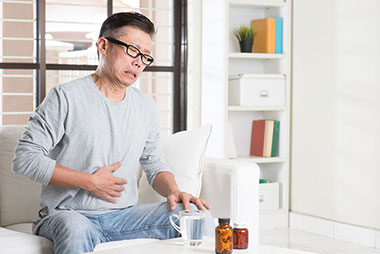
    Image of man holding his stomach in pain.

    A peptic ulcer, commonly called an “ulcer,” is a sore in the stomach caused by acid. Although many people believe that stress causes peptic ulcers, research has shown this is not the case. But there’s a catch: if you already have an ulcer, high stress levels can make it worse.

    The American College of Gastroenterology states that peptic ulcers are actually caused by two things: bacteria and some medicines.

    Helicobacter pylori infection:This bacteria, also called H. pylori, is the most common cause of peptic ulcers. Scientists aren’t sure why some people get infected with this bacteria, but genetics may be partly to blame. If you have symptoms of a peptic ulcer, your doctor may test you for this bacteria. If your test is positive, the infection can be treated with antibiotics and medicines that reduce stomach acid. Once the infection has been treated, your ulcer should go away. If you are prescribed antibiotics, be sure to take the entire course as instructed by your doctor.

    Medicines:Long-term use of NSAIDs (non-steroidal anti-inflammatory drugs) can cause peptic ulcers in some people. NSAIDs include pain relievers like aspirin, ibuprofen, and naproxen. Taking these occasionally will not cause an ulcer, but if you take them for a long time or at high doses, you increase your risk.

    Know the symptoms

    Peptic ulcers often cause burning pain in the stomach or abdominal area. The pain may be worse when you lie down at night or when your stomach is empty. If you have symptoms of an ulcer, your doctor may refer you to a specialist to get further tests done. Proper diagnosis and treatment can usually cure an ulcer.

    If you are taking NSAID medicines and are diagnosed with an ulcer, your doctor may talk with you about finding another treatment.

    If you have an ulcer, you do not have to follow a bland diet. Spicy or rich foods do not make an ulcer worse. Following a healthy diet, however, can improve your health and will help your ulcer heal as quickly as possible after treatment. Visitchoosemyplate.govfor the current Dietary Guidelines for Americans.

    © American Institute for Preventive Medicine

  • Does Stress Lead To Cancer?

    SUCCESS OVER STRESS

    Image of older female.

    Whether due to work, family or finances, most of us have felt stressed at some point in our lives. And to make matters worse, some studies have shown that stress can lead to depression, anxiety, or a weakened immune system. But can it cause cancer?

    The National Cancer Institute says no. There is no evidence that stress alone can lead to cancer. But, habits such as smoking, drinking, and eating unhealthy foods may be linked to cancer. These are often done in response to high stress events.

    Bottom line:cope with stress in healthy ways, such as exercising, deep breathing, meditation, and getting help from your doctor, if needed. Lowering your overall stress levels will help you feel your best emotionally and physically. And, don’t worry about whether the occasional stressful event may cause cancer. The experts say it won’t.

    © American Institute for Preventive Medicine

  • Does Your Family Calendar Need A “Time Out”?

    FAMILY LIFE

    Image of smiling family.

    Today’s families are busier than ever. Sports, music, and other extracurricular activities may take up most – if not all – of your child’s free time outside of school. Is this helping or hurting our kids?

    The American Academy of Pediatrics says free play time is an important aspect of a child’s development. All children need some time to be creative, interactive, and to problem-solve. This can be quiet time alone with toys, pretend play with friends, or even just daydreaming. The time should not be spent with electronics such as watching TV or playing video games.

    Also consider sleep. If your schedule is so packed that you or your children are exhausted all the time, it’s time to take another look. Children need adequate sleep for mental and physical development. Adults need enough sleep for optimal health and stress relief.

    If your household is running ragged with commitments, consider some “time out” for your whole family. It may be one of the best things you do for your child’s well-being – and your own sanity.

    © American Institute for Preventive Medicine

  • Don’t Be A Slouch, Posture Matters

    WELL-BEING

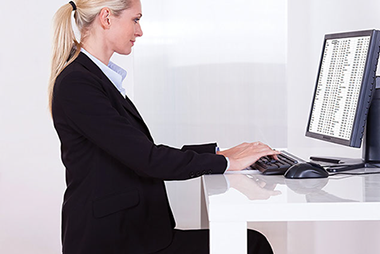
    Image of business women sitting at desk with correct posture.

    Just like the average coach airplane seat is uncomfortable for most people, office chairs and desks may not fit you either. Arrange your laptop, computer, and tablet so they fit you, urges Dr. Erik Peper, professor at San Francisco State University’s Institute for Holistic Health Studies. Don’t let an incorrectly adjusted chair or table height force you to work in an awkward body position.

    For working at a computer:Sit in a chair with your feet on the floor. Keep your elbows bent at 90 degrees with your hands, wrists, and forearms straight, in line, and roughly parallel to the floor so that your hands can be on the keyboard while the top of the monitor is level with your eyebrow.

    For working with a laptop:You will always compromise body position. If the screen is at eye level, you have to bring your arms and hands up to the keyboard, or, more commonly, you will look down at the screen while at the same time raising your hands to reach the keyboard. The solution is to use an external keyboard so that the keyboard can be at your waist position and the laptop screen eye level.

    For working with tablets and smartphones.You have little choice. You either look down or reach up to touch the screen. As much as possible tilt and raise the tablet so that you do not have to slouch to see the screen.

    © American Institute for Preventive Medicine

  • Don’t Be Rash

    SELF-CARE CORNER

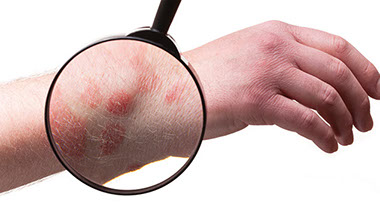
    Image of rash on a person's arm.

    It’s itchy and red. Maybe painful. A rash is your immune system’s way of saying, “I’m protecting you.”

    When skin cells detect something suspicious (such as poison ivy or chickenpox), they begin a chain reaction that leads to inflammation or swelling. Doctors call it dermatitis. But you might think of it as a rash.

    Rashes can be caused by bacteria, viruses, drugs, allergies, genetic disorders, and even light. So it’s important to find out what is causing the rash. Most rashes clear up and go away quickly. Others may need care over a long time.

    Call your doctor if any of these are true, advises the NIH News in Health:

    *  Your rash is so uncomfortable or painful it interferes with daily activities or sleep.

    *  The rash is on your face.

    *  Your rash looks worrisome or seems infected.

    *  You break out in a rash after taking a new medication.

    *  Your rash lasts for several days.

    © American Institute for Preventive Medicine

  • Don’t Get Cold Feet

    WELL-BEING

    Image of feet with socks on.

    Chilly weather can be hard on feet. The American College of Foot and Ankle Surgeons offers 5 tips to healthy feet.

    1.If the shoe fits, wear it-Narrow shoes, overly-high heels or shoes that aren’t worn very often, such as dress shoes, can irritate feet and lead to blisters, calluses, swelling, and even severe ankle injuries. Choose a shoe that has a low heel and fits your foot in length, width, and depth while you are standing.

    2.Don’t overindulge– Did you know your feet can feel the effects if you eat too much of certain foods and beverages high in purines. Shellfish, red meat, red wine, and beer can trigger extremely painful gout attacks, a condition when uric acid builds up and crystallizes in and around your joints. Uric acid is sensitive to temperature changes (so gout can start in the big toe, which is the coldest part of the body).

    3.Be pedicure-safety conscious-Nail salons can be a breeding ground for bacteria. To reduce your risk of infection, choose a salon that follows proper sanitation practices and is licensed by the state. Consider also purchasing your own pedicure instruments to bring to your appointment.

    4.Watch for ice and snow-Use caution when traveling outdoors. Watch for ice or snow patches along your trail. The ankle joint can be more prone to serious injury from falling on ice. If you fall, use R.I.C.E. therapy (Rest, Ice, Compression, and Elevation) to help reduce the pain and control swelling around the injury until you see a doctor.

    5.“Listen” to your feet-Inspect your feet regularly for any sign of ingrown toenails, bruising, swelling, blisters, dry skin, or calluses, especially if you have diabetes.

    © American Institute for Preventive Medicine

  • Don’t Just Eat Your Food – Grow It!

    HEALTHY EATING

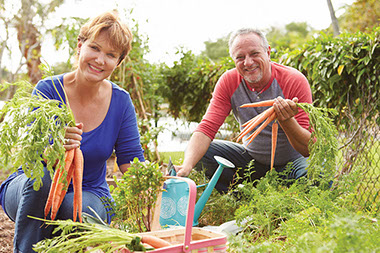
    Image of couple in the garden harvesting carrots.

    Spring is here – and it’s the perfect time to think about starting a garden. But a garden doesn’t have to be just for decoration. Grow something you and your family can eat! Even if you don’t have a lot of room, many delicious and healthy foods can be grown in pots and small spaces.

    Benefits of gardening

    Many people grow their own food to save money on groceries – but the benefits of a fruit and/or vegetable garden go far beyond finances:

    *  By tending to your own garden, you can get more physical activity and fresh air.

    *  Being outside in nature can improve mental health and help reduce anxiety and stress.

    *  Children who grow their own foods may be more interested in trying – and eating – more fresh fruits and vegetables.

    *  Foods that are freshly picked often taste better and have the maximum amount of vitamins and nutrients. This is why “in season” foods and those fresh from the farmers market often look, feel and taste the best.

    Getting started with gardening

    Taking on a garden may feel overwhelming at first, but it doesn’t have to be a major chore. Start small and simple, and add more space or plants as you are able. Try to select larger containers so the plants have enough soil and room to grow. Start with one or two of your favorites, and expand your selection each year.

    Most seed packets will list directions for the amount of sun and space a plant needs. Certain plants, such as lettuce and salad greens, only need about five inches of soil depth. But, potatoes, tomatoes, carrots, broccoli and cucumbers need up to 12 inches of soil. If you purchase the seeds or plants from a nursery, ask the employee for success tips.

    Protect your garden from unwanted diners

    You don’t have to use chemicals or go to drastic measures to keep your bounty from animals, birds and bugs. A few simple barriers will keep out most of these uninvited guests:

    *  Hang balls of soap to repel deer from plants. You can also spray your plants with capsaicin, a natural ingredient found in hot peppers. This spray may also keep skunks and raccoons away.

    *  Keep birds and small animals, like squirrels, away from fruit plants. Simply cover the plants with plant netting that can be purchased at a hardware or gardening store.

    *  Plant bug-repelling herbs, such as basil, lavender, thyme, mint and lemongrass, in your garden. Flowers, such as marigolds, chrysanthemums and petunias, add beauty to your yard and help to repel insects.

    Source: Farmer’s Almanac

    © American Institute for Preventive Medicine

  • Don’t Just Sit There

    BE FIT

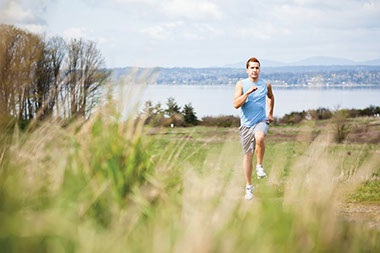
    Image of man running.

    When you’re upright and active, even briefly, your body is at work. “You’re engaging a wide range of systems in your body when you move throughout your day,” says Dr. Charles E. Matthews, who studies physical activity and cancer risk at NIH. “Your muscles are contracting, you’re maintaining your balance, and you’re resisting the force of gravity.”

    When you’re sitting, he says, “Muscle contractions go way down, and your body’s resistance to gravity decreases.” When you sit for long periods, your body adapts to the reduced physical demand and slows down its metabolism. When metabolism slows, you burn fewer calories and boost the chance that extra energy will be stored as fat.

    The best way to raise your metabolism is simply by  moving. The more you move, the better.

    A new study led by NIH’s Dr. Steven Moore looked at data on more than 650,000 adults, mostly age 40 and older. The researchers found that leisure-time physical activity was linked to a longer life expectancy, regardless of how much people weighed.

    “We found that even a low level of physical activity-equivalent to about 10 minutes a day of walking-was associated with a gain of almost 2 years in life expectancy. High levels of activity-equivalent to about 45 minutes a day of walking-were associated with a gain of 4 years or more,” says Dr. Moore.

    Look for opportunities to be active throughout your day. Get moving as much as you can.

    © American Institute for Preventive Medicine