Author: AIPM

  • Getting Active As A Family

    FAMILY LIFE

    Image of family jogging.

    One of the best ways to prevent weight problems in children is to make exercise and activity a family event. Not only can parents set a good example, but it helps everyone get healthier while bonding and having fun together. The U.S. Department of Health and Human Services offers some tips:

    *  Find some free time. Being active together just twice a week can have health and emotional benefits. Try to find some 30-minute time slots and put your activity time on the calendar.

    *  Don’t make too many changes at once. To get everyone on board, start gradually and be sure to celebrate each time you make a healthy change.

    *  Ask for the kids’ ideas. Ask your kids about where they’d like to walk or bike. Talk to them about sports or activities they want to try.

    Remember, any time you make a change toward more activity and less screen time, you’re helping everyone in your family lead a healthier life.

    © American Institute for Preventive Medicine

  • Getting Kids To Donate Old Toys

    FAMILY LIFE

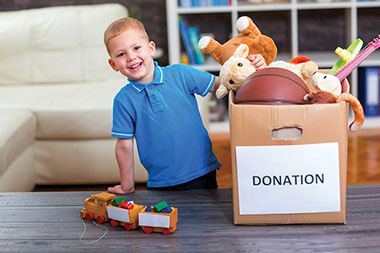
    Image of happy child placing toys in donation box.

    After the holidays, many families find their house overrun with toys. If your kids received new toys as gifts and have old toys they don’t use anymore, consider donating the toys to families in need.

    Unfortunately, it’s not always easy to do this. Many parents find that children struggle to give up old toys. Even if they haven’t touched it in months, they may be unwilling to give the toy away.

    The American Academy of Pediatrics suggests these tips to get kids on board:

    *Make giving a part of family life.Try volunteering for a local charity as a family throughout the year. Talk to the kids about causes you support.

    *Talk to the kids about ways to give.Talk to your child about local charities that could use their old toys. A church nursery, children’s shelters, a child care center, and children’s hospitals are just a few options.

    *Ask for the kids’ help.Take some time to sort through old toys with your child. Try the “give one, keep one” approach so they can decide for themselves what stays and what goes.

    *Only donate toys that are safe, not broken, and clean.

    Tips for teaching gratitude to kids

    *Do small things for friends or neighbors.Have your children bring fresh food to a neighbor who lives alone, or help them rake leaves without asking for anything in return.

    *Talk to them about what they are thankful for each day.This can help parents too.

    *Say “thank you” to others whenever appropriate.This helps them learn by following your example.

    *Send thank-you notesand teach kids to send them after receiving birthday or holiday gifts.

    *Have them do age-appropriate chores.This gives kids an idea of all the work it takes to keep a household running.

    © American Institute for Preventive Medicine

  • Getting Motivated To Exercise

    BE FIT

    Image of couple running.

    We know exercise is healthy. But, without motivation, it’s hard to get started. Try these tips to get excited about working out, to get going and to stay with it.

    *Set goals you can achieve.Try 20 minutes of exercise, 3 days per week. Once you’ve mastered that habit, move it up to 30. Then, increase the number of days, and so on.

    *Make exercise “me time.”Exercise class, a walk or your favorite sport is time that helps your body and mind get healthier. Think of it as a treat to yourself.

    *Write down something you’ve achieved with exercise.Whether you met your goal for two weeks or perhaps noticed your mood was better, take note of it. Go back and look at the good things you’ve accomplished over time. This can give you positive encouragement.

    *Don’t dwell on setbacks.Everyone has a day where they miss a workout. Just move forward and figure out how you can get back into your routine tomorrow.

    *Find support when you need it.Sometimes, it helps to have a friend cheer you on. Or, maybe a family member is willing to babysit your kids while you exercise. Maybe you can ask a friend to exercise with you. Together, you can motivate each other.

    *Skip the stuff you don’t like.If you really dislike a certain class or activity, don’t do it. Instead, find an exercise you can look forward to. Do what gets you active and feels fun and invigorating.

    *Try something new.Whether it’s a new class, a new video or a new piece of equipment at the gym, variety can be fun. Doing the same exercise every day for weeks or months can kill motivation.

    If you have any health conditions, or haven’t exercised in a long time, ask your doctor which types of exercise would work best for you.

    Source: American Academy of Family Physicians

    © American Institute for Preventive Medicine

  • Give Cold Sores The Cold Shoulder

    SELF-CARE CORNER

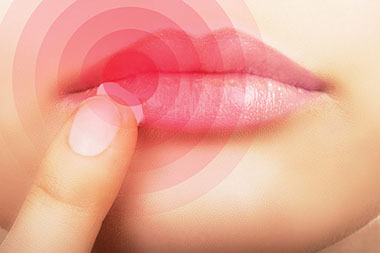
    Close up image of cold sore.

    Cold sores – those bothersome blisters that appear around the mouth – can be painful and embarrassing. Cold sores are spread by a virus, but not the cold virus.

    Cold sores happen when a person gets infected with the herpes simplex virus (HSV). This is why cold sores may also be called “oral herpes.” HSV is very contagious. It can be easily spread person to person by:

    *  Sharing drinks or utensils

    *  Kissing

    *  Touching a cold sore or infected person’s face, and then touching your face

    *  Touching an infected person’s face and then touching someone else (this is how many babies get HSV)

    *  Sharing personal items like razors or towels

    *  Intimate or sexual contact

    *  Touching the same object that was touched by a person with a cold sore.

    The type of HSV that causes cold sores is usually HSV  type 1. Another type of HSV,  known as HSV type 2, is most often spread through sexual contact. HSV type 2 is the virus that usually causes genital herpes. But, either type of  HSV can cause cold sores or genital herpes.

    What triggers cold sores?

    Once you get HSV, there is no cure. It stays in the body forever and it may cause repeated outbreaks of cold sores. Certain things may trigger a cold sore outbreak. Things that bring down the body’s defenses may allow the virus to become active and produce a cold sore again. Many people get cold sores due to:

    *  Stress

    *  Hormone changes such as menstruation or pregnancy

    *  Illnesses, like the flu or a cold

    *  Sun exposure

    *  Certain foods

    Don’t spread cold sores!

    Even if you stay healthy and avoid stress, there is no way to prevent all cold sore outbreaks. So, it’s best to try and avoid spreading cold sores and HSV to others.

    The best way to avoid spreading cold sores is to wash your hands frequently and avoid contact that could spread the sore. If you feel a cold sore coming on, don’t share drinks and other items listed in this article. Avoid touching your mouth and don’t touch people’s faces or kiss people, especially babies, children and people with weakened immune systems.

    Treating cold sores

    If you get cold sores frequently, ask your doctor about medicines that can help. Some antiviral medicines can reduce the number of outbreaks. They also help lower the chance of spreading HSV to others.

    Some over-the-counter medicines can also help speed up the healing time of a sore, but they won’t prevent outbreaks or stop the spread of HSV. Ask your doctor if one of these treatments might work for you.

    Sources: American Academy of Pediatrics, Centers for Disease Control and Prevention, National Institutes of Health

    © American Institute for Preventive Medicine

  • Giving The Gift Of Healthy Eating

    HEALTHY EATING

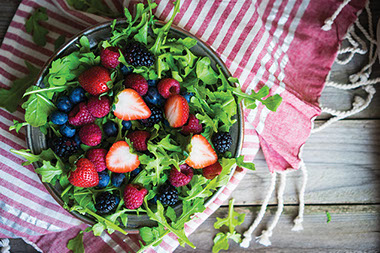
    Image of salad filled with a variety of berries.

    The holiday season is usually associated with a lot of unhealthy, rich foods and sweets. The result of eating too much of these treats is often weight gain. A study in the New England Journal of Medicine found that people gained weight within 10 days of a national holiday, and it took several months to lose that weight.

    This year, celebrate without extra weight! Spread the gift of healthy eating to others by giving gifts that encourage good habits.

    Making healthy food easier

    If you’re looking for a thoughtful gift that will be truly appreciated, try giving the gift of healthy food that saves time and effort! Here are some ideas:

    *Make a healthy meal that freezes well and hand deliver it.The recipient can choose to freeze and eat later, or eat it that day. Be sure you are aware of any food allergies or other dietary needs. Some ideas include homemade chili or pasta sauce.

    *Put a more creative twist on a traditional fruit basket and give them a fruit salad that’s ready to eat.Pre-washed and cut fruit that’s ready to grab means they can enjoy it right away, without any prep time.

    *Put soup ingredients in a mason jar.This is a popular gift that helps the person prepare an easy and healthy dinner. Usually, the dry ingredients for your favorite soup will go well in a jar. Be sure to include directions on how to cook it, and consider adding some whole-grain bread on the side.

    *Share your favorite mix or sauce.Do you have a secret recipe for healthy granola or a delicious marinade for meats? Share your gift of cooking by putting it in a jar or container with a nice label. Provide tips on how to use or prepare it.

    Not into cooking?You can always purchase dishes or containers that are useful for healthy eating. For instance, a person who eats lunch on the go may appreciate containers that can keep salads, dressing or other healthy foods fresh and delicious.

    © American Institute for Preventive Medicine

  • Gluten-Freecauliflower Pizza Crust

    HEALTHY EATING

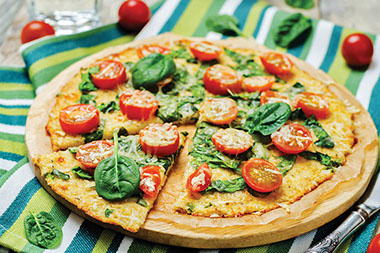
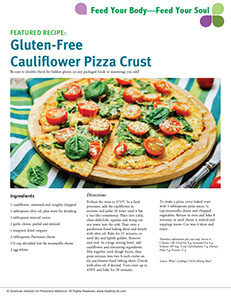
    Image of cauliflower crust pizza.

    Be sure to double-check for hidden gluten on any packaged foods or seasonings you add!

    Ingredients

    1 cauliflower, stemmed and roughly chopped

    1 tablespoon olive oil, plus more for drizzling

    1 tablespoon minced onion

    2 garlic cloves, peeled and minced

    1 teaspoon dried oregano

    2 tablespoons Parmesan cheese

    1/4 cup shredded low-fat mozzarella cheese

    2 egg whites

    Directions

    Preheat the oven to 375°F. In a food processor, add the cauliflower in sections and pulse 10 times until it has a rice-like consistency. Place into a dry, clean dishcloth, squeeze and wring out any water into the sink. Pour onto a parchment-lined baking sheet and drizzle with olive oil. Bake for 25 minutes, or until dry and lightly golden. Remove and cool. In a large mixing bowl, add cauliflower and remaining ingredients. Mix together until dough forms, then press mixture into two 8-inch circles on the parchment-lined baking sheet. Drizzle with olive oil, if desired. Turn oven up to 450°F and bake for 20 minutes.

    To make a pizza, cover baked crust with 3 tablespoons pizza sauce, ¼ cup mozzarella cheese and chopped vegetables. Return to oven and bake 8 minutes, or until cheese is melted and toppings warm. Cut into 4 slices and enjoy.

    Nutrition information for crust only: Serves 4. Calories 120; Total Fat 8 g; Saturated Fat 4 g; Sodium 185 mg; Total Carbohydrate 5 g; Dietary Fiber 5 g; Protein 11 g

    Source: What’s Cooking? USDA Mixing Bowl

    © American Institute for Preventive Medicine

  • Gluten-Free Diet Is Treatment, Not Trend

    MEDICAL NEWS

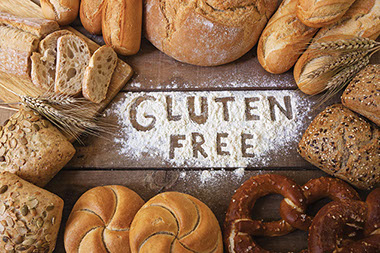
    Image of various breads with the words "Gluten Free" written in powedered white flour.

    You’d never suspect it from the growing number of gluten-free items on supermarket shelves, but only one in about every 133 people has celiac disease. This genetic autoimmune disorder causes the body to react negatively to the intake of gluten, a protein found in wheat, rye, barley, and their byproducts.

    It is estimated that more than 80% of the Americans whose systems can’t tolerate gluten are either not diagnosed or misdiagnosed. And the average time a person waits for a correct diagnosis is more than 10 years. A prime reason is that the symptoms of gluten-related problems vary widely-from migraine headaches and diarrhea to joint pain and skin rashes-and are common to numerous other conditions and disorders.

    When a person with celiac disease consumes gluten, the protein triggers an immune response that damages part of the small intestine called villi, which interferes with the absorption of nutrients from the food. This can cause malnutrition, trigger other health problems-among them cancer, osteoporosis, and infertility-and open the door to other autoimmune disorders.

    “There’s greater awareness of celiac disease, we have better tests, and we know more about who should be screened, but we’re still seeing only the tip of the iceberg,” said  Dr. Anca M. Safta, a gastroenterologist at Wake Forest Baptist Medical Center and director of its Gluten & Allergic Digestive Disorders Program.

    A simple antibody blood test can screen for celiac disease. And because the disease is inherited, there’s also genetic testing. But while these tests can eliminate the possibility of celiac disease, they can’t confirm its presence. That usually has to be done with an endoscopic biopsy. This procedure examines the small intestine and removes tissue samples for analysis.

    If the biopsy results are positive for celiac disease, the only way to repair existing damage to the small intestine and prevent reoccurrence is for the person to adopt a strict gluten-free diet.

    That’s also the treatment for people with non-celiac gluten sensitivity. This has symptoms much like those of celiac disease but doesn’t cause the same intestinal damage and can’t be identified through blood or tissue testing.

    Steering completely clear of gluten can be tricky. Gluten isn’t just in grain-based products such as bread, cereal, cookies, pastry, pasta, and beer. It also can be found in candy, ice cream, lunch meats, cooking oil, salad dressing, condiments, instant coffee, soup mixes, and a host of other processed foods. Vitamins, toothpaste, and lipstick can also contain gluten.

    Gluten-free products are more plentiful than ever, but they’re also costly-nearly 250% more expensive than their conventional counterparts. And because even small amounts of gluten can produce negative effects, cross-contamination-when gluten-free foods come into contact with or are prepared with gluten products-is a threat, especially when eating outside the home.

    Is going gluten-free good for everybody? In a word, no.

    “It’s not necessarily a healthier diet if you don’t need it,” Dr. Safta said.

    Any time you restrict your diet, you have a greater chance of not getting all the nutrients you need. You risk developing a nutrient or vitamin deficiency because gluten-free products aren’t fortified or enriched like most regular bread and cereal products are.

    Going gluten-free is not the best way to shed excess pounds. Weight loss is generally due to eating fewer processed foods and more fruits and vegetables, not shunning gluten. And gluten-free foods can contain as many calories as standard products, or even more.

    © American Institute for Preventive Medicine

  • Be Active Every Day!

    WELL-BEING

    Image of couple walking along the beach.

    Go4Life® is an exercise and physical activity campaign from the National Institute on Aging at NIH for people 50-plus. It is designed to help them fit exercise and physical activity into daily life.

    Go4Life® is based on research which shows that exercise can help prevent many of the chronic conditions and disability linked with aging. Despite the benefits of exercise for people of all ages, U.S. adults tend to become less active as they age. Go4Life® provides an interactive website athttps://go4life.nia.nih.govto help older adults increase their physical activity. This includes sample exercises, success stories, and free materials to motivate them to improve their health and achieve a better quality of life. Go4Life® also works with local and national groups to provide an environment that supports these efforts.

    “It’s never too late for exercise to have a positive effect on your health,” said NIA Director Richard J. Hodes, M.D. “We know that exercise can reduce the risk of heart disease, obesity, stroke, diabetes and other chronic conditions. One recent study found that even sedentary people in their 70s and 80s improved mobility and reduced the risk of disability through a regular program of structured physical activity.”

    “The establishment of Go4Life® Month will help draw attention to the critical importance of exercise with age and the resources that we can provide to support adults who want to do more,” Hodes said.

    Athttps://go4life.nia.nih.gov/event-list, find out about activities planned for Go4Life® Month.

    For more information on healthy aging, accesswww.nia.nih.gov.

    © American Institute for Preventive Medicine

  • Go Dark For Better Sleep – And Better Mornings

    WELL-BEING

    Image of a young female using a tablet in the dark.

    Your nighttime habits may be hurting your morning routine. Many electronic devices, such as smartphones, computers and tablets, give off blue light. This type of light boosts energy – and can interfere with sleep.

    If you wake up feeling groggy in the morning, try shutting off the electronics two to three hours before bedtime. And, make sure you get out and see some daylight and other bright lights during your waking hours. This can help set your body’s internal clock, telling you when to wind down at bedtime and then rise the next day.

    Source: Harvard Medical School

    © American Institute for Preventive Medicine