Author: AIPM

  • Go Red To Manage Pain

    SELF-CARE CORNER

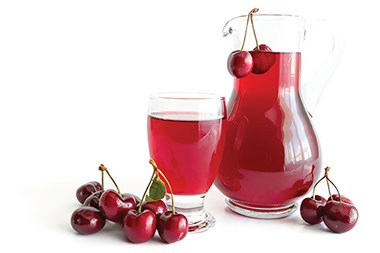
    Image of cherry juice.

    Tart cherries may help reduce chronic inflammation, especially for the millions of Americans suffering from joint pain and arthritis, according to research from Oregon Health & Science University. The researchers suggest tart cherries have the “highest anti-inflammatory content of any food” and can help people with osteoarthritis manage their disease.

    In a study of women ages 40 to 70 with inflammatory osteoarthritis, the researchers found that drinking tart cherry juice twice daily for three weeks led to significant reductions in important inflammation markers-especially for women who had the highest inflammation levels at the start of the study.

    Often thought of as “wear-and-tear” arthritis, osteoarthritis is the most common type of arthritis. Athletes are often at a greater risk for developing the condition, given their excessive joint use that can cause a breakdown in cartilage and lead to pain and injury, according to the Arthritis Foundation.

    Along with providing the fruit’s bright red color, the antioxidant compounds in tart cherries-called anthocyanins-have been specifically linked to high antioxidant capacity and reduced inflammation, at levels comparable to some well-known pain medications.

    Available every day of the year in dried, frozen, and juice forms, tart cherries are a versatile ingredient to include in any training or inflammation-fighting diet.

    © American Institute for Preventive Medicine
  • Go With The Grain

    HEALTHY EATING

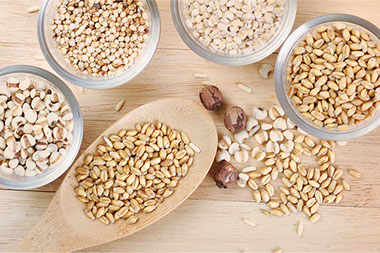
    Image of different grains.

    With one look down the grocery store aisle or a quick glance at a restaurant menu, it’s clear that whole-grain options are popping up everywhere. From quinoa to buckwheat and farro to freekeh, the number of grain possibilities is growing, leaving home cooks and diners puzzled by how to choose the right one and know how to prepare it.

    Not only do whole grains provide an array of health benefits, they can also be an excellent base for hearty dishes that taste great and are remarkably filling. Whether featured in a salad, formed into a patty as a vegetarian burger option, warmed up for breakfast, or used as the base of a thick stew, grains are extremely versatile and can be enjoyed as part of breakfast, lunch, dinner or dessert.

    Although cooking with grains can seem like a daunting task, the chef instructors at Le Cordon Bleu encourage home cooks to soak their long-cooking grains, whether for a few hours or overnight, to minimize the cooking time. This also ensures that any resin left on the grain that can cause a bitter taste will get washed off.

    They also suggest these cooking tips:

    *  Whole-grain options can be customized for each meal of the day. Make a big batch of steel-cut oats on Sunday evening and eat it for breakfast throughout the week. Add quinoa to lunchtime salads-add the dressing in advance so the grain fully absorbs the flavors of the dish. For dinner, add wheat berries or barley to soups for a hearty, filling meal.

    *  Resist the urge to stir grains as they are cooking. Stirring causes whole grains, especially rice, to become sticky and clump together, making it difficult to prepare a fluffy, flavorful dish.

    *  After they are cooked, whole grains stay fresh for several days in the refrigerator. You can cook a large pot of brown rice or quinoa at the beginning of the week and use it in dishes throughout the week to save cooking time.

    © American Institute for Preventive Medicine

  • Going Back To Work After A Leave

    WORK LIFE

    Image of 2 construction workers.

    Many people take a leave of absence from work at some point. It could be for a life event, such as maternity or paternity leave, or because of an illness. A leave of absence is usually an extended period of time off that goes beyond vacation or other type of leave.

    No matter how long your leave is, going back to work can be a big adjustment and cause you plenty of anxiety. But, you can make the transition smoother if you prepare for your new routine. Try these tips:

    *  Get organized. A week or two before you go back, start jotting down things you will need to do every day. Whether it’s packing lunches, walking the dog or dropping kids off at daycare, it helps to have it all written down to feel more in control of the situation. You can then create a schedule or to-do list which helps make it more manageable.

    *  Start moving back to your work schedule. It can be quite a shock to go back to a 6 a.m. work shift if you’ve been staying up late. At least two weeks before you go back, start transitioning your sleep schedule. Give your body time to adjust to getting up at that same time and change your bedtime accordingly. Aim for seven to eight hours of sleep so you can feel rested and productive.

    *  Allow for extra time in the morning. Set your alarm for earlier than you think you need to. You’ll be glad to have the extra time without rushing in the morning. Or, you may find that it takes you longer to get ready than you thought.

    *  Talk with your supervisor before going back. You can discuss your specific job duties and schedule. And, you can touch base about any changes or updates that may have taken place while you were gone. This could save you time and stress on your first day back.

    *  Discuss breastfeeding in advance. Moms who plan to pump breastmilk at work should ask their supervisor or human resources department about this before going back. Come up with a pumping schedule that works for you and your employer. Discuss where you can pump. You’ll need a clean and private area with access to a sink.

    Going back to work can be less stressful with some planning and open discussion with your employer. Don’t wait until you go back to deal with these questions and details.

    © American Institute for Preventive Medicine

  • Good Cheer For Holiday Dieting

    HEALTHY EATING

    Image of gift sitting on a plate.

    Big holiday coming up? Don’t panic. With a good game plan and strategic planning you and your diet can not only survive holidays but you can actually thrive on them. Holidays do not have to be a time of feast or famine-you can strike a happy balance between gorging and self-sacrifice.

    *  Review your eating habits from the previous year’s celebration. Does food take center stage during the holidays? Do you genuinely enjoy foods like fruitcake, for example, or do you just eat them out of custom and tradition?

    *  Before digging in at a big holiday feast, imagine how you will feel after eating it. Visualize the bloated, uncomfortable, and guilty feelings you’ve experienced on past occasions.

    *  Forget about being “perfect” on holidays. Stringent dieting may be unrealistic and you could sabotage your efforts by setting standards that are too high. Don’t set yourself up for failure by only thinking of what you can’t have. Concentrate instead on healthy options such as fruit baskets.

    *  Learn to be festive without depending on alcohol. A drink here, a toast there-the calories of alcohol can add up. Substitute club soda or mineral water for alcohol.

    *  If you’re invited to someone’s home for dinner, ask if you can bring a dish, then make it  low-calorie. (And be sure to make plenty. Low-calorie foods are usually very popular.)

    *  Remember that the major purpose of the holidays is to enjoy family and friends. Food and alcohol are secondary factors.

    © American Institute for Preventive Medicine

  • Good Mood Foods

    HEALTHY EATING

    Image of couple eating dinner.

    Colder temps, darker and longer days, and the temptation to eat more and move less. Sound like your winter schedule? Boost your mood with this advice from Highmark, a health care company.

    *Focus on nutrient-rich foods.Eating “comfort foods” may help you relax and give you a mood boost, but it’s only temporary. Nutrient-rich foods like fruits, vegetables, whole grains, and lean protein foods provide a consistent and long-lasting impact on your health, mood, energy, and alertness.

    *Cut back on your fat intake.A high-fat diet can be a real brain and energy drainer. Just say “no” to deep-fried foods and look for foods that contain no more than 3 grams of fat per serving.

    *Eat moderate portion sizes and avoid large meals.Have you ever wondered why you feel tired after eating a large meal? During periods of digestion, your blood supply is directed to the digestive tract and away from the rest of the body, which causes you to slow down.

    *Eat regular meals.Skipping meals can slow your metabolic rate, and the lower your metabolism, the lower your energy level. Plan regular meals and snacks to keep your metabolic rate and blood sugar levels normal to provide your brain the best means to function and handle stress.

    *Remember balance, variety, and moderation.The best strategy for maintaining a good mood, high-energy level, and concentration is to consistently eat a wide variety of foods high in nutritional value.

    © American Institute for Preventive Medicine

  • Grab On

    WELL-BEING

    Image of tub and shower with grab bars.

    You don’t have to be a senior to risk falling in a steamy, slippery bathroom. Grab bars provide extra support through unique anchoring systems that can support up to 500 pounds of pressure, depending on the manufacturer, according to Lifetime Products.

    When installing safety grab bars, look for places where you are most likely to lose your balance:

    *Tub/Shower.Install grab bars at a lower level to help bathers with raising and lowering. A grab bar at waist level or slightly higher is ideal to help with stepping in and out of the tub, as well as to hold for extra balance while washing and shampooing when showering.

    *Toilet.Install a grab bar on the wall near the toilet for support when sitting down and standing up. Some toilet-paper holders are specifically designed to double as safety bars.

    *Towel racks.Regular towel racks aren’t designed to support the weight of someone leaning on them and will loosen over time and eventually detach from the wall, which could lead to serious injury. Install safety towel bars and/or towel shelves that are designed to provide support.

    © American Institute for Preventive Medicine

  • Great American Smokeout

    MEDICAL NEWS

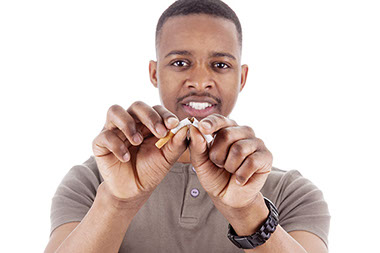
    Image of a man breaking a cigarette in half.

    Every year, on the third Thursday of November, the American Cancer Society asks tobacco users to make a plan to quit on this day, or plan in advance and then quit smoking that day.

    Earlier this year, the Surgeon General’s office released The Health Consequences of Smoking-50 Years of Progress. The report showed that adult smoking rates have fallen from about 43% in 1965 to about 18% today, but more than 42 million American adults and more than 3.5 million middle and high school students continue to smoke.

    Get help to quit

    Quitting tobacco is not easy. Nicotine is as addictive as cocaine or heroin.

    *  Use a nicotine replacement product, such as a patch, gum, or lozenges. Use as directed.

    *  Ask your doctor about prescribed medications that can help you quit.

    *  Take part in a non-tobacco use program  and events at work or in your community.

    *  Use the “Get Help to Quit” resources listed on this page.

    Ready, set, go…

    *  Set a quit date. The CDC advises doing this within 2 weeks.

    *  Write down the top reasons you want to quit.

    *  Tell others so they can encourage you. Ask others not to smoke around you.

    *  Get rid of tobacco products and related items from your home, car, and workplace. This includes matches, lighters, and ashtrays.

    *  Avoid drinking while you’re quitting cigarettes. Drinking alcohol can trigger cravings for a cigarette.

    *  When you get the urge to smoke, dip, or chew, take a deep breath through your mouth. Slowly exhale through pursed lips. Repeat 5-10 times.

    *  Have sugarless gum or mints or drink water.

    *  Hold a pen, stress ball, or other small object to keep your hands busy.

    *  Put the money you used to spend on tobacco products in a “ciggy” bank.

    *  Don’t give up if you relapse. Most people try several times before they succeed!

    Get help to quit

    American Lung Association

    800.LUNG.USA (586.4872)

    www.lungusa.org/tobacco

    National Cancer Institute’s Smoking Quitline

    877.44U.QUIT (448.7848)

    www.cancer.gov/cancertopics/smoking

    National Network of Tobacco Cessation Quitlines

    800.QUIT.NOW (784.8669)

    Smokefree Women

    www.women.smokefree.gov

    U.S. Department of Health & Human Services

    www.smokefree.gov

    © American Institute for Preventive Medicine

  • Grill Master

    HEALTHY EATING

    Close up image of a person grilling.

    Charring, burning, or grilling meat, poultry, and fish over high temperatures causes heterocyclic amines (HCAs) to form. These HCAs can damage your genes and raise your risk for stomach and colorectal cancers, says The University of Texas MD Anderson Cancer Center. You can avoid HCAs:

    *  Use a marinade. Marinating meat in vinegar, lemon juice, and herbs such as mint, rosemary, tarragon, or sage can reduce HCA formation by as much as 96%. Just 30 minutes can help.

    *  Stick with fish. Fish contains less fat and cooks faster than meat and poultry.

    *  Lightly oil the grill. This keeps charred materials from sticking to your food.

    *  Pre-cook food. Cook meat, poultry, or fish in the microwave or oven for 2 to 5 minutes, then finish them on the grill.

    *  Lower the temperature. For a charcoal grill, spread the coals thinly or prop the grill rack on bricks. This reduces the heat by increasing the distance between your food and the coals. And use barbecue briquettes and hardwood products, such as hickory and maple. They burn at lower temperatures than softwood (pine) chips.

    *  Scrub the grill. Cleaning the grill after each use prevents harmful chemicals from building up and transferring to your food.

    © American Institute for Preventive Medicine

  • Grilled Fish Tacos

    HEALTHY EATING

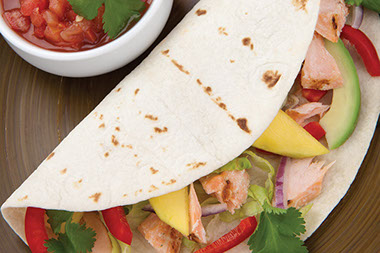
    Image of grilled fish tacos.

    Ingredients

    For the salsa:

    1 can of peach halves

    1/2 red bell pepper

    1/4 red onion

    1 whole jalapeno pepper

    1 Tablespoon fresh cilantro

    2 teaspoons lemon juice

    In a medium bowl, stir together chopped peaches, bell pepper, onions, jalapenos, cilantro and lemon juice; cover and refrigerate until ready to use.

    For the fish:

    4 tilapia fillets (about 1 lb)

    1 Tablespoon chili powder

    1/4 teaspoon low-sodium adobo seasoning

    1 packet low-sodium sazon seasoning

    8 flour tortillas (6″ diameter, warmed)

    Directions

    1. In a small bowl, stir together chili powder, adobo seasoning and sazon packet. Rub fish with spice mixture to coat completely.

    2. Place fish on hot greased grill grates.

    3. Cook, flipping once until fish is opaque and flakes easily with a fork (145 degrees Fahrenheit), about 8 minutes.

    4. Thinly slice fish. To serve, fill each tortilla with 1/2 fish fillet and about 1/3 cup of salsa.

    Serves 4: Per serving: Calories: 330; Total Fat: 5 g; Saturated Fat: 2 g; Sodium: 380 mg; Total Carbohydrate: 44 g; Dietary Fiber: 3 g; Protein: 27 g

    Source: What’s Cooking? USDA Mixing Bowl

    © American Institute for Preventive Medicine

  • Hair Loss: More Than Skin Deep

    WELL-BEING

    Image of man with thining hair.

    Hair loss is a common issue among men and women alike. The U.S. National Library of Medicine says about 50 million men and 30 million women have some degree of hair loss or baldness. Most of the time, this is due to hereditary hair loss.

    Sometimes, however, hair loss is a sign of a health problem. Hair loss can sometimes be caused by:

    *  Thyroid problems

    *  Diabetes

    *  Low iron in the blood (anemia)

    *  Prostate cancer in men

    *  High blood pressure (hypertension)

    *  Polycystic ovary syndrome (PCOS) in women

    Hair loss doesn’t always mean you have a serious illness. Sometimes hair falls out for a little while and then starts to grow back. Some of the reasons this happens include:

    *  Hair breakage from chemicals like perms and hair color

    *  Hairstyles that pull on the hair, such as tight ponytails and braids

    *  A stressful event, such as a death in the family

    *  Stress on the body from major surgery, childbirth or some illnesses

    *  Brushing hair too hard or too often

    *  Some prescription medicines, including those for arthritis, cancer, depression, gout, heart disease and high blood pressure

    *  Hormone changes, such as during pregnancy or menopause

    If you notice sudden hair loss, it’s important to find out the cause. If you notice large amounts of hair falling out when combing or washing your hair, or thinning or bald spots, make an appointment with your doctor.

    Common hair loss treatments

    Knowing the cause of your hair loss is the first step to treatment. For instance, if iron levels are low, your doctor may recommend an iron supplement. Treatments for common hereditary hair loss include:

    *  Topical minoxidil (brand name Rogaine, which can be purchased in stores)

    *  Finasteride (prescription medicine for men only)

    *  Topical or oral estrogen or other hormones (prescription for women only)

    *  Hair transplant surgery

    Source: American Academy of Dermatology

    © American Institute for Preventive Medicine