Author: AIPM

  • Heart-Shaped Foods Help Your Heart

    HEALTHY EATING

    Image of a berry and strawberry.

    While some dietitians extol the virtues of red wine, dark chocolate, and salmon for heart health, Dr. Katie Eliot, assistant professor of nutrition and dietetics at Saint Louis University, has a different plan.

    Keep it simple. Look to heart-shaped foods to protect your heart.

    “Being red and heart shaped can be a tip off that some foods are good for your heart,” Dr. Eliot said. “Many heart-shaped fruits and vegetables are great sources of antioxidants. These compounds act like shields, taking the hit from free radicals that otherwise damage the body and cause heart disease and cancer.”

    For instance, strawberries and raspberries are loaded with vitamin C and an antioxidant that prevents plaque from forming in arteries. Cherries contain an antioxidant that is thought to protect the blood vessels and is high in potassium, which helps lower blood pressure.

    Tomatoes and red peppers are rich in the antioxidant lycopene, which is in many red fruits and vegetables and works magic by neutralizing free radicals. And acorn squash and apples contain a type of fiber, which reduces bad cholesterol that can clog up your arteries to cause heart attacks and stroke.

    © American Institute for Preventive Medicine

  • Heat & Humidity:A Dangerous Combination

    MEDICAL NEWS

    Image of young women suffering heat exhaustion.

    Heat and humidity can trigger three major illnesses, according to Dr. Eric Kirkendall, of Cincinnati Children’s Hospital Medical Center:

    Heat strokesymptoms include hot flushed skin, high fevers (over 104ºF), altered mental states such as confusion, and can be accompanied by seizures. Heat stroke is a life-threatening emergency and needs to be treated promptly.

    Heat stroke is a 911 emergency. Cool the person off as quickly as possible while waiting for medical services to arrive. Move the person to a cool shady place or an air-conditioned room; sponge the entire body surface with cool water (as tolerated without causing shivering); and fan the person to increase heat loss from evaporation. Keep the feet elevated to counteract shock. If the person is awake, give him or her as much cold water to drink as he or she can tolerate. Fever medicines are of no value for heat stroke.

    Heat exhaustionsymptoms include pale skin, profuse sweating, nausea, vomiting, muscle cramps, or weakness. It is less severe than heat stroke but is still dangerous and may require medical attention.

    For heat exhaustion, put the person in a cool place indoors or in the shade. Have him or her lie down with the feet elevated. Undress the person (except for underwear) so the body surface can give off heat. Sponge the entire body surface continuously with cool water without causing shivering. Fan the person to increase heat loss from evaporation. Give as much cool, not cold water or sport drinks as the person tolerates until he or she feels better. If symptoms do not improve or the person gets light-headed or faints, get medical care right away.

    Heat crampsare most common in the abdomen and legs, especially the calf or thigh muscles. Tightness or hand spasms can also occur, but fever is not a symptom.

    For heat cramps, monitor physical activity and make sure children don’t overly exert themselves. Adults can self-monitor. Make sure children drink plenty of water often. Encourage frequent breaks from physical activity to cool down and gently stretch muscles.

    © American Institute for Preventive Medicine

  • Help For The Indoor Sneezing Season

    SELF-CARE CORNER

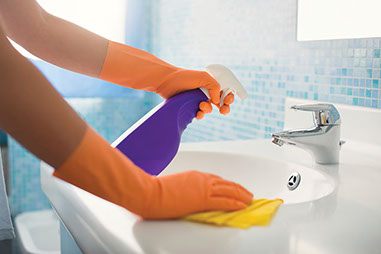
    Image of a person cleaning the bathroom sink.

    Sometimes indoor winter air brings a whole new set of allergy and asthma triggers including dust, pet dander, and mold.

    Doctors from the American College of Allergy, Asthma and Immunology offer advice on how to stay sneeze-free and sniffle-free while indoors this winter.

    *  Reduce moisture in your home to keep dust mites in check. Maintain humidity below 55%, and don’t use a humidifier or a vaporizer.

    *  Filter out dust and other allergens by installing a high efficiency furnace filter with a MERV rating of 11 or 12, and be sure to change it every 3 months.

    *  Banish allergens from the bedroom (where you spend a third of your life). Keep pets and their dander out, and encase mattresses and pillows with dust-mite-proof covers. Use blinds instead of curtains.

    *  Allergy sufferers should wear a NIOSH-rated N95 mask while dusting-a chore that should be done regularly. Wash bedding and stuffed animals in hot water every 14 days and use a vacuum with a HEPA filter.

    *  Turn on the fan or open the window to reduce mold growth in bathrooms (while bathing) and kitchens (while cooking). Wear latex-free gloves and clean visible mold with a 5% bleach solution and detergent.

    *  Box up books and knick-knacks and limit the number of indoor plants. When you are buying new furniture, like chairs or sofas, opt for leather or other nonporous surfaces to make cleaning easier.

    © American Institute for Preventive Medicine
  • Helping A Depressed Family Member

    FAMILY LIFE

    Image of man talking with a counselor.

    Depression is a medical condition that can be serious. The National Institutes of Mental Health say depression can affect how you feel, think and cope with daily life. Eating, sleeping, socializing and working can all be difficult for someone with depression.

    If a member of your family has depression, there are ways to support them.

    Tip #1:

    Don’t tell them to “just snap out of it.” Experts believe depression is caused by a chemical imbalance in the brain. This may be due to genetics or it may be triggered by a stressful event such as death of a family member, divorce or abuse. Sometimes, a cause cannot be found. It’s important to understand that the person’s everyday actions may be affected by this disease, and they can’t make it just go away.

    Tip #2:

    Take medical care seriously. Treatment for depression often involves medication  and/or therapy. It can take some time to find the treatment that works for your family member. Whenever possible, offer to go with them to doctor appointments. Support them in following their treatment plan. Do what you can to make sure they take medications as prescribed without forcing or arguing.

    Tip #3:

    Offer to take them out, but don’t push. Many people with depression struggle to get out of bed each day or leave the house. But, with treatment, it is possible to start enjoying life again. Ask the family member if they’d like to do something simple, such as go to the store or park. If they decline, wait a few days and offer again. Eventually, they may say yes.

    Tip #4:

    Listen when they want to talk. If your family member wishes to talk about his or her feelings, let them do so without judging or offering advice. Simply listen to their thoughts and feelings without trying to “fix” anything.

    Take loved ones’ comments about suicide or self-harm seriously. Many times a person will confide in a loved one prior to committing a harmful act.

    With help from a doctor, depression can be treated. Let your family member know you care, and ask them to get the medical help they need. Proper medical care can help them get on the path to a healthier, happier life.

    © American Institute for Preventive Medicine

  • Helping Others Makes You Happy

    SUCCESS OVER STRESS

    Image of volunteers smiling.

    It’s commonly believed that when we feel down, we should do something good for ourselves. But research suggests the opposite: you should do something good for someone else.

    Research shows that helping others may decrease depression. People who help others regularly may live longer, healthier lives. Studies have shown the following effects of helping others:

    *  Doing five acts of kindness a day can make you feel happier.

    *  Supporting others may lower stress levels in older people.

    *  Donating money to charity boosts a feel-good part of the brain.

    Acts of kindness can make you feel connected to other people. It can also make you feel needed and generous. This may distract you from your own stress and worries. It can also make you feel that your life has more purpose and meaning.

    Source: Mental Health America

    Simple ways to help

    There are a number of ways you can help others. Try one of these ideas.

    Small acts of kindness (try to do more than one each day):

    *  Call a friend or neighbor who lives alone or could use some company.

    *  Let someone go in front of you in line.

    *  Hold the elevator open for someone.

    *  Smile at people you meet and ask how they’re doing. The store cashier or receptionist at the doctor’s office may appreciate your kindness.

    Volunteer ideas:

    *  Outdoor work: parks and highways often need people to help clean up. Local garden clubs often need people to weed and plant.

    *  Offer to make fundraising calls for your favorite charity.

    *  Help with coaching a kids’ sports team.

    *  Volunteer at your local hospital. Most have a variety of ways you can help.

    *  Libraries often use volunteers to help organize materials and help patrons.

    To find local volunteer opportunities, visitwww.volunteermatch.org.

    © American Institute for Preventive Medicine

  • Helping Your Child Succeed At School

    FAMILY LIFE

    Image of school children with backpacks.

    Although learning may be easier for some children than others, any child can find success at school with some extra help from their family. The American Academy of Pediatrics recommends these tips to help your child get a great education.

    Make reading a priority.

    Reading to your child helps them become a better learner. When they’re old enough, let them read to you. Don’t let reading be a chore. Make it a fun time for them by allowing them to choose books they enjoy. If they have difficulty reading aloud, offer to take turns reading to give them a break.

    Be involved.

    Ask your child about their class, their friends, and what they like about school. Attend parent-teacher conferences. If you’re concerned about how your child is doing, ask the teacher how you can help.

    Get them to bed on time.

    Children need the right amount of sleep for learning and good health. Lack of sleep affects the immune system, brain, and emotional control. To find out how much sleep your child needs, visitsleep.org/articles/how-much-sleep-children.

    Power their bodies with healthy food.

    Be sure your child eats a healthy breakfast each morning. Pack their favorite fresh fruits and vegetables in their lunches. Avoid soda and sugary drinks. A healthy diet can boost energy levels and help them stay alert.

    When a child is too sick for school

    Your child gets up in the morning and says she doesn’t feel well. It can be difficult to decide when your child truly needs to stay home, especially if  she doesn’t appear sick. In general, a child should stay home if she:

    *  Has a fever greater than 99.5 degrees

    *  Isn’t feeling well enough to participate in activities

    *  Has an illness that could spread to other children

    *  Has no appetite

    *  Has diarrhea, vomiting or nausea

    Often, you’ll have to use your best judgment to decide if your child should go to school. If he seems “not like himself” or you’re concerned about any symptoms, it’s usually best to play it safe and keep him home.

    © American Institute for Preventive Medicine

  • Hey, Want To Improve Your Balance?

    SELF-CARE CORNER

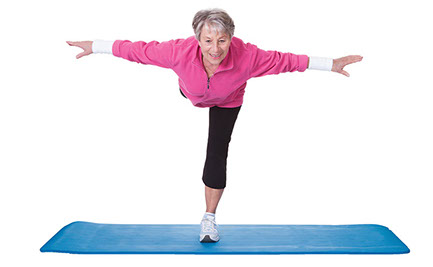
    Image of older women balancing on one leg while bending over half way.

    Everyone wants to prevent falls and improve balance, at any age. NIH in Health offers these daily exercises to steady your balance (and you could do these while talking on the phone or at work too):

    *  Stand on one leg at a time for a minute. Slowly increase the time. Try to balance with your eyes closed or without holding on to anything.

    *  Stand on your toes for a count of 10, and then rock back on your heels for a count of 10.

    *  Move your hips in a big circle to the left, and then to the right. Do not move your shoulders or feet. Repeat 5 times.

    © American Institute for Preventive Medicine

  • High Blood Pressure And Cold Medicines: A Potentially Bad Combination

    MEDICAL NEWS

    Image of a pharmacist.

    If you have high blood pressure, you need to be cautious when taking over-the-counter (OTC) medicines for coughs, colds, and flu. Most people didn’t know they were at risk if they took certain decongestants, according to a survey by St. Joseph Health Products.

    Here’s the caution:The most common OTC ingredient to avoid: decongestants. OTC cough and cold medicines with decongestants help to reduce nasal swelling in part by narrowing the blood vessels in the nose and facial area. However, the narrowing effect of decongestants can also affect other blood vessels while increasing blood pressure and heart rate, making it a potentially dangerous situation for the millions of Americans who have high blood pressure.

    Talk with your doctor or pharmacist about which cold and cough medications might be better for you if you have high blood pressure.

    © American Institute for Preventive Medicine

  • High-Intensity Workouts Aren’t Always Best

    BE FIT

    Image of women running during sunset.

    High-intensity workouts aren’t always best

    When it comes to exercise, is harder and longer always better? No, according to two studies recently published in the academic journal, Heart.

    The first study found that those who performed the most strenuous daily exercise were more than twice as likely to die of a heart attack or stroke. The second study found that men who exercised intensely for more than five hours a week were more likely to develop an irregular heartbeat later in life.

    So what’s the best exercise to do? Strive for moderate intensity exercise. You develop a fast heart rate while doing this type of exercise, but you should still be able to talk while doing the activity.

    Moderate exercise = longer life

    Studies show if you do seven hours of moderate intensity exercise each week, you will lower your risk of dying early by 40 percent. This is compared with those who exercise 30 minutes or less per week. If seven hours a week is too much for you, aim for 150 minutes per week. This amount of exercise also produces similar benefits.

    Before you start any exercise program, talk with your doctor about what’s best for you.

    Source: CDC and World Health Organization

    © American Institute for Preventive Medicine

  • Hit The Ground Running Safely

    BE FIT

    Image of women stretching.

    If you’re ready to train for a charity 5K or more serious road running, follow this advice from Saint Louis University physical therapy professor Chris Sebelski. You’ll hit the ground running and have realistic expectations about the work ahead.

    *  Before you begin, visit your doctor for a complete overall body check-up and talk about your exercise plans.

    *  It’s easy to go overboard during the enthusiasm of planning, but be sure you accurately acknowledge your current level of fitness. If you haven’t been exercising at all, you’ll want to start with a walking/jogging mix.

    *  Consider journaling to keep track of your progress and how you feel.

    *  Make small steps and celebrate little victories.

    *  Anticipate setbacks and obstacles (a cold, an injury, caregiving) and adjust your workout.

    *  Always do something. A few minutes doing squats is better than nothing.

    *  Consume calories smartly (lean proteins, whole grains). Drink water.

    *  Cross train with yoga for stretching or Pilates to build core strength.

    *  Join friends to train. Follow each other on Facebook. Blog about your experience. Let others cheer you on.

    © American Institute for Preventive Medicine