Author: AIPM

  • Hiv And Aids – How Much Do You Know?

    MEDICAL NEWS

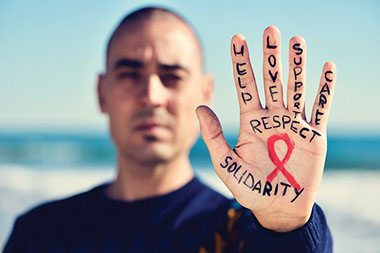
    Image of man's hold with the AIDS ribbon and words on fingers, that inlcude 'help', 'love', 'support', 'care.'

    When HIV and AIDS were first discovered, they were commonly thought to be one in the same. Nearly everyone who had HIV would eventually get AIDS. But as treatment for AIDS and HIV has continued to progress, HIV does not always turn  into AIDS.

    Today, there are special medicines called antiretroviral therapy (ART) that can help keep HIV from getting worse. These drugs can help a person live a long, healthy life with HIV, preventing them from getting AIDS later on.

    HIV: What it is and how it’s treated

    HIV stands for human immunodeficiency virus. HIV is spread through certain bodily fluids. Most commonly, it is spread through sexual contact or sharing needles.

    HIV attacks the body’s immune system, destroying the body’s cells that fight off infections. There is no cure for HIV, but there is treatment.

    Early treatment with ART is important. Someone who begins HIV treatment in the early stages of the infection can live nearly as long as someone who doesn’t have HIV.

    About 166,000 people have HIV and don’t know it. This means they aren’t getting the treatment they need to live longer and they can spread HIV to others.

    HIV is NOT spread through:

    *  Hugging or casual kissing

    *  The air, such as sneezing or coughing

    *  Mosquito or other insect bites

    Symptoms of HIV

    Within 2 to 4 weeks of getting HIV, a person may feel like they have a bad case of the flu. Symptoms include:

    *  Fever

    *  Headache

    *  Swollen glands

    *  Sore throat

    *  Body aches

    *  Rash

    These symptoms may last a few days or several weeks. Having these symptoms does not mean you have HIV.

    Some people do not feel sick at all after getting HIV. That’s why it’s important to get tested if you think you may have been exposed.

    To find an HIV testing site near you, go tolocator.hiv.gov.

    AIDS

    The last stage of an HIV infection is acquired immunodeficiency syndrome, or AIDS. Once HIV has progressed to AIDS, the body’s immune system is badly damaged. A person with AIDS may get sick often, and may get infections and cancers because the body cannot fight them off.

    Starting treatment at this late stage can still be helpful to someone with AIDS. But, it is much better to begin treatment as soon as possible after getting HIV.

    Sources: HIV.gov and Centers for Disease Control and Prevention

    © American Institute for Preventive Medicine

  • Home Alone (After School)

    FAMILY LIFE

    Image of 2 school kids running up the stairs.

    Set rules for success if kids are home alone after school. The Red Cross recommends that parents and guardians take the following steps for kids alone at home:

    *  Have your kids call you at work or send a text to check in when they get home.

    *  Lock the doors and don’t open the door for delivery or service workers. Don’t tell anyone on the phone that the parents are not home. Don’t reveal this information online or in social media chats or texts.

    *  Set ground rules for older kids about whether other kids can come over or if they can cook or leave the home.

    *  Post an emergency phone list with parents’ work numbers, cell numbers, neighbors, and others the kids can trust including 9-1-1.

    *  Practice an emergency plan about what to do in case of fire, injury, or other emergencies. Know where the flashlights and first-aid kit are kept.

    *  Remove or safely store in locked areas dangerous items like guns. Keep potential poisons such as lighter fluid out of reach. Lock up medications.

    *  Limit the time kids spend in front of the television or computer. Activate parental controls.

    © American Institute for Preventive Medicine

  • Home-Cooked Mealspromote Family Togetherness

    HEALTHY EATING

    Image of young family sitting around the table eating together.

    Busy weeknights often lead parents to skip family meals and instead rely on fast and processed foods, but a growing number of public health officials and parents alike agree that enjoying home-cooked meals as a family promotes health and well-being.

    Adolescents who participated in even one or two family meals per week were less likely to be overweight or obese in adulthood as compared to adolescents who never participated in family meals, according to a study in The Journal of Pediatrics.

    On this page, try the kid-friendly recipe by Kids Cook Monday, a national nonprofit campaign, which aims to help parents incorporate family meals at least once a week by offering a variety of free online resources. The latest is The Family Dinner Date, an easy-to-navigate e-cookbook featuring recipes that parents and kids can easily prepare together. Download free here:http://bit.ly/TKCMdinner.

    Each recipe features the campaign’s signature kid/adult/together instruction format to help parents determine which steps in the cooking process are safe for children to complete.

    The Kids Cook Monday is an initiative of The Monday Campaigns, a nonprofit public health organization in association with Columbia Mailman School of Public Health, Johns Hopkins Bloomberg School of Public Health, and the Maxwell School at Syracuse University.

    © American Institute for Preventive Medicine

  • How Cooking At Home Helps You Score Healthy Points

    HEALTHY EATING

    Image of cooking pot fill with different vegetables.

    Most people enjoy an occasional night out at a favorite restaurant. Unfortunately, many Americans eat out too frequently, and this often means consuming more calories and fat. The Academy of Nutrition and Dietetics says restaurant portions are often too large, contributing to overeating and obesity. A serving of French fries 20 years ago was 2 ounces and 210 calories. Today, it averages 7 ounces and 610 calories!

    Cooking at home allows you to control portion sizes, calories, fat, and sodium. Challenge yourself to eat at home just once or twice a week more. You may find that you save money and lose excess weight by cooking your own meals more often.

    © American Institute for Preventive Medicine

  • Hope For Migraine Headaches

    SELF-CARE CORNER

    Image of man with a migraine.

    Migraine headaches are more than an inconvenience. Migraine pain is severe and can interfere with a person’s life. Fortunately, today’s migraine treatments can help many people get the relief they need.

    There are two types of medicines for migraines: abortive and preventive.

    Abortive medicines

    Abortive medicines, also referred to as acute, are designed to stop, or abort, a migraine. They should be taken as early as possible when a person feels a migraine starting. Some of these medicines include:

    *  Pain relievers. Aspirin, ibuprofen, and other common pain relievers can be used to treat mild migraines. But, for many people, these aren’t enough to get rid of a migraine. Experts say people shouldn’t take these medicines more than twice a week. Overusing these medicines can lead to stomach problems and can even cause more headaches.

    *  Prescription migraine medicines. Your doctor may prescribe special medicines that are designed to relieve migraine pain and other symptoms, such as nausea. These may work well for people who don’t find relief from over-the-counter pain relievers.

    Preventing migraines

    Some of the medicines available today are used to prevent migraines before they happen. These are called preventive treatments. These types of medicines are recommended for people who:

    *  Get four or more migraines a month

    *  Have migraines that last 12 hours or longer

    *  Haven’t found relief with  abortive medicines

    *  Can’t take abortive medicines

    There are different types of preventive medicines available. Sometimes a person needs to try several different medicines before finding the one that works best for them. Keeping track of how many migraines you have and their severity can help you see how well a medicine is working.

    In addition to medicines, you and your doctor may discuss migraine triggers and how to avoid them. Certain foods, stress, lack of sleep, hormonal changes, and many other things can cause migraines. Learning your own triggers and how to avoid them is an important part of preventing migraines.

    What makes a migraine

    Migraines usually have the following symptoms:

    *  Severe pain and intense pounding in the head that makes it impossible to do daily tasks

    *  Nausea and/or vomiting

    *  Sensitivity to light or sound

    Some migraines also start with an aura. An aura may be vision changes, like seeing flashes of light or lines. Some people have trouble seeing clearly and cannot focus on objects. An aura may also cause tingling in an arm or leg. Only about 20 percent of people who get migraines will have an aura.

    © American Institute for Preventive Medicine

  • Hot-Weather Problems To Avoid

    WELL-BEING

    Image of a water bottle being poured into a glass.

    Summer’s brutal heat brings with it the dangers of deadly dehydration and other hot-weather health issues. Dr. Richard N. Bradley, associate professor of emergency medicine at The University of Texas Health Science Center, says, “Don’t push it too hard. When possible, stay inside your air-conditioned homes or go to places that have A/C.”

    If you notice someone acting confused and the person has been out in the hot sun, seek help immediately for any of these hot-weather problems. Be alert to the symptoms of heat-related illnesses such as cramps, heat exhaustion, and heat stroke.

    *Heat crampsare painful, brief muscle cramps that occur during exercise or work in a hot environment. The cramps are usually felt in the calves, thighs, abdomen, or shoulders.

    *Heat exhaustionoccurs when the body is not able to maintain normal functions because of the excessive loss of body fluids and salts. In effect, the body is trying to protect itself from a greater rise in body temperature. The symptoms include heavy sweating, intense thirst, dizziness, nausea and a weak or rapid pulse.

    *Heat strokeis a life-threatening emergency. It is the result of the body’s inability to regulate its core temperature. As the body’s water and salt supplies dwindle, its temperature rises to extreme levels. The symptoms include a body temperature above 104ºF (although heat stroke can occur at lower body temperatures), disorientation, confusion, or coma. The skin may be hot and dry or sweaty.

    Drink plenty of water, no alcohol. Drink throughout the day, even when you’re not thirsty.

    © American Institute for Preventive Medicine

  • How Does Diabetes Affect Your Eyes?

    MEDICAL NEWS

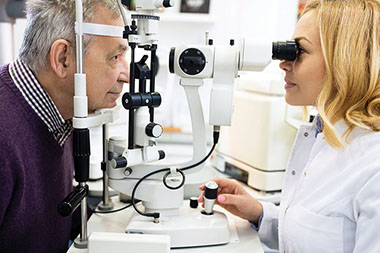
    Image of mature male at eye doctor appointment.

    Did you know that diabetes can affect your eyes? If diabetes isn’t well controlled with a doctor’s help, it can cause problems that can lead to vision loss. Eye problems that are caused by diabetes are called diabetic eye disease.

    Diabetic eye disease includes:

    *  Diabetic retinopathy

    *  Diabetic macular edema (DME)

    *  Cataracts

    *  Glaucoma

    What’s the link between diabetes and your eyes?

    When blood sugar is too high, it can change or damage the delicate blood vessels in the eyes. This can lead to too much pressure in the eye, bleeding in the eye or swelling in some of the eye’s important tissues. Diabetic retinopathy is the leading cause of blindness for adults ages 20 through 74.

    Diabetic eye disease is dangerous because many people don’t know they have it. These eye problems may have no signs or symptoms at first. Then, a person may start to lose their vision after eye damage has already occurred. Unfortunately, it is harder to treat these problems at a later stage.

    The good news

    Diabetes can be controlled. When you have good control over your diabetes and blood sugar, you can manage or avoid diabetic eye disease.

    You control your diabetes by:

    *  Taking your medications as prescribed by your doctor

    *  Monitoring blood sugar levels

    *  Getting regular exercise

    *  Eating a healthy diet

    *  Working toward a healthy weight

    *  Not smoking

    *  Getting a full eye exam at least once a year, including an exam that includes dilating of the eyes

    The diabetes ABCs are important measures of good diabetes control. Your ABCs are:

    *  A = A1C, which is a blood sugar (glucose) measurement. Your doctor can test this. Most people should have an A1C below 7 percent. This should be checked every 3-6 months.

    *  B = Blood pressure, which should be checked at each doctor appointment. Discuss your blood pressure target with your doctor.

    *  C = Cholesterol, which may need to be checked yearly or more often. Ask your doctor about a healthy cholesterol goal.

    Getting regular checkups and following your doctor’s recommendations for managing your diabetes will greatly reduce your risk of these problems. Most people with well-controlled diabetes can keep their eyes healthy.

    Sources: American Diabetes Association, National Eye Institute, National Institutes of Diabetes and Digestive and Kidney Diseases

    © American Institute for Preventive Medicine

  • How Does Your Heart ‘Rate’?

    BE FIT

    Image of female checking heart rate.

    When it comes to getting a good workout, no two people are alike. Age, health status, fitness level, and many other factors can play a role in how hard you can – or should – exercise.

    Your target heart rate can tell you if you’re exercising hard enough to burn calories, but not too hard. Your target heart rate is how fast you want your heart to beat during exercise.

    You can find your target heart rate by following these steps:

    1. Get a stopwatch or use a watch or clock that has a second hand.

    2. Periodically during exercise, put two fingers on a pulse point. This can be the inside of your wrist on the thumb side, the inside of your elbow, or the side of your neck.

    3. Count how many times your heart beats in 60 seconds.

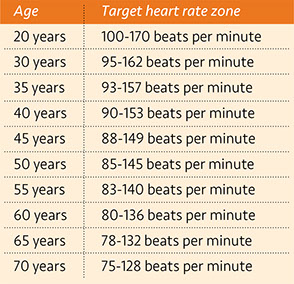
    Next, find your age in the chart and see if your heart rate is within the target heart rate zone listed. If it’s higher than the zone, take your workout down to an easier level. If it’s below, you may be able to exercise a little harder.

    Chart of Target Heart Rate Zone.

    If you’re just starting out with exercise, aim for the lower end of the range. After a few weeks, you can gradually work up to a higher heart rate within the zone.

    People who have heart conditions or other health problems should discuss any exercise or fitness activities with their doctor before starting. Certain medications that treat heart and blood pressure disease can cause a lower heart rate. Discuss your medications with your physician before trying to reach your maximum heart rate.

    Heart rate and blood pressure explained

    Heart rate and blood pressure are not the same thing. Blood pressure is the force of blood moving through your body. Heart rate or pulse is simply the number of times your heart beats per minute.

    A faster heart rate does not necessarily mean your blood pressure is rising. When the heart rate speeds up, blood vessels get bigger, allowing more blood to move through. This means many people can safely raise their heart rate during exercise without affecting their blood pressure.

    Talk to your doctor about blood pressure and get it checked yearly. Most people with high blood pressure can and should exercise with their doctor’s approval.

    Source: American Heart Association

    © American Institute for Preventive Medicine

  • How Much Calciumis Needed Each Day?

    HEALTHY EATING

    Image of different calcium sources.

    The Institute of Medicine’s recommended daily allowance (RDA) for calcium from food and supplements*:

    *  Ages 9-18 years, 1,300 mg

    *  Ages 19-50 years, 1,000 mg

    *  Ages 70+ years, 1200 mg

    *  Men 51-70 years, 1000 mg

    *  Women 51-70 years, 1200 mg

    *To increase absorption from calcium supplements, take no more than 600 mg at a time. Follow your doctor’s advice for calcium supplements.

    © American Institute for Preventive Medicine