Author: AIPM

  • Iron In Foods: Why It Matters

    HEALTHY EATING

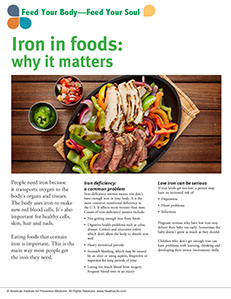
    Image of grilled chicken and steak.

    People need iron because it transports oxygen to the body’s organs and tissues. The body uses iron to make new red blood cells. It’s also important for healthy cells, skin, hair and nails.

    Eating foods that contain iron is important. This is the main way most people get the iron they need.

    Iron deficiency: a common problem

    Iron-deficiency anemia means you don’t have enough iron in your body. It is the most common nutritional deficiency in the U.S. It affects more women than men. Causes of iron-deficiency anemia include:

    *  Not getting enough iron from foods

    *  Digestive health problems such as celiac disease, Crohn’s and ulcerative colitis which don’t allow the body to absorb iron well

    *  Heavy menstrual periods

    *  Stomach bleeding, which may be caused by an ulcer or using aspirin, ibuprofen or naproxen for long periods of time

    *  Losing too much blood from surgery, frequent blood tests or an injury

    Low iron can be serious

    If iron levels get too low, a person may have an increased risk of:

    *  Depression

    *  Heart problems

    *  Infections

    Pregnant women who have low iron may deliver their baby too early. Sometimes the baby doesn’t grow as much as they should.

    Children who don’t get enough iron can have problems with learning, thinking and developing their motor (movement) skills.
    © American Institute for Preventive Medicine

  • Is 3D As Dangerous As The Warnings?

    WELL-BEING

    Illustration of a TV with wild animlas appearing to come out of the television set.

    Have you read the warnings on a 3D TV or gaming system? Can 3D actually cause altered vision, lightheadedness, twitching, nausea, disorientation, especially for children and the elderly?

    Through these disclaimers, companies may have been scaring away the customers they seek, but medical evidence does not back up the claims.

    Professional eye photographer Timothy Bennett of Penn State Hershey Eye Center said there are no health issues associated with 3D imaging. Some people experience headaches or dizziness, but these are temporary. The images may be disorienting, but as soon as you stop looking at 3D, the feelings clear up.

    He recommends sitting far from the screen, especially if you are sensitive, and take breaks from gaming or watching 3D TV.

    Some people experience headaches or dizziness, but these are temporary.

    © American Institute for Preventive Medicine

  • Is Bad Breath A Health Problem?

    WELL-BEING

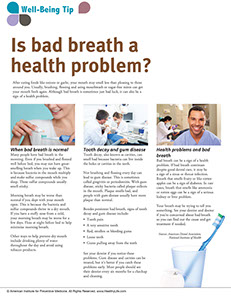
    Image of women placing tooth paste on tooth brush.

    After eating foods like onions or garlic, your mouth may smell less than pleasing to those around you. Usually, brushing, flossing and using mouthwash or sugar-free mints can get your mouth fresh again. Although bad breath is sometimes just bad luck, it can also be a sign of a health problem.

    When bad breath is normal

    Many people have bad breath in the morning. Even if you brushed and flossed well before bed, you may not have great-smelling breath when you wake up. This is because bacteria in the mouth multiply and make sulfur compounds while you sleep. These sulfur compounds usually smell stinky.

    Morning breath may be worse than normal if you slept with your mouth open. This is because the bacteria and sulfur compounds thrive in a dry mouth. If you have a stuffy nose from a cold, your morning breath may be worse for a few days. Floss at night before bed to help minimize morning breath.

    Other ways to help prevent dry mouth include drinking plenty of water throughout the day and avoid using tobacco products.

    Tooth decay and gum disease

    Tooth decay, also known as cavities, can smell bad because bacteria can live inside the holes or cavities in the teeth.

    Not brushing and flossing every day can lead to gum disease. This is sometimes called gingivitis or periodontitis. With gum disease, sticky bacteria called plaque collects in the mouth. Plaque smells bad, and people with gum disease usually have more plaque than normal.

    Besides persistent bad breath, signs of tooth decay and gum disease include:

    *  Tooth pain

    *  A very sensitive tooth

    *  Red, swollen or bleeding gums

    *  Loose teeth

    *  Gums pulling away from the teeth

    See your dentist if you notice these problems. Gum disease and cavities can be treated, but it’s better if you catch these problems early. Most people should see their dentist every six months for a checkup and cleaning.

    Health problems and bad breath

    Bad breath can be a sign of a health problem. If bad breath continues despite good dental care, it may be a sign of a sinus or throat infection. Breath that smells fruity or like rotten apples can be a sign of diabetes. In rare cases, breath that smells like ammonia or rotten eggs can be a sign of a serious kidney or liver problem.

    Your breath may be trying to tell you something. See your dentist and doctor if you’re concerned about bad breath so you can find out the cause and get treatment if needed.

    Sources: American Dental Association, National Institutes of Health

    © American Institute for Preventive Medicine

  • Is Cinnamon Good For Your Health?

    HEALTHY EATING

    Image of cinnamon.

    Cinnamon is often used in sugar-loaded treats like cinnamon rolls and lattes. And though it’s a popular spice for desserts, it’s not necessarily an unhealthy choice. The spice has been used for thousands of years, and some recent studies suggest cinnamon may even have health benefits:

    *  A study in the journal Diabetes Care studied 60 people with type 2 diabetes. Some were given cinnamon capsules, and others were given a placebo (a fake pill that contained no cinnamon). Those who consumed the cinnamon for 40 days had lower levels of blood sugar, triglycerides, LDL (“bad”) cholesterol, and total cholesterol.

    *  A study in the Journal of Nutrition suggests that cinnamon and other spices may help reduce triglyceride levels after eating a fatty meal.

    *  The Journal of Neuroimmune Pharmacology published a study that suggests cinnamon may be able to protect the brain against changes that can cause Parkinson’s disease.

    Want to spice up your health with cinnamon? Try adding it to your favorite foods or drinks in place of sugar. Its natural flavor can be a welcome addition to coffee, tea, oatmeal, fruit, and even chili.

    High doses of cinnamon can be dangerous, though. Be sure to talk with your doctor before taking cinnamon or other natural supplement.

    © American Institute for Preventive Medicine
  • Is Dairy Scary? Eating Right With Lactose Intolerance

    HEALTHY EATING

    Image of a variety of dairy products.

    Does dairy bother your belly? Millions of people have lactose intolerance, or the inability to fully digest lactose. Lactose is a natural sugar found in dairy products like milk, cheese and ice cream. When lactose isn’t properly digested, it leads to digestive problems.

    Symptoms of lactose intolerance

    A person who has lactose intolerance may notice one or more of these signs after eating dairy products:

    *  Bloating, swelling of the abdomen

    *  Stomach ache

    *  Cramps

    *  Diarrhea

    *  Nausea

    *  Gas

    Some people notice the symptoms within minutes, while others don’t notice it until a few hours later.

    Different levels of intolerance

    The level of intolerance can vary widely from person to person. Some people can eat small amounts of dairy without a problem. For instance, they may be able to eat a piece of cheddar cheese or a serving of yogurt. Others, however, notice bloating and discomfort when they drink a few sips of milk.

    Finding out your tolerance level can be a bit of trial and error. If you notice symptoms after eating two pieces of pizza with cheese, for instance, try a smaller serving next time until you don’t notice any problems.

    Can I still eat dairy?

    Many people with lactose intolerance can still eat dairy.

    *Start with small amounts.Many people can tolerate dairy if they eat small portions and gradually increase amounts.

    *Eat dairy only with meals.Eat dairy only with other foods to help it digest.

    *Choose lactose-free milk.Many lactose-free milk and ice cream products can be found in grocery stores.

    *Consider lactase supplements.The enzyme lactase helps digest lactose. Ask a doctor before using these. They may not be safe for everyone, including small children.

    Talk to a doctor or dietitian

    If you have ongoing stomach pain or diarrhea, talk to your doctor. If you aren’t eating any dairy products, ask about seeing a dietitian who can give you diet advice to get the nutrients your body needs, especially calcium and vitamin D.

    Sources: American College of Gastroenterology, National Institutes of Diabetes and Digestive and Kidney Diseases

    © American Institute for Preventive Medicine

  • Is It Anxiety – Or Just Stress?

    SUCCESS OVER STRESS

    Image of man using computer.

    Many people have used the word “anxiety” to simply mean they were worried or stressed about an event. But, are anxiety and stress really the same thing?

    According to the National Institutes of Mental Health, anxiety can be a different – and serious – mental health illness that goes beyond just stress. How do you know if it’s more than just daily stress? Here are some key differences:

    *Length of time:The worry goes on for months without relief.

    *Level of worry:You regularly have attacks of intense fear and worry about when the next attack will happen. These episodes may make you feel out of control.

    *Interferes with life:People with anxiety may avoid social situations, have trouble at work, and feel self-conscious around other people.

    *Physical symptoms:Anxiety can make it difficult to sleep and may cause intense fatigue, sweating, trembling or nausea.

    If you’re worried that you have more than just typical stress, seek medical care. Many people with anxiety can get relief with their doctor’s help. Possible treatments include:

    *Talk therapy:A mental health professional can talk with you about your anxiety and help you find ways to cope.

    *Self-help and support groups:Many people find that talking to others with anxiety (in person or online) is helpful.

    *Stress management:Avoiding caffeine, alcohol, and some medications can help improve anxiety symptoms. This is often used in combination with other treatment methods.

    *Medicines:Many medicines can treat anxiety, but they are not a “cure.” They can help calm symptoms of anxiety so a person can function in daily life.

    Diagnosing anxiety isn’t always simple to do, but talking with a doctor about your symptoms is an important first step. From there, you can decide if treatment is needed.

    © American Institute for Preventive Medicine

  • Is It The Flu?

    MEDICAL NEWS

    Image with the words "Fight the Flu" written in a banner.

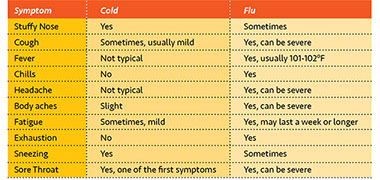
    Influenza, or the flu, circulates every winter and leaves thousands of people sick with a cough, aches, fever, and fatigue. The flu is much more serious than a cold: thousands of people die each year from flu-related complications. Unfortunately, many people don’t realize they have the flu until it’s too late. By then, they may have exposed people at work, school, or other public places. Here’s how to know if you have the flu, or just a cold:

    Chart showing symptoms of the cold vs the flu.

    When you come down with a cold, your symptoms usually appear very gradually over a few days. They often start with a sore throat followed by a runny nose. The flu often hits hard, very quickly. Symptoms appear suddenly and the exhaustion and aches can quickly become severe.

    If in doubt, try to stay home and stay away from others when you’re sick. In particular, try to avoid exposing young children and older adults, who may be more likely to suffer from flu-related problems. Wash your hands frequently and encourage others in your household to do the same.

    If you think you have the flu, call your doctor right away. You may be able to take an antiviral medication (brand name: Tamiflu), which can decrease your symptoms and the amount of time you are sick. Antiviral medications should be taken within 48 hours of the start of symptoms.

    Finally, talk to your doctor about getting a flu shot each year: it’s the number one way to help avoid getting – and spreading – the flu!

    Sources: Centers for Disease Control, U.S. Department of Veterans Affairs

    © American Institute for Preventive Medicine

  • Is Multitasking Really Helpful?

    WORK LIFE

    Concept image of man running with laptop.

    It seems that today’s world is built for multitasking. With smartphones and tablets, you can check your email, surf the web, and chat from nearly anywhere. And at work, you may be typing while on a conference call or checking messages during a meeting.

    But the American Psychological Association (APA) says this culture of multitasking could actually be harmful, not helpful. The brain is only capable of doing one thing at a time, and therefore, multitasking in itself is not truly possible. Your brain actually switches back and forth between tasks when you think you’re multitasking, says the APA. This process of switching costs you time, and can make you less efficient.

    In addition, Harvard Medical School says multitasking leads to errors and mistakes at work. Maybe you’re shifting back and forth between activities or thinking about something else (like the dinging of your smartphone) while you’re supposed to be doing a task. As a result, you may be more likely to miss details or forget to do things.

    So how do you break the multitasking habit? Find your main sources of distraction and put them aside. If your smartphone is the problem, try putting it in the next room or out of sight while you work on a task. At the very least, silence alerts you don’t need right away such as emails and text messages.

    If the beeping of your email at work is keeping you from focusing on your task at hand, consider closing your email program and only checking it at designated times.

    Cutting out the main sources of distraction can help you stay focused and productive at work or at home.

    © American Institute for Preventive Medicine

  • Is Yoga For You?

    BE FIT

    Close up image of female hands while in a yoga pose.

    Yoga is an ancient Indian practice that engages the mind and body. There are many different forms of yoga, and the type you choose should suit your health and fitness goals. Check out these more popular types of yoga.

    Hatha

    Hatha yoga is a general term for any type of yoga. But in general, hatha classes focus on perfecting and holding yoga poses and proper breathing. It can be relaxing, as it is generally slower paced. You may not get an aerobic workout from hatha yoga, but it can improve your strength, balance and flexibility. Hatha classes are usually geared towards beginners.

    Vinyasa

    This is a faster-paced style of yoga that moves quickly from pose to pose, sometimes with upbeat music. You may work up a sweat and get a good cardiovascular workout. Before trying vinyasa, be sure you are familiar with basic yoga poses so you can follow along. It is often suitable for all skill levels, as the poses can be modified to fit your comfort and ability.

    Ashtanga

    This style uses the same six poses in an identical order or sequence. It can be repetitive, but allows people to follow a set routine. This tends to be a more fast-paced and vigorous style of yoga. You may get hot and will need to drink plenty of fluids.

    Bikram

    Bikram yoga, sometimes called hot yoga, is done in a heated room and is designed to make participants sweat heavily during the class. Bikram involves a set of 26 poses and two breathing exercises during a 90-minute class. Though it’s a predictable sequence, the heat makes it a strenuous activity. Though studies haven’t proven its safety or risks for sure, it is not right for everyone. Always ask your doctor before trying any kind of hot yoga. The excess heat may cause heat-related illnesses in some people.

    © American Institute for Preventive Medicine