Author: AIPM

  • Lightening The Load: Dividing Household Chores

    FAMILY LIFE

    Image of couple ready to clean.

    Chores are a part of daily life for families. And, the way they are divided can have a big impact on your family relationships. A survey by the Pew Research Center found that sharing household chores was among the top three things that make a marriage work.

    This can be easier said than done in many households. Many families have to work outside the home, attend kids’ activities and deal with other demands every day. With all these things taking up time, chores may be an additional source of stress.

    First, have a good talk

    It’s easy to get angry or upset with someone for not doing enough chores.

    But before you do this, stop and think. Did you clearly tell them when and how you wanted this chore done? Have they been busy with other activities?

    Be kind and respectful when talking about chores; then you may find that the other person is more willing to take part. Try to look at things from their perspective. Perhaps they’ve been overwhelmed with other things or simply didn’t know that something needed to be done. Or, if you feel like you’ve been doing most of the work, ask if others can help take some things off your plate. Be specific with which chores you would like them to do and when.

    Get the kids involved

    Even small children can do chores. Toddlers can pick up toys and help make their beds. Preschool kids can help clean up spills, feed a pet and even take their laundry to the hamper. Older children may be able to wash dishes, and do laundry and fold clothes.

    Younger children often do well with a chore list so they know what is expected of them. If they can’t read yet, use pictures and stickers.

    Set aside a few minutes

    One strategy that works for many families is finding just 10 or 15 minutes a day to do some basic chores. This can be anything that needs to be done. Examples include picking up and putting things away, cleaning a bathroom or running the vacuum. You can even set a timer so it doesn’t feel so overwhelming. Make it fun by turning on music while you clean. Or, make it a “race” with little ones: who can pick up their room first? When the time is up, everyone can feel good about helping out around the house.

    © American Institute for Preventive Medicine

  • Like It Loud? Your Ears Don’t

    WELL-BEING

    Image of man listening to music with headphones.

    What do a lawn mower, a motorcycle, and a music player have in common? They can all cause permanent hearing loss.

    Many people assume that only extremely loud sounds, such as gunshots, can damage the ears. But any loud noise, such as power tools, headphones turned up too loud, lawn equipment, or a concert, can lead to hearing loss. This is known as noise-induced hearing loss.

    Noise-induced hearing loss often happens gradually, so you don’t realize the damage that’s being done over time. For instance, being around loud machinery every day or listening to loud music in earphones regularly can cause hearing damage that adds up. The National Institutes of Health states that 26 million Americans between the ages of 20 and 69 have hearing loss caused by excessive noise.

    The Centers for Disease Control and Prevention (CDC) says anything over 85 decibels can damage hearing. The louder it is, the faster it can cause hearing loss if used regularly and/or for long periods. Normal conversation is 60 decibels, and a hair dryer is around 90.

    Save your hearing

    The best way to prevent noise-induced hearing loss is to avoid loud noises whenever you can. But, this may not be possible if your job requires you to be around certain equipment. If you can’t avoid it, always wear proper hearing protection. This includes earplugs and/or ear muffs that have a noise reduction rating (NRR) listed.

    If you notice you have trouble hearing, talk to your doctor.

    © American Institute for Preventive Medicine

  • Listening: A Skill Well Worth Mastering

    WELL-BEING

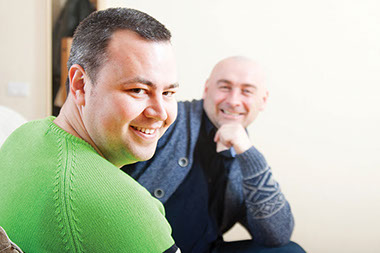
    Image of 2 men talking and smiling.

    You’ve heard the saying, “You’re born with two ears, but only one mouth.” According to the Society for Human Resource Management, being a good listener has many advantages at work and at home. You can come up with better ideas, work with others more easily, and connect with people more deeply.

    So how is it done? Try these tips:

    *  Don’t interrupt.

    *  Don’t offer a solution or advice unless the person asks for it.

    *  Don’t think about your response while the other person is still talking. Hear them all the way through.

    *  When the other person is finished, repeat what they said in your own words. “So what I hear you saying is…”

    *  Don’t make it about you. Remember the other person wants to tell you their story first. Stop yourself from turning it into a discussion about yourself or your problem.

    Having this valuable skill can enhance all the professional and personal relationships in your life.

    © American Institute for Preventive Medicine

  • Live Long Enough To Cash In Your 401(K): Styaing Healthy & Surviving Any Diagnosis

    WELL-BEING

    Image of an older couple at the beach.

    The big day has finally arrived. Your boss shakes your hand and wishes you well. Your colleagues gather around a cake and make small talk about landing the big fish in your retirement, or joke about what you’ll do now.

    A cardboard box is filled with the contents of your desk: family pictures, trinkets, and stale candy. Your name is off the cubicle, and you wonder what you’ll do for the next 30 years.

    One more stop: the benefits office. There you will be asked: How do you want to receive your pension? What does this have to  do with your health?

    Dr. Edward T. Creagan says, “Plenty. Because before you can make any decision about your pension distribution, you need to seek the guidance of skilled professionals, such as a financial planner, a tax adviser, an attorney, and-believe it or not-a doctor.”

    In the newly released second edition of his book How Not to Be My Patient: A Physician’s Secrets for Staying Healthy and Surviving Any Diagnosis, Dr. Creagan, a cancer specialist, explains why: “Let’s suppose you are generally healthy, with normal blood pressure, no diabetes or heart disease, and your mother lived to a ripe old age. For you, the annuity of a fixed amount every month becomes a reasonable option. You could very well ‘outlive’ the lump sum option you are presented along with the ‘gold watch’-and laugh all the way to the bank.”

    “On the other hand, you may have a serious medical condition, such as cancer, and let’s suppose that your expected survival is limited. In that situation, a reasonable option would be door number 2, the lump sum. You and your family would work with professionals to set investments in motion to take care of your family,” he advises.

    Retirement decisions are not always as obvious as this. But, Dr. Creagan observes, you will be making decisions about when to take Social Security and when to tap into your 401(k).

    “From a practical standpoint, I suggest you see your doctor around the time your retirement is planned. Some minor blood abnormalities or trivial symptoms might lead to a CT scan or EKG, and then to a diagnosis of a life-threatening illness. In that case, your financial options would be clear,” he suggests along with much more wise advice for anyone about taking control of their health in this updated second edition of the highly acclaimed book.

    © American Institute for Preventive Medicine

  • Living Well With Psoriasis

    MEDICAL NEWS

    Image of doctor looking at patients rash on arm.

    Psoriasis is a condition that causes skin cells to grow too quickly. These extra skin cells build up and form scaly patches, redness or a rash.

    There are several different types of psoriasis that look and feel different. Sometimes, a person may have one type of psoriasis and it later turns into another type. Experts aren’t sure what causes psoriasis, but they believe the immune system and a person’s genes are involved.

    Fortunately, there are ways to help manage this condition and live a healthy life with this disease. Try these tips:

    *  Know your triggers. Many people find that psoriasis flares up at certain times. Stress, skin injury, certain medications, infections or illnesses can cause a psoriasis flare-up. Talk with your doctor about healthy ways to avoid your triggers.

    *  Focus on all-around good health. A healthy diet and exercise will help you manage psoriasis. For example, being overweight can make psoriasis worse. In addition, people with psoriasis are at a higher risk of getting heart disease and diabetes.

    *  Don’t smoke. Smoking puts stress on the body and harms the immune system and skin.

    *  Work with your doctor to manage itching. Many people with psoriasis have itching that interferes with life. Keeping skin moisturized, cold packs and over-the-counter itch creams may help. If these remedies don’t work, ask your doctor about prescription options.

    *  Know the signs of psoriatic arthritis. Up to 30 percent of people with psoriasis will get psoriatic arthritis. This type of arthritis can be very painful and cause damage to your joints. Achy joints, especially in the morning, are one sign. Fingernails and toenails may also look different. They may get ridges, pits or a yellow or orange color. See your doctor if you notice any of these changes.

    *  Keep mental health in mind. Some people with psoriasis get depression or anxiety. Plus, your mental health plays an important role in overall health. See your doctor and ask about treatment for these conditions.

    *  Don’t stop taking medicines without your doctor’s approval. If you suddenly stop your psoriasis medicine, it can make the psoriasis more severe. If you need help paying for your medication, talk to your doctor. There may be financial assistance programs available for people with psoriasis.

    Sources: American Academy of Dermatology, National Psoriasis Foundation

    © American Institute for Preventive Medicine
  • Look Cool & Protect Your Eyes

    SELF-CARE CORNER

    Image of women smiling while wearing sunglasses and a sun hat.

    Sunglasses are a great fashion item, but their most important job is to protect your eyes from the sun’s ultraviolet rays. Prolonged exposure to the sun can damage the surface tissues, cornea, and lens of the eye. It has also been linked to cataract, macular degeneration, and temporary vision loss.

    Through its EyeSmart® UV Safety campaign, the American Academy of Ophthalmology offers tips to keep your eyes safe:

    Wear sunglasses that protect your eyes from both UVA and UVB rays.

    *  When you purchase sunglasses, look for either UV400 or 100% UV protection on the label. Frames with a close-fitting wraparound style give the best protection.

    *  Wear sunglasses even if you wear UV-blocking contact lenses. Contacts do not cover enough eye area.

    *  Wear sunglasses on cloudy days, too. The sun’s rays can pass through haze and clouds.

    Wear a hatalong with your sunglasses. Hats with a wide brim are best.

    Protect your children’s eyes.

    *  Keep children out of direct sunlight during the middle of the day.

    *  Have them wear sunglasses and hats whenever they are in the sun.

    Be extra careful in UV-intense conditions:

    *  Mid-day to early afternoon, when sunlight is strongest

    *  At higher altitudes

    *  Places where the sun is reflected off of water, ice or snow

    Learn more about UV eye safety and tips to protect the eyes from the sun atwww.geteyesmart.org/eyesmart/living/sun.cfm

    © American Institute for Preventive Medicine

  • Make The Most Of Your Commute

    WORK LIFE

    Image of man on phone while waiting at the subway.

    A commute is just a part of life for many working people. But whether you spend that time on a bus, train, or in a car, your commute doesn’t have to be a low point in your day. Instead, use that time to make your day better! Try these tips:

    *Practice relaxation.If you’re not driving, try doing some meditation or guided imagery. You can purchase scripts and songs for your phone or other device to listen to.

    *Stay cool while driving.If you’re driving, listen to peaceful music and focus on slow, deep breaths. Breathe in through the nose and out through the mouth. This can help relieve “road rage” while you focus on driving.

    *Wait for work time.Don’t check email or do other work tasks before you’ve arrived at work. Instead, stay “unplugged” for a more relaxing start to your day. This is especially important if you’re driving!

    *Exercise your brain.An audiobook or podcast can help you feel productive during this down time. Some mobile phone apps and podcasts can even help you learn a new language.

    Commuter-friendly snacks

    If you’re starving by the time you walk through the door each night, you can end up overeating or reaching for the first bag of chips you see. Hold off your hunger by packing a snack for your ride home:

    *  An ounce of nuts, such as almonds, cashews, or walnuts

    *  A cup of fresh berries and a piece of string cheese

    *  Baby carrots or celery with hummus

    *  Plenty of water to stay hydrated, fight fatigue, and curb hunger

    © American Institute for Preventive Medicine