Author: AIPM

  • Picky Eater?

    HEALTHY EATING

    Image of young child with a sad face looking down at a bowl of brussel sprouts.

    Is dinner time a war zone at your house? Do you fight battles with your kids over vegetables and mac and cheese?

    Picky eating is as normal as potty-training. Even the best of parents can have a difficult time getting their child to eat. In fact, picky eating is one of the most common events in children, often outgrown as the child reaches adolescence.

    But when eating behavior affects normal development, it could be something much more serious-a pediatric feeding disorder.

    “The difference between a fussy eater and a child with a feeding disorder is the impact the eating behavior has on a child’s physical and mental health,” said Dr. Peter Girolami, clinical director of the Pediatric Feeding Disorders Program at the Kennedy Krieger Institute in Baltimore.

    Pediatric feeding disorders are more common than most think, affecting 1 in 10 infants and children. Some kids just don’t eat enough calories and nutrients to thrive.

    Common symptoms of a pediatric feeding disorder are these:

    *  A sudden change in eating habits lasting longer than 30 days

    *  Delayed development of skills needed to feed or eat foods with greater textures

    *  Weight loss or failure to gain weight

    *  Choking/coughing during meals

    *  Unexplained fatigue, loss of energy

    *  Disruptive behavior during mealtime, throwing utensils

    Early diagnosis and treatment is extremely important.

    © American Institute for Preventive Medicine

  • Piggy Bank Smarts

    FINANCIAL HEALTH

    Image of hand placing a dollar bill into a piggy bank.

    Smart money management begins at home. Washington University researcher Michal Grinstein-Weiss found that teaching kids about money in childhood helps them better manage their mortgage loans as adults. The study was in Social Work Research.

    The professor offers 5 ways parents can teach their kids financial literacy:

    1. Discuss and explain basic finances around the dinner table, especially the difference between needs and wants.

    2. Teach kids how to save and set short-term goals (a new toy) and long-term goals (college). Kids will follow by example if they see you saving for something such as a family vacation.

    3. Open a savings account for your child as early as possible. Even if you bank online, visit the bank with your child to make a deposit because actions reinforce behaviors. Review monthly statements together.

    4. Teach kids budgeting and money-management skills. Help your child figure out how much money to save for how long to reach a goal amount.

    5. Get kids involved in daily activities and decisions about spending. Take them grocery shopping and have them compare prices of different brands. Count out the cash during a sale.

    © American Institute for Preventive Medicine

  • Planning For Your Child’s Expenses

    FINANCIAL HEALTH

    Image of piggy bank next to '529' blocks on top of books.

    It can feel like a dark cloud hanging overhead – the upcoming expense of your child’s college education. Whether your child is one month or 16 years old, it’s never too late to start putting some money away to invest in your child’s future.

    529 college savings plans

    A 529 allows you to save money to pay for your child’s college education tax-free. If the money is used on higher education, you won’t be taxed on the withdrawal either.

    Usually, the money must be used on tuition, room, board, or certain supplies required for college enrollment, or you may have to pay a penalty and taxes.

    Prepaid tuition plans

    When you set up a prepaid tuition plan, you “lock in” today’s tuition prices. In general, these plans must be used on colleges within your state to get the lower tuition rate.

    Savings accounts

    You can set up a savings account in your child’s name that you manage. This is called a custodial account. When your child is old enough, he or she can access the funds.

    IRA and Roth IRA accounts

    IRAs, or individual retirement accounts, are investment accounts that let you save without getting taxes taken out. With a deductible IRA, you must claim your money that goes into the IRA as tax deductible. Then, taxes are incurred when you withdraw the savings later.

    If you put money into a Roth IRA, your earnings are tax-free if you wait to withdraw them after five years – and if they’re used for college tuition.

    Coverdell education savings accounts (ESA)

    Coverdell ESAs are like an IRA for college. If the money is used for education, you won’t pay any taxes when you withdraw it.

    Because each family’s budget and needs are different, there is no single solution that works for everyone. Carefully consider the pros and cons of each option before you move forward.

    Before you begin saving for college….

    If possible, talk with a financial advisor before you begin. Some plans, such as a deductible IRA, may depend upon your income and other factors. And, an expert in the field can help you choose the best option for your situation.

    Ask questions. Be sure to ask the representative about:

    *  Fees and commissions to pay

    *  When and how taxes are incurred on the money you invest

    *  Interest you may earn

    *  Risk involved with investments

    *  Whether you can use the money for other things (if your child doesn’t go to college or gets a full scholarship, for instance)

    *  Whether the money must be used in-state

    Don’t forget about federal loans, which are an option for many families – especially if college is right around the corner.

    © American Institute for Preventive Medicine

  • Politics & Family: Agree To Disagree

    FAMILY LIFE

    Image of family around the dinner table.

    Politics can be hard to discuss. Often, the conversations turn into arguments or people getting upset because the other person doesn’t agree. When we feel strongly about something, it’s normal to want others to see our side of things.

    Family gatherings are common during the holidays. And, sometimes politics or touchy subjects come up, even when we try to avoid them. How do you handle it when you’re trying to keep the peace?

    *Find common ground.Even if you disagree about something, there’s probably areas where you both agree. For instance, you may have different opinions on gun control. But, you both agree you want your kids to be safe.

    *Don’t attack.Using insults or strong language can damage relationships. Remember that words have the power to harm others. State your point without hurting the other person or showing disrespect by calling them names.

    *Be prepared.If you know that Uncle Tim always says something that offends you, be ready. Think about how you can take deep breaths before responding. Sometimes, it’s better to walk away or change the subject, rather than argue.

    *Know that you probably won’t change the other person’s mind.When we care about something, we want others to agree. We want them to support our views. But, it may be best to accept that no matter how good your argument is, the other person may not change their view.

    *Think about a positive goal.Use disagreements to learn how others feel about something. Be open-minded and listen to their side.

    *Find other things to do.Remember that family gatherings are supposed to bring people together. Plan a fun family game or activity. This can keep people away from having tense discussions.

    *Be okay with different views.You can care about someone and have different views from them. Tell yourself it is okay to agree to disagree.

    *End the discussion when needed.Sometimes, people keep arguing because they’re trying to find a resolution. But, a resolution isn’t always possible. Instead, tell the person you appreciate their views, but you think it’s best to move on. Ask them about their personal interests or job. Share a funny story. Do something to break the tension and stop talking about the disagreement.

    Source: American Psychological Association

    © American Institute for Preventive Medicine

  • Poor Behavior At Office Parties May Hurt Your Career

    WORK LIFE

    Image of a group of co-workers drinking after hours.

    Too many drinks combined with poor behavior at an office holiday party could signal the demise of employment for some employees, warned Lynne Richardson, dean of the Ball State University Miller College of Business. She said employees should be on their best behavior and treat the annual holiday office party as an extension of work. Supervisors can and will hold employees accountable for inappropriate actions at such events. Avoid excessive alcohol consumption, dress appropriately, abstain from discussing sensitive work-related issues and bring a date only if told it is proper.

    © American Institute for Preventive Medicine

  • Pop The Cork, Not Your Eye

    WELL-BEING

    Image of cork popping from a champagne bottle.

    Americans will consume more than a billion glasses of champagne during holiday and New Year celebrations. According to the American Academy of Ophthalmology, the careless handling of champagne is one of the most common causes for holiday-related eye injuries. These injuries are often caused by improperly opening the bottle, as a champagne cork is just less than 90 pounds of pressure-3 times the pressure inside a car tire.

    The Korbel Champagne authorities offer this advice:

    *  The recommended way to properly open a bottle is to ease the cork out slowly, with the sound of a gentle sigh-not a pop, which wastes champagne.

    *  Make sure your champagne is chilled and unshaken. Chill the bottle for at least 4 hours in the refrigerator (a warm bottle is more likely to pop).

    *  Remove the foil cap covering the top of the bottle, exposing a wire hood.

    *  Undo the wire hood with 6 half-turns of the knob.

    *  Hold the bottle at a 45-degree angle while holding the cork firmly with one hand and the base of the bottle with the other. Be sure to point the bottle away from your guests.

    *  Do not twist the cork. Rather, turn the bottle slowly while letting the cork glide out gently, emitting a gentle sigh.

    *  In the did-you-know department: There are more than 50 million bubbles in a standard bottle of champagne.

    © American Institute for Preventive Medicine

  • Power Down At Night

    FAMILY LIFE

    Image of family playing a game of chess.

    Make the hour before bed a no-electronics zone, said Dr. Jill Creighton, pediatrician at Stony Brook Children’s Hospital. Powering down makes bedtime easier because kids need to relax before going to sleep.

    Most school-age kids (ages 6 to 17) have at least one device; a smartphone, video games, iPad or computer in their bedrooms while sleeping, according to a National Sleep Foundation survey. And children who leave those devices on at night sleep less-up to one hour less on average per night. Dr. Creighton makes a few more observations for your kids (and maybe for you as well):

    *  Ban hand-held devices from the bedroom. “The burst of light from a phone (even if it’s just to check the time) can break a sleep cycle,” she said. “A regular alarm clock is best.”

    *  If your child has a slight addiction to technology and is resistant about turning off a device, try dialing down the screen time. “Reduce screen time by 30 minutes or more each week until you reach your goal,” said Dr. Creighton. “A good rule of thumb is try to limit recreational screen time to 60 minutes every day. And for every 30 minutes of screen time, make sure your kids get 30 minutes of physical activity.”

    *  Try to replace screen time with an activity. “It’s sometimes hard to get kids off the couch and get them moving,” said Dr. Creighton. “Parents, get creative and make moving fun for kids.” Some ideas: a 20-minute family walk, 20 minutes of shooting hoops outside, walking the dog, going bike riding and doing chores (with the promise of an allowance) such as vacuuming, putting away laundry, raking leaves, shoveling snow and helping with the garbage/recycling.

    © American Institute for Preventive Medicine

  • Practically Free Ways To Get Fit

    BE FIT

    Image of women listening to head phones while dancing.

    “Can’t afford to get fit” is one of the top excuses people give when asked why they don’t exercise. That’s about as logical as saying, “I can’t drive because I can’t afford a Mercedes.” Here are penny-wise ways to get fit from University of Alberta exercise experts:

    *  Walk. Most people walk 4,000 to 5,000 steps per day anyway. Aim to add more steps in your daily activities.

    *  Use a pedometer to help keep track of your steps. You can get one for about $10, but sometimes health fairs give them away free.

    *  Take the stairs every chance you get, even if it’s only one flight.

    *  Don’t use your children as an excuse not to exercise. Take them along for a walk or run in a stroller, wagon, or on a bike.

    *  Turn on your radio and dance up a storm for 20 to 30 minutes in the privacy of your own home.

    *  Use the lowest stair or stairs in your home and create your own step workout.

    *  Turn your canned goods into weights. Or pour sand or water into empty milk bottles to create weights.

    *  Grab a chair or the kitchen counter and do some push-ups, squats and leg lifts.

    *  Pair a favorite TV show with some sit-ups. Just hook your toes under the sofa. Stand up and jog during commercials.

    *  Got rope? Jump it for a total body workout.

    *  Check with your company wellness program, community league or local rec center for any exercise classes, walking clubs, or team sports you can join.

    *  Go for a walk or just stand by your workstation and stretch for 5 to 10 minutes every hour.

    © American Institute for Preventive Medicine

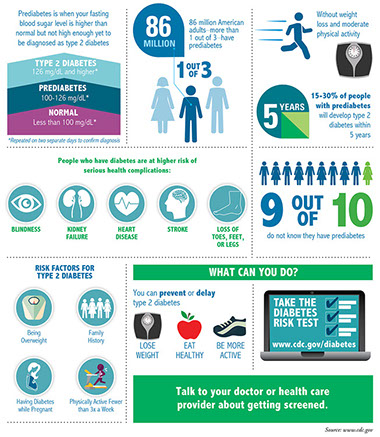
  • Prediabetes: Are You At Risk?

    MEDICAL NEWS

    Prediabetes infograph.

    © American Institute for Preventive Medicine

  • Preparing For A Vacation From Work

    WORK LIFE

    Image of family looking out of an airport window.

    To help make the most of your time off, be sure you’ve prepared for your absence at work. These steps can help you get ready for your well-deserved break:

    *Give people advance notice.As soon as you have plans, tell your supervisor and colleagues. If you have key clients or customers, be sure to tell them too.

    *Set up an out-of-office reply and voicemail.These basics let everyone know when you’ll get back with them. If possible, list a colleague’s name and number for urgent needs, but ask them first if this is okay.

    *Make a list of important tasks to complete before you leave.Then, stick to the list and make sure you get it done. This will help your colleagues and you’ll be able to rest easier on vacation.

    *Decide how you can be reached and let people know.If you don’t want phone calls or emails, let co-workers know. Some people want to take a complete break from work, while others like checking in. Or, you may tell people to call only if it’s urgent. It may depend on your job responsibilities and your preference.

    Traveling and spending

    In 2016, people in the U.S. spent $836.6 billion on domestic travel. This made up 84 percent of all travel expenditures. The money spent on travel in the U.S. directly supported over 7 million American jobs.

    Travelers spent $248.5 billion on food services. This accounted for 25 percent of travel expenses. It surpassed lodging expenses, which were 21.3 percent, or $210.8 billion, of total travel expenses.

    Source: U.S. Travel Association

    © American Institute for Preventive Medicine