Author: AIPM

  • Protect Your Personal Information

    FINANCIAL HEALTH

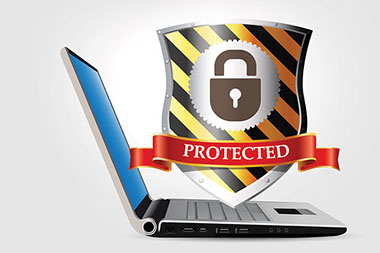
    Image of laptop with shield and lock key.

    Identity theft is a serious crime. It happens when someone steals your personal information such as your social security number or credit card numbers and uses it without your permission. You may see mistakes or mystery charges on your bank, credit card, or other account statements. You may receive bills for products or services you never received. Protect your personal information, urges the Federal Trade Commission. Get detailed information online atwww.ftc.gov/idtheft.

    *Keep your important papers secure.Limit what you carry in your wallet or purse. Pick up new checks at the bank instead of having them mailed to your home. Take outgoing mail to a collection box or the post office. Don’t leave it in your mailbox. Shred sensitive documents, receipts, credit card offers, insurance forms, checks, bank statements, and similar documents.

    *Secure your social security number.Only give it out when necessary (and ask if you can use a different kind of identification).

    *Protect your computer and mobile devices.Use anti-virus software. Don’t open files or click on links sent by strangers. Remove the memory cards from mobile devices before recycling them.

    *Protect your data online.Keep your passwords private. Don’t over share on social networking sites. If you post too much information about yourself, an identity thief can use that information to answer challenging questions on your accounts (birthdays, mother’s name, pet names, high school).

    © American Institute for Preventive Medicine
  • Protect Yourself From Medical Identity Fraud

    MEDICAL NEWS

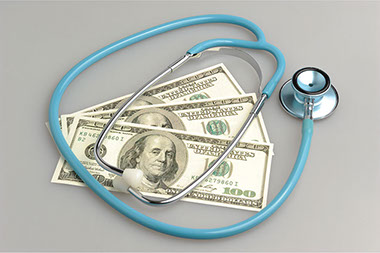
    Image of money and a stethoscope.

    It’s America’s fastest growing identity crime. DHHS says health care data hacking has affected more than 34 million Americans. Stolen records provide information for tax and insurance fraud.

    “When someone steals your medical identity, they corrupt your individual health record, so the next time you receive care your doctor can be working off a file riddled with bad information,” say ID Experts, a medical software provider.

    Use these wise fraud protection tips.

    *  Protect your health insurance card as carefully as you would your Social Security or credit cards. Theft of these cards allows someone to assume your identity to receive care. Treat their loss as seriously as a missing credit card; notify your insurance company and include it on any police report you file.

    *  Never share your insurance with a friend or family member. When someone pretends to be you to receive health care, your lifetime medical records become compromised. This can lead to a future misdiagnosis, a prescription mistake, or other inappropriate treatment.

    *  Use strong passwords on patient portals and change them often.

    *  Be observant in medical offices. Don’t just fill out the HIPAA policy form and then assume your provider is being careful. Raise concerns, like medical records sitting open on desks or unattended and unlocked computer terminals.

    *  Do NOT provide your medical information to someone who calls or emails you about your “possible involvement in a recent breach.”

    © American Institute for Preventive Medicine

  • Protein – Find The Right Balance

    HEALTHY EATING

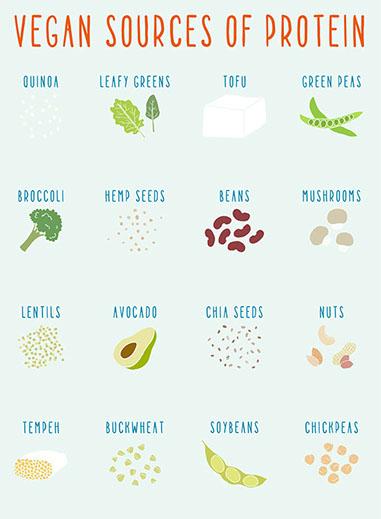
    Image of different protein sources.

    Protein is an essential part of any diet. Your body needs it to build tissues and cells.

    Some sources of protein are not as healthy as others. Animal sources, such as beef, pork and eggs, may contain saturated fat and/or cholesterol. The American Heart Association says saturated fats should make up less than 7 percent of your total daily calories. This means you should eat 16 grams or less of saturated fats if you eat 2,000 calories per day. Animal proteins also contain no fiber, and most Americans fall short of the recommended 25 to 35 grams of fiber needed per day.

    On the other hand, plant, nut and seed proteins often have little to no saturated fat and cholesterol and usually contain fiber and valuable nutrients. Check out this “Vegan Sources of Protein” diagram for a list of good non-animal protein sources. Try replacing some of your animal proteins with these vegan-friendly sources.

    Illustration of vegan sources of protein.

    © American Institute for Preventive Medicine

  • Got Breakouts? Proven Tips For Clear Skin

    SELF-CARE CORNER

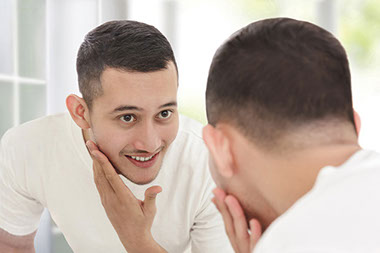
    Image of man looking at face in mirror.

    Acne can be an emotionally challenging condition for people of almost any age. The American Academy of Dermatology says acne affects up to 50 million people each year.

    Fortunately, there are a variety of products that can help you manage acne. If you or your child is dealing with acne, check out some of the most popular options to treat this condition.

    Salicylic acid

    What it does:Reduces redness and unclogs pores.

    Side effects:Minor redness, peeling or stinging.

    How to get it:Drugstore acne cleansers, toners, pads and creams. Dermatologists offer higher strength products and peels.

    Benzoyl peroxide

    What it does:Kills bacteria in the pores that causes acne.

    Side effects:Dryness, redness, peeling or stinging. May bleach hair or clothing.

    How to get it:Drugstore acne washes, creams and gels. Dermatologists offer products that combine benzoyl peroxide with other ingredients, such as an antibiotic.

    Retinoid

    What it does:Decreases the buildup of cells within pores.

    Side effects:Dryness, redness, peeling and burning that can be severe. Should not be used by pregnant or breastfeeding women or women who may become pregnant.

    How to get it:Only available from a dermatologist. Usually used for moderate to severe acne only.

    Antibiotics

    What it does:Kills acne bacteria on the skin.

    Side effects:Dryness and irritation. Some antibiotics can cause antibiotic resistance, especially if not used as directed by a doctor. This means the bacteria is no longer affected by the antibiotic and the medicine will no longer work correctly.

    How to get it:Only available from a dermatologist. Some antibiotics are applied to the skin. Others are taken as a pill.

    Getting breakouts under control can improve self-confidence and emotional well-being. If drugstore products don’t work for you, ask your doctor about stronger options. If your acne treatment is too drying, try a facial moisturizer labeled “non-comedogenic,” which means it won’t clog pores.

    © American Institute for Preventive Medicine
  • Pump Up Your Heart In 5 Easy Steps

    SELF-CARE CORNER

    Image of older women laughing.

    Did you know that a good night’s sleep can help prevent heart disease? That’s just one way to lower your risk. Dr. Holly Andersen, director of education and outreach at NewYork-Presbyterian Hospital/Weill Cornell Medical Center, offers some easy steps to improve heart health and overall well-being:

    Step 1: Know your numbers.

    Your blood pressure, cholesterol, and triglyceride levels are the most important numbers you will need to know before you take the path to good heart health. A normal blood pressure level is 140/85 or lower, total cholesterol levels should be less than 200, and triglycerides less than 150.

    Step 2: Start walking.

    Exercise really is the fountain of youth. A simple 20- to 30-minute walk a few days a week can actually cut your risk of premature death by more than half. Physical activity also improves sleep, reduces stress, elevates mood, reduces blood pressure, improves cholesterol, improves brain health, and prevents memory loss.

    Step 3: Laugh out loud.

    Laughter is good medicine. Just 15 minutes of laughter is about equal to 30 minutes of aerobic exercise with respect to our heart health. So choose funny movies on Netflix. Laughter has also been linked to the healthy function of blood vessels, an increase in the brain hormones that improve mood, and reduction of pain  and anxiety.

    Step 4: Focus on your waistline, not your weight.

    Your waistline is a better measurement of your overall health than your weight because the amount of fat around your waistline is directly linked to high blood pressure and high cholesterol and can place you at increased risk for diabetes. Anything you can do to make your waistline smaller is definitely a step in the right direction. Liposuction doesn’t count!

    Step 5: Get a good night’s sleep.

    Sleep is one of the most undervalued elements of our daily routines, but it is absolutely vital to good health. Lack of sleep increases your blood pressure, induces stress, increases your appetite and slows down your metabolism, dampens your mood and decreases your brain power.

    © American Institute for Preventive Medicine

  • Pumpkin And White Bean Soup

    HEALTHY EATING

    Image of pumpkin and white bean soup.

    Ingredients

    1 can small white beans (15 ounces)

    1 small onion (finely chopped)

    1 cup water

    1 can pumpkin (15 ounces)

    1-1/2 cups apple juice

    1/2 teaspoon cinnamon

    1/2 teaspoon black pepper

    1/4 teaspoon salt

    1/8 teaspoon nutmeg, allspice, or ginger (if you like)

    Directions

    1. Mash white beans, onion and water with a fork or blender until smooth. Set aside.

    2. In a large pot, add the pumpkin, apple juice, cinnamon, black pepper and salt. If using nutmeg, allspice or ginger, add that too. Stir.

    3. Add the bean mix to the pot.

    4. Cook over low heat for 15-20 minutes, until warmed through.

    Source: What’s Cooking? USDA Mixing Bowl

    © American Institute for Preventive Medicine
  • Questions Answered About Mers

    MEDICAL NEWS

    Illustration of lungs with MERS.

    As concern increases about Middle Eastern Respiratory Syndrome, or MERS, in the Middle East and in Asia, Dr. Peter Hotez, dean of the National School of Tropical Medicine at Baylor College of Medicine, answers questions on what we need to know about this emerging infectious disease.

    What is MERS?

    It is a serious lower respiratory infection caused by the MERS coronavirus. This emerging viral pathogen was first acquired from camels, but now has limited human-to-human transmission.

    What are the symptoms?

    The symptoms include fever, cough, and respiratory symptoms that could lead to respiratory failure and other organ system breakdown. This infectious disease is similar to SARS (severe acute respiratory syndrome) that caused a severe and highly lethal outbreak in South China in 2002-2003. Some data from previous SARS outbreaks indicate that 13% of cases may have no symptoms and this could also be true for MERS.

    How is it spread?

    The mode of spread is still not well known. In general, it involves close contact, especially in health care settings. For SARS, a related coronavirus, sneezing and cough seems to facilitate transmission.

    Is there a treatment? Is there a vaccine?

    There is no proven antiviral treatment, yet, for MERS. Several prototype vaccines are in different stages of development.

    Who is at risk? Any groups more at risk?

    For about 30 to 40%, of people who get MERS, the disease is fatal. At greatest risk of dying are the elderly and those with underlying heart and lung disease or diabetes.

    Should we be concerned?

    The MERS epidemic in South Korea looks as though it will be contained soon with all new cases appearing among the estimated 3,000 people in quarantine. However, in Saudi Arabia and elsewhere on the Arabian Peninsula, new cases continue to appear. Individuals thinking about travelling to the Arabian Peninsula should consult their doctor if they are elderly or have underlying chronic disease conditions.

    © American Institute for Preventive Medicine

  • Questions To Ask Before Choosing A Financial Planner

    FINANCIAL HEALTH

    Image of women writing different types of investments.

    1. How are you paid? Is it by a fee and commission? Do you fully disclose the fees and the commissions you earn on every investment you make or service you offer? If paid by fees, what is the average fee your clients pay?

    2. How many years have you been in the business? How long have you been a financial planner?

    3. Can you give me some references of people you have worked with for more than two years?

    4. What is your typical client like? Income levels, issues, investment amounts?

    5. What training did you have to be a planner? What requirements were needed to attain this degree or title?

    6. How many hours of continuing education must you have to keep your degree/designation?

    7. What does a completed financial plan look like?

    8. What is the most important difference your work made in someone’s life?

    9. How many clients do you have?

    10. How many support staff do you have? What are their credentials?

    11. Do you have a privacy statement?  May I have a copy?

    12. Is there an agreement among you and your staff to keep information confidential? Have there ever been any violations of that agreement?

    13. Do you have a copy of your Form ADV (a required disclosure form from the securities authorities)? Have you been responsible for any securities violations?

    14. Do you have a formal contract to define the responsibilities of the clients and those of the planners? Does it also address a protocol to settle differences and to terminate the relationship? How long does the contract last?

    Answers you will get to these questions can vary suggests Lynn S. Evans, CFP, author of Power of the Purse: Fear-Free Finances for Baby Boomer Women. You may have other questions that are important to you. Examples include if the offices are nearby and if you can communicate by email).

    A question regarding the planner’s investment performance is absent. For good reason: the planner’s average return on an investment is not the key to his or her success. The ability to meet the clients’ goals is what really counts.

    Lost without cyberspace?

    What if you couldn’t get a Wi-Fi signal on your smartphone? How anxious would you be if you forgot your phone or lost it? Worry about not being able to see instant news and weather? Or freak about a low battery? If you say yes, you may be a nomophobe (that’s having no mobile phone phobia), according to Iowa State University researchers, in the journal Computers in Human Behavior. Take the 20-question test and judge for yourself atwww.news.iastate.edu/news/2015/08/26/nomophobia. It’s not an addiction but an obsession, they say.

    © American Institute for Preventive Medicine

  • Quit Bugging Me

    WELL-BEING

    Image of insect repellant.

    As you enjoy the great outdoors, you may not see a bear, but you might encounter biting and stinging critters such as ticks, mosquitoes, and other insects.

    Bring along your own make-at-home first aid kit that includes assorted bandages and basic medicines such as a 1 percent hydrocortisone anti-itch cream, suggests Dr. Janyce Sanford, an ER doctor at the University of Alabama at Birmingham.

    Use insect repellant with DEET. Include tweezers to remove ticks (the best way is to pull straight up in an easy motion). And if anyone is sensitive to bee or wasp stings, carry an epinephrine auto-injector (EpiPen) when camping or hiking.

    Find out who in your party knows CPR before you might need it. Carry emergency supplies of food and light, and make sure you practice common sense.

    © American Institute for Preventive Medicine