Author: AIPM

  • Race Drinking

    BE FIT

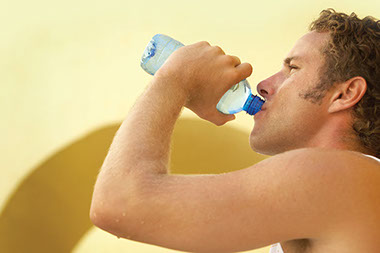
    Image of man drinking from a water bottle.

    Nearly half of recreational runners may be drinking too much fluid during races, according to a survey of runners by Loyola University Health System researchers. Expert guidelines recommend runners drink only when thirsty. But the Loyola survey found that 36.5% of runners drink according to a preset schedule or to maintain a certain body weight and 8.9% drink as much as possible.

    Drinking too much fluid while running can cause a potentially fatal condition called exercise-associated hyponatremia. It occurs when runners drink even when they are not thirsty. Drinking too much during exercise can dilute the sodium content of blood to abnormally low levels.

    Drinking only when thirsty will prevent overconsumption of fluids. “It’s the safest known way to hydrate during endurance exercise,” said Loyola sports medicine physician Dr. James Winger. The study is in the British Journal of Sports Medicine.

    Symptoms of hyponatremia can include nausea, vomiting, headache, confusion, loss of energy, muscle weakness, spasms or cramps. In extreme cases, the condition can lead to seizures, unconsciousness, and coma.

    © American Institute for Preventive Medicine

  • Ragweed

    WELL-BEING

    Image of ragweed.

    Maybe you’ve never been allergic to ragweed. You may not be miserable at the end of summer during ragweed season like a lot of other people.

    But even if you’ve never had a problem with seasonal hay fever caused by ragweed, don’t assume that runny nose and itchy eyes are caused by a cold.

    The truth, according to the American College of Allergy, Asthma and Immunology, is that anyone can develop an allergy-including an allergy to ragweed-later in life.

    Scientists think it may be you’ve always had the allergy, but it might have taken exposure to another allergen to trigger your symptoms. If symptoms won’t go away, lasting more than 2 weeks, you probably have allergies.

    Common allergy symptoms include itchy eyes and nose, as well as sneezing, but the mucus is typically clear.

    You’ll want to talk with your doctor first about over-the-counter medications to try to relieve those annoying symptoms.

    © American Institute for Preventive Medicine

  • Read The Labels, Again

    WELL-BEING

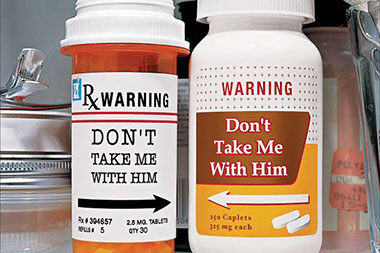
    Image of medicine bottles.

    Any box or bottle of over-the-counter (OTC) medicine lists its active ingredients prominently on the label. But are consumers using that information to make wise choices about taking two or more OTC drugs at the same time? Probably not, suggests a study in the Journal of Public Policy & Marketing.

    A consumer who takes a cold medicine containing, for instance, acetaminophen, may see nothing wrong with taking an additional medicine that also contains acetaminophen. In other words, the typical consumer, who is unlikely to have any medical expertise, may very well believe that there is no danger in taking any two OTC medications at the same time-even medications with the same active ingredients.

    Avoid double dosing. OTC drugs are not risk-free. Read labels.

    FYI

    According to the FDA, more than 600 OTC and prescription medicines contain the active ingredient acetaminophen. Taking acetaminophen is safe and effective when you follow the label information. But you can get severe liver damage if you take:

    *  More acetaminophen than directed

    *  More than one medicine that has acetaminophen

    *  3 or more alcoholic drinks every day while using acetaminophen

    For more information, ask your pharmacist, doctor, or nurse.

    © American Institute for Preventive Medicine

  • Recognize And Treat Early Signs Of Burnout

    SUCCESS OVER STRESS

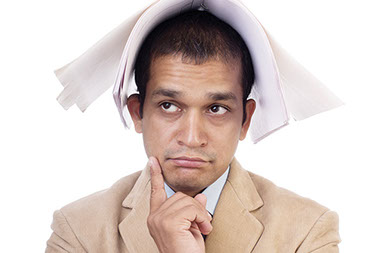
    Image of business man with a notebook over his head.

    Burnout isn’t something that happens overnight. It occurs over time from repeated and unresolved frustration or constant pressure to perform or achieve. With burnout, you feel exhausted, worn out, and detached from others. You feel as if you have nothing more to give and simply do not care about anything. Burnout puts your job, your relationships and your health in jeopardy.

    Signs on the road to burnout

    *  Too much work, not enough relaxation

    *  Feeling as if you have no control over your job

    *  Anger

    *  Fatigue

    *  Sleep problems

    *  Escaping through alcohol, drugs, TV, eating or gambling

    *  Avoiding making decisions

    *  Negative view of yourself and the world

    Also, some traits increase the risk for burnout. These include the need to be in control, wanting everything to be perfect and being a workaholic.

    Ten tips to prevent burnout

    1. Set career and personal goals that can be achieved.

    2. Follow healthy eating and sleeping habits.

    3. Exercise daily – At least 30 minutes most days of the week.

    4. Try not to spread yourself too thin. Delegate tasks at work and at home.

    5. Reduce long work or study hours, if you can. The more you do and the less you rest, the more likely burnout will occur.

    6. Take regular five to 10 minute relaxation breaks. Take mental breaks from stressful situations, too.

    7. Make time for leisure activities that you enjoy and look forward to.

    8. Get creative with a hobby or activity that has nothing to do with work.

    9. Manage stress through meditation, yoga, or therapy.

    10. Plan a vacation one or more times a year. Leave your work at home!

    Discuss feelings and problems you are having with your family, friends, and coworkers. Talking helps ease feelings of frustration that can feed burnout. It things do not get better seek professional help.

    © American Institute for Preventive Medicine

  • Refocus Your Pain

    SELF-CARE CORNER

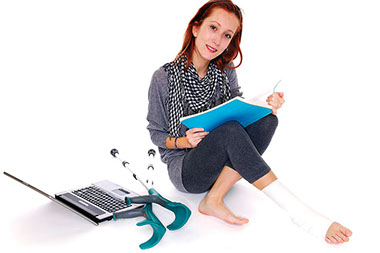
    Image of young women with a broken ankle, studying.

    Sometimes people in pain start to focus their entire lives around their pain, says a pain specialist.

    “I find the people who feel better about their situation are the ones who can focus their lives around their activities instead. They gauge how they are by what they can do,” observes Dr. Heather Tick, professor of integrative pain medicine at the University of Washington.

    “We reinforce the nerve connections of the things we focus on. If we focus on pain, we make those connections stronger. If we can shift the focus, we can distract ourselves and reinforce other nerve connections instead,” said Dr. Tick.

    In her book, Holistic Pain Relief, she offers some strategies to refocus:

    *  Eat an anti-inflammatory diet, which means eating low-glycemic foods and good-quality proteins, avoiding foods with added chemicals, and drinking plenty of fresh water.

    *  Talk to your doctor about taking anti-inflammatory supplements. Examples are omega-3s, vitamin D, and magnesium.

    *  Exercise regularly to the best of your current ability and expect to improve.

    *  Identify your sources of stress and try to spend some time de-stressing. For example, meditate or do breathing exercises.

    *  Take responsibility for getting well.

    *  Find joy and meaning in your life.

    *  Find a primary practitioner and a treatment team you like working with.

    © American Institute for Preventive Medicine

  • Re-Freeze Foods Safely

    HEALTHY EATING

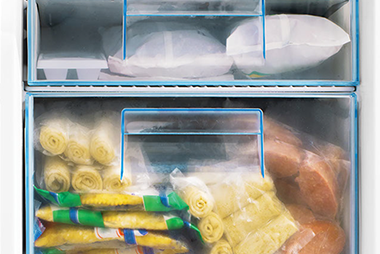
    Image of a freezer.

    It’s an old-wives’ tale that foods cannot be refrozen. But follow guidelines for safe food handling, according to the Partnership for Food Safety Education and the USDA.

    If raw foods such as meat, poultry, egg products, and seafood have been thawed in the refrigerator, then they may be safely re-frozen without cooking for later use. Never thaw raw foods by letting them sit on the kitchen counter. If raw foods are thawed outside of the refrigerator, for example in the microwave or in cool water, they should be cooked immediately. Never re-freeze raw or not fully cooked foods that have been thawed outside of the refrigerator.

    © American Institute for Preventive Medicine

  • Relaxed Muscles = Calmer Mind And Body

    SUCCESS OVER STRESS

    Image of women doing the PMR technique.

    It can be difficult to stay calm and avoid stress with today’s jam-packed lives. The World Health Organization says stress is a significant problem for both physical and mental health.

    However, there is good news. Some stress management skills have been proven to work. Progressive muscle relaxation (PMR) is an effective way to manage stress. It can lower cortisol which is a stress hormone. This can help lower blood pressure and heart rate when stress levels are high. And, almost anyone can learn how to do it with some practice.

    What is PMR?

    PMR is a technique of tensing and then relaxing muscles. Dr. Edmund Jacobson developed the technique early in the 20th century. He found that muscle tension and anxiety often go hand in hand. But, when you focus only on your muscles and your breathing, this helps to relax your mind. As a result, learning to reduce muscle tension can help a person cope with anxiety and stressful situations.

    How do I do PMR?

    Find a quiet place where you can lie down undisturbed. You may find doing this before bed is an ideal time, as it can also help you fall asleep. Until you become very familiar with the technique, you may wish to use an audio recording or an app to guide you through the process, though this is not necessary.

    The muscle tensing and relaxing typically starts at the very lowest point of the body: your toes. You’ll gradually work your way up to your face.

    *  Breathe in and clench the toes firmly. Don’t do it to the point of pain or cramping. Hold the tension for about 5 to 10 seconds.

    *  Breathe out, and completely relax the toes quickly.

    *  Relax for 10 to 20 seconds, and continue to breathe slowly.

    *  Begin with the next muscle group (usually the calves). Repeat the process by pointing the feet down and feeling the tension in the legs. Next, do the exercise on the buttocks, abdomen, shoulders, neck and face.

    With practice, this teaches the body to relax the muscles more often. This means the muscle tension you normally experience during stress is reduced.

    Relaxation methods like PMR can help you cope with stress in a more positive way. This, in turn, could improve your overall health. Take some time for yourself to try a relaxation method. It only costs you a little bit of your time and may pay off with big physical and mental health benefits.

    Sources: Health Science Journal, International Journal on the Biology of Stress

    © American Institute for Preventive Medicine

  • Remember This: You Can Improve Your Memory

    WELL-BEING

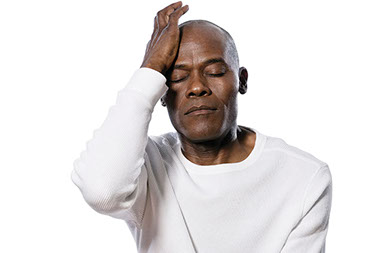
    Image of man with hand on his head.

    Worried because you searched a half hour before finding your reading glasses or car keys? Concerned that it took a couple minutes to remember the name of the familiar-looking woman who said hello to you in the restaurant?

    You probably don’t have much to worry about, said Dr. George Grossberg, an internationally recognized Alzheimer researcher and director of geriatric psychiatry at Saint Louis University School of Medicine. As annoying as it may be, temporary “tip of the tongue” forgetfulness is one of the changes that happens as we age.

    “If, on the other hand, the information is important to us, isn’t there when we want it, and doesn’t ever come back to us, that’s a more serious problem. The person who has Alzheimer’s disease and misplaces her reading glasses probably won’t even remember that she needs them to see. She knows the man next to her is familiar, but can’t remember that he’s her grandson and his name is Mark.”

    “In our society, we’re all on chronic systems overload. We’re multi-tasking – talking on our cell phones, listening for beepers to go off, walking into a store to shop,” he said. “It’s very easy for certain things to get lost in the shuffle. That’s not Alzheimer’s disease.”

    Dr. Grossberg offers this recipe for brain health:

    *  Try to figure out what is causing your forgetfulness. Did you make a wrong turn while driving while you were talking on a cell phone and listening to the radio? Maybe you’re trying to do too many things at once and need to put down the phone or turn off  the tunes.

    *  Exercise your body. Aerobic exercise improves your cardiovascular health. Exercise also increases your “feel-good” brain chemicals, which improve your mood and prevents depression which is a risk factor for Alzheimer’s disease.

    *  Exercise your mind. Research shows mental challenge can help rewire connections in the brain. So find a new hobby, learn to play chess, use your left hand if you’re right-handed, or study a foreign language.

    *  Take care of yourself. Control risk factors for cardiovascular disease such as high blood pressure, smoking, high cholesterol, and obesity to help decrease your risk.

    *  Get a good night’s sleep. Not getting enough deep, restful sleep causes mental impairment later in life. Besides, if you’re sleep deprived, you won’t think clearly and are more likely to forget in the present time.

    *  Feed your brain. Some research shows antioxidant vitamins have protective powers against Alzheimer’s disease. Some B vitamins, especially B-12 and folate, are very important in how brain cells function. Talk with your doctor about taking vitamin supplements.

    *  Check your meds. Discuss, with your doctor, if any prescribed and over-the-counter medications you take could cause memory or concentration problems.
    © American Institute for Preventive Medicine

  • Retirement: How Are You Going To Do That?

    FINANCIAL HEALTH

    Image of middle-aged women.

    A secure and worry-free retirement is a cherished dream for millions of us. What will it take for you to achieve that dream? The experts say –

    Save more than you think.Most people have not tried to estimate how much money they will need for retirement. And those who have, usually underestimate the amount they need.

    Know when you will retire.Many working Americans will retire before they expect to, and before they’re ready.

    Plan to live a long life and spend accordingly.Some retirees will live well beyond their life expectancy, with a great risk of outliving their savings.

    Face facts about long-term care.Many people underestimate their chances of needing long-term care. Explore lower-cost plans now.

    Understand your options.Should you take a pension in a lump sum or as a lifetime annuity? Talk with a financial planner (and your doctor) to decide the best option for you.

    Understand your investments.Due to the growth of workplace retirement savings plans, employees are now managing investments for retirement. Need help? Get it from a trusted financial adviser.

    Seek sound advice.Many retirees and pre-retirees do not seek the help of a “qualified professional.” Yet they indicate a strong desire to work with one.

    Know where your retirement income is coming from.You may be disappointed in retirement if you try to live on the income that’s available.

    Deal with inflation.Inflation is a fact of life. After retirement, you won’t be getting pay increases.

    Provide for a surviving spouse.Many married couples fail to plan for the eventual death of one spouse before the other. This can have serious consequences, especially when the survivor is the wife.

    Source: Report from LIMRA International, the Society of Actuaries and Matthew Greenwald & Associates, with research sponsored by the Society of Actuaries Committee on Post-Retirement Needs and Risks

    © American Institute for Preventive Medicine

  • Ride Your Bike To Work

    BE FIT

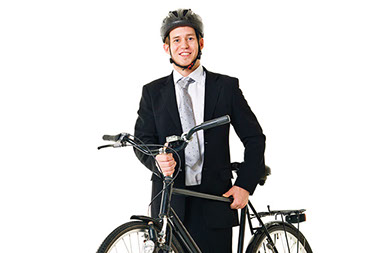
    Image of young man in a business suit with a bike and helmet on.

    Think of the money you’ll save on gas, train fare, and parking. If you live within 10 miles of your work, find solutions to overcome these popular excuses:

    *Not safe:Use less congested roads if rush-hour traffic clogs the main streets.

    *Have to dress nicely at work:Drive to work one day each week and leave a week’s worth of clean clothes.

    *No place to shower:To clean up, use a deodorant soap and washcloth in the restroom.

    *No secure place to park my bike:Check for a storage closet or furnace room, or stash your bike with a friend who lives nearby or at a bike shop.

    *I’d have to ride in the dark:Wear light-colored, reflective clothing, attach lights and reflectors and use a route that’s lit by streetlights.

    *Hate riding in cold and rainy weather:If it’s pouring or sleeting, leave the bike at home.

    *Too far:Drive part way and cycle the rest. Look for a park-and-ride commuter lot.

    Source: Bicycling magazine’s 1,000 All-Time Best Tips

    © American Institute for Preventive Medicine