Author: AIPM

  • Shin Splints Can Sidetrack Your Running Routine

    BE FIT

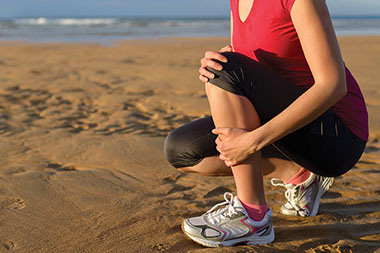
    Image of women holding her shin.

    If shin splints are keeping you from making the most of your runs this spring, you’re not alone. Shin splints-pain in the front of the lower legs-is common among those who exercise regularly. This ailment especially affects runners.

    According to Dr. Matthew Silvis, associate professor of family medicine and orthopedics at Penn State Hershey, shin splints are among the most common complaints in spring for people back on the road or trail after a long winter.

    The term shin splints generally refers to pain and soreness along the shinbone, or tibia, the largest bone of the lower leg. The pain comes from overuse of the muscles and tendons around the bone. Added or unusual stress on and around the shinbone causes it to become inflamed and sore.

    If you’re already dealing with shin splints, icing the area can help. So can taking an over-the-counter anti-inflammatory medicine if needed for pain. Wait to return to your activity until you’re pain-free for 2 weeks.

    The fix

    Give the body time to adjust when changing an exercise routine. Doing too much too soon can bring on shin splints. If untreated, a more serious injury-stress fracture-can result. Stress fractures-tiny cracks in the bone-usually come from overuse. To avoid this:

    *  Gradually increase the amount or intensity of a workout to avoid too much stress on the legs.

    *  Follow a regular, gentle stretching routine that includes the calves. Keeping the muscles around the shinbone flexible can help prevent  shin splints.

    *  Wear well-fitting, supportive athletic shoes. And replace them every 300 to 500 miles.

    *  Balance running workouts with other training that isn’t as stressful on the legs. Examples are cycling, cross-training, and swimming.

    © American Institute for Preventive Medicine

  • Shingles (And We’re Not Talking About Your Roof)

    SELF-CARE CORNER

    Image of shingles the rash on a person's back.

    Shingles is a painful viral infection that affects 30% of Americans every year. It is caused by Varicella Zoster virus, the same virus that causes chicken pox.

    The outbreak occurs mostly in people 50 years of age and older. The virus can lie dormant in the nerve tissue of the body for many years, then becomes activated and causes shingles later in life.

    According to the Centers for Disease Control and Prevention, shingles is not passed from one person to another. However, the virus that causes shingles can spread from a person with active shingles to another person who has never had chicken pox. In such cases, the person exposed to the virus might develop chickenpox, not shingles.

    “If you are diagnosed with shingles, you are contagious as long as you have blisters and ulcers. It is important to cover your rash and wash your hands frequently. It also is important to avoid people who have not received the chicken pox vaccine, pregnant women and anyone with a weak immune system,” said Dr. Khalilah Babino, physician at Loyola University Health System and assistant professor in the Department of Family Medicine at Loyola University Chicago Stritch School of Medicine.

    A shingles outbreak can last several weeks. Before the rash appears, the following symptoms may occur:

    *  Fatigue

    *  Headache

    *  Tingling

    *  Itching

    *  Burning Pain

    After a few days, a blistering rash in clusters appears. The shingles rash is always located along the involved nerve pattern called a dermatome, typically in a band on one side of the body. Most often, the rash is on the chest and/or back, but can occur on other body parts.

    “If you develop shingles on your face, especially near your eye, you should seek immediate medical care as this type may result in loss of vision,” Dr. Babino said. The blisters that form will pop in a few days and become open sores, which are contagious. Usually, these ulcers scab over within 7 to 10 days and the rash goes away within 4 weeks.

    “Fortunately, there is antiviral medication to help slow the virus and speed recovery. The earlier the medication is started, the more effective it is against the virus. I recommend starting these medications within 72 hours of the onset of rash. Since shingles can be very painful, you might also need prescription pain medication,” Dr. Babino said.

    Most people with shingles do not suffer any complications. Still, there is a 10% chance of developing a painful condition called post-herpetic neuralgia after the rash has gone away. The pain can last from a few months to a year.

    You can decrease your risk of developing shingles and its complications by getting the shingles vaccine. One dose of shingles vaccine is advised for adults age 60 years and older, but can be given between the ages of 50 and 59.

    “People who have had shingles previously can still receive the vaccine. If you are above the age of 50 years old, you should talk to your health care provider about the shingles vaccine,” Dr. Babino said.

    © American Institute for Preventive Medicine

  • Shopping Cart Spills Can Be Prevented

    FAMILY LIFE

    Image of mother with toddler sitting in a shopping cart.

    Kids dangling over shopping carts reaching for candy, standing up, and riding underneath. Every 22 minutes a child goes to the ER with a shopping cart-related injury. A study in Clinical Pediatrics found that falls from a shopping cart accounted for the majority of injuries for children up to 4 years old, followed by running into/falling over the cart, cart tipovers, and entrapment of arms, legs, and fingers in the cart. The kids suffered concussions and other head injuries.

    Dr. Gary Smith, director of the Center for Injury Research and Policy at Nationwide Children’s Hospital, said parents need to understand the dangers. He suggests these strategies:

    *  Always use the shopping cart safety straps. Be sure your child is snugly secured in the straps and that the child’s legs are placed through the leg openings. If parts of the cart restraint system are missing or are not working, choose another cart.

    *  Use a cart that has a child seat that is low to the ground, if one is available.

    *  Make sure your child remains seated. Stay with the cart and your child at all times.

    *  Avoid placing infant carriers on top of shopping carts. If your child is not old enough to sit upright in the shopping cart seat, consider other options such as leaving your child at home with another adult while you are at the store, using in-store child care areas, using a front- or back-pack carrier, or using a stroller.

    © American Institute for Preventive Medicine

  • Shopping Online Safely

    FINANCIAL HEALTH

    Image of couple shopping online.

    Using your computer, tablet or smartphone to shop can be quick and convenient. But, the internet is full of websites that aren’t trusted places to shop. To keep your personal information and money safe, follow these steps before you shop online:

    *Use major companies that you know.Look for a company address, phone number, and email. Read online reviews before buying.

    *Research the return policy.Can you get a full refund if you aren’t satisfied? What does it cost to send it back?

    *Know what shipping will cost.Be sure you know what the cost will be before you place the order. Shipping costs should be clearly listed on the website.

    *Never use cash.If you pay by credit card, your purchase is protected by the Fair Credit Billing Act. This means you can dispute charges you didn’t make. You may also be protected from having to pay for unauthorized charges if your card number is stolen.

    *Compare your credit card statement and your online receipt.Be sure the costs match.

    *Don’t use email for sending financial information.Email isn’t secure and someone could steal your information this way.

    Beware of fake online reviews

    You see a product online that has hundreds of glowing reviews. It must be great, right? Not necessarily. In fact, some companies have been sued by the FTC for providing fake online reviews. Some companies even pay people to write great reviews for their products, or delete negative reviews on their site.

    Take any online reviews with a grain of salt. If they seem too good to be true, they probably are. Almost any product will have some positive, neutral and negative opinions. If it doesn’t, this may be a red flag for a scam.

    Source: Federal Trade Commission

    © American Institute for Preventive Medicine

  • Should I Be Gluten-Free?

    HEALTHY EATING

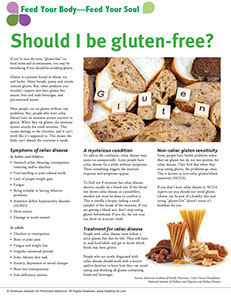
    Image of bread with the word 'Gluten' on wooden blocks.

    If you’ve seen the term “gluten-free” on food items and at restaurants, you may be wondering if you should be avoiding gluten.

    Gluten is a protein found in wheat, rye and barley. Many breads, pastas and cereals contain gluten. But, other products you wouldn’t suspect also have gluten like sauces, beer and malt beverages, and   pre-seasoned meats.

    Most people can eat gluten without any problems. But, people who have celiac disease have an immune system reaction to gluten. When they eat gluten, the immune system attacks the small intestine. This causes damage to the intestine, and it can’t work like it’s supposed to. This means the body can’t absorb the nutrients it needs.

    Symptoms of celiac disease

    In babies and children:

    *  Stomach aches, bloating, constipation, vomiting and/or diarrhea

    *  Foul-smelling or pale-colored stools

    *  Lack of proper weight gain

    *  Fatigue

    *  Being irritable or having behavior problems

    *  Attention deficit hyperactivity disorder (ADHD)

    *  Short stature

    *  Damage to tooth enamel

    In adults:

    *  Diarrhea or constipation

    *  Bone or joint pain

    *  Fatigue and weight loss

    *  Irregular menstrual periods

    *  Itchy, blistery skin rash

    *  Anxiety, depression or mood changes

    *  Bone loss (osteoporosis)

    *  Iron-deficiency anemia

    A mysterious condition

    To add to the confusion, celiac disease may come on unexpectedly. Some people have celiac disease for a while without symptoms. Then, something triggers the immune response and symptoms appear.

    To find out if someone has celiac disease, doctors usually do a blood test. If the blood test shows celiac disease as a possibility, another test must be done to confirm it. This is usually a biopsy (taking a small sample) of the inside of the intestine. If you are getting a blood test, don’t stop eating gluten beforehand. If you do, the test may not show an accurate result.

    Treatment for celiac disease

    People with celiac disease must follow a strict gluten-free diet for life. They will have to read food labels and get to know which foods may have gluten.

    People who are newly diagnosed with  celiac disease should work with a doctor and/or dietitian to learn how they can avoid eating and drinking all gluten-containing foods and beverages.

    Non-celiac gluten sensitivity

    Some people have health problems when they eat gluten but do not test positive for celiac disease. They find that when they stop eating gluten, the problems go away. This is known as non-celiac gluten/wheat sensitivity (NCGS).

    If you don’t have celiac disease or NCGS, experts say you should not avoid gluten. Gluten can be part of a healthy diet and eating “gluten-free” doesn’t mean it’s healthier for you.

    Sources: American Academy of Family Physicians, Celiac Disease Foundation, National Institute of Diabetes and Digestive and Kidney Diseases

    © American Institute for Preventive Medicine

  • Should I Exercise If I’M Sick?

    BE FIT

    Image of women blowing her nose.

    Although you may be coughing, your body aching, and your nose running like a faucet, it can be difficult to decide if you should exercise or take a temporary break.

    “We all know that exercise is key to good health, but there are times that your body may need a break,” said Dr. Keith Veselik, director of primary care at Loyola University Health System. “Having to slow down when you’re sick is Mother Nature’s way of saying don’t push it and it’s reasonable to pay attention to that.”

    As a general rule, it’s okay to exercise if your symptoms are above the neck, such as a sore throat or runny nose. But it could be dangerous to exercise if you have the following symptoms: fever, shortness of breath, chest congestion, body aches, diarrhea, vomiting or dizziness.

    When you’re sick, your body is already battling against an illness and that takes energy.

    For instance, adding the extra stress of exercising while sick can be dangerous for someone with a heart condition. A person with diabetes may need to monitor blood glucose levels more often because being ill may raise glucose levels and exercise may lower them.

    If you do have a medical condition and are not sure if you should exercise while sick, call your doctor.

    © American Institute for Preventive Medicine

  • Should Kids Have Caffeine

    FAMILY LIFE

    Image of boy drinking water standing next to his bike.

    Many kids love the sugary sweet taste of soda, sports drinks and energy drinks. And, many of these drinks also contain various amounts of caffeine. Is it okay for your child to consume these drinks?

    No, says the American Academy of Pediatrics (AAP). Because these drinks can actually be harmful, the AAP says children and teens should avoid them. Here’s why:

    *  Caffeine can be harmful to a child’s developing brain and heart, according to the AAP.

    *  Soda contains extra sugar and calories that can lead to weight gain and tooth decay.

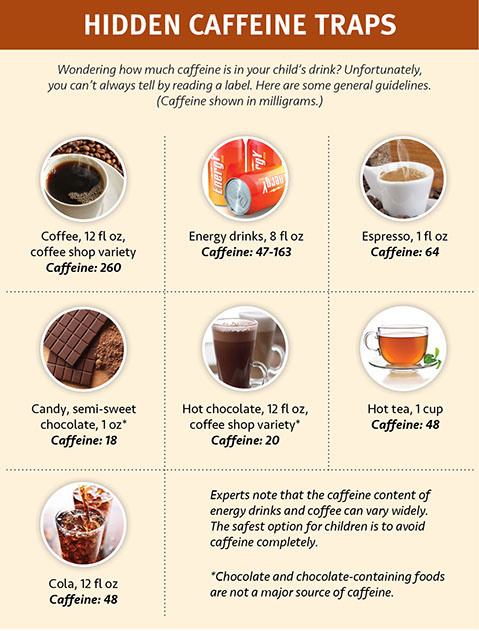
    *  Energy drinks contain caffeine and other stimulants which can be harmful to children. Often, the caffeine content is not listed and can be higher than a cup of coffee.

    *  Water is a better option for kids playing sports. Sports drinks are usually not needed and often contain extra calories. Only children who exercise very hard for long periods may need a sports drink to replenish lost electrolytes, such as sodium and potassium.

    The Academy of Nutrition and Dietetics (AND) agrees. Caffeine can interfere with a child’s sleep. The AND adds that caffeine can lead to a cycle of lack of sleep and consuming more caffeine to get through the day. If your child is low on energy, the AND recommends a short nap or getting to bed earlier at night.

    © American Institute for Preventive Medicine

  • Sick Days: When To Stay Home

    WORK LIFE

    Image of young women in bed sick.

    You’re feeling under the weather, but you don’t want to miss work. What should you do? In some cases, it may be okay to go to work when you’re not feeling 100 percent. But other times, you should make your wellness a priority. These guidelines can help you decide if you’re well enough to work:

    Fever:

    The CDC recommends you stay home for 24 hours after your fever is gone. This helps minimize the spread of illness to others. You should also skip social gatherings, shopping, and other outings.

    Sniffles and sneezing:

    Many people simply can’t miss work every time they have a minor cold. Let your symptoms be your guide. If you’re feeling well enough to work and don’t have other symptoms, such as a fever or body aches, you can go to work if necessary. But, if you have fatigue or feel that you won’t be able to safely do your job, consider using sick time.

    Vomiting or diarrhea:

    Stomach-related illnesses such as norovirus are highly contagious. Even after you stop vomiting, you could get other people sick. If you serve or prepare food as part of your job, the CDC says you should stay home for at least 48 hours after your symptoms stop.

    Remember that staying home from work may help you to recover more quickly, as your body needs rest to fight an illness. In addition, staying home will help avoid spreading illness to co-workers, customers, and others you encounter.

    Choosing to stay home may also depend on your employer’s sick day policies. Make sure you are familiar with these and abide by them.

    © American Institute for Preventive Medicine