Author: AIPM

  • Stretching Exercises To Do At Your Desk

    WORK LIFE

    Image of office with employees working on computers.

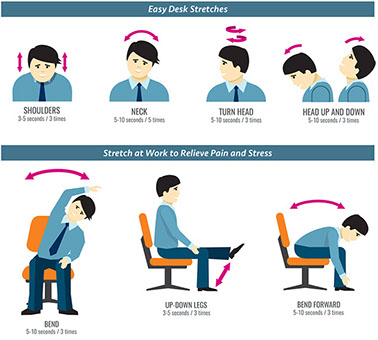
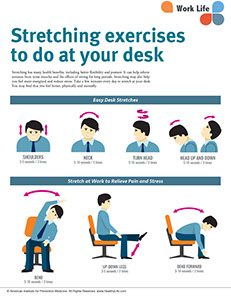
    Stretching has many health benefits, including better flexibility and posture. It can help relieve soreness from tense muscles and the effects of sitting for long periods. Stretching may also help you feel more energized and reduce stress. Take a few minutes every day to stretch at your desk. You may find that you feel better, physically and mentally.

    Illustration showing different desk stretches.

    © American Institute for Preventive Medicine

  • Strike The Right Cord

    FAMILY LIFE

    Image of young smiling family.

    Children can be strangled by window cords on blinds and curtains. In fact, such tragedies are among the top hazards in American homes. Infants and children die each year from accidental strangling in the cords.

    The Consumer Product Safety Commission recommends that only cordless window coverings or those with unreachable cords be used in homes with young children. They are available today in the marketplace and will prevent window blind strangulations.

    In addition, the Window Covering Safety Council encourages parents, grandparents and caregivers to follow these basic cord-safety precautions:

    *  Move all furniture, cribs, beds, and climbable surfaces away from windows.

    *  Keep all window shades, blinds, and drapery cords well out of the reach of children.

    *  Install only cordless window coverings in homes with young children.

    © American Institute for Preventive Medicine

  • Stroke Signs

    MEDICAL NEWS

    Image of elderly man with stroke symptoms.

    Seek immediate medical care for someone who shows one or more of the following warning signs: sudden numbness or weakness of the face, arm or leg, especially on one side of the body; sudden confusion, trouble speaking or understanding; sudden trouble seeing in one or both eyes; sudden trouble walking, dizziness, loss of balance or coordination; or sudden, severe headache with no known cause.

    To remember the signs of stroke, the National Stroke Association recommends using the acronymFAST:

    Face:Ask the person to smile. Does one side of the face droop?

    Arms:Ask the person to raise both arms. Does one arm drift downward?

    Speech:Ask the person to speak. Does the person have slurred speech or trouble speaking?

    Time:If you observe any of these signs, call 9-1-1.

    © American Institute for Preventive Medicine

  • Strong Way To Buildgood Health

    BE FIT

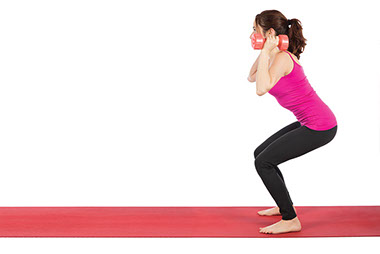
    Image of women doing squats while holding dumb bells.

    If you want good health, a long life, and feel your best well into old age, the most important thing you can do is strength training, said Dr. Brett Osborn, author of Get Serious, A Neurosurgeon’s Guide to Optimal Health and Fitness.

    “Our ability to fight off disease resides in our muscles,” Dr. Osborn said. “The greatest thing you can do for your body is to build muscle.”

    He cites a large, long-term study in the British Medical Journal of nearly 9,000 men ages 20 to 80. After nearly 19 years, the men still living were those with the most muscular strength. Muscle is all protein, and it’s “nothing but good for you,” he said. He recommends this back-to-basics routine as the pillars of a solid training regimen (trainers at your gym can show you how to do these exercises):

    *The squatis a full-body exercise; it’s the basic movement around which all training should be centered. Heavy squats generate a robust hormonal response as numerous muscular structures are traumatized during the movement (even your biceps). Standing erect with a heavy load on your back and then repeatedly squatting down will stress your body-in a good way-forcing it to grow more muscle.

    *The overhead pressprimarily activates the shoulders, arm extenders, and chest. Lower body musculature is also activated as it counters the downward force of the dumbbell. From the planted feet into the hands, force is transmitted through the skeletal system, stabilized by numerous muscular structures, most importantly the lower back.

    *The deadliftcenters on the hamstrings, buttocks, lumbar extensors, and quadriceps, essentially the large muscles of your backside and the front of your thighs. As power is transferred from the lower body into the bar through the upper body conduit, upper back muscles are also stressed, contrasting with the squat, which is supported by the hands. Deadlifts are considered by some to be the most complete training exercise.

    *The bench pressmostly targets the chest, shoulders, and triceps. It’s the most popular among weightlifters, and it’s very simple-while lying on a bench, push the barbell off the lower chest until the arms are straight. This motion stresses not only the entire upper body, but also the lower body, which serves a stabilizing function. This provides a big hormonal response and plenty of bang for your buck.

    Strength training has health benefits for everyone, no matter their size.

    © American Institute for Preventive Medicine

  • Sugar: Not So Sweet For Your Health

    HEALTHY EATING

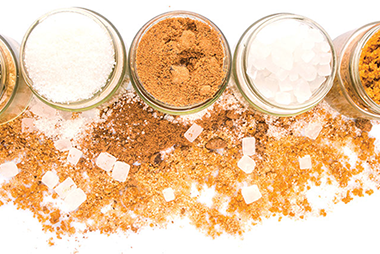
    Image of different types of sugars.

    Cookies, cake, and candy – we all know which foods are high in sugar. Or do we?

    The average American is consuming too much sugar today, and the American Heart Association says this is hurting us. Sugar is loaded with calories, which can cause weight gain and heart problems. A high-sugar diet can also be a factor in diabetes. Sugar can cause cavities and other dental problems.

    You might be surprised to find that many regular or even “healthy” foods have a lot of sugar in them. That’s why the FDA is proposing a change to the food Nutrition Facts label that would list “added sugar.”

    What is added sugar?

    Some healthy foods contain a certain amount of natural sugar. These include fruits, vegetables, dairy, and whole grains. The sugar (simple carbohydrate) naturally occurs in the food.

    On the other hand, many packaged and processed foods contain “added sugar.” This sugar has been added to improve the taste. Many things you wouldn’t suspect, like “diet” foods, soup, yogurt, crackers, and salad dressings can contain a lot of added sugar.

    How do I spot added sugar?

    Sugar can be listed by many different names in the ingredients. So, it’s hard to know how much added sugar you’re getting. Until the nutrition label change takes place, the best thing to do is look at the sugar listing on the Nutrition Facts. Keep track of how many grams are in each serving of food and add them up each day. The AHA recommends:

    *  No more than six teaspoons (25 grams) for women per day

    *  No more than nine teaspoons (37.5 grams) for men per day

    If you eat processed or packaged foods or drinks, look at the Nutrition Facts and see how much sugar each one contains. You may be surprised at how many grams of sugar you consume, even if you’ve been watching your diet. And drinks count too – fruit juice, sports drinks, and sodas are usually loaded with sugar. In fact, a 12- ounce serving of soda contains about 38 grams (nine to 10 teaspoons) of sugar.

    Many food labels don’t list the word “sugar” in the ingredients. In fact, there are more than 50 different names for sugar! These include sucrose, dextrose, maltose, corn syrup, corn syrup solids, dextrin and maltodextrin.

    © American Institute for Preventive Medicine

  • Summer Salmon

    HEALTHY EATING

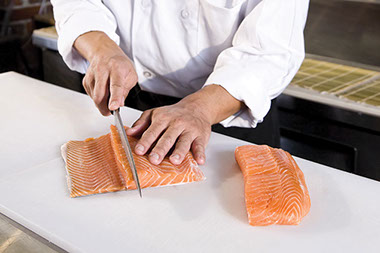
    Image of a person cutting salmon.

    Ingredients

    Juice from 1 orange

    1 tablespoon extra-virgin olive oil

    1 teaspoon honey

    1 teaspoon mustard

    Kosher salt (optional) and freshly ground black pepper

    1 skinless salmon fillet (6-ounce)

    1/4 cup whole-wheat linguine

    6 asparagus spears (chopped)

    1/4 medium onion (chopped)

    1 clove minced garlic

    4 sprigs fresh parsley (leaves removed and chopped)

    2 fresh basil leaves (thinly sliced)

    1 teaspoon freshly grated Pecorino cheese

    Directions

    In a small bowl, whisk together the orange juice, 1 teaspoon olive oil, honey, and mustard. In a medium sauté pan over moderate heat, warm 1 teaspoon olive oil. Add the salmon and cook for 4 minutes. Flip the salmon over, add the orange sauce, and continue to cook until the salmon is golden and cooked through, about 4 more minutes. Season with salt (optional) and pepper and transfer to a plate.

    In a medium pot of boiling water, cook the pasta until al dente, about 5 minutes. Add the asparagus and continue cooking for 2 more minutes. Drain the pasta and asparagus and transfer to a bowl.

    In a medium sauté pan over moderate heat, warm the remaining 1 teaspoon of olive oil. Add the onion, garlic, parsley, and basil and sauté, stirring occasionally, about  3 minutes. Add the onion and garlic mixture to the pasta, sprinkle with cheese, and toss to combine. Serve the salmon alongside the pasta with asparagus.

    Makes 2 servings: Per serving: 273 calories, total fat 14g, protein 22g, fiber 4g, sodium 157 mg

    From the US Department of Agriculture, USDA Mixing Bowl; find more recipes at www.usda.gov/whatscooking

    © American Institute for Preventive Medicine

  • Secrets For Healthier Feet

    SELF-CARE CORNER

    the word "Summer" spread across an illustration of the sun.

    Podiatrist Dr. Lauren Kishman, Akron General Orthopedics, knows the most common foot complaints and lets you in on some secrets to get your feet summer-ready.

    Sweaty, smelly feet?

    Use antiperspirant on your feet. Why? Because you have sweat glands on your feet too. Change out your socks often and try a clear roll-on antiperspirant on the bottom of your feet. Apply after showering and drying your feet. If an over-the-counter antiperspirant doesn’t work, you can try a prescription-strength antiperspirant.

    Avoid fungus.

    Wear sandals around the pool. If you have athlete’s foot, over-the-counter antifungal medications are generally successful. Nail fungus, though, is typically more difficult to treat and often will require prescription medication to recover completely.

    Don’t leave nail polish on all summer.

    The chemicals and dyes in nail polish can discolor or crack nails. Remove nail polish after about 2 weeks and give your toes a break before reapplying.

    Apply sunscreen all over your feet.

    Skin cancer can affect the feet. If you notice any suspicious or dark spots on your feet-on your skin or underneath the nails-see a doctor to get them checked out. If you have cracking or dry skin, lotions that contain urea or ammonium lactate can help.

    © American Institute for Preventive Medicine

  • Summer With Less Screens

    FAMILY LIFE

    Image of grandparents playing basketball with grandkids.

    When the kids are home from school for the summer, it can be hard to avoid technology. Kids (and adults) are used to constant entertainment from the television, computer, smartphones and tablets. But, reducing screen time can have many benefits for families:

    *  Boredom is a great way for kids to learn to be creative. If they’re always entertained by a screen, kids don’t have a chance to be bored and to learn how to entertain themselves.

    *  Sitting in front of a screen means time not spent getting exercise.

    *  Some studies suggest that too much screen time can lead to behavior problems, lack of good thinking skills, and sleep problems.

    It’s not always realistic to avoid screens completely. If you can’t, look for ways to limit screen time. Try these tips:

    *  Choose certain times of day to be screen-free. For instance, you can choose to let kids have 30 minutes of screens after lunch, but morning is for screen-free play.

    *  Watch the clock. Decide on a daily limit of screen time, such as two hours, and stick with it. Consistent rules help kids know what they can expect each day, so there is less complaining.

    *  Visit the library. If you can get kids to read books they like, they won’t miss screens as much.

    *  When you do watch TV, watch shows together as a family. Choose educational shows when possible.

    Have a plan

    A family media plan can help you stay on track with screen time. Create yours atwww.healthychildren.org/English/media.

    © American Institute for Preventive Medicine