Author: AIPM

  • Telling Kids About Tragedy

    FAMILY LIFE

    Image of parents talking to their child.

    Talking to kids about scary events and disasters is important when they’re old enough to understand. Kids may have more fear of an event if they don’t know any details. They may imagine something much worse than what happened.

    Although telling kids some details may help, the American Academy of Pediatrics says it’s important that you filter the information you give your child. Think about the child’s age, personality and what they will be able to cope with. These steps can get the conversation started:

    *Ask the child what they know about the event.This can help you separate facts from fiction. It gives you a way to explain the things they already know in a way that is direct but not scary.

    *Avoid any graphic details.Although the media may share lots of details that are graphic and scary, children should be shielded from these things.

    *Don’t be too vague.Saying “something happened that was bad” doesn’t give enough information. Instead, name the place where it happened and tell them that some people were hurt. The police/firemen/ government, etc. are helping people and working to keep us safe.

    *Keep it open ended.Tell them if they have any questions, they can ask you.

    Is your child coping?

    After a disaster, some children have a hard time coping. These red flags may be a sign that your child needs help:

    *  Trouble sleeping, nightmares or being very tired all the time

    *  Unusual aches and pains, such as headache or feeling “sick” often

    *  Appetite changes

    *  Social changes, such as aggression or being clingy

    *  Frequent feelings of sadness or fear

    Talk to your child’s doctor if you notice any of these changes.

    © American Institute for Preventive Medicine

  • Temporary Tattoos Harmful Too

    MEDICAL NEWS

    Close up image of wrist getting a temporary tattoo.

    What’s the harm in a temporary tattoo applied at the beach or boardwalk or state fair? Maybe a lot is wrong.

    The FDA is reporting problems such as redness, blisters, raised red weeping sores, loss of skin color, increased sensitivity to sunlight, and even permanent scarring from seemingly harmless henna tattoos.

    Here’s why. Some temporary tattoo “artists” are using harmful coloring such as hair dye or “black henna” instead of traditional henna, a reddish-brown coloring made from a flowering plant.

    Inks marketed as black henna may be a mix of henna with other ingredients, or may really be hair dye alone. The reason for adding other ingredients is to create a tattoo that is darker and longer lasting, but use of black henna is potentially harmful. The temporary tattoos made with black henna are dark black.

    Temporary tattooing is not regulated by anyone. No one is checking to make sure the artist is following safe practices. Don’t assume this is a safe thing to do.

    For any problems or long-lasting rashes, see a doctor. You may report a problem to the FDA’s MedWatch:www.fda.gov/Safety/MedWatch/HowToReport/default.htm.

    © American Institute for Preventive Medicine

  • Thanksgiving Can Be Healthy – Here’S How

    HEALTHY EATING

    Image of thanksgiving dinner set on the table.

    At major holidays like Thanksgiving, it can be easy to overeat. Being around friends and family and having access to a wide array of foods at the buffet table can make it difficult to stick to a healthy eating plan.

    Fortunately, you can still enjoy your favorite dishes without all the calories if you plan ahead. Here are some simple ways to keep Thanksgiving healthy and delicious:

    *  Add low-sodium chicken broth to mashed potatoes to add flavor without the calories of gravy and butter.

    *  Substitute Greek yogurt in recipes that call for sour cream or buttermilk.

    *  Use applesauce in place of oil or butter in baked goods.

    *  Use fresh fruits and vegetables as appetizers rather than fried foods.

    *  Don’t come to Thanksgiving overly hungry or you may end up overeating. Have a light meal earlier in the day with healthy protein, such as peanut butter or low-fat cheese, to keep you satisfied.

    *  To avoid mindless eating, sit and socialize away from the food table.

    *  Focus on calorie-free beverages, such as water or tea. Have a glass before you eat.

    *  Be aware of drinking calories. Alcoholic drinks should be consumed in moderation, which is one drink per day for women and two drinks for men.

    Source: Academy of Nutrition and Dietetics

    © American Institute for Preventive Medicine

  • The Aches Of Arthritis

    SELF-CARE CORNER

    Image of older women holding hand in pain.

    Feeling pain and stiffness in your joints? Wonder if it’s because you’re aging? Many people experience joint pain when they’re 45 to 50. It’s generally from arthritis-one of the most common diseases. “Arthr” means joint, and “itis” means inflammation.

    There are more than 100 types of arthritis. The most common is osteoarthritis (wear and tear on joints in the fingers, knees, and hips). And, yes, osteoarthritis can develop years after an injury to a joint.

    Rheumatoid arthritis can affect your whole body. It arises when your immune system mistakenly attacks your own joints bringing pain, swelling, stiffness, and loss of function.

    Arthritis can damage not only your joints but also internal organs and skin. Talk with your doctor about what you can do. Here are some ideas from the NIH News in Health:

    *  Try to stay at a healthy weight that’s normal for your height.

    *  Exercise. A trained health professional can show you how to move more easily if you have arthritis. Going for a walk every day will help, too.

    *  If you had a severe joint injury to a joint, protect it from getting injuried again.

    *  Don’t smoke. People who smoke are more likely to get rheumatoid arthritis, and their symptoms tend to be worse.

    *  Take your medicines when and how you are supposed to. They can help reduce pain and stiffness.

    *  Try taking a warm shower in the morning.

    © American Institute for Preventive Medicine

  • The Aerobic Mile

    BE FIT

    Image of water bottle, towel and dumb bells on a mat.

    How much exercise do you need? The answer is 30 minutes most days of the week, according to government guidelines. But you can calculate your own fitness level by using the aerobic mile as your guideline.

    An aerobic mile, simply, is how much energy you expend jogging one mile. Okay, you don’t want to jog. But you can burn the same number of calories by doing other exercises. Here are some examples of activities you can do to equal one aerobic mile:

    *  Walking one mile at any pace

    *  Bicycling at a moderate pace for 12 minutes

    *  Vigorous rowing for 12 minutes

    *  Swimming for 24 minutes

    *  Tennis for 20 minutes (11 if your game is vigorous)

    *  Weight training at a moderate pace for 15 minutes

    *  Easy gardening for one hour

    *  Aerobic exercise to music, easy pace for 20 minutes

    Beginning exercisers should strive to achieve the equivalent of 6 aerobic miles a week. Those with good fitness levels can move up to 10 hours a week. High fitness levels are achieved with 15 aerobic miles each week, according to ACSM Guidelines for Exercise Testing.

    © American Institute for Preventive Medicine

  • The Best Foods To Help You Focus

    HEALTHY EATING

    Image of different vegetables shaped into an apple.

    You know the right foods are good for your body, but did you know they can help your brain too? Many foods can actually improve brain function, according to the Academy of Nutrition and Dietetics:

    *Vegetables.All vegetables can benefit the brain, but certain vegetables seem to be especially helpful. Cruciferous vegetables like broccoli, cabbage or cauliflower boost brain power. Dark leafy greens, such as spinach, kale, mustard greens and dark lettuce, also improve concentration and memory.

    *Dark-colored berries.Blackberries, blueberries and cherries have nutrients that your brain needs for optimal function. Fresh or frozen are great options. If you choose dried fruits, read the label and avoid any with added sugar.

    *Omega-3 fatty acids.Fatty fish, such as salmon, bluefin tuna, sardines and herring contain high amounts of omega-3 fatty acids. Vegetarian sources include flaxseeds, chia seeds and walnuts.

    In addition, these foods are also great for your heart and overall health. Try working them into your daily diet for maximum brain benefit and a healthier you.

    © American Institute for Preventive Medicine

  • The Buzz About Alcohol

    WELL-BEING

    Image of lemon water.

    Drinking at social events or bars and the ease that a little buzz provides make it hard to limit yourself when friends gather around a pitcher of beer. Dennis Donovan, director of the Alcohol and Drug Abuse Institute at the University of Washington, has advice for how to drink moderately-or not at all.

    *Count your drinks.In many cases, people lose track of how much they’ve had. This is especially true when sharing a pitcher of beer and someone refills the glass.

    *Know a standard serving size.Large wine glasses, higher alcohol content in some beers, and generous liquor pours in mixed drinks make the “I only had one!” claim questionable.

    *One drink, one hour.Most people’s bodies can process about one drink per hour. Pace yourself to one drink an hour or so, and every hour or two you might take a drink “off” and have water or another non-alcoholic beverage instead. Also, make sure to eat.

    *Ginger ale looks like a cocktail.Teetotalers not wanting to attract attention or questions can stick to ginger ale or other non-alcoholic drinks that look like cocktails.

    *Say no.Firmly, confidently turn down drinks and become resistant to social pressure and arm-twisting. Practice saying: “No, I’ve reached my limit” or “I’m not drinking tonight.”

    © American Institute for Preventive Medicine
  • The Condition Men Don’T Talk About

    MEDICAL NEWS

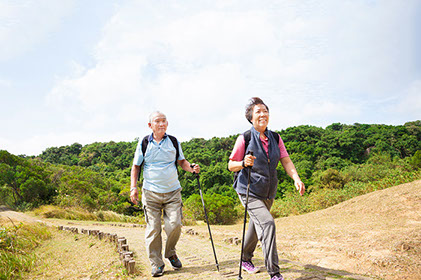
    Image of elderly man stretching.

    Men who are physically active are at lower risk of waking up at night to urinate (a condition called nocturia), according to a study led by a Loyola University Chicago Stritch School of Medicine researcher and published in Medicine & Science in Sports & Exercise.

    Nocturia is the most common and bothersome lower urinary tract symptom in men. It can be due to an enlarged prostate known as benign prostatic hyperplasia (BPH)-as the prostate enlarges, it can squeeze down on the urethra. Other causes include overproduction of urine, low bladder capacity, and sleep disturbances. Nocturia increases with age and is estimated to occur in more than 50% of men 45 and older.

    Among the thousands of men in the study group, those who were physically active one or more hours per week were 13% less likely to report nocturia and 34% less likely to report severe nocturia than men who reported no physical activity. (Nocturia was defined as waking 2 or more times during the night to urinate; severe nocturia was defined as waking 3 or more times to urinate.)

    Physical activity may help manage this symptom, researchers said, because exercise might reduce body size, improve sleep, decrease some nervous system activity, and lower levels of inflammation.

    However, if you are experiencing nocturia, it’s something to discuss with your doctor.

    © American Institute for Preventive Medicine

  • The Downside Of Skiing: Falls And Spills

    BE FIT

    Image of man on top of a skiing slope.

    If you find yourself heading downhill on skis, but you’re swooshing down on your backside because of a fall, you’ll be glad you prepared for the inevitable spills.

    According to the American College of Sports Medicine, falls account for up to 85% of skiing injuries. The majority of those injuries are sprains, broken bones, cuts, and dislocations-and now more knee injuries because mid-calf plastic ski boots are protecting ankles.

    Thirty to 40% of ski injuries affect the knee area, most likely the MCL (medial collateral ligament). This trauma often occurs with slow twisting falls or when beginners maintain a snowplow position for lengthy periods and stress the ligament. If skiers catch an edge (when the lower leg is suddenly twisted away from the upper leg) or skis separate, the foot is forced away from the body, which causes a distraction force on the inside of the knee.

    Another common knee injury is rupture of the anterior cruciate ligament (ACL), which can be caused by a backward fall as the lower leg moves forward. Catching an edge causes a sudden external rotation below the knee, which can cause the ACL to become sprained or snap (5 times more common in women skiers).

    Your pre-conditioning program should include 4 elements: endurance, strength training, flexibility, and balance. Aerobic fitness is the key to preventing the end-of-the-day injuries. Cross training, which includes multiple sports and activities, will help with cardiovascular endurance, while strength and flexibility focusing on the legs is vital for injury prevention, says Scott M. Levin, MD, a board-certified orthopaedic surgeon and sports medicine specialist.

    “Besides conditioning, skiers need to warm up and stretch before starting down the hill because cold muscles are more prone to injury,” notes Dr. Levin. Warm up with jumping jacks, running, or walking in place for a few minutes and then stretch your hamstrings, hip flexors, and quadriceps.

    © American Institute for Preventive Medicine

  • The Facts About Breast Cancer Screening

    MEDICAL NEWS

    Image of 4 women with arms around each other smiling and laughing.

    Breast cancer is the most common cancer in women after skin cancer. About 1 in 8 women in the U.S. will get breast cancer during her life. One of the best things you can do for yourself is learn when and how to get screened for breast cancer.

    A mammogram can help save lives.

    Mammograms do not prevent breast cancer. But, they are the best way to find breast cancer early, when it is easier to treat. Mammograms can detect breast cancer before you can see it or feel it. Finding breast cancer in its early stages may reduce a person’s risk of dying by  30 percent or more.

    Breast self exams alone aren’t enough.

    Experts say that breast self-exams (BSEs) cannot take the place of a mammogram. Although women should see their doctors if they notice any changes in their breasts, studies say that BSEs alone are not enough to catch breast cancer early.

    Each woman’s mammogram schedule may be different.

    Women who have a family history of breast cancer or other risk factors may need to start getting yearly mammograms at a younger age. Women who don’t have risk factors may begin getting mammograms in their 40s or later. It’s important to talk with your doctor to find out when you should start getting mammograms.

    If you’re not sure when you should get a mammogram, talk with your doctor. Together, you can create a breast cancer screening schedule that is right for you.

    © American Institute for Preventive Medicine