Author: AIPM

  • Understanding Your Gallbladder

    MEDICAL NEWS

    Image of man talking to his doctor.

    The hardest working digestive helper might well be your gallbladder, a pear-sized organ that sits just under the liver and next to the pancreas.

    The gallbladder stores bile, a thick liquid that’s produced by the liver to help digest fat. When you eat, the gallbladder’s thin, muscular lining squeezes bile into the small intestine through the main bile duct. The more fat you eat, the more bile the gallbladder injects into the digestive tract.

    Bile has a delicate chemical balance. It’s full of soluble cholesterol produced by the liver. This is a different type of cholesterol than the kind related to cardiovascular disease. If the chemical balance of bile gets slightly off, the cholesterol can crystalize and stick to the wall of the gallbladder. Over time, these crystals can combine and form gallstones.

    Gallstones can range from the size of a grain of sand to that of a golf ball. When the gallbladder injects bile into the small intestine, the main bile duct can become blocked by these stones. That may cause pressure, pain, and nausea, especially after eating meals.

    Gallstones can cause sudden pain in the upper-right abdomen, called a gallbladder attack. In most cases, though, people with gallstones don’t realize they have them.

    The causes of gallstones are unclear, but you’re more likely to have gallstone problems if you have too much body fat, especially around your waist, or if you’re losing weight very quickly.

    If left untreated, a blocked main bile duct and gallbladder can become infected and lead to a life-threatening situation. A surgeon can remove the gallbladder. You can live normally without it.

    Symptoms of a gallstone attack

    Talk with your doctor if you have:

    *  Severe pain in the upper-right side of the abdomen that starts suddenly and lasts from 30 minutes to many hours

    *  Pain under the right shoulder or in the right shoulder blade

    *  Indigestion after eating foods high in fat or protein, including desserts and fried foods

    Seek help right away if you have these signs of a serious attack:

    *  Abdominal pain that lasts more than 5 hours

    *  Nausea and vomiting

    *  Fever or chills

    *  Yellowish color of the skin or the whites of the eyes

    *  Dark urine or light-colored stools

    © American Institute for Preventive Medicine

  • Unexpected Ways To Be Happy (And Healthy)

    WELL-BEING

    Image of a couple jumping in a puddle while it's raining.

    *It’s easy being green.Make vegetables a central part of your diet. Dark green foods provide essential vitamins and nutrients to your body that protect you from many of life’s worst diseases. The FDA recommends 3 to 5 servings a day for pristine health. This is not as hard to accomplish as it sounds. Examples of one serving include 2 broccoli spears, 3 tablespoons of green beans, or 3 sticks of celery.

    *Brush your teeth.Brushing and flossing your teeth not only prevents tooth decay but gum disease, which has been linked to heart attacks and strokes. Healthy gums are one more way to keep that heart pumping strong.

    *Hear ye, hear ye!Pick up your local newspaper once in a while. There is more information out there than you can imagine. Sift through the bounty of news because when it comes to your health and health care, no one is more responsible than you are. Take time to understand what’s going on in the world.

    *Be a small fry.Order smaller portions. Even the small fries at fast food drive-throughs.

    *Give yourself a break.Not only are vacations an important part of maintaining your sanity, but there are many other positives about getting away. Studies  have shown that employees come back  to work post-vacation more creative and more productive.

    *Scrub a dub dub.The easiest way to avoid infectious diseases-a common cold, the flu-is by washing your hands often.

    *Then lend a hand.A study at Vanderbilt University found that volunteer work was good for both mental and physical health. People of all ages who volunteered were happier and had better physical health and less depression. Think about something you like to do in your spare time and find a match atwww.volunteermatch.org.

    © American Institute for Preventive Medicine

  • Use Antibiotics Wisely

    MEDICAL NEWS

    Image of mother with sick child in bed.

    Antibiotics do not fight infections caused by viruses such as colds, flu, most sore throats, bronchitis, and many sinus and ear infections. Instead, symptom relief might be the best treatment option for viral infections, advises the CDC.

    Get smart about when antibiotics are needed-to fight bacterial infections. When you use antibiotics appropriately, you do the best for your health, your family’s health, and the health of those around you.

    Know that antibiotics

    *  Will not cure a viral infection

    *  Will not keep other people from getting sick

    *  Will not help you or your child feel better

    *  May cause unnecessary and harmful side effects

    *  May contribute to antibiotic resistance, which is when bacteria are able to resist the effects of an antibiotic and continue to cause harm

    Rest, fluids, and over-the-counter products may be your or your child’s best treatment option against viral infections.

    © American Institute for Preventive Medicine

  • Using Decongestants Safely

    SELF-CARE CORNER

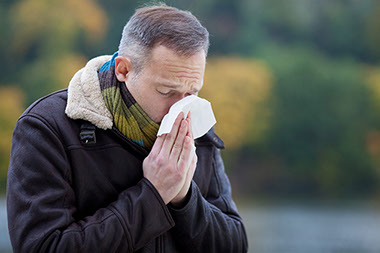
    Image of man sneezing into a tissue.

    As we approach the peak season for colds and flu, many people turn to over-the-counter medicines for relief. And if you have a stuffy nose (known as nasal congestion), you may be thinking about taking a decongestant.

    What are decongestants?

    Decongestants are medicines designed to relieve stuffiness and pressure in the nose and sinuses. The two over-the-counter decongestants available are phenylephrine (i.e., Sudafed PE) and pseudoephedrine. Pseudoephedrine are stocked behind a pharmacy counter, but you don’t need a prescription. Both medicines work by shrinking blood vessels in the nose, allowing air to pass through more easily.

    Are decongestants safe?

    Decongestants are safe when they are used properly. Here’s what to know before you take one:

    *  Read the label and be sure you understand how much you can take and how often to take it. If you’re not sure, ask your pharmacist or doctor.

    *  Know the active ingredients. Many cold and flu products contain several active ingredients. They are listed on the drug facts label at the top. Be sure you don’t accidentally take too much of one ingredient. For instance, many cold products contain acetaminophen, a pain reliever that can be toxic in high doses. If you’ve already taken a pain reliever with acetaminophen and you take the cold medicine too, you could take too much acetaminophen.

    *  Talk to your doctor before taking a decongestant if you have diabetes, heart conditions, high blood pressure, glaucoma, prostate problems or thyroid disease.

    *  If you take other over-the-counter or prescription medicines, ask your doctor if decongestants can be safely taken with your other medicines.

    *  Do not give decongestants or any cough or cold product to kids under 4 years of age. Ask your child’s pediatrician before giving them any medicines.

    *  Talk to your doctor if you need to take a decongestant for longer than a week.

    What about nasal sprays?

    Saline nasal sprays with no medicine in them are safe to use daily, as often as needed. These can help flush out allergens and mucus so you can breathe easier. Not sure if it’s just saline? Look at the drug facts label and be sure it contains only sodium chloride as the active ingredient.

    But, decongestant sprays that contain active ingredients are not safe to take for more than three days in a row. This is because your body can become dependent on them. When this happens, your nose may become even stuffier over time, and you’ll have to use more and more spray to get relief.

    Medicines can help you cope with bothersome cold and flu symptoms. But, be safe and savvy before you take them – and keep them in a locked cabinet out of children’s reach!

    Sources: American Academy of Family Physicians, Food and Drug Administration

    © American Institute for Preventive Medicine

  • Use Mindfulness At Work

    WORK LIFE

    Concept image of co-workers with graphics above them.

    With mindfulness-being focused and fully present in the here and now-you can replace multitasking habits with more directed practices to reduce stress and increase productivity,” said Dr. Romie Mushtaq, a neurologist with expertise in mind-body medicine. The result? You’ll be sharper, more efficient, and more creative.

    To clear away distractions and live in the moment, Dr. Mushtaq offers these tips for practicing mindfulness in a multitasking business:

    Focus on a single task for an allotted amount of time.

    You might say, “For 15 minutes, I’m going to read through my emails, and then for one hour, I’m going to make my phone calls.” If your job comes with constant interruptions that demand your attention, take several deep breaths and then prioritize them. Resist the urge to answer the phone every time it rings-unless it’s your boss. If someone asks you to drop what you’re doing to help with a problem, it’s okay to say, “I’ll be finished with what I’m doing in 10 minutes, then I’m all yours.”

    When you get “stuck” in a task, change your physical environment to stimulate your senses.

    Sometimes we bounce from one task to another because we just don’t have the words to begin writing that strategic plan, or we’re staring at a problem and have no ideas for solutions. That’s the time to get up, take a walk outside and look at the flowers and the birds or turn on relaxing music. Offering your senses pleasant and different stimulation rewires your brain for relaxation and reduces the effects of stress hormones, which helps to unfreeze your creativity center.

    Delegate!

    We often have little control over the external stresses in our life, particularly on the job. Have compassion for yourself, and reach out for help. If you can assign a task to somebody else who’s capable of handling it, do so. If you need to ask a colleague to help you out, ask.

    © American Institute for Preventive Medicine
  • Use “Planned-Overs” Creatively

    HEALTHY EATING

    Image of multi-generational family having dinner in the back yard.

    Making family-sized recipes can provide you with leftovers (or “planned-overs”) for future meals. Freeze the remaining food in meal-sized containers. Be sure to label the containers with the contents and date to avoid “surprise meals” later.

    Try using planned-overs in completely different recipes. For example, add leftover fruit to muffin, quick bread, or pancake batter. Freeze planned-over vegetables and use in stews, soups, and casseroles. Use extra bread to make French toast, bread pudding, or stuffing. Use planned-over meat in tacos, soup or stir-fry, or on salads.

    Suggestions from the University of Nebraska-Lincoln Extension Service.

    © American Institute for Preventive Medicine

  • Use Spirituality To Boost Wellness

    WELL-BEING

    Image of women sitting in open field reading a book.

    Good physical health involves eating right, exercise and getting enough sleep. But many medical experts believe good health goes beyond physical things. There is some evidence to suggest that healthy spirituality can be linked to overall well-being.

    First, think about what spirituality is to you. It is something that connects your mind and spirit to something bigger than yourself. It can be your religion, morals, or something you’re passionate about, such as music, art or nature. Spirituality differs for everyone.

    An important part of overall health

    The American Academy of Family Physicians says a person’s spirituality can play a role in how they feel physically. Things like positive thinking, religious beliefs, prayer, meditation and other mindful activities can help you feel better and even help prevent some health problems.

    Spirituality may also help you cope better with stressful events and illnesses. While spirituality alone cannot heal illnesses or injuries, it may help in supporting a person’s overall health.

    How to improve spiritual health

    Anyone can work to improve their spiritual health. Think about things in your life that help you feel peaceful, comforted, joyful or connected. Make time regularly to do the things that fulfill you spiritually:

    *  Go to a religious meeting or service

    *  Take a meditation or yoga class

    *  Play your favorite sport

    *  Read a book

    *  Take a walk in a peaceful place

    *  Listen to relaxing or inspiring music

    Good spiritual health can help you live a healthier life. When you have a healthy spirit, you may be able to deal with challenges, such as a chronic illness or stressful events. Though it can’t solve all of life’s problems, spiritual practices can help you feel better and manage some of life’s struggles.

    © American Institute for Preventive Medicine

  • Using This Credit Card May Be Bad For Your Health

    WELL-BEING

    Image of young women cutting up a credit card.

    High levels of credit card debt and the stress of having debt may be bad for your health, a study in Social Science & Medicine suggests. People who reported higher levels of stress about their debt showed higher levels of physical impairment and reported worse health than those with lower levels of debt.

    In the study, researchers asked people to rate their own health on a scale of very poor to very good. They rated how much they worried about their total debt. Researchers also asked how difficult it was for survey participants to do everyday activities such as climbing stairs and carrying groceries. Participants also reported how many credit cards they have and whether they carry a balance from month to month.

    But it didn’t matter how many credit cards a person had, the big stress factor related to health was the ratio of credit card debt to their total family income-in other words, how much you owe compared with what you earn.

    “The stress of owing money, and knowledge that we’re paying high interest rates, may lead to increased stress resulting in worsening health,” said the director of Ohio State’s Center for Survey Research. Credit counseling is one way to reverse debt-stress.

    © American Institute for Preventive Medicine

  • Vaccinations For Adults

    SELF-CARE CORNER

    Image of nurse giving a patient a shot.

    Do you think shots are only for kids? Actually, there are several important vaccines you need as an adult.

    Vaccinations protect yourself from disease, but also protect people around you. Young babies who aren’t yet vaccinated or people with weak immune systems can benefit from your vaccination. You will be less likely to spread an illness, such as whooping cough, to someone who is more likely to get sick.

    Don’t wait until it’s too late. Ask your doctor about which vaccines you may need at your next well visit.

    Adults may get shots for a variety of reasons:

    *  You need to be vaccinated for something that affects adults, such as the flu.

    *  You need boosters of vaccines you got as a child. This is because many vaccines start to lose their protection over time.

    *  You didn’t receive the complete set of vaccines in your youth and want to be protected now.

    The CDC says that all adults should get:

    *Influenza vaccine.This helps prevent influenza, or the flu. You get this every year.

    *Td vaccine.This protects you from tetanus and you should get one every 10 years.

    *Tdap vaccine instead of Td vaccine (one time only).This protects against tetanus and diphtheria plus whooping cough (pertussis). Pregnant women should get the Tdap vaccine during each pregnancy.

    *Pneumonia vaccine.This helps prevent certain bacteria that can cause pneumonia. Ask your doctor when you should get this vaccine.

    *Shingles vaccine.This can prevent shingles, a painful rash that can develop from a previous chickenpox infection.

    Other shots may also be recommended for you. Not every adult needs the same vaccines. Some will depend on your past vaccines, your age, lifestyle and health. Talk with your doctor about whether you need other shots.

    © American Institute for Preventive Medicine

  • Vegetarian Spaghetti Sauce

    HEALTHY EATING

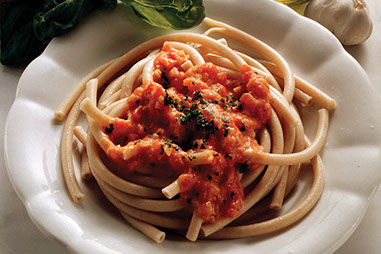
    Image of spaghetti with vegetarian sauce.

    Ingredients:

    2 Tbsp olive oil

    2 small onions, chopped

    3 cloves garlic, chopped

    1-1/4 cups zucchini, sliced

    1 Tbsp oregano, dried

    1 Tbsp basil, dried

    1 8 oz can tomato sauce

    1 6 oz can tomato paste*

    2 medium tomatoes, chopped

    1 cup water

    Directions

    1. In a medium skillet, heat oil. Sauté onions, garlic, and zucchini in oil for 5 minutes on medium heat.

    2. Add remaining ingredients and simmer covered for 45 minutes. Serve over spaghetti.

    Makes 6 servings; 3/4 cup each. Per Serving: 105 calories, 5 g fat, 0 mg cholesterol, 479 mg sodium*, 15 g carbohydrate, 4 g fiber, 3 g protein. *To reduce sodium, use a 6-oz can of low-sodium tomato paste. New sodium content for each serving is 253 mg.

    Source: National Heart, Lung, and Blood Institute, YOUR GUIDE TO Lowering Your Blood Pressure With DASH – Recipes for Heart Health

    © American Institute for Preventive Medicine