Author: AIPM

  • 6 Ways To Help New Parents

    FAMILY LIFE

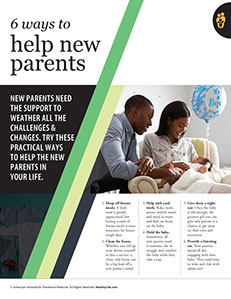
    Young couple holding newborn.

    New parents need the support to weather all the challenges & changes. Try these practical ways to help the new parents in your life.

    1.  Drop off freezer meals. A fresh meal is greatly appreciated, but having a stash of freezer meals is extra insurance for future tough days.

    2.  Clean the house. Whether you roll up your sleeves yourself or hire a service, a clean, tidy home can be a big load off a new parent’s mind.

    3.  Help with yard work. Rake, mow, prune, mulch, water, and weed so mom and dad can focus on the baby.

    4.  Hold the baby. Sometimes, all new parents need is someone else to snuggle and comfort the baby while they take a nap.

    5.  Give them a night out. Once the baby is old enough, the greatest gift you can give new parents is a chance to get away on their own and reconnect.

    6.  Provide a listening ear. New parents spend all day engaging with their baby. They need time to relax and chat with adults too!

    © American Institute for Preventive Medicine

  • A Heavy Load For Kids’ Backs

    FAMILY LIFE

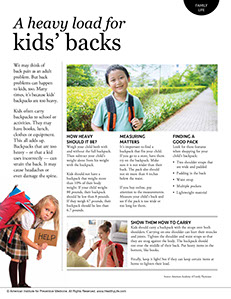
    Smiling boy wearing a backpack.

    We may think of back pain as an adult problem. But back problems can happen to kids, too. Many times, it’s because kids’ backpacks are too heavy.

    Kids often carry backpacks to school or activities. They may have books, lunch, clothes or equipment. This all adds up. Backpacks that are too heavy – or that a kid uses incorrectly – can strain the back. It may cause headaches or even damage the spine.

    How heavy should it be?

    Weigh your child both with and without the full backpack. Then subtract your child’s weight alone from his weight with the backpack.

    Kids should not have a backpack that weighs more than 10% of their body weight. If your child weighs 80 pounds, their backpack should be less than 8 pounds. If they weigh 67 pounds, their backpack should be less than 6.7 pounds.

    Measuring matters

    It’s important to find a backpack that fits your child. If you go to a store, have them try on the backpack. Make sure it is not wider than their back. The pack also should not sit more than 4 inches below the waist.

    If you buy online, pay attention to the measurements. Measure your child’s back and see if the pack is too wide or too long for them.

    Finding a good pack

    Look for these features when shopping for your child’s backpack:

    *  Two shoulder straps that are wide and padded

    *  Padding in the back

    *  Waist strap

    *  Multiple pockets

    *  Lightweight material

    Show them how to carry

    Kids should carry a backpack with the straps over both shoulders. Carrying on one shoulder can hurt their muscles and joints. Tighten the shoulder and waist straps so that they are snug against the body. The backpack should rest over the middle of their back. Put heavy items in the bottom, like books.

    Finally, keep it light! See if they can keep certain items at home to lighten their load.

    Source: American Academy of Family Physicians

    © American Institute for Preventive Medicine

  • Advocate Against Domestic Violence

    FAMILY LIFE

    Back of women, wind blowing her hair as she hugs herself.

    Domestic violence is a serious issue that requires immediate action. It occurs when an individual suffers abuse at the hands of a family member or partner.

    Abuse can come in many forms:

    *  Physical abuse

    *  Emotional abuse

    *  Economic abuse

    *  Sexual violence

    *  Stalking

    Whether the individual is a spouse, child, or older relative, everyone deserves a life free from violence and abuse.

    Recognizing the signs

    Domestic violence is a challenging topic to talk about and often involves feelings of shame and worthlessness. Keep an eye out for these signs of abuse:

    *  Unexplained cuts or bruises

    *  Avoidance of close relationships or family activities

    *  Discomfort or fear around a partner

    *  A partner or family member who is controlling and makes all the decisions

    *  A partner or family member who threatens to hurt themself if the partner wants to break up.

    Preventing violence & abuse

    Domestic violence relies on an environment of isolation and secrecy. People with high self-esteem and strong social support are less likely to become victims.

    To advocate against domestic violence, consider getting involved in programs that work to support strong communities. Many successful domestic violence prevention programs focus on:

    *  Investing in healthy relationships

    *  Advocating for accessible community resources

    *  Social programs aimed at reducing poverty

    *  Increased educational opportunities

    Confronting domestic violence

    If you or someone you know is a victim of domestic violence, seek help. Call 911 if you are in a dangerous situation, or reach out to the domestic violence hotline at 800-799-SAFE.

    © American Institute for Preventive Medicine

  • After You Quit Smoking

    WELL-BEING

    Hand refusing cigarettes.

    No matter what your age is, or how long you’ve smoked, you can reap benefits of quitting today!

    Here’s what happens in your body after you quit:

    *  12 hours later, carbon monoxide in your blood drops to normal levels.

    *  2 weeks to 3 months later, your circulation improves and your lungs work better.

    *  1 year later, your risk of developing heart disease is slashed in half.

    You’ll also lower your risk for lung cancer when you quit. And the health benefits continue the longer you stay smoke-free. Visitsmokefree.govto start your quit journey!

    © American Institute for Preventive Medicine

  • Aging In Place For Older Adults

    FAMILY LIFE

    Smiling, happy older couple.

    Many people have a loved one who is an older adult. Sometimes an older adult may wish to stay in their home as they get older. This is possible for many older adults with some support from family members or friends.

    Here are some ways to help an older loved one stay in their home:

    *Be sure they can get around.Some adults may need a walker or electric scooter. Sometimes Medicare will help cover the cost of these mobility aids.

    *Help them find things to do.It can be boring and lonely at home alone. Help them learn how to do video calls with family and friends. When it’s safe to do so, help them get involved at a local senior center.

    *Get them daytime help if needed.Some people may need help with personal care, such as washing their hair. If a family member can’t be there each day, consider hiring a trained aide that can help them with everyday needs.

    *Consider an emergency alert system.This can call for help if your loved one falls or gets hurt.

    *Keep nutrition in mind.Be sure your loved one can get healthy food from the grocery store. Consider meal delivery services in your area that may be free or low-cost.

    *Make sure they go to appointments.Regular checkups are important, especially if the person has any health conditions. Drive them to their appointments if needed.

    *Check up on bills.Make sure their bills for insurance, utilities and other needs are getting paid on time. Find out what bills they have and offer to help get them organized and paid. Talk to them about scams, too. Tell them not to give out their social security number or other information to anyone over the phone.

    *Get rid of fall hazards.Consider ramps instead of stairs at the front door. Put grab bars in showers and bathtubs. Put plenty of night lights around their house and remove loose rugs from the floor. Encourage them to wear supportive shoes or non-slip socks around the house.

    Source: National Institute on Aging

    © American Institute for Preventive Medicine

  • Alcohol And Meds Don’t Mix

    MEDICAL NEWS

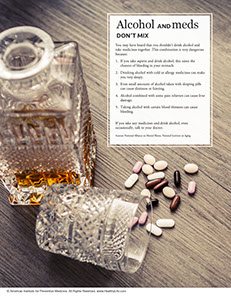
    Image of alcohol and pills.

    You may have heard that you shouldn’t drink alcohol and take medicines together. This combination is very dangerous because:

    1.  If you take aspirin and drink alcohol, this raises the chances of bleeding in your stomach.

    2.  Drinking alcohol with cold or allergy medicines can make you very sleepy.

    3.  Even small amounts of alcohol taken with sleeping pills can cause dizziness or fainting.

    4.  Alcohol combined with some pain relievers can cause liver damage.

    5.  Taking alcohol with certain blood thinners can cause bleeding.

    If you take any medicines and drink alcohol, even occasionally, talk to your doctor.

    Sources: National Alliance on Mental Illness, National Institute on Aging

    © American Institute for Preventive Medicine

  • All About Red Blood Cells

    MEDICAL NEWS

    Lab tube with blood.

    Blood nourishes every part of the body. Red blood cells are a major component of blood and a key player in how the body receives the oxygen it needs.

    What they do

    Red blood cells contain a special protein called hemoglobin that carries oxygen from the lungs and delivers it to the organs and tissues. Once a red blood cell drops off oxygen, it picks up carbon dioxide and returns it to the lungs to be exhaled when you breathe out.

    Every cell in the body relies on oxygen delivery from red blood cells. To keep a constant supply of healthy red blood cells, the bone marrow produces an impressive 2 million cells every second.

    Measuring red blood cells

    When you go to the doctor, they often order a complete blood count (CBC) to assess the health of your blood. Several of those values provide information about your red blood cells:

    *  Red blood cells (RBC) – the number of red blood cells in a specific volume of blood

    *  Hemoglobin – the amount of hemoglobin (by weight in grams) per the volume in blood (in deciliters)

    *  Hematocrit – how much of the blood is made up of red blood cells

    *  MCV – the average size of red blood cells

    *  MCH – the amount of hemoglobin in each red blood cell

    *  MCHC – the average amount of hemoglobin in a group of red blood cells

    When red blood cells are high

    Common causes include:

    *  Dehydration

    *  Kidney disease

    *  Heart disease

    *  Lung disease

    *  Smoking (causes scarring of lung tissue)

    *  Conditions of the bone marrow

    What to do:

    If your doctor finds your red blood cell values are higher than normal, they may do further testing to identify a cause. Staying well-hydrated keeps your blood cells healthy and in the right concentration.

    When red blood cells are low

    You may experience fatigue, weakness, shortness of breath, and irregular heart rates. Common causes include:

    *  Anemia

    *  Malnutrition

    *  Certain types of cancer

    *  Kidney disease

    *  Liver disease

    *  Certain medications

    What to do:

    A healthy diet high in iron and other vitamins and minerals is essential for red blood cells. Leafy greens, beans, nuts, seeds, fish, meat, and iron-fortified foods keep blood cells healthy. Your doctor may also recommend supplements or medications.

    © American Institute for Preventive Medicine

  • Allergies Annoying You?

    SELF-CARE CORNER

    Women outside blowing her nose.

    A runny nose, sneezing, itchy eyes… allergy symptoms can be miserable and common. More than 50 million Americans have allergies.

    People can get allergies at different times of the year. This is because different allergy triggers come and go as the seasons change:

    *  If you have allergies in the spring, you may be allergic to tree pollen.

    *  People who notice allergy symptoms in the summer are usually allergic to grass or weed pollen.

    *  Those who notice their allergies getting worse in late summer to fall are probably reacting to ragweed pollen.

    *  Allergy symptoms related to wet, rainy weather are often due to mold.

    *  If you have allergies year-round, you may be allergic to something indoors like dust mites or pet dander.

    What does allergy medicine do?

    There are many medicines available today that treat allergies. Each one works in a different way and can help people with different types of allergies. With the help of your doctor, you can find a solution that helps control your allergy symptoms. This can include:

    *  Antihistamines. They stop histamine, which is a chemical that the body releases when it is exposed to an allergen. These can help tackle all types of allergy symptoms, from runny nose to itching. Some antihistamines are pills, and others are nose sprays.

    *  Nasal (nose) sprays. Some allergy nose sprays contain an antihistamine ingredient. Others may contain a steroid to help stop swelling and inflammation, which causes a runny nose and sneezing. Nose sprays can help shut down the allergic reaction that starts in the nose.

    *  Eye drops. Eye drops for allergies are helpful for people who notice itchy or watery eyes. They don’t usually help with sneezing or other allergy symptoms.

    *  Immunotherapy. Includes allergy shots or small tablets placed under the tongue. These treatments expose the body to a small amount of the allergen over time. Your healthcare provider will have to give these to you.

    With all the treatments available today, you don’t have to live with miserable allergy symptoms. But talk with your healthcare provider before you try any new medicines.

    Sources: American Academy of Family Physicians, Asthma and Allergy Foundation of America

    © American Institute for Preventive Medicine