Author: AIPM

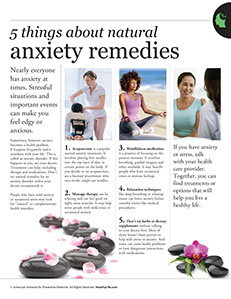
  • 5 Things About Natural Anxiety Remedies

    SELF-CARE CORNER

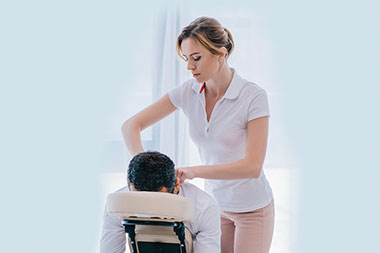
    Man getting a chair massage.

    Nearly everyone has anxiety at times. Stressful situations and important events can make you feel edgy or anxious.

    Sometimes, however, anxiety becomes a health problem. It happens frequently and it interferes with your life. This is called an anxiety disorder. If this happens to you, see your doctor. Treatments can help, including therapy and medications. Don’t try natural remedies for an anxiety disorder unless your doctor recommends it.

    People who have mild anxiety or occasional stress may look for “natural” or complementary health remedies.

    1.  Acupuncture is a popular natural anxiety treatment. It involves placing thin needles into the top layer of skin in certain points on the body. If you decide to try acupuncture, see a licensed practitioner who uses sterile, single-use needles.

    2.  Massage therapy can be relaxing and can feel good on tight, tense muscles. It may help some people with mild stress or occasional anxiety.

    3.  Mindfulness meditation is a practice of focusing on the present moment. It involves breathing, guided imagery and other methods. It may benefit people who have occasional stress or anxious feelings.

    4.  Relaxation techniques like deep breathing or relaxing music can lower anxiety before stressful events like medical procedures.

    5.  Don’t try herbs or dietary supplements without talking to your doctor first. Most of them haven’t been proven to help with stress or anxiety. And some can cause health problems or have dangerous interactions with medications.

    If you have anxiety or stress, talk with your health care provider. Together, you can find treatments or options that will help you live a healthy life.
    © American Institute for Preventive Medicine
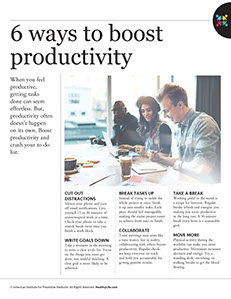
  • 6 Ways To Boost Productivity

    WORK LIFE

    Three co-workers sitting at table working.

    When you feel productive, getting tasks done can seem effortless. But, productivity often doesn’t happen on its own. Boost productivity and crush your to-do list.

    Cut out distractions

    Silence your phone and turn off email notifications. Give yourself 15 to 30 minutes of uninterrupted work at a time. Check your phone or take a stretch break every time you finish a work block.

    Write goals down

    Take a moment in the morning to write a clear to-do list. Focus on the things you must get done, not wishful thinking. A clear goal is more likely to be achieved.

    Break tasks up

    Instead of trying to tackle the whole project at once, break it up into smaller tasks. Each piece should feel manageable, making the entire project easier to achieve from start to finish.

    Collaborate

    Team meetings may seem like a time-waster, but in reality, collaborating with others boosts productivity. Regular check-ins keep everyone on track and hold you accountable for getting positive results.

    Take a break

    Working pedal to the metal is a recipe for burnout. Regular breaks refresh and energize you making you more productive in the long run. A 10-minute break every hour is a reasonable goal.

    Move more

    Physical activity during the workday can make you more productive. Movement increases alertness and energy. Try a standing desk, stretching, or walking breaks to get the blood flowing.

    © American Institute for Preventive Medicine
  • 6 Ways To Help New Parents

    FAMILY LIFE

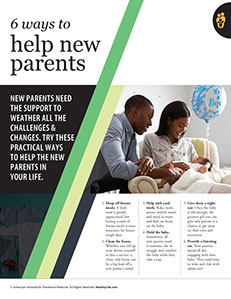
    Young couple holding newborn.

    New parents need the support to weather all the challenges & changes. Try these practical ways to help the new parents in your life.

    1.  Drop off freezer meals. A fresh meal is greatly appreciated, but having a stash of freezer meals is extra insurance for future tough days.

    2.  Clean the house. Whether you roll up your sleeves yourself or hire a service, a clean, tidy home can be a big load off a new parent’s mind.

    3.  Help with yard work. Rake, mow, prune, mulch, water, and weed so mom and dad can focus on the baby.

    4.  Hold the baby. Sometimes, all new parents need is someone else to snuggle and comfort the baby while they take a nap.

    5.  Give them a night out. Once the baby is old enough, the greatest gift you can give new parents is a chance to get away on their own and reconnect.

    6.  Provide a listening ear. New parents spend all day engaging with their baby. They need time to relax and chat with adults too!

    © American Institute for Preventive Medicine

  • A Heavy Load For Kids’ Backs

    FAMILY LIFE

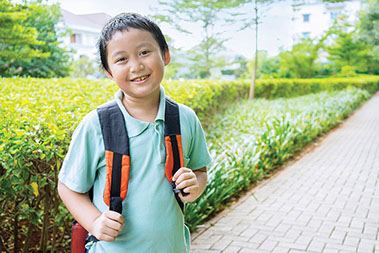
    Smiling boy wearing a backpack.

    We may think of back pain as an adult problem. But back problems can happen to kids, too. Many times, it’s because kids’ backpacks are too heavy.

    Kids often carry backpacks to school or activities. They may have books, lunch, clothes or equipment. This all adds up. Backpacks that are too heavy – or that a kid uses incorrectly – can strain the back. It may cause headaches or even damage the spine.

    How heavy should it be?

    Weigh your child both with and without the full backpack. Then subtract your child’s weight alone from his weight with the backpack.

    Kids should not have a backpack that weighs more than 10% of their body weight. If your child weighs 80 pounds, their backpack should be less than 8 pounds. If they weigh 67 pounds, their backpack should be less than 6.7 pounds.

    Measuring matters

    It’s important to find a backpack that fits your child. If you go to a store, have them try on the backpack. Make sure it is not wider than their back. The pack also should not sit more than 4 inches below the waist.

    If you buy online, pay attention to the measurements. Measure your child’s back and see if the pack is too wide or too long for them.

    Finding a good pack

    Look for these features when shopping for your child’s backpack:

    *  Two shoulder straps that are wide and padded

    *  Padding in the back

    *  Waist strap

    *  Multiple pockets

    *  Lightweight material

    Show them how to carry

    Kids should carry a backpack with the straps over both shoulders. Carrying on one shoulder can hurt their muscles and joints. Tighten the shoulder and waist straps so that they are snug against the body. The backpack should rest over the middle of their back. Put heavy items in the bottom, like books.

    Finally, keep it light! See if they can keep certain items at home to lighten their load.

    Source: American Academy of Family Physicians

    © American Institute for Preventive Medicine
  • Advocate Against Domestic Violence

    FAMILY LIFE

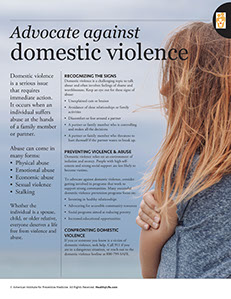
    Back of women, wind blowing her hair as she hugs herself.

    Domestic violence is a serious issue that requires immediate action. It occurs when an individual suffers abuse at the hands of a family member or partner.

    Abuse can come in many forms:

    *  Physical abuse

    *  Emotional abuse

    *  Economic abuse

    *  Sexual violence

    *  Stalking

    Whether the individual is a spouse, child, or older relative, everyone deserves a life free from violence and abuse.

    Recognizing the signs

    Domestic violence is a challenging topic to talk about and often involves feelings of shame and worthlessness. Keep an eye out for these signs of abuse:

    *  Unexplained cuts or bruises

    *  Avoidance of close relationships or family activities

    *  Discomfort or fear around a partner

    *  A partner or family member who is controlling and makes all the decisions

    *  A partner or family member who threatens to hurt themself if the partner wants to break up.

    Preventing violence & abuse

    Domestic violence relies on an environment of isolation and secrecy. People with high self-esteem and strong social support are less likely to become victims.

    To advocate against domestic violence, consider getting involved in programs that work to support strong communities. Many successful domestic violence prevention programs focus on:

    *  Investing in healthy relationships

    *  Advocating for accessible community resources

    *  Social programs aimed at reducing poverty

    *  Increased educational opportunities

    Confronting domestic violence

    If you or someone you know is a victim of domestic violence, seek help. Call 911 if you are in a dangerous situation, or reach out to the domestic violence hotline at 800-799-SAFE.

    © American Institute for Preventive Medicine

  • After You Quit Smoking

    WELL-BEING

    Hand refusing cigarettes.

    No matter what your age is, or how long you’ve smoked, you can reap benefits of quitting today!

    Here’s what happens in your body after you quit:

    *  12 hours later, carbon monoxide in your blood drops to normal levels.

    *  2 weeks to 3 months later, your circulation improves and your lungs work better.

    *  1 year later, your risk of developing heart disease is slashed in half.

    You’ll also lower your risk for lung cancer when you quit. And the health benefits continue the longer you stay smoke-free. Visitsmokefree.govto start your quit journey!

    © American Institute for Preventive Medicine
  • Aging In Place For Older Adults

    FAMILY LIFE

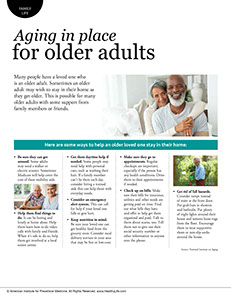
    Smiling, happy older couple.

    Many people have a loved one who is an older adult. Sometimes an older adult may wish to stay in their home as they get older. This is possible for many older adults with some support from family members or friends.

    Here are some ways to help an older loved one stay in their home:

    *Be sure they can get around.Some adults may need a walker or electric scooter. Sometimes Medicare will help cover the cost of these mobility aids.

    *Help them find things to do.It can be boring and lonely at home alone. Help them learn how to do video calls with family and friends. When it’s safe to do so, help them get involved at a local senior center.

    *Get them daytime help if needed.Some people may need help with personal care, such as washing their hair. If a family member can’t be there each day, consider hiring a trained aide that can help them with everyday needs.

    *Consider an emergency alert system.This can call for help if your loved one falls or gets hurt.

    *Keep nutrition in mind.Be sure your loved one can get healthy food from the grocery store. Consider meal delivery services in your area that may be free or low-cost.

    *Make sure they go to appointments.Regular checkups are important, especially if the person has any health conditions. Drive them to their appointments if needed.

    *Check up on bills.Make sure their bills for insurance, utilities and other needs are getting paid on time. Find out what bills they have and offer to help get them organized and paid. Talk to them about scams, too. Tell them not to give out their social security number or other information to anyone over the phone.

    *Get rid of fall hazards.Consider ramps instead of stairs at the front door. Put grab bars in showers and bathtubs. Put plenty of night lights around their house and remove loose rugs from the floor. Encourage them to wear supportive shoes or non-slip socks around the house.

    Source: National Institute on Aging

    © American Institute for Preventive Medicine