Author: AIPM

  • Alcohol And Meds Don’T Mix

    MEDICAL NEWS

    Image of alcohol and pills.

    You may have heard that you shouldn’t drink alcohol and take medicines together. This combination is very dangerous because:

    1.  If you take aspirin and drink alcohol, this raises the chances of bleeding in your stomach.

    2.  Drinking alcohol with cold or allergy medicines can make you very sleepy.

    3.  Even small amounts of alcohol taken with sleeping pills can cause dizziness or fainting.

    4.  Alcohol combined with some pain relievers can cause liver damage.

    5.  Taking alcohol with certain blood thinners can cause bleeding.

    If you take any medicines and drink alcohol, even occasionally, talk to your doctor.

    Sources: National Alliance on Mental Illness, National Institute on Aging

    © American Institute for Preventive Medicine

  • All About Red Blood Cells

    MEDICAL NEWS

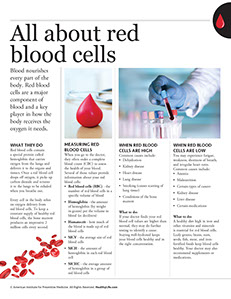
    Lab tube with blood.

    Blood nourishes every part of the body. Red blood cells are a major component of blood and a key player in how the body receives the oxygen it needs.

    What they do

    Red blood cells contain a special protein called hemoglobin that carries oxygen from the lungs and delivers it to the organs and tissues. Once a red blood cell drops off oxygen, it picks up carbon dioxide and returns it to the lungs to be exhaled when you breathe out.

    Every cell in the body relies on oxygen delivery from red blood cells. To keep a constant supply of healthy red blood cells, the bone marrow produces an impressive 2 million cells every second.

    Measuring red blood cells

    When you go to the doctor, they often order a complete blood count (CBC) to assess the health of your blood. Several of those values provide information about your red blood cells:

    *  Red blood cells (RBC) – the number of red blood cells in a specific volume of blood

    *  Hemoglobin – the amount of hemoglobin (by weight in grams) per the volume in blood (in deciliters)

    *  Hematocrit – how much of the blood is made up of red blood cells

    *  MCV – the average size of red blood cells

    *  MCH – the amount of hemoglobin in each red blood cell

    *  MCHC – the average amount of hemoglobin in a group of red blood cells

    When red blood cells are high

    Common causes include:

    *  Dehydration

    *  Kidney disease

    *  Heart disease

    *  Lung disease

    *  Smoking (causes scarring of lung tissue)

    *  Conditions of the bone marrow

    What to do:

    If your doctor finds your red blood cell values are higher than normal, they may do further testing to identify a cause. Staying well-hydrated keeps your blood cells healthy and in the right concentration.

    When red blood cells are low

    You may experience fatigue, weakness, shortness of breath, and irregular heart rates. Common causes include:

    *  Anemia

    *  Malnutrition

    *  Certain types of cancer

    *  Kidney disease

    *  Liver disease

    *  Certain medications

    What to do:

    A healthy diet high in iron and other vitamins and minerals is essential for red blood cells. Leafy greens, beans, nuts, seeds, fish, meat, and iron-fortified foods keep blood cells healthy. Your doctor may also recommend supplements or medications.

    © American Institute for Preventive Medicine

  • Allergies Annoying You?

    SELF-CARE CORNER

    Women outside blowing her nose.

    A runny nose, sneezing, itchy eyes… allergy symptoms can be miserable and common. More than 50 million Americans have allergies.

    People can get allergies at different times of the year. This is because different allergy triggers come and go as the seasons change:

    *  If you have allergies in the spring, you may be allergic to tree pollen.

    *  People who notice allergy symptoms in the summer are usually allergic to grass or weed pollen.

    *  Those who notice their allergies getting worse in late summer to fall are probably reacting to ragweed pollen.

    *  Allergy symptoms related to wet, rainy weather are often due to mold.

    *  If you have allergies year-round, you may be allergic to something indoors like dust mites or pet dander.

    What does allergy medicine do?

    There are many medicines available today that treat allergies. Each one works in a different way and can help people with different types of allergies. With the help of your doctor, you can find a solution that helps control your allergy symptoms. This can include:

    *  Antihistamines. They stop histamine, which is a chemical that the body releases when it is exposed to an allergen. These can help tackle all types of allergy symptoms, from runny nose to itching. Some antihistamines are pills, and others are nose sprays.

    *  Nasal (nose) sprays. Some allergy nose sprays contain an antihistamine ingredient. Others may contain a steroid to help stop swelling and inflammation, which causes a runny nose and sneezing. Nose sprays can help shut down the allergic reaction that starts in the nose.

    *  Eye drops. Eye drops for allergies are helpful for people who notice itchy or watery eyes. They don’t usually help with sneezing or other allergy symptoms.

    *  Immunotherapy. Includes allergy shots or small tablets placed under the tongue. These treatments expose the body to a small amount of the allergen over time. Your healthcare provider will have to give these to you.

    With all the treatments available today, you don’t have to live with miserable allergy symptoms. But talk with your healthcare provider before you try any new medicines.

    Sources: American Academy of Family Physicians, Asthma and Allergy Foundation of America

    © American Institute for Preventive Medicine

  • An Annual Financial Review

    FINANCIAL HEALTH

    Women writing on paper with laptop next to her.

    Managing your finances is a long-term investment. Following a budget is the blueprint for financial health. But, how do you know if it’s working?

    A yearly financial review provides a snapshot of how well your financial management achieves your financial goals. And it allows you to identify and adapt to changes in your financial health.

    Step 1: Review your debts

    Begin by making a list of all your debts and their interest rates. Evaluate your progress in reducing your debt burden in the past year. Determine if your current payoff plan is working or if you need to allocate more resources to reduce debt.

    Step 2: Reevaluate your budget

    Compare your budget to your actual monthly expenses. Make adjustments so it accurately reflects your current bills and income. It’s normal for things to change over the course of a year. Identify areas where you are overspending and need to adjust either your budget or your spending habits.

    Step 3: Assess your savings

    It’s wise to have a rainy-day fund set aside in a separate savings account. That account should be paid into each month to provide a safety net in case of unexpected expenses. Check to see how well you did contributing each month.

    Step 4: Review retirement accounts

    Check in with any retirement or investment accounts and consider whether they are growing at a comfortable pace. Make sure you are taking full advantage of any matching retirement funds from your employer. Double-check how the maximum IRA contribution may affect you in the coming year.

    Step 5: Update your financial goals

    Using all the information you have gathered, set both short and long-term financial goals. Paying off debts, reducing expenses, increasing savings or retirement, or planning for a large purchase can all be part of your updated goals. Keep the goals specific and measurable.

    © American Institute for Preventive Medicine

  • Are Payday Loans Worth It?

    FINANCIAL HEALTH

    Person holding open empty wallet.

    When you need money, payday loans may seem like a quick, easy option. But these loans may not be worth the money they cost you.

    Payday loans are also called cash advance loans. They’re a short-term loan. You pay a fee – often a big one – to borrow money for a short amount of time.

    How does a payday loan work?

    *  You give the lender a check for the amount of money you want to borrow plus the fee to borrow it. For instance, if you borrow $500 and their fee is $75, you give the lender a check for $575.

    *  The lender keeps your check and gives you $500 cash.

    *  On your next payday, you pay the lender $575. You can have the lender cash your original check or you can pay in cash.

    If you can’t pay back the $575 on your next payday, you may have to roll over the loan. This means you may pay another fee. The high fees for these loans add up quickly. It can get so expensive that you end up paying back an amount much higher than what you borrowed.

    Other loan options

    Payday loans are often not worth the cost. Consider borrowing money from your bank or credit union or use your credit card instead. Even if your credit card interest rate is 20%, this may still be lower than a payday loan.

    Sometimes you can ask for more time to pay your bills. A credit counselor may be able to help with this.

    Compare loan costs

    If you need a loan, ask about these things before you sign and agree:

    *  What is the annual percentage rate (APR)?

    *  What are the fees?

    *  When do I pay it back?

    *  What happens if I can’t pay it back on time?

    Sometimes things happen and you need some money quickly. If you’re in this situation, try to find a loan with low fees. Think about the amount you need. Only borrow what you know you can pay back with your next paycheck.

    Source: Federal Trade Commission

    © American Institute for Preventive Medicine

  • Are You Getting Enough Vitamin D?

    SELF-CARE CORNER

    Women holding a glass of water and a vitamin D pill.

    Everyone needs vitamin D for good health. Vitamin D is important because:

    *  It helps keep your bones strong.

    *  Muscles need it for strength and movement.

    *  Nerves use it when they send messages throughout the body.

    *  The immune system needs it to fight off illnesses.

    Which foods have vitamin D?

    Vitamin D is found in only a few foods, including:

    *  Fortified milk or milk alternatives like soy or almond milk

    *  Fortified cereals or juices

    *  Fatty fish such as salmon, tuna and mackerel

    *  Beef liver, cheese, egg yolks

    *  Mushrooms

    Sun exposure

    The body can make vitamin D when your skin is exposed to the sun. But being out in the sun can raise your risk of getting skin cancer.

    Because of the cancer risk, most experts don’t recommend that you spend a lot of time in the sun without sunscreen. Instead, you should make sure you get enough vitamin D through diet or supplements.

    Taking vitamin D supplements

    Some people may need to take vitamin D, but others don’t. It depends on your health and how much you get from your diet or the sun.

    If you are in one of these groups, you may have lower levels of vitamin D:

    *  People who have darker skin

    *  Older adults

    *  People who have Crohn’s disease or celiac disease

    *  People who are obese

    Recommended Daily- Amounts of Vitamin D

    Birth to 12 months: 400 IU

    Children 1-13 years: 600 IU

    Teens 14-18 years: 600 IU

    Adults 19-70 years: 600 IU

    Adults 71 years+: 800 IU

    Pregnant and breastfeeding women: 600 IU

    With vitamin D, more is not always better. Vitamin D can be toxic at high levels. Don’t take more than these amounts in supplements unless your doctor tells you to.

    Be careful with supplements

    Before taking vitamin D or any supplement, ask your doctor about it. Some supplements can interfere with medications or cause side effects.

    Whenever you can, get your vitamin D and other nutrients from healthy foods. Don’t use supplements to replace a healthy diet.

    Sources: Dietary Guidelines for Americans, National Institute on Aging, National Institutes of Health Office of Dietary Supplements


    © American Institute for Preventive Medicine

  • Are Your Ears Ringing?

    WELL-BEING

    Women covering her ears with her fingers.

    Ringing in the ears, known as tinnitus, is not a disease. It’s a symptom of something wrong with your body’s hearing system. And, it may not be “ringing” at all. Some people hear sounds like roaring, hissing, clicking or buzzing.

    Experts think that tinnitus happens when certain nerve cells are out of balance. This makes a person hear a sound that isn’t really there.

    Why does it happen?

    Tinnitus can be caused by many different things. Some possible causes include:

    *  Certain medicines – see a doctor right away if this happens. Tinnitus can be a serious side effect.

    *  High blood pressure

    *  Being around loud noises

    *  Sinus infections

    *  Brain injuries

    *  Injuries to the neck or head

    * .  Anemia

    *  Thyroid problems

    *  Autoimmune diseases

    *  Temporomandibular joint (TMJ) disorders

    Sometimes a person has tinnitus without being able to identify an obvious cause.

    Can I make it stop?

    There is no cure for all types of tinnitus. But, if your doctor can find out what’s causing it, there may be a treatment to resolve the issue. For instance, you might need treatment for high blood pressure or a sinus or ear infection.

    Some people have tinnitus because they also have some hearing loss. That’s why using a hearing aid may be helpful in these cases.

    If there’s no obvious cause, other things may help. They include:

    *  Wearable sound generators. These small devices fit inside the ear. They create a soft, pleasant noise that helps you ignore the sound of tinnitus.

    *  White noise machines or sound machines. Some people notice tinnitus more at night. This is probably because when you’re lying down in a quiet room, the tinnitus is easier to hear. For these times, you may benefit from a machine that plays noise while you sleep to override the tinnitus sound.

    *  Antidepressants or anti-anxiety medicines. Some people have severe tinnitus that interferes with their life. Tinnitus can cause anxiety or depression. In these cases, medicine to treat these health conditions can help.

    If you notice sounds or ringing in your ears, see your doctor. They may be able to help you find a solution that improves your quality of life.

    Sources: American Tinnitus Association, National Institutes of Health

    © American Institute for Preventive Medicine

  • Asian-Style Steamed Salmon

    HEALTHY EATING

    Concept image of plate with "DO NOT" sign and clock hands.

    This is a fast and easy way to make heart-healthy salmon for a weeknight dinner.

    Ingredients

    1 cup low-sodium chicken broth

    ½ cup shiitake mushroom caps, rinsed and sliced (or substitute dried shiitake mushrooms)

    2 tablespoons fresh ginger, minced (or 2 teaspoons ground)

    ¼ cup scallions (green onions), rinsed and chopped

    1 tablespoon less sodium soy sauce

    1 tablespoon sesame oil (optional)

    12 ounces salmon fillet, cut into 4 portions (3 ounces each)

    Directions

    1.  Combine chicken broth, mushroom caps, ginger, scallions, soy sauce and sesame oil (optional) in a large, shallow sauté pan. Bring to a boil over high heat, then lower heat and simmer for 2-3 minutes.

    2.  Add salmon fillets, and cover with a tight-fitting lid. Cook gently over low heat for 4-5 minutes or until the salmon flakes easily with a fork in the thickest part (to a minimum internal temperature of 145 °F).

    3.  Serve one piece of salmon with ¼ cup of broth.

    Nutrition per serving: Servings 4. Calories 175; Total fat 9 g; Saturated fat 2 g; Sodium 208 mg; Total fiber 1 g; Protein 19 g; Carbohydrates 4 g

    Source: National Institutes of Health Keep the Beat Recipes

    © American Institute for Preventive Medicine

  • Avalanche Your Debt

    FINANCIAL HEALTH

    Four credit cards layed on top of eachother.

    If you carry multiple credit card balances, reducing your debt can feel overwhelming. But there are many techniques to help you tackle your debt. One strategy is to create a debt avalanche.

    Here’s how it works:

    *  Make a list of your credit cards, their balances, interest rates, and minimum payments.

    *  Evaluate your budget to determine how much money you have available to pay toward your debts.

    *  If you don’t have much extra beyond your minimum debt payments, consider ways to bring in extra money to get your avalanche started.

    *  Identify the credit card with the highest interest rate. This is the one to pay off first.

    *  Each month pay the minimum balance on ALL your cards.

    *  Use any extra from your budget to pay more on your highest interest rate card.

    *  Once that card is paid off, move on to the card with the next highest interest rate while continuing to make minimum payments on all other cards.

    *  Each time you pay off a card, the amount of extra you can put towards your highest interest rate card goes up, creating a debt-paying avalanche.

    *  Your avalanche will pick up speed over time until you are credit card debt-free.

    *  Put away your cards, and don’t use credit unless you know you have the money to pay the bill in full.

    © American Institute for Preventive Medicine