Author: AIPM

  • Avocado And Corn Salsa

    HEALTHY EATING

    A bowl of avocado and corn salsa.

    Salsa isn’t just for chips! Use it to flavor chicken, eggs, fish or a black bean burger. This recipe adds fresh flavor with corn and avocado. And it’s perfect for summer – no hot stove required.

    Ingredients

    1 avocado (diced)

    3/4 cup frozen corn kernels, thawed

    1/2 cup grape tomatoes, quartered

    1 tablespoon fresh cilantro, chopped

    2 teaspoon lime juice

    1/4 teaspoon salt

    Directions

    1.  Toss avocado, corn, tomatoes, cilantro, lime juice and salt in a medium bowl.

    2.  Chill one hour and then serve.

    Nutrition Facts: Serving size: ½ cup, recipe makes 5 servings. Calories 67; Total Fat 4 g; Saturated Fat 1 g; Cholesterol 0 mg; Sodium 119 mg; Total Carbohydrate 8 g; Dietary Fiber 3 g; Protein 1 g

    Source: USDA ChooseMyPlate

    © American Institute for Preventive Medicine

  • Avocado-Green Tea Popsicle

    HEALTHY EATING

    Avocado green tea popsicles.

    Ingredients

    1 avocado (halved, pitted)

    1 banana (peeled, roughly chopped)

    1 cup fat-free milk

    1/2 cup fat-free, plain Greek yogurt

    1 tablespoon green tea matcha powder

    1 tablespoon honey

    Directions

    1.  Halve the avocado and remove the pit. Spoon the avocado’s flesh into a food processor or blender. Add the chopped banana, milk, yogurt, matcha powder, and honey.

    2.  Purée until mixture is smooth.

    3.  Carefully pour mixture into 6 (4-ounce) popsicle molds. Insert popsicle sticks and freeze until firm, at least 8 hours.

    4.  Place the outside of the popsicle mold under warm running water to easily remove popsicle from the mold.

    Nutrition per serving: Servings 6. Calories 106; Total Fat 5 g; Saturated Fat 1 g; Sodium 27 mg; Total Carbohydrate 13 g; Dietary Fiber 3 g; Protein 4 g.

    © American Institute for Preventive Medicine

  • Avoid A Walking Injury

    BE FIT

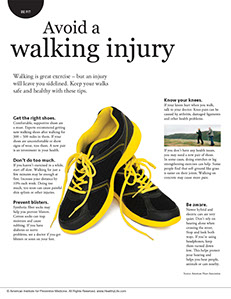
    Older couple hiking using walking sticks.

    Walking is great exercise – but an injury will leave you sidelined. Keep your walks safe and healthy with these tips.

    Get the right shoes.

    Comfortable, supportive shoes are a must. Experts recommend getting new walking shoes after walking for 300 – 500 miles in them. If your shoes are uncomfortable or show signs of wear, toss them. A new pair is an investment in your health.

    Don’t do too much.

    If you haven’t exercised in a while, start off slow. Walking for just a few minutes may be enough at first. Increase your distance by  10% each week. Doing too much, too soon can cause painful shin splints or other injuries.

    Prevent blisters.

    Synthetic fiber socks may help you prevent blisters. Cotton socks can trap moisture and cause rubbing. If you have diabetes or nerve problems, see a doctor if you get blisters or sores on your feet.

    Know your knees.

    If your knees hurt when you walk, talk to your doctor. Knee pain can be caused by arthritis, damaged ligaments and other health problems.

    If you don’t have any health issues, you may need a new pair of shoes. In some cases, doing stretches or leg strengthening exercises can help. Some people find that soft ground like grass is easier on their joints. Walking on concrete may cause more pain.

    Be aware.

    Newer hybrid and electric cars are very quiet. Don’t rely on hearing alone when crossing the street. Stop and look both ways. If you’re using headphones, keep them turned down low. This helps protect your hearing and helps you hear people, animals or cars nearby.

    Source: American Heart Association

    © American Institute for Preventive Medicine

  • Avoid Dubious Debt Collectors

    FINANCIAL HEALTH

    Wife on phone while husband sits besides her.

    Have you ever received a call from a debt collector that did not seem quite right? Perhaps it was for a debt you already paid or for one you did not recognize. Either way, the call may have given you a moment’s hesitation, wondering if they had the right person or if the call was legitimate. Scams like this are on the rise across the nation, and it is important for you to protect yourself from any debt collection scam.

    Ask who is calling

    Ask for the collector’s name, the company’s name, its address and phone number. If they cannot answer any of that information, hang up.

    Keep personal information to yourself

    If the collector asks for you to confirm personal information, do not correct them if they give out wrong information. Do not volunteer any additional personal information.

    Demand a validation notice

    Collectors must provide a validation notice and tell them you will not discuss the debt until you have received it. This notice will tell you how much money you owe, the name of the creditor and what to do if you don’t think you owe the money. The debt should also appear on a free, annual credit report.

    Do not respond to threats

    If the collector threatens to have you arrested or take away your driver’s license, hang up and report the collector to the FTC atftc.gov/complaint.

    Do detective work

    Contact the original creditor yourself to get to the bottom of it. They should be able to confirm whether the debt is legitimate.

    Dispute the debt

    If you do not think you should owe anything, even if you got validation information, dispute it with the collector by mail or online.

    Source: Federal Trade Commission

    © American Institute for Preventive Medicine

  • Babies, Pacifiers & Thumb Sucking

    FAMILY LIFE

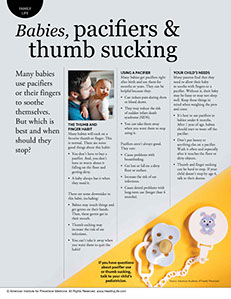
    Baby sucking his thumb as father holds him.

    Many babies use pacifiers or their fingers to soothe themselves. But which is best and when should they stop?

    The thumb and finger habit

    Many babies will suck on a favorite thumb or finger. This is normal. There are some good things about this habit:

    *  You don’t have to buy a pacifier. And, you don’t have to worry about it falling on the floor and getting dirty.

    *  A baby always has it when they need it.

    There are some downsides to this habit, including:

    *  Babies may touch things and get germs on their hands. Then, these germs get in their mouth.

    *  Thumb sucking may increase the risk of ear infections.

    *  You can’t take it away when you want them to quit the habit!

    Using a pacifier

    Many babies get pacifiers right after birth and use them for months or years. They can be helpful because they:

    *  Can reduce pain during shots or blood draws.

    *  They may reduce the risk of sudden infant death syndrome (SIDS).

    *  You can take them away when you want them to stop using it.

    Pacifiers aren’t always good. They can:

    *  Cause problems with breastfeeding.

    *  Get lost or fall on a dirty floor or surface.

    *  Increase the risk of ear infections.

    *  Cause dental problems with long-term use (longer than 6 months).

    Your child’s needs

    Many parents find that they need to allow their baby to soothe with fingers or a pacifier. Without it, their baby may be fussy or may not sleep well. Keep these things in mind when weighing the pros and cons:

    *  It’s best to use pacifiers in babies under 6 months. After 1 year of age, babies should start to wean off the pacifier.

    *  Don’t put honey or anything else on a pacifier. Wash it often and especially after it touches the floor or dirty objects.

    *  Thumb and finger sucking can be hard to stop. If your child doesn’t stop by age 4, talk to their doctor.

    If you have questions about pacifier use or thumb sucking, talk to your child’s pediatrician.

    Source: American Academy of Family Physicians

    © American Institute for Preventive Medicine

  • Back-To-School Stress Busters

    FAMILY LIFE

    Smiling child with backpack on.

    Going back to school is a big transition for kids. Providing extra support and understanding can ensure a smooth start to the school year and a positive school experience.

    Ease into a daily routine

    A week or two before school starts, gradually establish an appropriate sleep and meal schedule. A tired or hungry child will struggle to manage their feelings. Set them up for success.

    Plan a daily chat time

    It doesn’t have to be long, but set aside ten or fifteen minutes to check in with your child. Ask questions and let them share their thoughts and feelings about their day.

    Make time for play

    Play is how kids relax and make sense of the world around them. Unstructured play should be a non-negotiable part of your child’s day.

    If your child is struggling, it helps to talk to your pediatrician. Your healthcare provider can recommend stress management techniques or address any other needs your child may have.

    © American Institute for Preventive Medicine

  • Balancing Work & Caregiving

    WORK LIFE

    Women pushing man in wheelchair through the lawn.

    Many people have to care for a loved one and work outside the home. Doing both of these things can be challenging. If you’re having trouble with your dual role, you’re not alone. There are some things you can do to help make things easier.

    First, try to take care of yourself. Find time for exercise, relaxation or getting out. Self-care is important for caregivers!

    Be open with your supervisor

    Having a talk with your supervisor may help relieve stress. You can get your challenges out in the open.

    Find out if they have suggestions that could help you. Maybe you have some ideas of how you can get your job done while still meeting your caregiving responsibilities. If so, share them!

    Check into policies and programs

    Your workplace may have some policies or programs that can help you. Some examples include:

    *Employee assistance programs.Many employers have resources to help their employees deal with challenges. They may have counseling services or can help you find services in your community.

    *Flexibility with hours.Depending on your job, you may be able to work different hours. Talk with your supervisor or human resources department if this would work for you.

    *Family and Medical Leave Act (FMLA).Under FMLA, some employees are able to take up to 12 weeks of unpaid leave to care for a loved one. You have to meet certain qualifications for this, so ask your human resources department about the details.

    Consider other options

    Caregiving can be difficult. Some people find that they need to use some caregiving services. These services can be life-changing if you work and need some extra help. You may want to check out:

    *Local Area Agency on Aging.This organization can help you locate programs and services that can help you. Go towww.acl.govto learn about U.S. programs for aging people.

    *Adult day care.These centers can provide social interaction for your loved one while you work. Some of them may also provide meals, personal care and medical care.

    *Help from others.Some people ask for caregiving help from a neighbor, family member or friend. You may also hire a nurse or home care aide to come in and help when needed.

    Source: American Academy of Family Physicians

    © American Institute for Preventive Medicine

  • Be A Safe Swimmer

    BE FIT

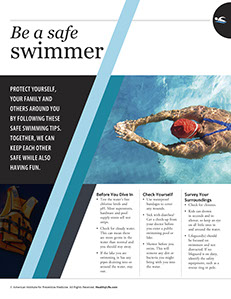
    Bird eye view of female swimming.

    Protect yourself, your family and others around you by following these safe swimming tips. Together, we can keep each other safe while also having fun.

    Before You Dive In

    *  Test the water’s free chlorine levels and pH. Most superstores, hardware and pool supply stores sell test strips.

    *  Check for cloudy water. This can mean there are more germs in the water than normal and you should stay away.

    *  If the lake you are swimming in has any pipes draining into or around the water, stay out.

    Check Yourself

    *  Use waterproof bandages to cover any wounds.

    *  Sick with diarrhea? Get a check-up from your doctor before you enter a public swimming pool or lake.

    *  Shower before you swim. This will remove any dirt or bacteria you might bring with you into the water.

    Survey Your Surroundings

    *  Check for closures.

    *  Kids can drown in seconds and in silence, so keep an eye on all little ones in and around the water.

    *  Lifeguard(s) should be focused on swimmers and not distracted. If no lifeguard is on duty, identify the safety equipment, such as a rescue ring or pole.

    © American Institute for Preventive Medicine