Author: AIPM

  • Make Your Summer Workout Easier

    BE FIT

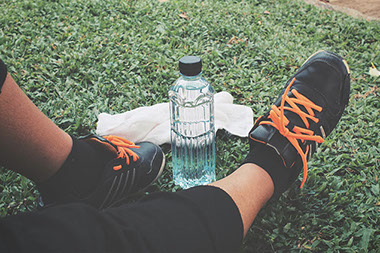
    Feet wearing tennis shoes and a bottle of water on grass.

    You can still enjoy a productive workout during the warmer months. Try these tips:

    1.Start early with water.Don’t wait to start drinking water right before you exercise. Drink water throughout the day to keep your body hydrated. Then, drink additional water during and after your workout.

    2.Go indoors when heat and humidity are too high.Don’t try to brave extreme weather with an outdoors workout. Heat exhaustion and heat stroke are dangerous and can happen to anyone. On heat advisory days, take your workout indoors.

    3.Wear the right clothes.Choose light-colored clothing that is made for sweating and workouts. Many new, lighter fabrics will keep sweat and moisture away, which makes you feel cooler. Cotton clothing is best suited for low-humidity weather conditions.

    4.Shun the midday sun.In the summer, limit or avoid heavy workouts from 10 a.m. to 4 p.m. The sun and temperatures will be hottest during these times. Instead, go out early in the morning or in the evening.

    Source: Academy of Nutrition and Dietetics

    © American Institute for Preventive Medicine

  • Make A Healthy, Filling Snack With Hummus

    HEALTHY EATING

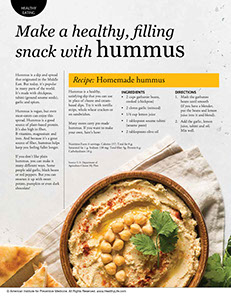
    A bowl of hummus.

    Hummus is a dip and spread that originated in the Middle East. But today, it’s popular in many parts of the world. It’s made with chickpeas, tahini (ground sesame seeds), garlic and spices.

    Hummus is vegan, but even meat-eaters can enjoy this spread. Hummus is a good source of plant-based protein. It’s also high in fiber,  B vitamins, magnesium and iron. And because it’s a great source of fiber, hummus helps keep you feeling fuller longer.

    If you don’t like plain hummus, you can make it many different ways. Some people add garlic, black beans or red peppers. But you can sweeten it up with sweet potato, pumpkin or even dark chocolate!

    Hummus is a healthy, satisfying dip that you can use in place of cheese and cream-based dips. Try it with tortilla strips, whole wheat crackers or on sandwiches.

    Many stores carry pre-made hummus. If you want to make your own, here’s how:

    Ingredients

    *  2 cups garbanzo beans, cooked (chickpeas)

    *  2 cloves garlic (minced)

    *  1/4 cup lemon juice

    *  1 tablespoon sesame tahini (sesame paste)

    *  2 tablespoons olive oil

    Directions

    1. Mash the garbanzo beans until smooth (if you have a blender, put the beans and lemon juice into it and blend).

    2. Add the garlic, lemon juice, tahini and oil. Mix well.

    Nutrition Facts: 6 servings. Calories 157; Total fat 8 g; Saturated fat 1 g; Sodium 138 mg; Total fiber 5g; Protein 6 g; Carbohydrates 18 g.

    Source: U.S. Department of Agriculture Choose My Plate

    © American Institute for Preventive Medicine

  • Listen To Your Ears

    SELF-CARE CORNER

    Workers with safety gear protecting head, eyes and ears.

    It’s easy to take hearing for granted. But without proper care of your ears, you could end up with hearing loss or ear problems.

    Worried about wax

    Your body makes ear wax to protect your ears. Wax keeps dust and other particles from getting inside.

    Only clean the outside of your ears with a tissue, washcloth or cotton swab. Never stick anything, including a cotton swab, in your ear. This will push wax farther down into the ear and can create a harmful blockage.

    If you feel that there’s a lot of wax in the ear, you can safely try to soften it with a drop of mineral oil or glycerin. Your doctor can also remove ear wax blockages without damaging your ear.

    Saying no to noise

    One of the most common reasons people lose their hearing is exposure to loud noises. This can happen very quickly after a loud sound like an explosion. Or, it can happen over time if a person is exposed to loud sounds for months or years.

    You can help prevent noise-induced hearing loss with one simple tool: ear plugs. Wear them when going to a loud concert, watching fireworks or attending loud events. Wear them when mowing the lawn or using loud power equipment at home.

    If you have a job where you are exposed to noise, make sure you are using the right hearing protection. You may need something more powerful than ear plugs for certain jobs. Talk about this with your employer.

    Use headphones with care

    The World Health Organization says people should limit how much they use headphones. Don’t use them more than one hour a day. Keep the volume as low as possible, but no louder than 60 percent.

    Noise-cancelling headphones help you keep the volume low because they block out sounds around you. But, you should not use these when driving, cycling or walking because you won’t be able to hear possible dangers nearby.

    Talk to your doctor about your hearing health. Together, you can decide when you may need a hearing test.

    Sources: American Academy of Family Physicians, National Institute on Deafness and Other Communication Disorders

    © American Institute for Preventive Medicine

  • The Latest On Mammograms

    MEDICAL NEWS

    Female doctor smiling.

    Our understanding of cancer has expanded rapidly in recent decades. As a result, cancer treatment continues to improve. However, prevention and early detection are important steps to fight cancer.

    Identifying breast cancer before it has the chance to spread is one of the best ways to improve breast cancer survival. In general, the earlier cancer is diagnosed, the better the prognosis. Mammograms are a critical tool for early detection.

    How a mammogram works

    A mammogram is an x-ray specially designed to look at breast tissue. The amount of radiation exposure from a mammogram is low, and the benefits usually outweigh any risk.

    While the images from a mammogram cannot tell you if you have cancer, they can show if there is abnormal tissue in the breast. The presence of abnormal tissue could indicate the need for further testing.

    When used as a routine screening tool, a mammogram may detect breast cancer before it presents any symptoms and while it is too small to feel.

    When to get a mammogram

    A woman’s risk of breast cancer increases over their lifespan. Past a certain age, a mammogram should be a regular part of routine healthcare.

    If and when you should get a mammogram is a decision to be made in consultation with your doctor. The general guidelines for women are:

    *  Women who are 50-74 years of age and at average risk of breast cancer should have a mammogram every two years.

    *  Women between the ages of 40-49 may benefit from early screening if recommended by their doctor.

    *  Women at high risk of breast cancer should talk to their doctor about how often to get a mammogram.

    Recent Advances in Mammography

    The FDA recently approved a computer-assisted and detection (CAD) program to aid doctors in identifying and diagnosing breast cancer using data from mammographies. The advances in CAD have the potential to improve the early detection of breast cancer. This could mean a big step forward in the fight against breast cancer.

    © American Institute for Preventive Medicine

  • Kids, Puberty & Sports

    BE FIT

    Adult and teen playing basketball.

    Sports can be a great way for kids to develop social skills, teamwork and resilience. But it’s important to know that athletic ability changes as kids grow.

    Growth affects performance

    During puberty, boys and girls have a growth spurt that can change their athletic ability. After going through puberty:

    *  Boys may notice more muscle strength and overall bigger body size.

    *  Girls often lose some muscle mass. They may temporarily lose some of their speed or agility.

    *  Kids could feel “clumsy” as they adjust to being taller. The brain hasn’t yet adjusted to this new height and may affect balance skills or body control.

    *  It may be harder to throw or hit a ball with longer arms.

    *  Girls may have headaches, mood swings or cramps during menstruation.

    Puberty & knee injuries

    As kids get taller and heavier, they have a higher risk of anterior cruciate ligament (ACL) injury. The ACL is an important ligament that supports the knee.

    ACL injuries can be serious. They may require surgery and can increase the risk of knee arthritis later in life.

    Most ACL injuries happen when a person suddenly stops, changes direction, jumps or lands on the ground. They don’t usually happen from a blow to the knee. Sometimes an ACL injury causes a “popping” sound as it occurs.

    ACL injuries may cause swelling, severe pain, and inability to put weight on the knee. If your child injures their knee, see a doctor right away.

    Positive support is key

    Coaches who know about the effects of puberty can help kids. In addition, parents can help their kids by being positive and supportive. Yelling at kids or being put down may cause them to quit their sport. Remember that changes caused by puberty are only temporary.

    Source: American Academy of Pediatrics

    © American Institute for Preventive Medicine

  • Is Sea Salt Better Than Regular Salt?

    HEALTHY EATING

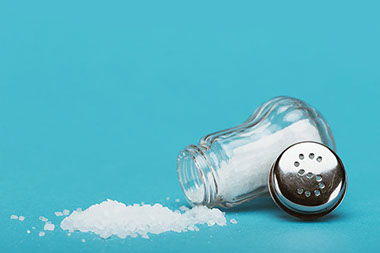
    A salt bottle opened with spilled salt.

    Many food products contain “sea salt” as an ingredient instead of table salt, also commonly called “salt.” In particular, many so-called natural food products say they use sea salt. But is sea salt any healthier than old-fashioned table salt?

    What’s the difference?

    In general, sea salt has a coarse, crunchy texture. Table salt has a more fine grind and may have a weaker taste. In foods like potato chips or sea salt caramels, some people prefer the flavor and texture of sea salt.

    Sea salt is made from evaporated sea water. It’s usually not processed, so it may be considered a more “natural” choice. It may contain trace levels of minerals like magnesium, potassium and calcium. But, these minerals are found in small amounts. So, eating sea salt is not a reliable way to get more minerals in your diet.

    Table salt comes from mined salt deposits. It is processed into a fine texture. During this process, it usually loses its other minerals. However, most table salt brands contain added iodine, which is a necessary nutrient that many people don’t get enough of. Table salt may also contain some additives to prevent clumping.

    Same in sodium

    Although sea salt shows up in many “natural” food products, it’s not usually healthier. Sea salt and table salt have about 40 percent sodium by weight.

    Some types of sea salt say that they contain less sodium than table salt. To check this, read the Nutrition Facts panel on the package. Table salt contains about 575 mg of sodium in ¼ teaspoon.

    Going coarser

    Some very coarse salts like kosher salt may have slightly less sodium, teaspoon for teaspoon. This is because the larger crystal size makes it less compact, so you can’t get as much salt into your measuring spoon.

    In these cases, using a coarse type of salt in cooking may help you reduce sodium content, but probably not by very much. Some people prefer the taste and texture of a very coarse salt. But don’t use it thinking that you’ll really reduce your sodium intake.

    Choose the type of salt you prefer, and use it sparingly. One type isn’t healthier than another. Talk to your doctor about how much sodium you should eat each day.

    Source: American Heart Association

    © American Institute for Preventive Medicine

  • Is It Food Poisoning Or A Virus?

    SELF-CARE CORNER

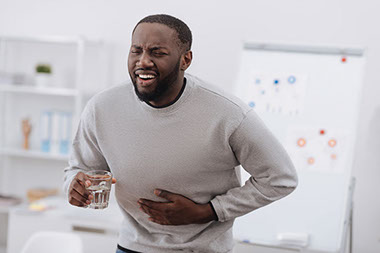
    Man holding a glass of water with one hand and holding stomach in pain with the other hand.

    Many people know the awful feeling of an upset stomach. It happens to almost everyone at least a few times in our lives. Many times, we blame the last thing we ate. But this is not always the cause.

    It can be hard to know what made you sick. If you got food poisoning, it can take 24 hours or more to get sick from some germs. And if you caught a virus, it can take several days to get sick after you were exposed.

    ‘stomach flu’ isn’t the flu

    Many people will say they had the “stomach flu” if they had a stomach virus. But the flu, or influenza, is not the same thing. The real flu rarely causes stomach problems in adults. Instead, it causes fever, coughing, headache and body aches.

    Norovirus is a virus that often causes stomach symptoms. It spreads easily in crowded places, schools and daycares.

    What is food poisoning, anyway?

    Food poisoning happens when you eat or drink something that contains harmful germs.

    If you were with others who ate the same food as you, they could get sick too. This is where it becomes hard to know if you have food poisoning or a viral infection. You can only get food poisoning through contaminated food. You get norovirus from other people.

    Symptoms look the same

    Both viruses and food poisoning can cause:

    *  Stomach pain

    *  Vomiting

    *  Diarrhea

    *  Fever

    *  Headache

    *  Body aches

    *  Tiredness

    Which one is it?

    If there is a large outbreak of food poisoning, you may find out about it. It could be in the news if many people got sick. But often, you may never know if you had a stomach virus or food poisoning. The symptoms are very similar.

    Sometimes doctors may run tests to find out what kind of illness you have. Usually, however, this isn’t necessary.

    Talk to your doctor

    Most people get better on their own after a stomach illness. But if you’re concerned, talk to your doctor. They can tell you what you should do based on your symptoms, age and health history.

    If you’re worried about serious dehydration or if the illness is severe, you should get medical help right away.

    Source: American Academy of Family Physicians

    © American Institute for Preventive Medicine

  • Importance Of A Drug-Free Workplace

    WORK LIFE

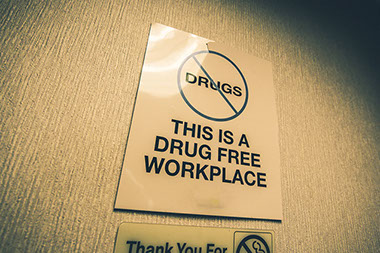
    sign that says "This is a drug free workplace."

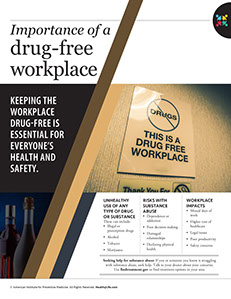
    Keeping the workplace drug-free is essential for everyone’s health and safety.

    Unhealthy use of any type of drug or substance

    These can include:

    *  Illegal or prescription drugs

    *  Alcohol

    *  Tobacco

    *  Marijuana

    Risks with substance abuse

    *  Dependence or addiction

    *  Poor decision making

    *  Damaged relationships

    *  Declining physical health

    Workplace impacts

    *  Missed days of work

    *  Higher cost of healthcare

    *  Legal issues

    *  Poor productivity

    *  Safety concerns

    Seeking help for substance abuse: If you or someone you know is struggling with substance abuse, seek help. Talk to your doctor about your concerns. Usefindtreatment.govto find treatment options in your area.

    © American Institute for Preventive Medicine