Author: AIPM

  • A Parents Guide To Gaming

    FAMILY LIFE

    Father and son playing virtual games.

    Gaming is a popular past-time among this generation of kids. As a parent, here are some things to know to keep gaming safe.

    *  Moderation is key. Set healthy limits on how much video game time you allow your kids.

    *  Know what they’re playing. Some games are better than others. If your kid struggles with mental health, help them find better games.

    *  Prioritize sleep. It’s common for gaming to interfere with healthy sleep habits. Set boundaries that prioritize sleep.

    *  Take breaks. Teach your kids to schedule regular breaks into their gaming time. Stepping away is good for mental health.

    *  Stay connected off-line. Keep your kids grounded in the real world by engaging in screen-free activities together.

    *  Game with your kids. Get involved with your kids’ interests by gaming with them (in moderation!).

    © American Institute for Preventive Medicine

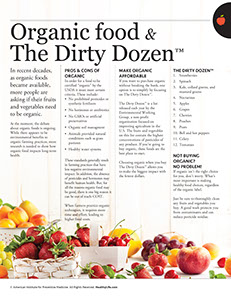
  • Organic Food & The Dirty Dozen™

    HEALTHY EATING

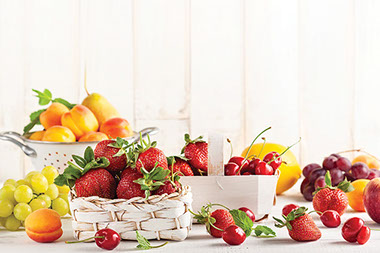
    Varity of fruits.

    In recent decades, as organic foods became available, more people are asking if their fruits and vegetables need to be organic.

    At the moment, the debate about organic foods is ongoing. While there appears to be environmental benefits to organic farming practices, more research is needed to show how organic food impacts long-term health.

    Pros & cons of organic

    In order for a food to be certified “organic” by the USDA it must meet certain criteria. These include:

    *  No prohibited pesticides or synthetic fertilizers

    *  No hormones or antibiotics

    *  No GMOs or artificial preservatives

    *  Organic soil managment

    *  Animals provided natural conditions such as grass pastures

    *  Healthy water systems

    These standards generally result in farming practices that have less negative environmental impact. In addition, the absence of pesticides and hormones may benefit human health. But, for all the reasons organic food may be good, there is one big reason it can be out of reach: COST.

    When farmers practice organic techniques, it requires more time and effort, leading to higher food costs.

    Make organic affordable

    If you want to purchase organic without breaking the bank, one option is to simplify by focusing on The Dirty Dozen™.

    The Dirty Dozen™ is a list released each year by the Environmental Working Group, a non-profit organization focused on improving agriculture in the U.S. The fruits and vegetables on this list contain the highest concentrations of pesticides of any produce. If you’re going to buy organic, these foods are the best place to start.

    Choosing organic when you buy The Dirty Dozen™ allows you to make the biggest impact with the fewest dollars.

    The Dirty Dozen™

    1.  Strawberries

    2.  Spinach

    3.  Kale, collard greens, and mustard greens

    4.  Nectarines

    5.  Apples

    6.  Grapes

    7.  Cherries

    8.  Peaches

    9.  Pears

    10. Bell and hot peppers

    11. Celery

    12. Tomatoes

    Not buying organic? No problem!

    If organic isn’t the right choice for you, don’t worry. What’s most important is making healthy food choices, regardless of the organic label.

    Just be sure to thoroughly clean any fruits and vegetables you buy. A good wash protects you from contaminants and can reduce pesticide residue.

    © American Institute for Preventive Medicine

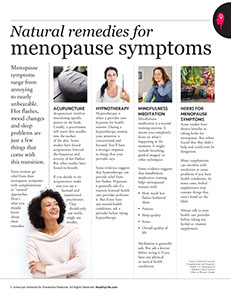
  • Natural Remedies For Menopause Symptoms

    SELF-CARE CORNER

    Women sitting with eyes closed and relaxed.

    Menopause symptoms range from annoying to nearly unbearable. Hot flashes, mood changes and sleep problems are just a few things that come with this transition.

    Some women get relief from their menopause symptoms with complementary or “natural” approaches. Here’s what you should know about these remedies.

    Acupuncture

    Acupuncture involves stimulating specific points on the body. Usually, a practitioner will insert thin needles into the surface of the skin. Some studies have found acupuncture lowered the frequency and severity of hot flashes. But other studies have found no benefit.

    If you decide to try acupuncture, make sure you use a licensed and experienced practitioner. They should only use sterile, single-use needles.

    Hypnotherapy

    Hypnotherapy is when a provider uses hypnosis for health reasons. During a hypnotherapy session, your attention is concentrated and focused. You’ll have a stronger response to things that your provider says.

    Some evidence suggests that hypnotherapy can provide relief from hot flashes. Hypnosis is generally safe if a trained, licensed health care provider performs it. But if you have any mental health conditions, ask a provider before trying hypnotherapy.

    Mindfulness meditation

    Mindfulness meditation is a mental training exercise. It means you completely focus on what’s happening in the moment. It might include breathing, guided imagery or other techniques.

    Some evidence suggests that mindfulness meditation training helps menopausal women with:

    *  How much hot flashes bothered them

    *  Anxiety

    *  Sleep quality

    *  Stress

    *  Overall quality of life

    Meditation is generally safe. But ask a doctor before trying it if you have any physical or mental health conditions.

    Herbs for menopause symptoms

    Some studies have shown benefits to taking herbs for menopause. But others found that they didn’t help and could even be dangerous.

    Many supplements can interfere with medicines or cause problems if you have health conditions. In some cases, herbal supplements may contain things that aren’t listed on the label.

    Always talk to your health care provider before taking any herbal or vitamin supplement.

    Sources: National Center for Complementary and Integrative Health, U.S. Department of Health & Human Services Office on Women’s Health

    © American Institute for Preventive Medicine

  • Mood & Food: The Close Link

    HEALTHY EATING

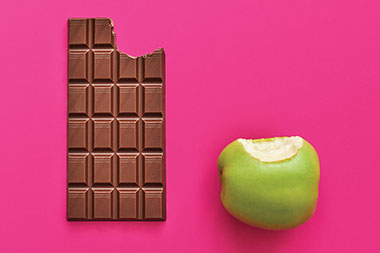
    A bite out of a green apple and in a chocolate bar.

    You may already know that your diet can change how you feel mentally. If you’ve ever been really hungry, you may notice that you start to feel upset or angry. And, some high-calorie junk foods are called “comfort foods” for a reason. They make you feel better mentally, but only for a little while.

    The link between the mind and what a person eats is complex. That’s why it can be so hard to make good choices when you have a bad day or feel depressed. But there are ways to fight this habit and start to make better choices, even when your mood is down or you feel stressed.

    Why we want comfort food

    Stress can make you want to eat unhealthy foods. This is your body’s way of trying to get fuel when it thinks you are in trouble. Although this is normal, you have the power to overcome it.

    Take a moment to think about a food you are craving. Then think about your current emotions. If you’re feeling sad, angry or stressed, this could be why you want that pizza or ice cream.

    If you eat the food, you may feel good for a few minutes. But unhealthy foods with lots of fat and sugar can actually increase the risk of depression or anxiety. This creates an unhealthy cycle that will continue as you eat those comfort foods.

    The cycle of mood & food

    If you use food to cope with stress or depression for too long, your body will get used to it. Then, when you do try to make a healthy choice, your body and mind may be confused. This could lead to an even stronger craving for those comfort foods. This cycle makes it very hard to make changes to your diet.

    You can win!

    You’re not stuck in this cycle. Eating fruits and vegetables can make you feel happy. When you’re happy, you’re more likely to reach for healthy foods again. This can start a positive cycle!

    Source: American Heart Association

    © American Institute for Preventive Medicine

  • Mindful Eating Can Boost Your Health

    HEALTHY EATING

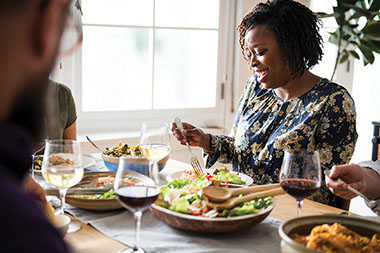
    Women eating with friends.

    If you want to eat healthier without a strict diet, try mindful eating. Mindful eating is a way to fully focus on your food as you eat. When you eat mindfully, you may:

    *  Eat less

    *  Avoid eating when you’re bored or stressed

    *  Stop when you feel full

    When you practice mindful eating, you eat more slowly. You’ll enjoy your food more without overeating.

    How to do it

    You don’t need any special equipment or classes to practice mindful eating. Take these steps at your next meal:

    *Avoid distractions:Make your meals an event. Don’t eat while driving, working, watching TV or doing other activities.

    *Ask yourself how you feel:Are you actually hungry? Or are you thirsty, bored, stressed or lonely?

    *Leave some space:If you’re used to filling your plate, leave about a quarter of your plate empty for now. You can always go back for seconds if you are still truly hungry.

    *Chew slowly:Take small bites. Put your fork, spoon and knife down between every bite.

    *Enjoy:Experience the smell, taste and texture of your food with each bite.

    *Watch the time:Wait at least 20 minutes before you get another helping. By then, your stomach may realize it’s full.

    *Know when to stop:When you’re full, stop eating. You don’t need to clean your plate.

    Sources: American Heart Association, Veterans Health Administration

    © American Institute for Preventive Medicine

  • Mediterranean Diet: Should You Try It?

    HEALTHY EATING

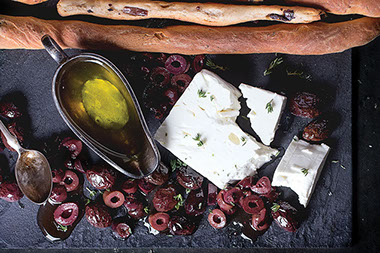
    Olive oil, black oils, bread and cheese.

    You may have heard about the Mediterranean diet and how some people believe it can make you healthy. But, what is this diet, and is it right for you?

    The Mediterranean diet isn’t a special diet plan or product. Instead, it describes the typical diet of people who live near the Mediterranean Sea. In this region, many people eat a diet that focuses on:

    *  Plenty of vegetables and fruits

    *  Moderate amounts of dairy, fish and poultry

    *  Whole-grain bread and cereals

    *  Beans and lentils

    *  Nuts and seeds

    *  Olive oil

    *  Wine (low to moderate amounts)

    *  Very little red meat and sugary desserts

    *  Fresh, mostly unprocessed foods

    When followed properly, the Mediterranean diet is similar to the diet recommended by the American Heart Association (AHA). But, the Mediterranean diet tends to be higher in fat than the AHA recommendations. The AHA believes that this higher amount of fat may be leading to obesity in Mediterranean countries.

    Fat’s not all bad

    The AHA says that the type of fat in the Mediterranean diet is healthier than the typical American diet. This is because the American diet often includes eating too much saturated fat, particularly from red meat. The Mediterranean diet uses healthier unsaturated fats from olive oil and fish. These unsaturated fats are better for the heart because they don’t raise unhealthy blood cholesterol levels.

    But, this doesn’t mean you should eat high amounts of any kind of fat. The AHA still recommends that even the healthy unsaturated fats should be eaten in moderate amounts. Saturated fat should be limited to six percent of a person’s total calories each day. Saturated fat is found in meat and dairy products, as well as coconut oil.

    Fat has nine calories per gram, which means it packs more calories than carbs and protein. So, consuming too much of it could still lead to unwanted weight gain – even if it’s the healthy kind of fat.

    Are Mediterranean people healthier?

    This begs the question: does the Mediterranean diet make you healthier? Mediterranean countries have lower rates of heart disease than the U.S. But, this may not be due to diet alone. Their exercise habits and other factors could also play a role.

    What’s the verdict on this diet?

    The bottom line: No large studies have shown that the Mediterranean diet is a magic fix for better health. But, it’s a good idea to eat more vegetables, fruits, and whole grains and less red meat. Always ask a doctor before changing your diet, especially if you have any health conditions.


    © American Institute for Preventive Medicine

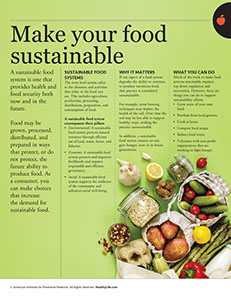
  • Make Your Food Sustainable

    HEALTHY EATING

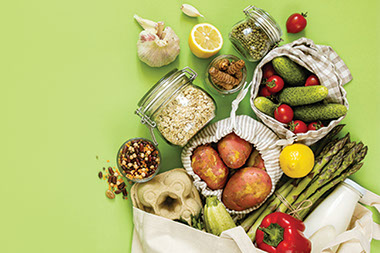
    Variety of food items on green table.

    A sustainable food system is one that provides health and food security both now and in the future.

    Food may be grown, processed, distributed, and prepared in ways that protect, or do not protect, the future ability to produce food. As a consumer, you can make choices that increase the demand for sustainable food.

    Sustainable food systems

    The term food system refers to the elements and activities that relate to the food you eat. This includes agriculture, production, processing, distribution, preparation, and consumption of food.

    A sustainable food system encompasses three pillars:

    *Environmental:A sustainable food system protects natural resources through efficient use of land, water, forest, and fisheries.

    *Economic:A sustainable food system protects and improves livelihoods and requires responsible and efficient governance.

    *Social:A sustainable food system supports the resilience of the community and enhances social well-being.

    Why it matters

    If any aspect of a food system degrades the ability to continue to produce nutritious food, that practice is considered unsustainable.

    For example, some farming techniques may deplete the health of the soil. Over time the soil may be less able to support healthy crops, making the practice unsustainable.

    In addition, a sustainable food system ensures no one goes hungry, now or in future generations.

    What you can do

    Much of the work to make food systems sustainable requires top-down regulation and innovation. However, there are things you can do to support sustainability efforts:

    *  Grow some of your own food.

    *  Purchase from local growers.

    *  Cook at home.

    *  Compost food scraps.

    *  Reduce food waste.

    *  Volunteer with non-profit organizations that are working to fight hunger.

    © American Institute for Preventive Medicine

  • Make A Cold Care Kit

    SELF-CARE CORNER

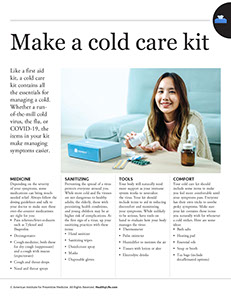
    Women siting at table with a box and medicine.

    Like a first aid kit, a cold care kit contains all the essentials for managing a cold. Whether a run-of-the-mill cold virus, the flu, or COVID-19, the items in your kit make managing symptoms easier.

    Medicine

    Depending on the severity of your symptoms, some medications can bring much-needed relief. Always follow the dosing guidelines and talk to your doctor to make sure these over-the-counter medications are right for you:

    *  Pain relievers/fever-reducers such as Tylenol and Ibuprofen

    *  Decongestants

    *  Cough medicine, both those for dry cough (suppressant) and a cough with mucus (expectorant)

    *  Cough and throat drops

    *  Nasal and throat sprays

    Sanitizing

    Preventing the spread of a virus protects everyone around you. While most cold and flu viruses are not dangerous to healthy adults, the elderly, those with preexisting health conditions, and young children may be at higher risk of complications. At the first sign of a virus, up your sanitizing practices with these items:

    *  Hand sanitizer

    *  Sanitizing wipes

    *  Disinfectant spray

    *  Masks

    *  Disposable gloves

    Tools

    Your body will naturally need more support as your immune system works to neutralize the virus. Your kit should include items to aid in reducing discomfort and monitoring your symptoms. While unlikely to be serious, have tools on hand to evaluate how your body manages the virus:

    *  Thermometer

    *  Pulse oximeter

    *  Humidifier to moisten the air

    *  Tissues with lotion or aloe

    *  Electrolyte drinks

    Comfort

    Your cold care kit should include some items to make you feel more comfortable until your symptoms pass. Everyone has their own tricks to soothe pesky symptoms. Make sure your kit contains those items you naturally wish for whenever a cold strikes. Here are some ideas:

    *  Bath salts

    *  Heating pad

    *  Essential oils

    *  Soup or broth

    *  Tea bags (include decaffeinated options)

    © American Institute for Preventive Medicine

  • Low Or No-Cost Family  Outings

    FAMILY LIFE

    Father and son feeding a giraffe.

    Depending on your budget and the size of your family, fun outings can be cost-prohibitive. Try these low or no-cost options for family fun.

    Farmers market

    In addition to strolling among the stalls, many farmer’s markets offer live music and free kid-friendly activities.

    Bird watching

    Invest in a pair of binoculars and a bird guide book, and you have all you need to start a new family hobby. You can even make bird bingo cards for a fun family competition.

    Zoo free days

    A few times a year, most zoos offer free admission days. You can also check at your local library to see if they have free zoo tickets.

    Movie in the park

    Many towns schedule free family outdoor movie nights at local parks. Pack blankets, pillows, and popcorn for a night under the stars.

    Geocaching

    All you need is a GPS device and a geocaching app to get started. Plus, everyone will learn valuable skills while searching for your next cache.

    Cookout at the park

    Check if your local park has firepits or grills you can reserve for a cookout. Invite family and friends to join for added fun.

    © American Institute for Preventive Medicine

  • Listen To Your Ears

    SELF-CARE CORNER

    Workers with safety gear protecting head, eyes and ears.

    It’s easy to take hearing for granted. But without proper care of your ears, you could end up with hearing loss or ear problems.

    Worried about wax

    Your body makes ear wax to protect your ears. Wax keeps dust and other particles from getting inside.

    Only clean the outside of your ears with a tissue, washcloth or cotton swab. Never stick anything, including a cotton swab, in your ear. This will push wax farther down into the ear and can create a harmful blockage.

    If you feel that there’s a lot of wax in the ear, you can safely try to soften it with a drop of mineral oil or glycerin. Your doctor can also remove ear wax blockages without damaging your ear.

    Saying no to noise

    One of the most common reasons people lose their hearing is exposure to loud noises. This can happen very quickly after a loud sound like an explosion. Or, it can happen over time if a person is exposed to loud sounds for months or years.

    You can help prevent noise-induced hearing loss with one simple tool: ear plugs. Wear them when going to a loud concert, watching fireworks or attending loud events. Wear them when mowing the lawn or using loud power equipment at home.

    If you have a job where you are exposed to noise, make sure you are using the right hearing protection. You may need something more powerful than ear plugs for certain jobs. Talk about this with your employer.

    Use headphones with care

    The World Health Organization says people should limit how much they use headphones. Don’t use them more than one hour a day. Keep the volume as low as possible, but no louder than 60 percent.

    Noise-cancelling headphones help you keep the volume low because they block out sounds around you. But, you should not use these when driving, cycling or walking because you won’t be able to hear possible dangers nearby.

    Talk to your doctor about your hearing health. Together, you can decide when you may need a hearing test.

    Sources: American Academy of Family Physicians, National Institute on Deafness and Other Communication Disorders

    © American Institute for Preventive Medicine