Author: AIPM

  • Start Running

    BE FIT

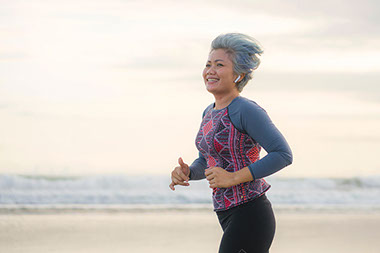
    Middle aged women jogging on beach.

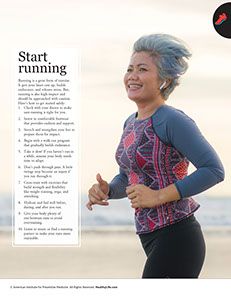
    Running is a great form of exercise. It gets your heart rate up, builds endurance, and releases stress. But, running is also high-impact and should be approached with caution. Here’s how to get started safely:

    1. Check with your doctor to make sure running is right for you.

    2. Invest in comfortable footwear that provides cushion and support.

    3. Stretch and strengthen your feet to prepare them for impact.

    4. Begin with a walk-run program that gradually builds endurance.

    5. Take it slow! If you haven’t run in a while, assume your body needs time to adapt.

    6. Don’t push through pain. A little twinge may become an injury if you run through it.

    7. Cross-train with exercises that build strength and flexibility like weight training, yoga, and stretching.

    8. Hydrate and fuel well before, during, and after you run.

    9. Give your body plenty of rest between runs to avoid overtraining.

    10. Listen to music or find a running partner to make your runs more enjoyable.
    © American Institute for Preventive Medicine

  • Smoking Triggers And How To Beat Them

    MEDICAL NEWS

    Cigarettes and nicotine gum.

    Many people have tried to quit smoking but couldn’t. There are many reasons for this, but one of them is because of triggers. A trigger is something that makes you want to smoke.

    Emotional triggers

    When you have certain emotions, you may get the urge to smoke. They may include feeling stressed, nervous, depressed or even bored.

    You can help stop these triggers by dealing with your emotions in other healthy ways. Try meditation, deep breathing or exercise to help manage stress and anxiety. Exercise is also a great way to beat boredom and fight depression. Listen to calming music or talk to a friend who can encourage you to keep up your efforts to quit.

    Pattern triggers

    Sometimes you’re used to smoking when you do something else, such as drinking coffee or alcohol. This is known as a pattern trigger. You may also like to smoke after eating or during a work break.

    Change your routine to help avoid these patterns. Chew your favorite gum, suck on a hard candy or mint or go for a walk. Try brushing your teeth after meals, coloring in an adult coloring book or squeezing a stress relief ball.

    Social triggers

    Many people want to smoke at bars, parties or when they’re with people who smoke. These can be powerful triggers for you to smoke.

    It’s best to avoid these triggers if you’re trying to quit. Instead, surround yourself with people who don’t smoke or who want you to quit. Try taking a class or find a hobby, such as painting or cycling.

    Withdrawal triggers

    Your body will crave nicotine when you quit smoking. Nicotine is very addictive and you may go through withdrawal. Withdrawal triggers include:

    *  Cravings for cigarettes or e-cigarettes

    *  Feeling like you need to do something with your hands or mouth

    *  Feeling restless or uncomfortable

    Withdrawal can be very difficult to manage. As with other triggers, spend time with people who don’t smoke and who want you to quit. Find things to do that have nothing to do with smoking. Avoid places or situations where you might see or smell cigarettes or vaping.

    Quitting is hard. But if you have support from your doctor, family and friends, you can do it. Millions of people have quit and you can too!

    Source: Smokefree.gov

    © American Institute for Preventive Medicine
  • One Pot Broccoli Skillet

    HEALTHY EATING

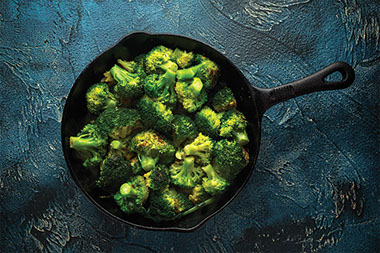
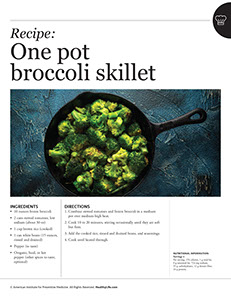
    Large skillet filled with broccoli.

    Ingredients

    *  10 ounces frozen broccoli

    *  2 cans stewed tomatoes, low sodium (about 30 oz)

    *  1 cup brown rice (cooked)

    *  1 can white beans (15 ounces, rinsed and drained)

    *  Pepper (to taste)

    *  Oregano, basil, or hot pepper (other spices to taste, optional)

    Directions

    1.  Combine stewed tomatoes and frozen broccoli in a medium pot over medium-high heat.

    2.  Cook 10 to 20 minutes, stirring occasionally until they are soft but firm.

    3.  Add the cooked rice, rinsed and drained beans, and seasonings.

    4.  Cook until heated through.

    Nutritional Information: Servings 4

    Per serving. 276 calories, 1 g total fat, 0 g saturated fat, 724 mg sodium, 55 g carbohydrates, 12 g dietary fiber, 16 g protein.

    © American Institute for Preventive Medicine
  • Recipe: Salsa

    HEALTHY EATING

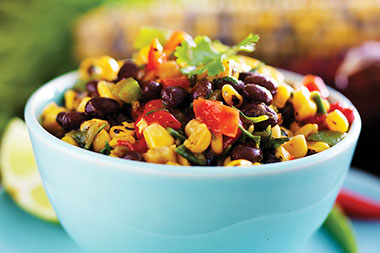
    A bowl of salsa.

    Ingredients

    1/2 cup corn (fresh cooked or frozen)

    1 can black beans (15 ounce, drained and rinsed)

    1 cup tomatoes (fresh, diced)

    1/2 cup onion (diced)

    1/2 cup green pepper (diced)

    2 tablespoons lime juice

    2 garlic cloves (finely chopped)

    1/2 cup Picante sauce

    Directions

    1.  Combine all ingredients in a large bowl. Chill until serving time.

    2.  Drain before serving.

    3.  Serve with low-fat baked tortilla chips or fresh vegetables.

    Nutrition Facts: 8 servings, Calories 95, Total fat 0g, Saturated fat 0g, Sodium 236mg, Total carbohydrates 19g, Fiber 6g, Protein 5g.

    Source: U.S. Department of Agriculture

    © American Institute for Preventive Medicine
  • Save At The Supermarket

    FINANCIAL HEALTH

    Couple at the grocery store.

    While the cost of food is out of your control, smart shopping habits will help keep your grocery bill more manageable.

    Tips to save on groceries

    Shop with a list

    Grocery stores know just how to tempt you to make impulse purchases. With eye-catching end cap displays and strategically placed snack foods, it’s easy to end up bringing home more than you intended. Instead, make a detailed list before you go and stick to it.

    Check the cabinets

    How many times have you purchased an item only to find you already have it hidden in the back of your pantry? As you make your shopping list, carefully check your current food supply to make sure you really need the ingredients.

    Buy in bulk

    When possible, purchase family-sized or bulk items for your most commonly used ingredients. This works especially well for meats, beans, rice, grains, and pasta. When you get home, promptly freeze or store the extra. You can also join a wholesale club to get better prices on bulk food.

    Eat seasonally

    Fruits and vegetables are cheapest when in season. For example, berries are more expensive in the winter than during peak berry season in the summer. Oranges and other citrus are usually cheapest during the winter months. Opt for in-season produce whenever possible.

    Stock up

    Buy more than one when your favorite foods go on sale. Dry goods generally keep for a long time, and many fresh foods can be frozen for longer storage. Keep in mind that you should only stock up on ingredients you regularly use.

    Low-cost recipes

    How you choose to eat is a major determinant of your food budget. If you like to cook gourmet, you’ll need fancier ingredients that cost more. Instead, find tasty recipes that use inexpensive ingredients. Examples include beans, rice, frozen vegetables, tuna, potatoes, and eggs.

    © American Institute for Preventive Medicine
  • Save On Prescriptions

    FINANCIAL HEALTH

    Pills and bottle on top of a money.

    Whether you have insurance or not, the cost of filling prescriptions can be high. Here are some ways to save big on the medicine you need.

    Go generic

    Ask your doctor if there is a cheaper generic option they can prescribe.

    Talk to your insurance

    Some insurance companies have options to make your medicine cheaper, such as direct buying programs.

    Get a 90-day supply

    Often it’s cheaper to get more at once than to refill a prescription multiple times.

    Apply for assistance

    Check with state and local governments to see if you qualify for financial assistance with prescriptions.

    Compare prices

    Call around to different pharmacies to find which one is the cheapest for your specific medicines.

    Ask for a higher dose

    Ask your doctor if they can prescribe a higher dose and let you cut the pills. Not all pills can be cut, but if it’s possible, it can save you money.

    © American Institute for Preventive Medicine

  • Secure Your Home For Vacation

    WELL-BEING

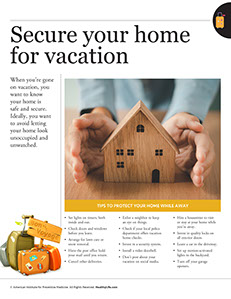
    Small wooden home on table with hands protecting it.

    When you’re gone on vacation, you want to know your home is safe and secure. Ideally, you want to avoid letting your home look unoccupied and unwatched.

    Tips to protect your home while away

    *  Set lights on timers, both inside and out.

    *  Check doors and windows before you leave.

    *  Arrange for lawn care or snow removal.

    *  Have the post office hold your mail until you return.

    *  Cancel other deliveries.

    *  Enlist a neighbor to keep an eye on things.

    *  Check if your local police department offers vacation home checks.

    *  Invest in a security system.

    *  Install a video doorbell.

    *  Don’t post about your vacation on social media.

    *  Hire a housesitter to visit or stay at your home while you’re away.

    *  Invest in quality locks on all exterior doors.

    *  Leave a car in the driveway.

    *  Set up motion-activated lights in the backyard.

    *  Turn off your garage openers.

    © American Institute for Preventive Medicine

  • Sepsis: Spot It, Save A Life

    MEDICAL NEWS

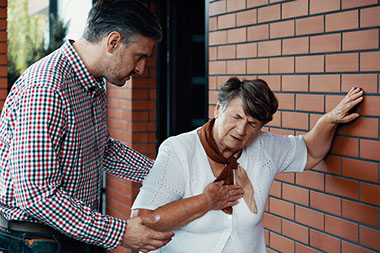
    Women leaning on wall with chest pain and man helping her.

    Sepsis can happen when a person has an infection like pneumonia, an infected cut in the skin or a urinary tract infection. Then, the body’s immune system releases a strong response that can get out of control. This immune response is so powerful that it can damage the body’s organs and cause blood clots.

    Sepsis can cause blood pressure to get extremely low and heart rate to get faster. This can trigger septic shock. With septic shock, the body becomes starved for blood and oxygen. It is a life-threatening emergency.

    Most who get an infection will not get sepsis. But experts don’t know why some people get it and others don’t. It seems to affect older adults, babies and young children the most. People who have a weakened immune system or a long-term illness like diabetes, liver disease or cancer are also more likely to get it.

    Spot sepsis signs

    Sepsis can be hard to spot. At first, symptoms may look like a mild illness. Sometimes a person has an infection and doesn’t know it. Signs include:

    *  Fever or a low body temperature

    *  Chills

    *  Fast heartbeat

    *  Trouble breathing or  fast breathing

    *  Blotchy skin or rash

    *  Being confused

    *  Feeling faint or lightheaded

    Even if you don’t have an infection, or don’t think you have one, ask yourself:

    *  Was I recently around someone who was ill?

    *  Did I recently have surgery or a medical procedure?

    *  Do I have any cuts or breaks in the skin?

    Getting treatment

    If you think a person might have sepsis, it’s important to get them medical care right away. Doctors will look at symptoms and may order blood tests. Sometimes other tests, like an x-ray or CT scan, may be needed.

    Sepsis is serious, so doctors often treat it in the Intensive Care Unit (ICU) of a hospital. Treatment usually includes antibiotics and getting fluids.

    Fortunately, most people who recover from sepsis often contine to have a normal, healthy life.

    Sources: Centers for Disease Control and Prevention, National Institutes of Health, Sepsis Alliance

    © American Institute for Preventive Medicine

  • Signs Of Childhood Anxiety

    FAMILY LIFE

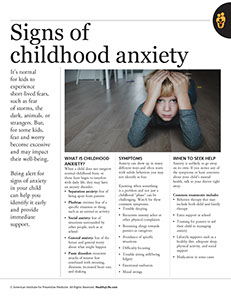
    Young boy laying on floor with hands on top of head.

    It’s normal for kids to experience short-lived fears, such as fear of storms, the dark, animals, or strangers. But, for some kids, fear and worry become excessive and may impact their well-being.

    Being alert for signs of anxiety in your child can help you identify it early and provide immediate support.

    What is childhood anxiety?

    When a child does not outgrow normal childhood fears, or those fears begin to interfere with daily life, they may have an anxiety disorder.

    *  Separation anxiety: fear of being apart from parents

    *  Phobias: extreme fear of a specific situation or thing, such as an animal or activity

    *  Social anxiety: fear of situations surrounded by other people, such as at school

    *  General anxiety: fear of the future and general worry about what might happen

    *  Panic disorder: recurrent attacks of intense fear combined with sweating, dizziness, increased heart rate, and shaking

    Symptoms

    Anxiety can show up in many different ways and often starts with subtle behaviors you may not identify as fear.

    Knowing when something is a problem and not just a childhood “phase” can be challenging. Watch for these common symptoms:

    *  Trouble sleeping

    *  Recurrent tummy aches or other physical complaints

    *  Becoming clingy towards parents or caregivers

    *  Avoidance of specific situations

    *  Difficulty focusing

    *  Trouble sitting still/being fidgety

    *  Emotional outbursts

    *  Mood swings

    When to seek help

    Anxiety is unlikely to go away on its own. If you notice any of the symptoms or have concerns about your child’s mental health, talk to your doctor right away.

    Common treatments include:

    *  Behavior therapy that may include both child and family therapy

    *  Extra support at school

    *  Training for parents to aid their child in managing anxiety

    *  Lifestyle supports such as a healthy diet, adequate sleep, physical activity, and social support

    *  Medication in some cases

    © American Institute for Preventive Medicine
  • Sitting Doesn’t Mean Not Moving

    WELL-BEING

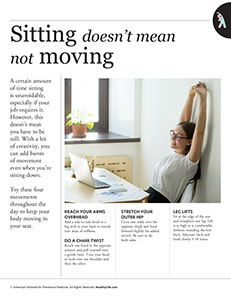
    Female sitting at table with laptop, stretching arms up.

    A certain amount of time sitting is unavoidable, especially if your job requires it. However, this doesn’t mean you have to be still. With a bit of creativity, you can add bursts of movement even when you’re sitting down.

    Try these four movements throughout the day to keep your body moving in your seat.

    Reach your arms overhead

    Add a side-to-side bend or a big arch to your back to stretch into areas of stiffness.

    Do a chair twist

    Reach one hand to the opposite armrest and pull yourself into a gentle twist. Turn your head to look over one shoulder and then the other.

    Stretch your outer hip

    Cross one ankle over the opposite thigh and bend forward slightly for added stretch. Be sure to do both sides.

    Leg lifts

    Sit at the edge of the seat and straighten one leg. Lift it as high as is comfortable without rounding the low back. Alternate back and forth slowly 5-10 times.

    © American Institute for Preventive Medicine