Author: AIPM

  • Understanding Psoriatic Arthritis

    MEDICAL NEWS

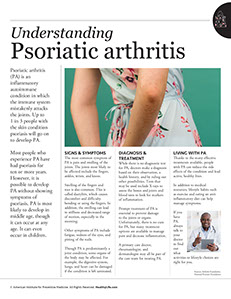
    Image of women's arm rash.

    Psoriatic arthritis (PA) is an inflammatory autoimmune condition in which the immune system mistakenly attacks the joints. Up to 1 in 3 people with the skin condition psoriasis will go on to develop PA.

    Most people who experience PA have had psoriasis for ten or more years. However, it is possible to develop PA without showing symptoms of psoriasis. PA is most likely to develop in middle age, though it can occur at any age. It can even occur in children.

    Signs & symptoms

    The most common symptom of PA is pain and swelling of the joints. The joints most likely to be affected include the fingers, ankles, wrists, and knees.

    Swelling of the fingers and toes is also common. This is called dactylitis, which causes discomfort and difficulty bending or using the fingers. In addition, the swelling can lead to stiffness and decreased range of motion, especially in the morning.

    Other symptoms of PA include fatigue, redness of the eyes, and pitting of the nails.

    Though PA is predominantly a joint condition, some organs of the body may be affected. For example, the digestive system, lungs, and heart can be damaged if the condition is left untreated.

    Diagnosis & treatment

    While there is no diagnostic test for PA, doctors make a diagnosis based on their observation, a health history, and by ruling out other possibilities. Tests that may be used include X-rays to assess the bones and joints and blood tests to look for markers of inflammation.

    Prompt treatment of PA is essential to prevent damage to the joints or organs. Unfortunately, there is no cure for PA, but many treatment options are available to manage pain and decrease inflammation.

    A primary care doctor, rheumatologist, and dermatologist may all be part of the care team for treating PA.

    Living with PA

    Thanks to the many effective treatments available, people with PA can reduce the side effects of the condition and lead active, healthy lives.

    In addition to medical resources, lifestyle habits such as exercise and eating an anti-inflammatory diet can help manage symptoms.

    If you have PA, always talk to your doctor to find out what activities or lifestyle choices are right for you.

    Sources: Arthritis Foundation, National Psoriasis Foundation
    © American Institute for Preventive Medicine

  • Understanding Dyslexia

    MEDICAL NEWS

    Boy spelling DYSLEXIA with wood blocks.

    Dyslexia is a learning disability that impacts the ability to read. While the condition can be frustrating, people with dyslexia have more resources available than ever before. With proper support, they can build the skills needed to adapt and learn.

    Causes

    Dyslexia is neurobiological, meaning it is caused by how the brain is “wired.” Many people with dyslexia are born with a brain that has difficulty interpreting written information. However, dyslexia can develop as a result of a brain injury or dementia.

    Dyslexia isn’t related to a person’s intelligence. People of all intellectual abilities may be affected by dyslexia. Just because someone has difficulty processing written information doesn’t mean they don’t understand the concepts.

    Genetics may play a role in the development of dyslexia. While the exact cause of the condition is unknown, research is ongoing to further clarify its origin and treatment.

    Signs

    While no single test can diagnose dyslexia, a doctor will look at a range of signs and symptoms. Information from family history, medical history, reading evaluations, psychological testing, and other factors provide the basis for a diagnosis.

    Here are some common signs of dyslexia:

    *  Reading or writing slowly

    *  Writing letters in the wrong order

    *  Difficulty telling similar letters or words apart

    *  Problems spelling

    *  Difficulty planning and organizing

    *  Avoidance of activities that involve reading

    *  Problems remembering sequences

    Support

    Early identification of dyslexia is vital, especially for young children. With the right support, most individuals can be successful in school and at work. Effective treatment involves providing a supportive environment and individualized instruction to teach techniques that make reading easier. These include:

    *  Helping a child use multiple senses to identify written words

    *  Tutoring sessions with a reading specialist

    *  A school Individual Education Program (IEP) that guarantees learning support

    *  Reading aloud to children and having them practice reading aloud

    *  Utilizing technology to aid reading and writing

    © American Institute for Preventive Medicine

  • Take Care Of  Bleeding Gums

    SELF-CARE CORNER

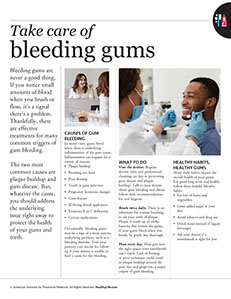
    Man smiling at dentist office with dentist about to start exam.

    Bleeding gums are never a good thing. If you notice small amounts of blood when you brush or floss, it’s a signal there’s a problem. Thankfully, there are effective treatments for many common triggers of gum bleeding.

    The two most common causes are plaque buildup and gum disease. But, whatever the cause, you should address the underlying issue right away to protect the health of your gums and teeth.

    Causes of gum bleeding

    In many cases, gums bleed when there is underlying inflammation of the gum tissue. Inflammation can happen for a variety of reasons.

    *  Plaque buildup

    *  Brushing too hard

    *  Poor flossing

    *  Tooth or gum infection

    *  Pregnancy hormone changes

    *  Gum disease

    *  Ill-fitting dental appliances

    *  Vitamins K or C deficiency

    *  Certain medications

    Occasionally, bleeding gums may be a sign of a more serious underlying problem, such as a bleeding disorder. Visit your primary care doctor for follow-up if your dentist is unable to find a cause for the bleeding.

    What to do

    Visit the dentist. Regular dentist visits and professional cleanings are key to preventing gum disease and plaque buildup. Talk to your dentist about gum bleeding and always follow their recommendations for oral hygiene.

    Brush twice daily. There is no substitute for routine brushing to rid your teeth of plaque. Plaque is made up of sticky bacteria that irritate the gums. If your gums bleed when you brush, be gentle but thorough.

    Floss every day. Floss gets into the tight spaces your toothbrush can’t reach. Lack of flossing or poor technique could result in plaque buildup around the gum line and gingivitis, a major culprit of gum bleeding.

    Healthy habits, healthy gums

    Many daily habits impact the overall health of your gums. For good long-term oral health, follow these healthy lifestyle habits.

    *  Eat lots of fruits and vegetables

    *  Limit added sugar in your diet

    *  Avoid tobacco and drug use

    *  Drink water instead of sugary beverages

    *  Ask your dentist if a mouthwash is right for you

    © American Institute for Preventive Medicine

  • Tea Time: Is Tea Good For You?

    HEALTHY EATING

    A tea pot with two cups of tea and lemons.

    Many people drink tea every day. The most popular teas are black, green and oolong. Matcha tea is also becoming more popular.

    Black, green, oolong and matcha teas come from a plant known as Camellia sinensis. Each of these teas looks and tastes different because of how they are processed.

    Caffeine content

    Tea, like coffee, naturally contains caffeine and can be different in each cup. If you steep your tea longer, it will have more caffeine than a quick steep.

    Estimates of the caffeine content per 8-ounce cup:

    *  Coffee: 95 milligrams

    *  Black tea: 48 milligrams

    *  Oolong tea: 38 milligrams

    *  Green tea: 29 milligrams

    *  Decaffeinated tea: Very small amounts

    Some tea packages will tell you how much caffeine it contains. Look for this on the product label.

    Watch your caffeine intake

    You can still drink too much caffeine from tea if you’re not careful. Too much caffeine can make you feel nervous or shaky. It can also make it hard for you to sleep.

    Most healthy adults can tolerate up to 400 milligrams of caffeine each day. People who are more sensitive to caffeine may need to consume much less than this amount.

    Decaf teas are a good option if you love tea but want to cut back on caffeine. They still contain only small amounts of caffeine.

    Are herbal teas really “tea”?

    Herbal teas are not made from the tea plant Camellia sinensis. Instead, they are made from the roots, leaves, flowers and other parts of certain plants.

    For instance, chamomile tea is made from chamomile flowers. Peppermint and spearmint teas are made from the plant’s leaves.

    Herbal teas don’t contain any caffeine. They are usually safe in regular amounts. But ask a doctor before you consume herbal tea if you are taking medicine or have any health conditions. These teas can interfere with some medications or cause side effects in some people.

    © American Institute for Preventive Medicine
  • The Facts About Donating Organs

    MEDICAL NEWS

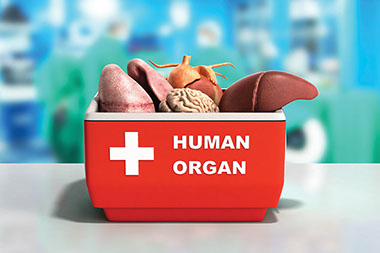
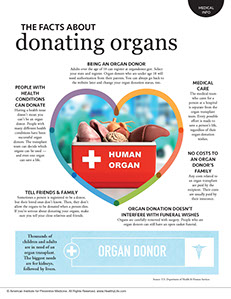
    Illustration of organs.

    Thousands of children and adults are in need of an organ transplant. The biggest needs are for kidneys, followed by livers.

    Being an organ donor

    Adults over the age of 18 can register at organdonor.gov. Select your state and register. Organ donors who are under age 18 will need authorization from their parents. You can always go back to the website later and change your organ donation status, too.

    People with health conditions can donate

    Having a health issue doesn’t mean you can’t be an organ donor. People with many different health conditions have been successful organ donors. The transplant team can decide which organs can be used – and even one organ can save a life.

    Tell friends & family

    Sometimes a person is registered to be a donor, but their loved ones don’t know. Then, they don’t allow the organs to be donated when a person dies. If you’re serious about donating your organs, make sure you tell your close relatives and friends.

    Medical care

    The medical team who cares for a person at a hospital is separate from the organ transplant team. Every possible effort is made to save a person’s life, regardless of their organ donation wishes.

    No costs to an organ donor’s family

    Any costs related to an organ transplant are paid by the recipient. Their costs are usually paid by their insurance.

    Organ donation doesn’t interfere with funeral wishes

    Organs are carefully removed with surgery. People who are organ donors can still have an open casket funeral.

    Source: U.S. Department of Health & Human Services

    © American Institute for Preventive Medicine

  • The Truth About Fast Food

    HEALTHY EATING

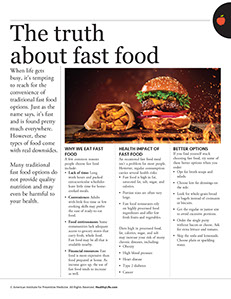
    Burger with french fries and fire.

    When life gets busy, it’s tempting to reach for the convenience of traditional fast food options. Just as the name says, it’s fast and is found pretty much everywhere. However, these types of food come with real downsides.

    Many traditional fast food options do not provide quality nutrition and may even be harmful to your health.

    Why we eat fast food

    A few common reasons people choose fast food include:

    *Lack of time:Long work hours and packed extracurricular schedules leave little time for home-cooked meals.

    *Convenience:Adults with little free time or few cooking skills may prefer the ease of ready-to-eat food.

    *Food environment:Some communities lack adequate access to grocery stores that carry fresh, whole food. Fast food may be all that is available nearby.

    *Financial resources:Fast food is more expensive than food prepared at home. As income goes up, the use of fast food tends to increase as well.

    Health impact of fast food

    An occasional fast food meal isn’t a problem for most people. However, regular consumption carries several health risks:

    *  Fast food is high in fat, saturated fat, salt, sugar, and calories.

    *  Portion sizes are often very large.

    *  Fast food restaurants rely on highly processed food ingredients and offer few fresh fruits and vegetables.

    Diets high in processed food, fat, calories, sugar, and salt may increase your risk of many chronic diseases, including:

    *  Obesity

    *  High blood pressure

    *  Heart disease

    *  Type 2 diabetes

    *  Cancer

    Better options

    If you find yourself stuck choosing fast food, try some of these better options when you order:

    *  Opt for broth soups and salads.

    *  Choose low-fat dressings on the side.

    *  Look for whole-grain bread or bagels instead of croissants or biscuits.

    *  Get the regular or junior size to avoid excessive portions.

    *  Order the single patty without bacon or cheese. Ask for extra lettuce and tomato.

    *  Skip the soda and lemonade. Choose plain or sparkling water.

    © American Institute for Preventive Medicine

  • Tips For Filing Taxes

    FINANCIAL HEALTH

    Image of paper work for taxes.

    April 15 is Tax Day. Everyone must file their taxes by this day or file for an extension. Don’t get overwhelmed. These tips can help you get started.

    Get all your papers together

    You’ll need all your income records. This may include a W-2 from each employer, a 1099 for other income you made, and records of any other revenue even if you don’t have a form. You’ll also need all the paperwork that supports your tax deductions. Try to gather all these papers early so you have more time to get them in order before you file your taxes.

    Check IRS.gov

    The IRS website has help for people filing their taxes. There are FAQ’s, forms you may need, and helpful interactive tools.

    Double check

    If there’s a mistake on your taxes, your refund may be delayed. Double check social security numbers. The IRS says this is one of the most common mistakes.

    If you owe taxes, but can’t pay it all right now, don’t panic. Go toIRS.gov/payments. You may be able to set up a payment plan or ask the IRS to delay tax collection.

    © American Institute for Preventive Medicine
  • Too Tired To Exercise?

    BE FIT

    Man standing by a body of water drinking out of a water bottle.

    Let’s face it: exercise takes some energy. And after work and other life responsibilities, many people are tired. This makes it hard to get up and start moving. But there are some ways to “trick” your body into thinking it has more energy, so you might have just enough to go for that walk or stop by the gym for a class. Here’s how to do it.

    Hydrate early

    Don’t wait until an hour or two before exercise to start drinking water. Do it at the start of the day, and continue all day long. Then, when it’s time to exercise, you won’t have to worry about dehydration and that sluggish feeling.

    Eat healthy carbs

    Carbs don’t have to be the enemy. Eat plenty of fruits, vegetables and whole grains. These give you energy right away, so try eating them about an hour before exercise.

    Don’t sit too long

    When you can, get up and stand or walk – even for a few minutes. Sitting all day can make you feel drained.

    Deep breaths

    A quick break for deep breathing or meditation can relieve stress and give you a mood boost. It also helps send more oxygen to your muscles and organs. This can help you feel refreshed and ready for the rest of your day.

    Plan for it

    If you can, go straight to the gym after work instead of stopping at home. Or schedule your exercise time – even just 30 minutes – in your calendar with a reminder to prompt you.

    Source: American Heart Association

    © American Institute for Preventive Medicine
  • Turmeric

    HEALTHY EATING

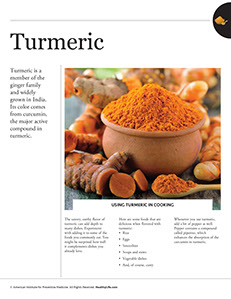
    Small bowl filled with turmeric spice.

    Turmeric is a member of the ginger family and widely grown in India. Its color comes from curcumin, the major active compound in turmeric.

    Using Turmeric In Cooking

    The savory, earthy flavor of turmeric can add depth to many dishes. Experiment with adding it to some of the foods you commonly eat. You might be surprised how well it complements dishes you already love.

    Here are some foods that are delicious when flavored with turmeric:

    *  Rice

    *  Eggs

    *  Smoothies

    *  Soups and stews

    *  Vegetable dishes

    *  And, of course, curry

    Whenever you use turmeric, add a bit of pepper as well. Pepper contains a compound called piperine, which enhances the absorption of the curcumin in turmeric.

    © American Institute for Preventive Medicine