Author: AIPM

  • Understanding Perimenopause

    MEDICAL NEWS

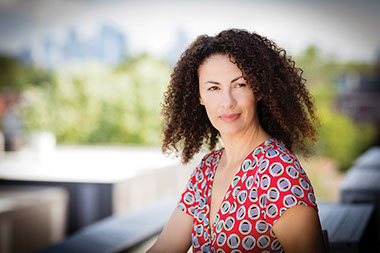
    Women outside looking out to the distance.

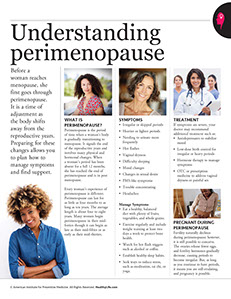
    Before a woman reaches menopause, she first goes through perimenopause. It is a time of adjustment as the body shifts away from the reproductive years. Preparing for these changes allows you to plan how to manage symptoms and find support.

    What is perimenopause?

    Perimenopause is the period of time when a woman’s body is gradually transitioning to menopause. It signals the end of the reproductive years and involves many physical and hormonal changes. When a woman’s period has been absent for a full 12 months, she has reached the end of perimenopause and is in post menopause.

    Every woman’s experience of perimenopause is different. Perimenopause can last for as little as four months to as long as ten years. The average length is about four to eight years. Many women begin perimenopause in their mid-forties though it can begin as late as their mid-fifties or as early as their mid-thirties.

    Symptoms

    *  Irregular or skipped periods

    *  Heavier or lighter periods

    *  Needing to urinate more frequently

    *  Hot flashes

    *  Vaginal dryness

    *  Difficulty sleeping

    *  Mood changes

    *  Changes in sexual desire

    *  PMS-like symptoms

    *  Trouble concentrating

    *  Headaches

    Manage Symptoms

    *  Eat a healthy, balanced diet with plenty of fruits, vegetables, and whole grains.

    *  Exercise regularly and include weight training at least two days a week to protect bone health.

    *  Watch for hot flash triggers such as alcohol or coffee.

    *  Establish healthy sleep habits.

    *  Seek ways to reduce stress, such as meditation, tai chi, or yoga.

    Treatment

    If symptoms are severe, your doctor may recommend additional treatment such as:

    *  Antidepressants to stabilize mood

    *  Low-dose birth control for irregular or heavy periods

    *  Hormone therapy to manage symptoms

    *  OTC or prescription medicine to address vaginal dryness or painful sex

    Pregnant during perimenopause

    Fertility naturally declines during perimenopause; however, it is still possible to conceive. The ovaries release fewer eggs, and fertility hormones gradually decrease, causing periods to become irregular. But, as long as you continue to have periods, it means you are still ovulating, and pregnancy is possible.
    © American Institute for Preventive Medicine

  • What To Know About Rainbow Fentanyl

    WELL-BEING

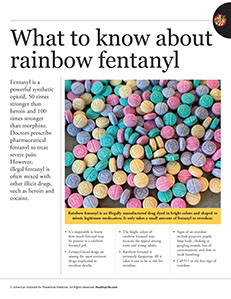
    Image of rainbow fentanyl.

    Fentanyl is a powerful synthetic opioid, 50 times stronger than heroin and 100 times stronger than morphine. Doctors prescribe pharmaceutical fentanyl to treat severe pain. However, illegal fentanyl is often mixed with other illicit drugs, such as heroin and cocaine.

    Rainbow fentanyl is an illegally manufactured drug dyed in bright colors and shaped to mimic legitimate medication. It only takes a small amount of fentanyl to overdose.

    *  It’s impossible to know how much fentanyl may be present in a rainbow fentanyl pill.

    *  Fentanyl-laced drugs are among the most common drugs implicated in overdose deaths.

    *  The bright colors of rainbow fentanyl may increase the appeal among teens and young adults.

    *  Rainbow fentanyl is extremely dangerous. All it takes is one to be at risk for overdose.

    *  Signs of an overdose include pinpoint pupils, limp body, choking or gurgling sounds, loss of consciousness, and slow or weak breathing.

    *  Call 911 at the first sign of overdose.

    © American Institute for Preventive Medicine
  • Be Strong At Any Age

    BE FIT

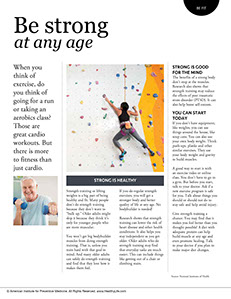
    Older man using weights.

    When you think of exercise, do you think of going for a run or taking an aerobics class? Those are great cardio workouts. But there is more to fitness than just cardio.

    Strong is healthy

    Strength training or lifting weights is a big part of being healthy and fit. Many people don’t do strength training because they don’t want to “bulk up.” Older adults might skip it because they think it’s only for younger people who are more muscular.

    You won’t get big bodybuilder muscles from doing strength training. That is, unless you train hard with that goal in mind. And many older adults can safely do strength training and find that they love how it makes them feel.

    If you do regular strength exercises, you will get a stronger body and better quality of life at any age. No bodybuilder is needed!

    Research shows that strength training can lower the risk of heart disease and other health conditions. It also helps you stay independent as you get older. Older adults who do strength training may find that everyday tasks are much easier. This can include things like getting out of a chair or climbing stairs.

    Strong is good for the mind

    The benefits of a strong body don’t stop at the muscles. Research also shows that strength training may reduce the effects of post traumatic stress disorder (PTSD). It can also help boost self-esteem.

    You can start today

    If you don’t have equipment, like weights, you can use things around the house, like soup cans. You can also use your own body weight. Think push-ups, planks and other similar exercises. They use your body weight and gravity to build muscles.

    A good way to start is with an exercise video or online class. You don’t have to go to a gym. But before you start, talk to your doctor. Ask if a new exercise program is safe for you. Talk about things you should or should not do to stay safe and help avoid injury.

    Give strength training a chance. You may find that it makes you feel better than you thought possible! A diet with adequate protein can help build muscle at any age and even promote healing. Talk to your doctor if you plan to make major diet changes.

    Source: National Institutes of Health

    © American Institute for Preventive Medicine
  • Benefits Of Stretching

    BE FIT

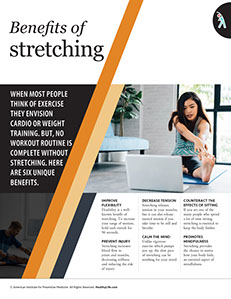
    Women stretching.

    When most people think of exercise they envision cardio or weight training. But, no workout routine is complete without stretching. Here are six unique benefits.

    Improve flexibility

    Flexibility is a well-known benefit of stretching. To increase your range of motion, hold each stretch for 90 seconds.

    Prevent injury

    Stretching increases blood flow to joints and muscles, decreasing stiffness and reducing the risk of injury.

    Decrease tension

    Stretching releases tension in your muscles, but it can also release mental tension if you take time to be still and breathe.

    Calm the mind

    Unlike vigorous exercise which pumps you up, the slow pace of stretching can be soothing for your mind.

    Counteract the effects of sitting

    If you are one of the many people who spend a lot of time sitting, stretching is essential to keep the body limber.

    Promotes mindfulness

    Stretching provides the chance to notice how your body feels, an essential aspect of mindfulness.

    © American Institute for Preventive Medicine
  • Bone Broth:Worth The Hype?

    HEALTHY EATING

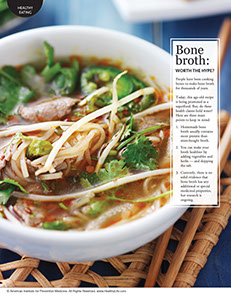
    Image of bone broth soup.

    People have been cooking bones to make bone broth for thousands of years.

    Today, this age-old recipe is being promoted as a superfood. But, do these health claims hold water? Here are three main points to keep in mind:

    1.  Homemade bone broth usually contains more protein than store-bought broth.

    2.  You can make your broth healthier by adding vegetables and herbs – and skipping the salt.

    3.  Currently, there is no solid evidence that bone broth has any additional or special medicinal properties, but research is ongoing.

    © American Institute for Preventive Medicine

  • Breastfeeding And Work

    WORK LIFE

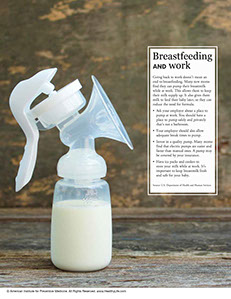
    Breast pump bottle filled with milk.

    Going back to work doesn’t mean an end to breastfeeding. Many new moms find they can pump their breastmilk while at work. This allows them to keep their milk supply up. It also gives them milk to feed their baby later, so they can reduce the need for formula.

    *  Ask your employer about a place to pump at work. You should have a place to pump safely and privately that’s not a bathroom.

    *  Your employer should also allow adequate break times to pump.

    *  Invest in a quality pump. Many moms find that electric pumps are easier and faster than manual ones. A pump may be covered by your insurance.

    *  Have ice packs and coolers to store your milk while at work. It’s important to keep breastmilk fresh and safe for your baby.

    Source: U.S. Department of Health and Human Services

    © American Institute for Preventive Medicine
  • Campfire Safety

    WELL-BEING

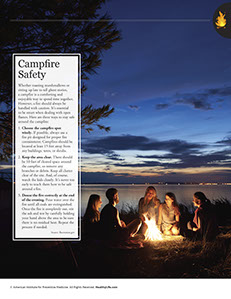
    Group of people sitting around a campfire and tent.

    Whether roasting marshmallows or sitting up late to tell ghost stories, a campfire is a comforting and enjoyable way to spend time together. However, a fire should always be handled with caution. It’s essential to be smart when dealing with open flames. Here are three ways to stay safe around the campfire:

    1.Choose the campfire spot wisely.If possible, always use a fire pit designed for proper fire containment. Campfires should be located at least 15 feet away from any buildings, tents, or shrubs.

    2.Keep the area clear.There should be 10 feet of cleared space around the campfire, so remove any branches or debris. Keep all clutter clear of the site. And, of course, watch the kids closely. It’s never too early to teach them how to be safe around a fire.

    3.Douse the fire correctly at the end of the evening.Pour water over the fire until all coals are extinguished. Once the fire is completely out, stir the ash and test by carefully holding your hand above the area to be sure there is no residual heat. Repeat the process if needed.

    Source: Recreation.gov

    © American Institute for Preventive Medicine