Author: AIPM

  • Lift Weights The Safe Way

    BE FIT

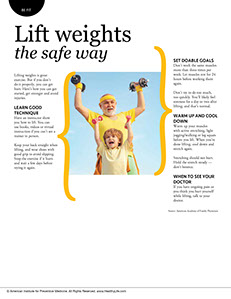
    Grandfather and grandson exercising by lifting weights.

    Lifting weights is great exercise. But if you don’t do it properly, you can get hurt. Here’s how you can get started, get stronger and avoid injuries.

    Learn good technique

    Have an instructor show you how to lift. You can use books, videos or virtual instruction if you can’t see a trainer in person.

    Keep your back straight when lifting, and wear shoes with good grip to avoid slipping. Stop the exercise if it hurts and wait a few days before trying it again.

    Set doable goals

    Don’t work the same muscles more than three times per week. Let muscles rest for 24 hours before working them again. Don’t try to do too much, too quickly. You’ll likely feel soreness for a day or two after lifting, and that’s normal.

    Warm up and cool down

    Warm up your muscles with active stretching, light jogging/walking or leg squats before you lift. When you’re done lifting, cool down and  stretch again.

    Stretching should not hurt. Hold the stretch steady – don’t bounce.

    When to see your doctor

    If you have ongoing pain or you think you hurt yourself while lifting, talk to your doctor.

    Source: American Academy of Family Physicians
    © American Institute for Preventive Medicine

  • Low Or No-Cost Family  Outings

    FAMILY LIFE

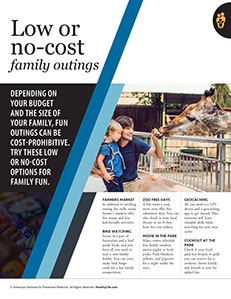
    Father and son feeding a giraffe.

    Depending on your budget and the size of your family, fun outings can be cost-prohibitive. Try these low or no-cost options for family fun.

    Farmers market

    In addition to strolling among the stalls, many farmer’s markets offer live music and free kid-friendly activities.

    Bird watching

    Invest in a pair of binoculars and a bird guide book, and you have all you need to start a new family hobby. You can even make bird bingo cards for a fun family competition.

    Zoo free days

    A few times a year, most zoos offer free admission days. You can also check at your local library to see if they have free zoo tickets.

    Movie in the park

    Many towns schedule free family outdoor movie nights at local parks. Pack blankets, pillows, and popcorn for a night under the stars.

    Geocaching

    All you need is a GPS device and a geocaching app to get started. Plus, everyone will learn valuable skills while searching for your next cache.

    Cookout at the park

    Check if your local park has firepits or grills you can reserve for a cookout. Invite family and friends to join for added fun.

    © American Institute for Preventive Medicine
  • Magnificent Magnesium

    HEALTHY EATING

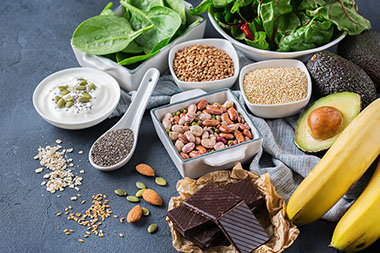
    Image of magnesium food sources.

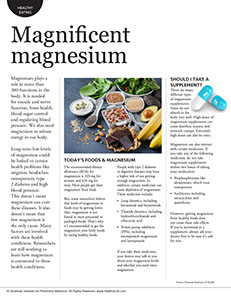
    Magnesium plays a role in more than 300 functions in the body. It is needed for muscle and nerve function, bone health, blood sugar control and regulating blood pressure. We also need magnesium to release energy in our body.

    Long-term low levels of magnesium could be linked to certain health problems like migraine headaches, osteoporosis, type 2 diabetes and high blood pressure. This doesn’t mean magnesium can cure these diseases. It also doesn’t mean that low magnesium is the only cause. Many factors are involved with these health conditions. Researchers are still working to learn how magnesium is connected to these health conditions.

    Today’s foods & magnesium

    The recommended dietary allowance (RDA) for magnesium is 320 mg for women and 420 mg for men. Most people get their magnesium from food.

    But, some researchers believe that levels of magnesium in foods may be getting lower. Also, magnesium is not found in most processed or packaged foods. That’s why it’s recommended to get the magnesium your body needs by eating healthy foods.

    People with type 2 diabetes or digestive diseases may have a higher risk of not getting enough magnesium. In addition, certain medicines can cause depletion of magnesium. These medicines include:

    *  Loop diuretics, including furosemide and bumetanide

    *  Thiazide diuretics, including hydrochlorothiazide and ethacrynic acid

    *  Proton pump inhibitors (PPIs), including esomeprazole magnesium and lansoprazole

    If you take these medicines, your doctor may talk to you about your magnesium levels and whether you need extra magnesium.

    Should I take a supplement?

    There are many different types of magnesium supplements. Some do not absorb in the body very well. High doses of magnesium supplements can cause diarrhea, nausea, and stomach cramps. Extremely high doses can also be toxic.

    Magnesium can also interact with certain medicines. If you take any of the following medicines, do not take magnesium supplements within two hours of taking your medication:

    *  Biophosphonates like alendronate, which treat osteoporosis

    *  Antibiotics including tetracyclines and quinolones

    However, getting magnesium from healthy foods does not cause these side effects. If you’re interested in a supplement, always ask your doctor first to be sure it’s safe for you.

    Source: National Institutes of Health

    © American Institute for Preventive Medicine
  • Make Your Picnic Fun & Safe

    HEALTHY EATING

    Family have a picnic.

    Many people enjoy outdoor eating throughout the spring and summer. But don’t let unsafe food rain on your picnic. Food poisoning can happen when food is not kept at the right temperature during barbecues and outings. Dangerous bacteria can grow on the food and make people sick.

    Luckily, there are some simple precautions you can take to be sure your picnic food stays safe to eat.

    Clean hands

    If you’re using a picnic site without running water and soap, bring your own. A large jug of water, some soap and paper towels will work.

    If you don’t have a jug of water, use antibacterial hand wipes. Encourage everyone to clean their hands before eating, after using the bathroom and before serving food.

    Hot and cold

    One of the keys to eating safe food is to keep hot foods hot and cold foods cold. Don’t let food become just warm or room temperature.

    The “danger zone” for bacteria to grow is between 40 and 140 degrees. If food stays at this temperature for two hours, bacteria can grow rapidly. If it’s hot outside (90 degrees or above), food can become unsafe after just one hour in the danger zone.

    To keep food cold, use ice packs or fresh, clean ice. Check it often to be sure the ice is still cold. Try to avoid opening the cooler too often.

    To keep hot foods hot, use insulated containers and microwaveable heat packs. Keep children away from hot containers or heat packs.

    Dishes and utensils

    If you’re using a grill, you may need to place raw meat, poultry or seafood on the grill. But be careful about what that raw food touches.

    Don’t reuse a plate or utensils that touched raw meat, poultry or seafood. Germs from the raw food can contaminate the cooked food and cause illness. Wash all the dishes and utensils in hot, soapy water before using them again.

    Wash produce before you go

    Before you pack your picnic basket, wash any fresh fruits or vegetables. This will ensure they are clean when you are ready to eat.

    Source: Food and Drug Administration

    © American Institute for Preventive Medicine
  • Medical Loans: The Good, Bad, And The Alternatives

    FINANCIAL HEALTH

    Wallet with stethoscope.

    A medical loan is a specific type of personal loan that can only be used to cover healthcare expenses. For people facing significant out-of-pocket medical expenses, this type of loan can seem ideal. However, there are a few things you should know.

    The Good

    *  No collateral is required to secure the loan.

    *  Can be easy to qualify for if you have good credit.

    *  Enables you to undergo elective procedures quickly.

    The Bad

    *  Hard to get if you have poor credit.

    *  High interest rates can mean a very high monthly payment.

    *  May involve expensive initiation fees upfront.

    The Alternatives

    *  Talk to your doctor’s office or hospital about a payment plan.

    *  Find help through a medical charity or hospital program.

    *  Talk to your doctor about cost-effective treatment options.

    © American Institute for Preventive Medicine

  • Mindful Eating Can Boost Your Health

    HEALTHY EATING

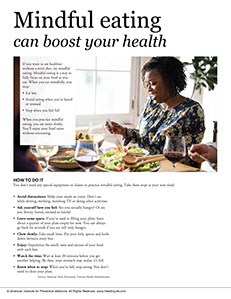
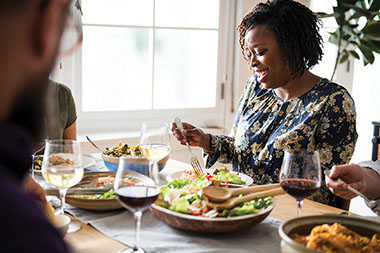
    Women eating with friends.

    If you want to eat healthier without a strict diet, try mindful eating. Mindful eating is a way to fully focus on your food as you eat. When you eat mindfully, you may:

    *  Eat less

    *  Avoid eating when you’re bored or stressed

    *  Stop when you feel full

    When you practice mindful eating, you eat more slowly. You’ll enjoy your food more without overeating.

    How to do it

    You don’t need any special equipment or classes to practice mindful eating. Take these steps at your next meal:

    *Avoid distractions:Make your meals an event. Don’t eat while driving, working, watching TV or doing other activities.

    *Ask yourself how you feel:Are you actually hungry? Or are you thirsty, bored, stressed or lonely?

    *Leave some space:If you’re used to filling your plate, leave about a quarter of your plate empty for now. You can always go back for seconds if you are still truly hungry.

    *Chew slowly:Take small bites. Put your fork, spoon and knife down between every bite.

    *Enjoy:Experience the smell, taste and texture of your food with each bite.

    *Watch the time:Wait at least 20 minutes before you get another helping. By then, your stomach may realize it’s full.

    *Know when to stop:When you’re full, stop eating. You don’t need to clean your plate.

    Sources: American Heart Association, Veterans Health Administration

    © American Institute for Preventive Medicine

  • Mood-Boosting Foods

    HEALTHY EATING

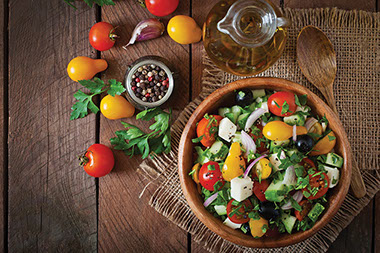
    Fresh salad bowl.

    A healthy diet can have an effect on your brain. It can actually make you feel happy.

    Eat plenty of foods with omega-3 fats. These heart-healthy fats are found in fish, flaxseeds and walnuts, and may help reduce the risk of developing depression.

    Focus on the Mediterranean Diet. This diet includes lots of plant-based foods like fruits and vegetables, as well as olive oil, whole grains, fish, poultry, eggs and beans.

    Source: American Heart Association

    © American Institute for Preventive Medicine
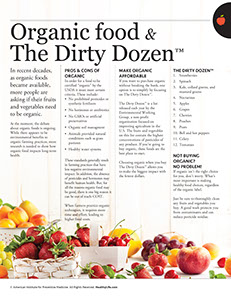
  • Organic Food & The Dirty Dozen™

    HEALTHY EATING

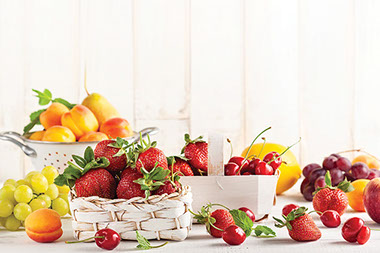
    Varity of fruits.

    In recent decades, as organic foods became available, more people are asking if their fruits and vegetables need to be organic.

    At the moment, the debate about organic foods is ongoing. While there appears to be environmental benefits to organic farming practices, more research is needed to show how organic food impacts long-term health.

    Pros & cons of organic

    In order for a food to be certified “organic” by the USDA it must meet certain criteria. These include:

    *  No prohibited pesticides or synthetic fertilizers

    *  No hormones or antibiotics

    *  No GMOs or artificial preservatives

    *  Organic soil managment

    *  Animals provided natural conditions such as grass pastures

    *  Healthy water systems

    These standards generally result in farming practices that have less negative environmental impact. In addition, the absence of pesticides and hormones may benefit human health. But, for all the reasons organic food may be good, there is one big reason it can be out of reach: COST.

    When farmers practice organic techniques, it requires more time and effort, leading to higher food costs.

    Make organic affordable

    If you want to purchase organic without breaking the bank, one option is to simplify by focusing on The Dirty Dozen™.

    The Dirty Dozen™ is a list released each year by the Environmental Working Group, a non-profit organization focused on improving agriculture in the U.S. The fruits and vegetables on this list contain the highest concentrations of pesticides of any produce. If you’re going to buy organic, these foods are the best place to start.

    Choosing organic when you buy The Dirty Dozen™ allows you to make the biggest impact with the fewest dollars.

    The Dirty Dozen™

    1.  Strawberries

    2.  Spinach

    3.  Kale, collard greens, and mustard greens

    4.  Nectarines

    5.  Apples

    6.  Grapes

    7.  Cherries

    8.  Peaches

    9.  Pears

    10. Bell and hot peppers

    11. Celery

    12. Tomatoes

    Not buying organic? No problem!

    If organic isn’t the right choice for you, don’t worry. What’s most important is making healthy food choices, regardless of the organic label.

    Just be sure to thoroughly clean any fruits and vegetables you buy. A good wash protects you from contaminants and can reduce pesticide residue.

    © American Institute for Preventive Medicine
  • Pasta With Chickpeas, Tomato & Spinach

    HEALTHY EATING

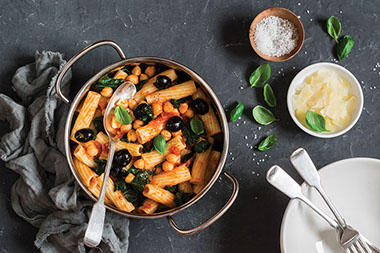
    Pasta with chickpeas, tomato and spinach.

    Ingredients

    *  1 small yellow onion (peeled and chopped into ¼-inch pieces)

    *  8 ounces medium-size whole-wheat pasta (such as rotini or shells)

    *  1 tablespoon vegetable oil

    *  2 cloves garlic (peeled and minced)

    *  2 carrots (scrubbed and diced into 1/4-inch pieces)

    *  1 celery stalk (diced into 1/4-1/2-inch pieces)

    *  1/2 teaspoon dried rosemary

    *  1 can 16-ounce low-sodium chickpeas (drained and rinsed with cold water)

    *  1 can 14.5-ounce low-sodium diced tomatoes (including the liquid)

    *  2 cups spinach (washed and chopped)

    *  1/2 teaspoon chopped red pepper flakes (optional)

    *  1/4 cup grated Parmesan cheese (optional)

    *  1/4 cup whole olives (optional)

    Directions

    1.  To cook the pasta, fill a large pot halfway with water. Bring it to a boil over high heat. When the water is boiling, add the pasta and cook until just tender, about 12 minutes or the time listed on the package. Just before draining, reserve 1 ½ cups of the pasta water. Drain the pasta and set aside.

    2.  While the pasta is cooking, cook the sauce: Put the skillet on the stove over medium-low heat and when it is hot, add the oil. Add the garlic, onion, carrots, celery, and rosemary and cook until the garlic is golden, about 15 minutes.

    3.  Add the chickpeas and using the fork, lightly mash half of them. Add the reserved pasta water and tomatoes and cook 10 minutes.

    4.  Add the pasta and spinach to the skillet mixture and cook until the spinach is tender and most of the liquid has been absorbed by the pasta, about 10 minutes. Add the red pepper flakes and olives, if desired.

    5.  Mix well and serve immediately, garnished with Parmesan cheese if desired.

    Note: Kale can be used instead of spinach.

    Nutrition Facts: Servings 4. Calories 395; Total Fat 8 g; Saturated Fat 2 g; Total Carbohydrate 68 g; Dietary Fiber 13 g; Protein 19 g.

    Source: What’s Cooking? USDA Mixing Bowl

    © American Institute for Preventive Medicine