Author: AIPM

  • Should You Join A Mlm?

    FINANCIAL HEALTH

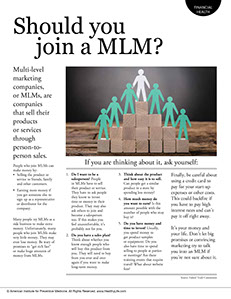
    Tier made of blocks with paper cut out of people.

    Multi-level marketing companies, or MLMs, are companies that sell their products or services through person-to-person sales.

    People who join MLMs can make money by:

    *  Selling the product or service to friends, family and other customers.

    *  Earning more money if you get someone else to sign up as a representative or distributor for the company.

    Many people try MLMs as a side business to make extra money. Unfortunately, many people who join MLMs make very little money. They may even lose money. Be wary of promises to “get rich fast” or make huge amounts of money from MLMs.

    If you are thinking about it, ask yourself:

    1.  Do I want to be a salesperson? People in MLMs have to sell their product or service. They have to ask people they know to invest time or money in their product. They may also ask others to join and become a salesperson too. If this makes you feel uncomfortable, it’s probably not for you.

    2.  Do you have a sales plan? Think about whether you know enough people who will buy this product from you. They will need to buy from you over and over again if you want to make long-term money.

    3.  Think about the product and how easy it is to sell. Can people get a similar product in a store by spending less money?

    4.  How much money do you want to earn? Is this amount possible with the number of people who may buy it?

    5.  Do you have money and time to invest? Usually, you spend money to get product samples or equipment. Do you also have time to spend selling to people at parties or meetings? Are there training events that require travel? What about website fees?

    Finally, be careful about using a credit card to pay for your start-up expenses or other costs. This could backfire if you have to pay high interest rates and can’t pay it off right away.

    It’s your money and your life. Don’t let big promises or convincing marketing try to talk you into an MLM if you’re not sure about it.

    Source: Federal Trade Commission
    © American Institute for Preventive Medicine

  • Signs Of Childhood Anxiety

    FAMILY LIFE

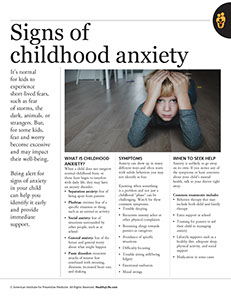
    Young boy laying on floor with hands on top of head.

    It’s normal for kids to experience short-lived fears, such as fear of storms, the dark, animals, or strangers. But, for some kids, fear and worry become excessive and may impact their well-being.

    Being alert for signs of anxiety in your child can help you identify it early and provide immediate support.

    What is childhood anxiety?

    When a child does not outgrow normal childhood fears, or those fears begin to interfere with daily life, they may have an anxiety disorder.

    *  Separation anxiety: fear of being apart from parents

    *  Phobias: extreme fear of a specific situation or thing, such as an animal or activity

    *  Social anxiety: fear of situations surrounded by other people, such as at school

    *  General anxiety: fear of the future and general worry about what might happen

    *  Panic disorder: recurrent attacks of intense fear combined with sweating, dizziness, increased heart rate, and shaking

    Symptoms

    Anxiety can show up in many different ways and often starts with subtle behaviors you may not identify as fear.

    Knowing when something is a problem and not just a childhood “phase” can be challenging. Watch for these common symptoms:

    *  Trouble sleeping

    *  Recurrent tummy aches or other physical complaints

    *  Becoming clingy towards parents or caregivers

    *  Avoidance of specific situations

    *  Difficulty focusing

    *  Trouble sitting still/being fidgety

    *  Emotional outbursts

    *  Mood swings

    When to seek help

    Anxiety is unlikely to go away on its own. If you notice any of the symptoms or have concerns about your child’s mental health, talk to your doctor right away.

    Common treatments include:

    *  Behavior therapy that may include both child and family therapy

    *  Extra support at school

    *  Training for parents to aid their child in managing anxiety

    *  Lifestyle supports such as a healthy diet, adequate sleep, physical activity, and social support

    *  Medication in some cases

    © American Institute for Preventive Medicine
  • Slow Cooker Tips For Busy Days

    HEALTHY EATING

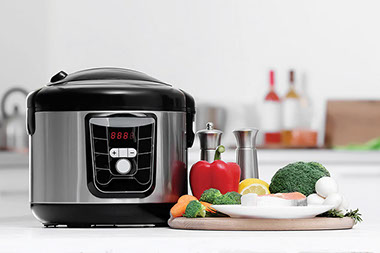
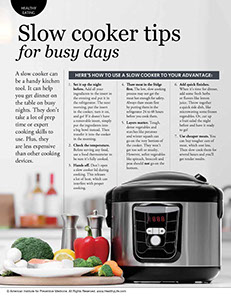
    Slow cooker on counter.

    A slow cooker can be a handy kitchen tool. It can help you get dinner on the table on busy nights. They don’t take a lot of prep time or expert cooking skills to use. Plus, they are less expensive than other cooking devices.

    Here’s how to use a slow cooker to your advantage:

    1.Set it up the night before.Add all your ingredients to the insert in the evening and put it in the refrigerator. The next morning, put the insert in the cooker, turn it on, and go! If it doesn’t have a removable insert, simply put the ingredients into a big bowl instead. Then transfer it into the cooker in the morning.

    2.Check the temperature.Before serving any food, use a food thermometer to be sure it’s fully cooked.

    3.Hands off.Don’t open a slow cooker lid during cooking. This releases a lot of heat, which can interfere with proper cooking.

    4.Thaw meat in the fridge first.The low, slow cooking process may not get the meat hot enough for safety. Always thaw meats first by putting them in the refrigerator 24 to 48 hours before you cook them.

    5.Layers matter.Tough, dense vegetables and starches like potatoes and winter squash can go on the very bottom of the cooker. They won’t get too soft or mushy. However, softer vegetables like spinach, broccoli and peas should not go on the bottom.

    6.Add quick finishes.When it’s time for dinner, add some fresh herbs or flavors like lemon juice. Throw together a quick side dish, like microwaving some frozen vegetables. Or, cut up a fruit salad the night before and have it ready to go!

    7.Use cheaper meats.You can buy tougher cuts of meat, which cost less. Then slow cook them for several hours and you’ll get tender results.

    © American Institute for Preventive Medicine
  • Stay Healthy With Shift Work

    WORK LIFE

    Doctor on phone working the night shift.

    For many people, shift work is a great way to get in hours around family commitments. For some people, shift work is simply part of their profession. Nurses, doctors, first responders and many others work shifts because it’s necessary.

    When you don’t work a 9 to 5 shift, it can be harder to find time to eat well and exercise. In the middle of the night, most restaurants and stores are closed. You may also feel tired and less motivated to exercise and eat well. But there are some ways to get around these obstacles.

    Try these healthy tips if you work a shift schedule:

    1.  Stock up on healthy food. When you’re tired, it’s easy to simply reach for convenience foods. Instead, keep your favorite fresh foods on hand at home or work and make them convenient. Washed and cut fruits and vegetables are a great snack anytime. You may also try nuts or seeds, oatmeal and hummus.

    2.  Make meals before your shift. Many times, the only choice during shift work is a vending machine. Try cooking large meals in a crock pot and freezing individual portions.

    3.  Avoid large portions. Many people feel tired and sluggish after a large meal. Pack portions that will fill you up without making you feel stuffed. Between meals, choose pre-packed, healthy snacks.

    4.  Take a break to eat. Sit down at a table, if possible. Enjoy your food and eat slowly. This can help you avoid overeating or mindless snacking.

    5.  Watch the caffeine.  Many people need at least six hours or more to process caffeine so they can sleep. If you’re feeling sluggish, try drinking plenty of water instead of coffee or tea.

    6.  Move your body when you can. Walk up and down stairs or hallways on breaks. Try stretching at your desk. You can even do some jumping jacks if you don’t have time for anything else. Any kind of physical activity can give you more energy and lift your mood.

    7.  Remember that sleep is important. Even if you don’t have a typical work schedule, you can still make sleep a priority. Aim for seven to nine hours per 24-hour period. If you can’t get that much at once, see if you can still get that much by using naps.

    Source: National Sleep Foundation

    © American Institute for Preventive Medicine
  • Stop The Spread Of Respiratory Infections

    MEDICAL NEWS

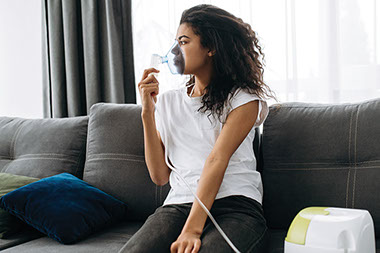
    Women sitting with a portable oxygen mask.

    The winter months are a peak time for the spread of infectious respiratory diseases. Cold weather often keeps people indoors, where it is easier for infections to spread.

    Infectious respiratory diseases include the common cold, as well as other respiratory illnesses that can be more serious. Some people may be at increased risk of severe side effects from respiratory disease, including the elderly, children, and the immunocompromised.

    Preventing the spread of respiratory disease helps keep everyone in your family and community safe. A few simple precautions can make all the difference. Once you know how these diseases are spread, you can take steps to contain them and make this winter a healthy one.

    Airborne transmission

    The most common way infectious respiratory diseases spread is by small aerosols that become airborne when an ill person coughs, laughs, talks, or sneezes. These tiny aerosols can hang in the air for hours and easily travel to the lungs when inhaled.

    Surface transmission

    Contact with a surface that is contaminated with droplets from an infected person is another route of transmission. If you touch something that has saliva or mucus on it and then later touch your mouth or face, you can become infected with the virus.

    Close contact transmission

    Being in close contact with someone infected with a virus can result in exposure to large virus-laden respiratory droplets. In contrast to the tiny aerosols that can hang in the air for an extended period, larger droplets fall quickly and most likely to spread when people are less than 3 feet apart.

    Types of infectious respiratory viruses

    *  Chickenpox

    *  Coronavirus infections (including SARS-CoV and MERS-CoV)

    *  Diphtheria

    *  Influenza (flu)

    *  Legionnaires’ disease

    *  Measles

    *  Middle East Respiratory Syndrome (MERS)

    *  Mumps

    *  Pneumonia

    *  Pneumococcal meningitis

    *  Rubella (German measles)

    *  Severe Acute Respiratory Syndrome (SARS)

    *  Tuberculosis

    *  Whooping cough

    Prevent the spread

    *  Minimize close contact with ill people.

    *  Wash your hands regularly with soap and water.

    *  Don’t share personal items such as food and utensils.

    *  Ask your doctor which vaccines are recommended for you, including the flu and COVID vaccines.

    *  Cover coughs and sneezes with your elbow and tissues (not your hands!).

    *  Stay home if you are ill.

    © American Institute for Preventive Medicine

  • Talking About Adoption: Do’s & Don’ts

    FAMILY LIFE

    Image of family waking along sidewalk.

    Many families include one or more children who are adopted. If you know someone with an adopted child, there are respectful ways to talk about it with them. And, if you have an adopted child, share these do’s and don’ts with friends and family members so they can be respectful to you.

    DO: Use the terms “birth child,” “adopted child,” “birth parents” or “biological parents” only when necessary. This may be during a discussion about the adoption itself. Otherwise, simply use “child” and “parent” with no other description. Once a child is adopted, they are their parents’ child and are no different than a child that was born biologically to them.

    DON’t: Use words like “real child,” “natural child,” “real parents” or “natural parents.” These terms can be hurtful to the family and imply that they don’t have a real relationship.

    DO: Treat all siblings in a family the same. Parents love all their children equally, whether they were adopted or not.

    DON’t: Bring up differences between adopted and biological children or refer to them as “adopted son” or “adopted daughter.” The word “adopted” is often not relevant or needed.

    DO: Speak about birth parents as choosing to make the best decision for their child through adoption. Children need to know that their birth parents wanted the best for them.

    DON’t: Say words like “put up” or “given up” for adoption. Also, don’t say “they chose not to keep” the child. This makes it sound like the birth parents didn’t care or didn’t want the child.

    DO: Celebrate cultural or racial differences within a family.

    DON’t: Ignore a child’s ethnicity, race or heritage. Children need support from family and friends to overcome stereotypes and racism.

    DO: Support parents who choose to adopt. Adoption is a beautiful gift for both the child and parents. Understand that the parents may be overwhelmed after adoption and may have financial stress. They may also be anxious about having a new child in the family.

    DON’t: Ask, “what did you pay for your child?” Children are not sold or bought. Adoption fees go toward social workers, court fees, paperwork, travel and other necessary expenses.

    Source: American Academy of Pediatrics

    © American Institute for Preventive Medicine

  • Telehealth: What To Know

    MEDICAL NEWS

    Phone and stethoscope.

    Telehealth or telemedicine uses video calls or other technology to help you see your doctor. This allows you to have medical appointments from home instead of going to the doctor’s office.

    Getting ready

    If you want to use telehealth, but don’t know how, contact your doctor’s office. Different doctors and hospitals use different apps and technology for their telemedicine appointments. Ask them for instructions on how to get set up.

    Before your appointment, check with your insurance company about coverage for telehealth appointments. Prepare a list of questions to ask your doctor so you’ll be sure to cover everything.

    If you need help

    If you’re feeling overwhelmed, ask a tech-savvy friend or family member to help. Usually, you only need:

    1.  A strong internet connection. Your connection needs to be fast enough for video chats.

    2.  A smartphone, tablet or computer that connects to your wi-fi and has a working microphone, speaker and camera. Most newer devices have all of these built in.

    Telehealth can be a safe and convenient way to have your medical appointments. Don’t be intimidated by technology. With a little help, you can be up and running – and it may become your favorite way to have your doctor visits!

    Source: National Institutes on Aging

    © American Institute for Preventive Medicine

  • The Family That Plays Together Stays Together

    FAMILY LIFE

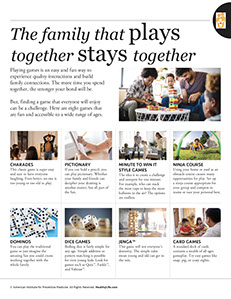
    Family playing Jenga.

    Playing games is an easy and fun way to experience quality interactions and build family connections. The more time you spend together, the stronger your bond will be. But, finding a game that everyone will enjoy can be a challenge. Here are eight games that are fun and accessible to a wide range of ages.

    Charades

    This classic game is super easy and sure to have everyone laughing. Even better, no one is too young or too old to play.

    Pictionary

    If you can hold a pencil, you can play pictionary. Whether your family and friends can decipher your drawing is another matter, but all part of the fun.

    Minute to win it style games

    The idea is to create a challenge and compete for one minute. For example, who can stack the most cups or keep the most balloons in the air? The options are endless.

    Ninja course

    Using your home or yard as an obstacle course creates many opportunities for play. Set up a ninja course appropriate for your group and compete in teams or race your personal best.

    Dominos

    You can play the traditional game or just imagine the amazing fun you could create working together with the whole family.

    Dice games

    Rolling dice is fairly simple for any age. Simple addition or pattern matching is possible for even young kids. Look for games such as Quix™, Farkle™, and Yahtzee™.

    Jenga™

    This game will test everyone’s dexterity. The simple rules mean young and old can get in the mix.

    Card games

    A standard deck of cards contains a wealth of all-ages gameplay. Try easy games like snap, pig, or crazy eights.

    © American Institute for Preventive Medicine
  • The Mighty Cruciferous

    HEALTHY EATING

    Different colored cauliflower in bowl, surrounded by bok choy, cabbage, kale.

    Cruciferous vegetables are among the most well-studied, cancer-fighting foods. This incredible group of vegetables is packed with nutrients that support good health and may prevent cancer growth.

    Cruciferous vegetables

    The name “cruciferous” comes from the cross-like shape (crucifer) of the four-petaled flowers these plants produce. They include:

    *  Broccoli

    *  Cauliflower

    *  Cabbage

    *  Brussel sprouts

    *  Kale

    *  Collard greens

    *  Bok choy

    Key nutrients

    Cruciferous vegetables are nutrient-dense, meaning they provide lots of nutrition in a low amount of calories. Some of their most important nutrients include:

    *  Vitamins C, E, and K

    *  Folate

    *  Carotenoids

    *  Fiber

    *  Potassium

    *  Selenium

    *  Glucosinolates, which are sulfur-containing compounds that are central to their cancer-fighting benefits.

    Cancer-fighting benefits

    While more research is needed, cruciferous vegetables may provide these benefits:

    *  Protect cellular DNA from damage

    *  Neutralize carcinogens

    *  Have anti-inflammatory effects

    *  Inhibit tumor blood vessel formation and metastasis

    *  Induce tumor cell death

    © American Institute for Preventive Medicine