Author: AIPM

  • Understanding Autoimmunity

    MEDICAL NEWS

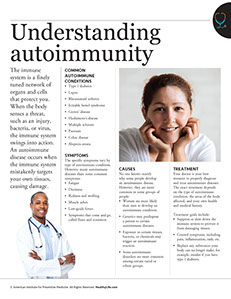
    Smiling female.

    The immune system is a finely tuned network of organs and cells that protect you. When the body senses a threat, such as an injury, bacteria, or virus, the immune system swings into action. An autoimmune disease occurs when the immune system mistakenly targets your own tissues, causing damage.

    Common autoimmune conditions

    *  Type 1 diabetes

    *  Lupus

    *  Rheumatoid arthritis

    *  Irritable bowel syndrome

    *  Graves’ disease

    *  Hashimoto’s disease

    *  Multiple sclerosis

    *  Psoriasis

    *  Celiac disease

    *  Alopecia areata

    Symptoms

    The specific symptoms vary by type of autoimmune condition. However, many autoimmune diseases share some common symptoms:

    *  Fatigue

    *  Dizziness

    *  Redness and swelling

    *  Muscle aches

    *  Low-grade fevers

    *  Symptoms that come and go, called flares and remission

    Causes

    No one knows exactly why some people develop an autoimmune disease. However, they are more common in some groups of people:

    *  Women are more likely than men to develop an autoimmune condition.

    *  Genetics may predispose a person to certain autoimmune diseases.

    *  Exposure to certain viruses, bacteria, or chemicals may trigger an autoimmune reaction.

    *  Some autoimmune disorders are more common among certain racial or ethnic groups.

    Treatment

    Your doctor is your best resource to properly diagnose and treat autoimmune diseases. The exact treatment depends on the type of autoimmune condition, the areas of the body affected, and your own health and medical history.

    Treatment goals include:

    *  Suppress or slow down the immune system to prevent it from damaging tissues.

    *  Control symptoms, including pain, inflammation, rash, etc.

    *  Replace any substances your body can no longer make, for example, insulin if you have type 1 diabetes.

    © American Institute for Preventive Medicine

  • Understanding Dyslexia

    MEDICAL NEWS

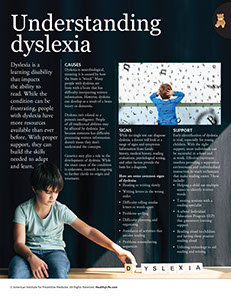
    Boy spelling DYSLEXIA with wood blocks.

    Dyslexia is a learning disability that impacts the ability to read. While the condition can be frustrating, people with dyslexia have more resources available than ever before. With proper support, they can build the skills needed to adapt and learn.

    Causes

    Dyslexia is neurobiological, meaning it is caused by how the brain is “wired.” Many people with dyslexia are born with a brain that has difficulty interpreting written information. However, dyslexia can develop as a result of a brain injury or dementia.

    Dyslexia isn’t related to a person’s intelligence. People of all intellectual abilities may be affected by dyslexia. Just because someone has difficulty processing written information doesn’t mean they don’t understand the concepts.

    Genetics may play a role in the development of dyslexia. While the exact cause of the condition is unknown, research is ongoing to further clarify its origin and treatment.

    Signs

    While no single test can diagnose dyslexia, a doctor will look at a range of signs and symptoms. Information from family history, medical history, reading evaluations, psychological testing, and other factors provide the basis for a diagnosis.

    Here are some common signs of dyslexia:

    *  Reading or writing slowly

    *  Writing letters in the wrong order

    *  Difficulty telling similar letters or words apart

    *  Problems spelling

    *  Difficulty planning and organizing

    *  Avoidance of activities that involve reading

    *  Problems remembering sequences

    Support

    Early identification of dyslexia is vital, especially for young children. With the right support, most individuals can be successful in school and at work. Effective treatment involves providing a supportive environment and individualized instruction to teach techniques that make reading easier. These include:

    *  Helping a child use multiple senses to identify written words

    *  Tutoring sessions with a reading specialist

    *  A school Individual Education Program (IEP) that guarantees learning support

    *  Reading aloud to children and having them practice reading aloud

    *  Utilizing technology to aid reading and writing

    © American Institute for Preventive Medicine
  • Weighted Blankets – A Sleep Saver?

    WELL-BEING

    Bed with weighted blankets.

    Weighted blankets have become popular – but do you need one?

    Weighted blankets are designed to feel very heavy. They are usually filled with glass or plastic pellets that add weight. Some people believe the extra weight can feel like a hug. This may have a calming effect.

    Before you invest in a weighted blanket, here’s what to know:

    *  No large studies say that weighted blankets have proven health benefits. But some smaller studies have found that they can help a person calm down when stressed. They may also help some people with insomnia and anxiety, according to the National Sleep Foundation.

    *  Weighted blankets come in different sizes and weights. You may wish to use one that weighs around 10 percent of your body weight.

    *  Never use a weighted blanket on a baby or toddler.

    © American Institute for Preventive Medicine

  • What Is ‘Lazy Eye’?

    MEDICAL NEWS

    Young child at the eye doctor office.

    Lazy eye, also known as amblyopia, is the most common cause of vision impairment in children.

    Amblyopia

    Amblyopia means that the vision in one eye is reduced because of a problem with the brain and eye communication. Amblyopia is not a disease, but is a result of another vision problem. Usually, amblyopia can happen when a child has:

    *  Strabismus, which is when the two eyes can’t work together to focus on one object. They may point in different directions. Strabismus may cause a crossed eye, known as esotropia. It may also cause one eye to turn outward, known as exotropia.

    *  One eye that is more nearsighted or farsighted.

    *  One eye that has an astigmatism and can’t see as well as the other eye.

    *  A cataract in one eye that causes blurred vision.

    In all of these cases, the brain can start to “ignore” the signals it gets from the weaker or blurred eye. It starts using the stronger eye by itself.

    When the brain doesn’t use one eye during childhood, the eye and brain connection doesn’t develop well. Over time, the vision in the weaker eye gets worse because the proper brain connections were not formed.

    Steps you can take

    All children should get an eye exam before age 4. If there is a family history of amblyopia, childhood cataracts or other eye problems, get their eyes checked during infancy.

    Treatment for amblyopia usually involves the child wearing an eye patch. They wear the patch over the stronger eye, forcing the brain to use the weaker eye. Your child’s eye doctor will tell you how and when they should wear the patch.

    It can be difficult for a child to get used to the eye patch. Try these tips:

    *  Use positive words to explain that the patch will help them see better.

    *  Allow them to pick out a color or design for their eye patch that they like.

    *  If the patch isn’t a good solution for your child, ask the eye doctor about special drops that blur vision in the strong eye for the same effect. The blurring effect is temporary.

    Don’t wait! Getting amblyopia treated during childhood can help your child have good vision as an adult.

    Sources: American Academy of Ophthalmology, National Eye Institute

    © American Institute for Preventive Medicine
  • What To Do When Your Heel Hurts

    SELF-CARE CORNER

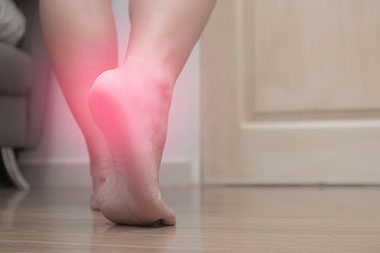
    Image of heel walking on bare floor.

    Heel pain is the most common foot and ankle problem. Often, a sore heel is not serious. But if you ignore it and keep using the foot, it could get worse.

    When it comes to heel pain, the first clue is where the heel hurts. Pain at the bottom of the heel is different from pain behind the heel.

    Pain underneath the heel

    *  Plantar fasciitis. This happens when activity inflames the tissue band that runs along the bottom of the foot. Sometimes, people get plantar fasciitis from wearing shoes that don’t properly support their foot. It’s often worse when you first get up in the morning. It can usually be resolved with rest, wearing special inserts in the shoes and/or physical therapy.

    *  Heel spur. A heel spur is a buildup of calcium that causes a bony bump on the heel bone. It usually happens if a person has plantar fasciitis for a long time. Treatment is usually similar to plantar fasciitis treatment.

    *  Stone bruise. Stepping on a hard object like a stone can injure the bottom of the heel. If you stepped on something recently, try to rest and protect the foot for a few days until it feels better. Wear shoes when you go outside to prevent this from happening in the future.

    Pain behind the heel

    Pain in the back of the heel is usually due to a problem with the Achilles tendon. This tendon connects the heel bone to the calf muscle. Heavy activity or exercise can put too much stress on the tendon too quickly. This can cause Achilles tendinitis, which includes small tears and inflammation in the tendon. Treatment may include:

    *  Physical therapy

    *  Rest

    *  Ice

    *  Orthotic(s) (shoe inserts)

    *  Night splint (device worn at night to protect the foot and tendon)

    People who have Achilles tendinitis may need to avoid the activity that caused it, such as running or jumping.

    Respect your feet

    Many people ignore heel pain, hoping it will go away. But, untreated problems with the foot may only get worse over time without treatment. If your heel pain lasts more than a couple of days, or if you have a health condition like diabetes, see a doctor right away.

    Source: American Academy of Orthopaedic Surgeons, American College of Foot and Ankle Surgeons

    © American Institute for Preventive Medicine

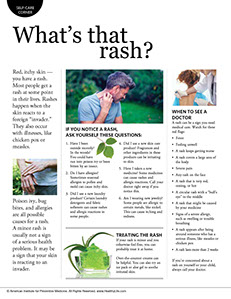
  • What’s That Rash?

    SELF-CARE CORNER

    Man itching rash on neck.

    Red, itchy skin – you have a rash. Most people get a rash at some point in their lives. Rashes happen when the skin reacts to a foreign “invader.” They also occur with illnesses, like chicken pox or measles.

    Poison ivy, bug bites, and allergies are all possible causes for a rash. A minor rash is usually not a sign of a serious health problem. It may be a sign that your skin is reacting to an invader.

    If you notice a rash, ask yourself these questions:

    1.  Have I been outside recently? In the woods? You could have run into poison ivy or been bitten by an insect.

    2.  Do I have allergies? Sometimes seasonal allergies to pollen and mold can cause itchy skin.

    3.  Did I use a new laundry product? Certain laundry detergents and fabric softeners can cause rashes and allergic reactions in some people.

    4.  Did I use a new skin care product? Fragrances and other ingredients in these products can be irritating to skin.

    5.  Have I taken a new medicine? Some medicines can cause rashes and allergic reactions. Call your doctor right away if you notice this.

    6.  Am I wearing new jewelry? Some people are allergic to certain metals, like nickel. This can cause itching and redness.

    Treating the rash

    If your rash is minor and you otherwise feel fine, you can probably treat it at home.

    Over-the-counter creams can be helpful. You can also try an ice pack or aloe gel to soothe irritated skin.

    When to see a doctor

    A rash can be a sign you need medical care. Watch for these red flags:

    *  Fever

    *  Feeling unwell

    *  A rash keeps getting worse

    *  A rash covers a large area of the body

    *  Severe pain

    *  Any rash on the face

    *  A rash that is very red, oozing, or hot

    *  A circular rash with a “bull’s eye” in the middle

    *  A rash that might be caused by your medicine

    *  Signs of a severe allergy, such as swelling or trouble breathing

    *  A rash appears after being around someone who has a serious illness, like measles or chicken pox

    *  A rash lasts more than 2 weeks

    If you’re concerned about a rash on yourself or your child, always call your doctor.

    © American Institute for Preventive Medicine
  • Why You Should Check Your Social Security Statement

    FINANCIAL HEALTH

    Man smiling while using the computer.

    If you’re not close to retirement, you may not think much about your Social Security statement. But you can – and should – check it once a year. Here’s why:

    *  There could be errors in your wages that need to be corrected.

    *  You can see how much you’ve paid into Social Security.

    *  You can get an estimate of your future Social Security payments.

    *  You can make sure your address or direct deposit information is correct.

    Check your statement for free online at the official Social Security website atssa.gov. Make sure you are on a website that ends in “.gov” or it’s not the official website.

    © American Institute for Preventive Medicine