Author: AIPM

  • Keep Produce At Its Peak

    Nutrition

    Image of reusable bag filled with produce.

    Produce-fresh fruits and vegetables-is a gold mine of nutrients, usually with a price to match. To get the most nutrition for the “lettuce” you fork over for fresh produce, follow these suggestions.

    *  Select fruits and vegetables that look crisp or feel firm.

    *  When buying citrus fruits and pineapple, choose fruits that feel heavy for their size.

    *  Don’t buy produce that’s soft or bruised.

    *  Don’t buy more than you can use within a few days. If not used within a few days, store it under refrigeration. Most kinds of produce kept at room temperature ripens-or spoils-more rapidly. That’s fine if you’re eager to eat an avocado or banana, but not so great if you want to be able to use every last orange or lemon in the bag.

    *  Don’t soak produce in water-nutrients will leach out.

    *  Pat produce dry after washing, to prolong freshness.

    *  Don’t cut vitamin C rich fruits or vegetables, like strawberries and peppers, until just prior to eating. Exposure to the air destroys vitamin C.

    Page from A Year of Health Hints book by the American Institute for Preventive Medicine. www.HealthyLife.com. All rights reserved.

    © American Institute for Preventive Medicine

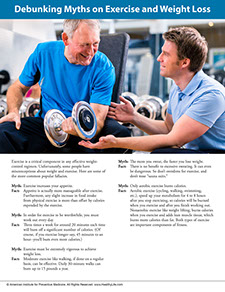
  • Debunking Myths On Exercise And Weight Loss

    Weight Control

    Exercise is a critical component in any effective weight-control regimen. Unfortunately, some people have misconceptions about weight and exercise. Here are some of the more common popular fallacies.

    Myth: Exercise increases your appetite.

    Fact: Appetite is actually more manageable after exercise. Furthermore, any slight increase in food intake from physical exercise is more than offset by calories expended by the exercise.

    Myth: In order for exercise to be worthwhile, you must work out every day.

    Fact: Three times a week for around 20 minutes each time will burn off a significant number of calories. (Of course, if you exercise longer-say, 45 minutes to an hour–you’ll bum even more calories.)

    Myth: Exercise must be extremely vigorous to achieve weight loss.

    Fact: Moderate exercise like walking, if done on a regular basis, can be effective. Daily 30-minute walks can burn up to 15 pounds a year.

    Myth: Only aerobic exercise burns calories.

    Fact: Aerobic exercise (cycling, walking, swimming, etc.), speed up your metabolism for 4 to 8 hours after you stop exercising, so calories will be burned when you exercise and after you finish working out. Nonaerobic exercise like weight lifting, burns calories when you exercise and adds lean muscle tissue, which burns more calories than fat. Both types of exercise are important components of fitness.

    Myth: The more you sweat, the faster you lose weight.

    Fact: There is no benefit to excessive sweating. It can even be dangerous. So don’t overdress for exercise, and don’t wear “sauna suits.”

    Page from A Year of Health Hints book by the American Institute for Preventive Medicine. www.HealthyLife.com. All rights reserved.

    © American Institute for Preventive Medicine

  • Motivation Is The Gateway For Adopting Healthy Changes

    Weight Control

    Female standing outside with arms open taking in the fresh air.

    *  Decide what changes YOU want to achieve, not what someone else wants you to do.

    *  Remind yourself, daily, why you want to make a health change. Picture the change taking place.

    *  Post reminders around the house.

    *  List things you have achieved and are proud of. Use your successes to realize that you can accomplish any goal you set your mind to.

    Dos

    *  Choose salads with low-calorie dressing and limit portions when eating out.

    *  Keep healthy snacks handy so the healthy choices are the easy choices.

    *  Be patient. It takes up to 6 weeks to make a new habit.

    Don’ts

    *  Don’t supersize a fast food meal.

    *  Don’t choose coffee beverages with syrup as a daily habit.

    *  Don’t let slip-ups keep you from making permanent, healthy changes.

    Page from HealthyLife Weigh book by the American Institute for Preventive Medicine. www.HealthyLife.com. All rights reserved.

    © American Institute for Preventive Medicine
  • Mind Your Mindless Munching 2

    Weight Control

    Eating when you are distracted can pack on pounds.

    To lose weight, you need to make a conscious effort to watch what you eat. No more of that “it doesn’t count because it’s not on my plate” logic. Calories from mindless munching in front of the TV, at your desk, or in the car add up quickly.

    Lower the need for munching & snack attacks.

    Image of teenage boys eating out of big bag of chips.

    *  Eat meals at regular times. Have breakfast every day.

    *  Eat when you feel hungry.

    *  Set a timer for 20 minutes and make your meal last that long.

    *  Chew foods slowly. Sip; don’t gulp.

    *  Savor a food’s flavor.

    *  Put your fork or spoon down between bites.

    *  If your stomach feels satisfied, stop eating.

    Identify what, where, and why you eat between meals.

    When you keep your daily activity diary, highlight all the extras – the mindless munchies – and add up just those calories. Note the places and activities you are doing and how you are feeling.

    Substitute a healthier activity for munching.

    *  Instead of eating when you watch TV, exercise or work on a craft to keep your hands busy.

    *  Do you eat when you are nervous, on a deadline, or upset? Go for a short walk instead.

    *  Do you treat yourself every time you pass the jar of candy or nuts at work? Walk around it or look the other way.

    *  Do you order the large popcorn at the movies and munch for 90 minutes straight? Take a couple of hard candies in your pocket. Pop these into your mouth instead.

    *  Lunch at your desk again? Stop multi-tasking and focus on your food.

    *  TV dinners common in your house? Clear the clutter off the dining room table and enjoy an easily prepared home cooked meal.

    *  Are you an appetizer addict? Learn to say “No” to tortilla chips or any other pre-meal snacks. Drink a glass of water or chew sugarless gum while you are waiting for your meal.

    Action Step

    Fill your time with activities you like to do that do not involve eating. Go for a walk. Do a home improvement project. Volunteer to help others. Take up a new hobby or renew an old one.

    Page from Ways to Well-Being book by the American Institute for Preventive Medicine. www.HealthyLife.com. All rights reserved.

    © American Institute for Preventive Medicine

  • Menus

    Nutrition

    You can follow the menus exactly or make changes as needed. It is okay to:

    *  Switch out foods from one meal to another (e.g. have the lunch menu for dinner and vice versa).

    *  If you are still hungry, especially if you are very active, eat a little more from one or more of the foods suggested for that day.

    *  Add more spices and low-sodium flavorings to dishes.

    *  Use 1 teaspoon of canola or olive oil with added herbs and spices instead of the salad dressing listed in the menu.

    *  Use the same menu several days in a row. This can be easier if you are only preparing food for one or two people. This can also help save money and trips to the grocery store.

    *  Swap a vegetable or a fruit that is listed for one that is seasonal or available in your area or for what you prefer to eat. For example, you can swap broccoli for asparagus or a pear for an apple.

    Reminder:

    If you eat more than recommended on a given day, get back on track the next day. Avoid restricting food to “make up” for what you ate yesterday. Your whole eating pattern over time and self-compassion for your body is more important.

    Page from HealthyLife Weigh Menus book by the American Institute for Preventive Medicine. www.HealthyLife.com. All rights reserved.

    © American Institute for Preventive Medicine

  • Make An Appointment To Exercise & Keep It

    Fitness

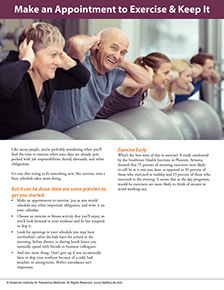
    Image of an exercise class.

    Like many people, you’re probably wondering when you’ll find the time to exercise when your days are already jam-packed with job responsibilities, family demands, and other obligations. It’s true that trying to fit something new, like exercise, into a busy schedule takes some doing. But it can be done. Here are some pointers to get you started.

    *  Make an appointment to exercise, just as you would schedule any other important obligation, and write it on your calendar.

    *  Choose an exercise or fitness activity that you’ll enjoy, so you’ll look forward to your workout and be less tempted to skip it.

    *  Look for openings in your schedule you may have overlooked-after the kids leave for school in the morning, before dinner, or during lunch hours you normally spend with friends or business colleagues.

    *  And one more thing: Don’t give up if you occasionally have to skip your workout because of a cold, bad weather, or emergencies. Perfect attendance isn’t important.

    Exercise Early

    What’s the best time of day to exercise? A study conducted by the Southwest Health Institute in Phoenix, Arizona, showed that 75 percent of morning exercisers were likely to still be at it one year later, as opposed to 50 percent of those who exercised at midday and 25 percent of those who exercised in the evening. It seems that as the day progresses, would-be exercisers are more likely to think of excuses to avoid working out.

    Page image from A Year of Health Hints book by the American Institute for Preventive Medicine. www.HealthyLife.com. All rights reserved.

    © American Institute for Preventive Medicine

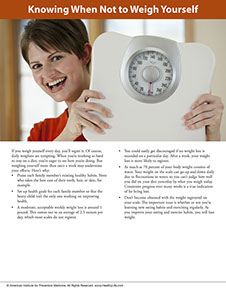
  • Knowing When Not To Weigh Yourself

    Weight Control

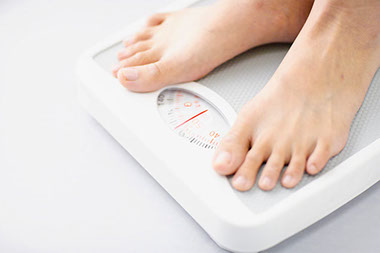
    Image on feet on a scale.

    If you weigh yourself every day, you’ll regret it. Of course, daily weigh-ins are tempting. When you’re working so hard to stay on a diet, you’re eager to see how you’re doing. But weighing yourself more than once a week may undermine your efforts. Here’s why:

    *  Praise each family member’s existing healthy habits. Note who takes the best care of their teeth, hair, or skin, for example.

    *  Set up health goals for each family member so that the heavy child isn’t the only one working on improving health.

    *  A moderate, acceptable weekly weight loss is around 1 pound. This comes out to an average of 2.3 ounces per day, which most scales do not register.

    *  You could easily get discouraged if no weight loss is recorded on a particular day. After a week, your weight loss is more likely to register.

    *  As much as 70 percent of your body weight consists of water. Your weight on the scale can go up and down daily due to fluctuations in water, so you can’t judge how well you did on your diet yesterday by what you weigh today. Consistent progress over many weeks is a true indication of fat being lost.

    *  Don’t become obsessed with the weight registered on your scale. The important issue is whether or not you’re learning new eating habits and exercising regularly. As you improve your eating and exercise habits, you will lose weight.

    Page from A Year of Health Hints book by the American Institute for Preventive Medicine. www.HealthyLife.com. All rights reserved.

    © American Institute for Preventive Medicine