Author: AIPM

  • Mango Shake

    Nutrition

    3 Servings, 1 cup each

    Ingredients:

    2 cups nonfat milk

    4 tablespoons frozen mango juice (or 1 fresh pitted mango)

    1/8 tsp. vanilla extract

    2 ice cubes

    Directions:

    Put all ingredients into a blender. Blend until foamy. Serve immediately.

    Variations:

    Instead of mango juice, try orange juice, papaya, or strawberries.

    Per Serving:

    Calories – 150

    Total fat – 1 gram

    Saturated fat – 0.5 gram

    Sodium – 110 mg

    Page from HealthyLife Weigh Recipe book by the American Institute for Preventive Medicine. www.HealthyLife.com. All rights reserved.

    © American Institute for Preventive Medicine

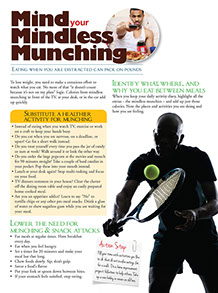
  • Mind Your Mindless Munching 2

    Weight Control

    Eating when you are distracted can pack on pounds.

    To lose weight, you need to make a conscious effort to watch what you eat. No more of that “it doesn’t count because it’s not on my plate” logic. Calories from mindless munching in front of the TV, at your desk, or in the car add up quickly.

    Lower the need for munching & snack attacks.

    Image of teenage boys eating out of big bag of chips.

    *  Eat meals at regular times. Have breakfast every day.

    *  Eat when you feel hungry.

    *  Set a timer for 20 minutes and make your meal last that long.

    *  Chew foods slowly. Sip; don’t gulp.

    *  Savor a food’s flavor.

    *  Put your fork or spoon down between bites.

    *  If your stomach feels satisfied, stop eating.

    Identify what, where, and why you eat between meals.

    When you keep your daily activity diary, highlight all the extras – the mindless munchies – and add up just those calories. Note the places and activities you are doing and how you are feeling.

    Substitute a healthier activity for munching.

    *  Instead of eating when you watch TV, exercise or work on a craft to keep your hands busy.

    *  Do you eat when you are nervous, on a deadline, or upset? Go for a short walk instead.

    *  Do you treat yourself every time you pass the jar of candy or nuts at work? Walk around it or look the other way.

    *  Do you order the large popcorn at the movies and munch for 90 minutes straight? Take a couple of hard candies in your pocket. Pop these into your mouth instead.

    *  Lunch at your desk again? Stop multi-tasking and focus on your food.

    *  TV dinners common in your house? Clear the clutter off the dining room table and enjoy an easily prepared home cooked meal.

    *  Are you an appetizer addict? Learn to say “No” to tortilla chips or any other pre-meal snacks. Drink a glass of water or chew sugarless gum while you are waiting for your meal.

    Action Step

    Fill your time with activities you like to do that do not involve eating. Go for a walk. Do a home improvement project. Volunteer to help others. Take up a new hobby or renew an old one.

    Page from Ways to Well-Being book by the American Institute for Preventive Medicine. www.HealthyLife.com. All rights reserved.

    © American Institute for Preventive Medicine

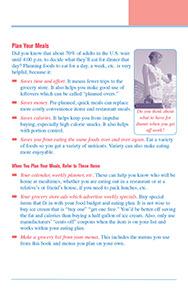
  • Plan Your Meals

    Nutrition

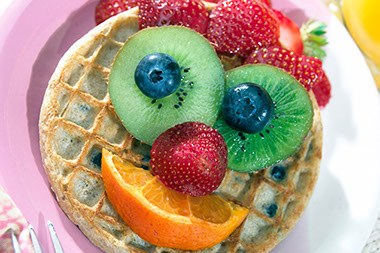
    Image of a face made out of fruit on a waffle.

    Did you know that about 70% of adults in the U.S. wait until 4:00 p.m. to decide what they’ll eat for dinner that day? Planning foods to eat for a day, a week, etc. is very helpful, because it:

    *  Saves time and effort. It means fewer trips to the grocery store. It also helps you make good use of leftovers which can be called “planned overs.”

    *  Saves money. Pre-planned, quick meals can replace more costly convenience items and restaurant meals.

    *  Saves calories. It helps keep you from impulse buying, especially high calorie snacks. It also helps with portion control.

    *  Saves you from eating the same foods over and over again. Eat a variety of foods so you get a variety of nutrients. Variety can also make eating more enjoyable.

    When You Plan Your Meals, Refer to These Items

    *  Your calendar, weekly planner, etc. These can help you know who will be home at mealtimes, whether you are eating out in a restaurant or at a relative’s or friend’s house, if you need to pack lunches, etc.

    *  Your grocery store ads which advertise weekly specials. Buy special items that fit in with your food budget and eating plan. It is not wise to buy ice cream that is “buy one” “get one free.” You’d be better off saving the fat and calories than buying a half-gallon of ice cream. Also, only use manufacturers’ “cents-off” coupons when the item is on your list and works within your eating plan.

    *  Make a grocery list from your menus. This includes the menus you use from this book and menus you plan on your own.

    Plan Breakfast

    Breakfast Is Important!

    *  It “breaks the fast” from sleeping.

    *  It helps give you energy to start your day.

    *  It is a way to get dietary fiber.

    *  It doesn’t take a lot of time.

    What To Eat

    *  When you plan your own breakfast, choose whole grain cereals and breads, fresh fruits, fruit juices, frozen, and canned fruits (in water or its own juice), skim, nonfat, or low-fat milks (regular or soy) and yogurts made from these. Add calorie-free items, such as coffee, tea, seasonings, spices (e.g., cinnamon for hot cereal).

    Breakfast Menu Makeover

    A breakfast of eggs, meat, hash browns, and toast and butter…should be eaten only occasionally. If eaten every day, the calories, fat, and cholesterol add up.

    Plan Lunch

    Suggestions For “Brown Bagging It”

    *  Fresh fruits

    *  Fresh vegetables or vegetable juices

    *  Whole wheat breads

    *  Lean meat, poultry, fish, dry beans, peas, lentils, hard-cooked eggs (especially egg whites), low-fat cheeses (2 to 6 grams of fat per ounce)

    *  Skim milk, low-fat (1%) milk, or nonfat or low-fat yogurt (regular or soy)

    *  Minimal fats, including margarine or salad dressings. Opt for low-fat or fat-free salad dressings, “butter”-type sprinkles and other no fat condiments, such as mustard, ketchup, or fat-free margarines

    Suggestions for Vegetables

    *  Large green salad with a mixture of greens and raw vegetables, such as cucumbers, green pepper, onions and broccoli. These could be “planned overs” from last night’s dinner salad.

    *  Raw vegetables, such as carrot sticks, celery sticks, broccoli, cauliflower, cucumbers, tomato slices, and/or beets. Keep these cut up and ready-to-eat in your refrigerator. They will be easy to grab when making your lunch.

    *  Ready-to-eat vegetables, such as peeled baby carrots; fresh, bagged salads, spinach, etc.

    *  Chopped raw vegetables for sandwich garnishes or stuffed in pita bread

    *  Soup or casserole dishes with vegetables. These could be “planned overs” from last night’s dinner.

    Suggestions for Fruits

    *  Keep fresh fruit in a fruit basket on the table or counter at home. Eat the fruit with the skin, if edible. This adds dietary fiber.

    *  Buy individual fruit cups (packed in water or in fruit juice) or buy larger cans and portion out the fruit in “keep cold” containers.

    Suggestions for Sandwiches

    *  Choose breads with dietary fiber, such as whole-wheat, multi-grain, Boston brown, rye, oatmeal, and pumpernickel.

    *  Choose from many shapes, such as pita (pocket), sub roll, bagel, soft tortilla, rice cakes, and lavash.

    *  Make a sandwich with lettuce leaves in place of bread.

    For Sandwich Fillings, Choose

    *  “Planned over” roast meats, turkey, chicken, or pork loin

    *  Lean deli and pre-packaged meats, such as turkey and chicken breast, or ham

    *  Flaked, cooked fish, or water packed tuna mixed with chopped, cooked, or raw vegetables and plain low-fat or fat-free dressings

    *  Mashed, cooked beans flavored with: A creole sauce made with tomatoes, onions, celery, green peppers

    *  Chopped onion and parsley, garlic powder, rosemary, thyme, and pepper

    *  Chopped cooked lean pork, celery, onions, and plain nonfat yogurt

    *  Low-fat cheeses that list no more than 6 grams of fat per ounce

    Other Bagged Lunch Suggestions

    *  Large salad with greens, chopped vegetables, lean meats, low-fat cheese, beans, such as garbanzo and kidney. Use a nonfat, no-oil, low-fat or regular salad dressing. Use serving sizes allowed in your food budget.

    *  Soup, such as vegetable or reduced fat cream of broccoli, with a whole grain muffin, fruit, and nonfat yogurt.

    *  “Planned overs” from the previous night’s dinner (e.g., lean meat, vegetable, rice, a casserole serving, chili, etc.)

    Plan Dinner

    *  Plan foods that you and your family and/or guests enjoy eating and that can be made in the time you have to prepare the meal.

    *  Choose foods that vary in flavor, color, texture, and temperature. The combination of foods should blend well together and look appealing.

    *  Make efficient use of your kitchen equipment. (For example, make baked potatoes with a roasted entree.)

    *  Focus on entrees that have whole grains and vegetables and less meat. Examples are stir-fry dishes, pasta dishes, chilis, soups, and stews.

    *  Add items to the entree (if they are not already part of it). Examples are potatoes, rice, pasta, couscous, and beans. Opt for whole grain products (bread, pasta, brown rice, etc. instead of white, enriched products), whenever possible.

    Lean (Fresh) Meat Suggestions

    *  Beef – round, sirloin, flank, lean tenderloin

    *  Veal – all trimmed cuts, except commercially ground

    *  Pork – tenderloin, leg (fresh), shoulder (arm or picnic), lean ham

    *  Lamb – leg, arm, loin

    *  Poultry – turkey, chicken, cornish hens

    *  Fish and shellfish – all, except fried

    *  Meat counter pre-portioned items – shish-kebobs or skewers of city chicken

    Meatless Main Dish Suggestions

    *  Dry beans, kidney beans, black beans, pinto beans, peas, lentils, garbonzo beans (chick peas), split peas, and lentils in soups, stews, and pasta sauces

    *  Vegetarian burgers and entrees

    *  Low-fat cheeses

    *  Tofu (soy bean curd)

    Convenience Food Items Suggestions

    *  Frozen dinners – Choose ones with less than 300 calories and less than 1000 mg of sodium.

    *  Frozen entrees – Look for ones with 15 grams of fat or less per serving.

    *  Prepared entrees in the meat section – Examples are pre-roasted, heat and serve chicken or turkey.

    *  Deli pre-cooked items – Choose barbecued chicken, broasted chicken breasts, and baked fish (available at some supermarkets with fish counters, cooked while you shop).

    *  Fast-food items – Choose pizza (without extra cheese and fatty meats); broiled and rotisserie chicken and broiled chicken sandwiches; quarter pound or 2 oz. hamburgers without cheese and mayonnaise; regular or junior sized shaved roast beef sandwiches; broiled and baked fish; soft tacos, burritos, tostadas, and chili; plain baked potatoes and vegetables; salads and salad bar (omit high fat items like regular dressing, creamy dressed salads, such as potato salad, etc.).

    *  Items usually served at breakfast – Have bagels, pancakes, English muffins, juice, fruits, fat-free muffins, cereal, skim and 1% milk, etc.

    Vegetable Suggestions

    Vegetables add color, texture, fiber, vitamins and minerals without adding a lot of calories. Choose good sources of carotene and vitamin C, often.

    Good Sources of Carotene

    (the form of vitamin A found in fruits and vegetables)

    *  Apricots

    *  Broccoli

    *  Cantaloupe

    *  Carrots

    *  Collard greens

    *  Peas

    *  Spinach

    *  Sweet potatoes

    *  Tomatoes

    *  Turnip greens

    *  Winter squash

    Tips for Vegetables

    *  Steam vegetables, cook them in the microwave or in a small amount of water to the “tender-crisp” stage. More nutrients will be retained.

    *  Add herbs, spices, wine, or de-fatted chicken stock to the water when steaming vegetables. These will add flavor.

    *  Use the liquid that the vegetables are cooked in to sauté foods or in soups and stews.

    *  Keep a supply of cut-up vegetables in the refrigerator. Cut vegetables into serving-sized snack pieces when you bring them home from the store. You will be more likely to eat them when they are ready-to-eat. Add them to fast-food meals that you bring home.

    *  Add imitation butter sprinkles or lemon juice and herbs to steamed vegetables instead of butter, margarine, honey, salt, and soy sauce. This will keep down the extra calories, fat, sugar, and sodium.

    Good Sources of Vitamin C

    *  Broccoli

    *  Brussels sprouts

    *  Cabbage

    *  Cantaloupe

    *  Citrus fruits & juices

    *  Strawberries

    *  Cauliflower

    *  Collard greens

    *  Green and red peppers

    *  Kiwi fruit

    *  Peas

    *  Tomatoes

    Plan Snacks

    Snacks can be part of healthy eating. Count them in your daily eating plan, not as “extras.” With planning, you can be prepared for “snack attacks.” This could help keep you from getting high fat, high salt items from vending machines, etc. Keep items that won’t spoil in a desk drawer at work, in your purse, briefcase, locker, etc.

    What to Eat

    *  Free items listed on page 18 and raw vegetables from the vegetable group.

    *  Foods from breakfast, lunch, or dinner menus. For example, save your serving of fruit from lunch and eat it between lunch and dinner.

    *  Any item(s) that total your daily “Extra Calories” budget. Read food labels for information. See the lists below for examples.

    Other Tips

    *  If it is hard for you to avoid eating high fat, high salt and high sugar snacks, don’t buy them. If you have a hard time stopping at one small serving, buy single-serving items.

    *  Eat snacks slowly. Use utensils to eat them.

    *  After you eat your planned snack, drink water and/or brush or floss your teeth.

    Sample 60 Calorie Snacks

    *  1 small apple, orange, or pear

    *  3 cups “light” microwave popcorn

    *  2 Tofutti fudge treat bars

    *  5-6 animal crackers

    *  2 fortune cookies

    *  1 fruit roll snack

    *  2 gingersnaps

    *  24 thin pretzel sticks

    *  1 Jell-O gelatin bar

    *  1 Dole Fruit ‘n Juice bar

    *  1-1/4 cups V-8 juice

    *  1/2 cup sorbet

    *  4 small shrimp

    *  4 ounces “lite” wine

    Sample 90 Calorie Snacks

    *  1 cup nonfat, plain yogurt

    *  1/2 cup fat free ice cream

    *  1/2 cup nonfat frozen yogurt

    *  2 ounces fat-free cheddar cheese

    *  1/2 cup fat-free pudding

    *  1 cup sugar-free yogurt with fruit

    *  1 Rice Krispies Treats bar

    *  1 thin slice banana bread

    *  1 rice cake with 1/2 Tbsp. peanut butter

    *  Low fat fruit smoothie drink

    *  8 ounces sugar-free hot cocoa

    *  4 ounces regular wine or 12 ounces “lite” beer

    Sample 120 Calorie Snacks

    *  1 cup nonfat, plain yogurt + 1/2 cup strawberries

    *  1 ounce dry roasted soy nuts

    *  4 mini Chips Ahoy cookies or 7 mini Oreo cookies

    *  2/3 cup Chex Mix

    *  3 rice cakes or 2 rice cakes with 1/2 Tbsp. peanut butter

    *  6 cups “lite” microwave popcorn

    *  11 animal crackers

    *  2 plain donut holes

    *  12 ounces regular beer

    Behavior Change Tip

    If you don’t have time to make a lunch in the morning, make it the night before. Put “planned overs” in controlled serving sizes in portable containers. Refrigerate items as needed. The next morning, your lunch is ready-to-go.

    Page from HealthyLife Weigh book by the American Institute for Preventive Medicine. www.HealthyLife.com. All rights reserved.

    © American Institute for Preventive Medicine

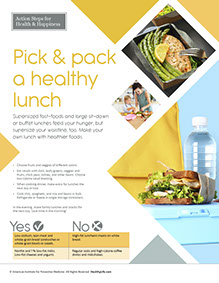
  • Pick & Pack A Healthy Lunch

    Nutrition

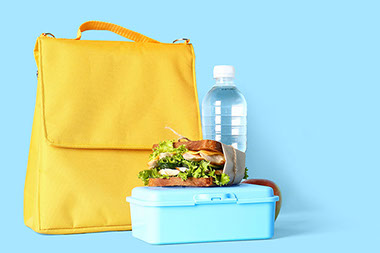
    Sandwich and water bottle sitting next to lunch bag.

    Supersized fast-foods and large sit-down or buffet lunches feed your hunger, but supersize your waistline, too. Make your own lunch with healthier foods.

    *  Choose fruits and veggies of different colors.

    *  Eat salads with dark, leafy greens; veggies and fruits; chick peas, kidney, and other beans. Choose low-calorie salad dressing.

    *  When cooking dinner, make extra for lunches the next day or two.

    *  Cook chili, spaghetti, and rice and beans in bulk. Refrigerate or freeze in single storage containers.

    In the evening, make family lunches and snacks for the next day. Save time in the morning!

    Yes:

    *  Low-sodium, lean meat and  whole-grain bread sandwiches or whole-grain bowls or salads.

    *  Nonfat and 1% low-fat milks. Low-fat cheeses and yogurts.

    No:

    *  High-fat luncheon meats on white bread.

    *  Regular soda and high-calorie coffee drinks and milkshakes.

    Page from HealthyLife Weigh book by the American Institute for Preventive Medicine. www.HealthyLife.com. All rights reserved.

    © American Institute for Preventive Medicine

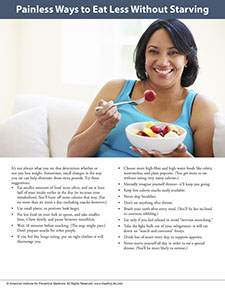
  • Painless Ways To Eat Less Without Starving

    Weight Control

    It’s not always what you eat that determines whether or not you lose weight. Sometimes, small changes in the way you eat can help eliminate those extra pounds. Try these suggestions.

    *  Eat smaller amounts of food more often, and eat at least half of your intake earlier in the day (to increase your metabolism). You’ll burn off more calories that way. (Eat no more than six times a day-including snacks-however.)

    *  Use small plates, so portions look larger.

    *  Put less food on your fork or spoon, and take smaller bites. Chew slowly, and pause between mouthfuls.

    *  Wait 10 minutes before snacking. (The urge might pass.) Don’t prepare snacks for other people.

    *  If you feel like binge eating, put on tight clothes-it will discourage you.

    *  Choose more high-fiber and high-water foods like celery, watermelon, and plain popcorn. (You get more to eat without eating very many calories.)

    *  Mentally imagine yourself thinner–it’ll keep you going.

    *  Keep low-calorie snacks easily available.

    *  Never skip breakfast.

    *  Don’t eat anything after dinner.

    *  Brush your teeth after every meal. (You’ll be less inclined to continue nibbling.)

    *  Eat only if you feel relaxed to avoid “nervous munching.”

    *  Take the light bulb out of your refrigerator–it will cut down on “search-and-consume” forays.

    *  Drink lots of water every day, to suppress appetite.

    *  Never starve yourself all day in order to eat a special dinner. (You’ll be more likely to overeat.)

    Page from A Year of Health Hints book by the American Institute for Preventive Medicine. www.HealthyLife.com. All rights reserved.

    © American Institute for Preventive Medicine

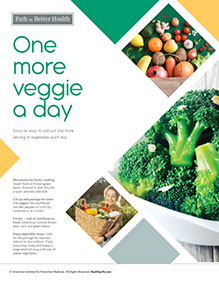
  • One More Veggie A Day

    Nutrition

    Women carrying a basket filled with vegetables.

    Focus on ways to add just one more serving of vegetables each day.

    *Microwave for faster cooking:Steam fresh or frozen green beans, broccoli or bok choy for a quick and easy side dish.

    *Cut up and package for later:Use veggies like cauliflower and bell peppers in a stir-fry, casserole or as a snack.

    *Frozen – just as nutritious as fresh:Good buys include frozen peas, corn and green beans.

    *Enjoy vegetable soups:Look on the package for reduced-sodium or low-sodium. If you have time, make and freeze a large batch of soup with lots of added vegetables.

    Page from HealthyLife Weigh book by the American Institute for Preventive Medicine. www.HealthyLife.com. All rights reserved.

    © American Institute for Preventive Medicine

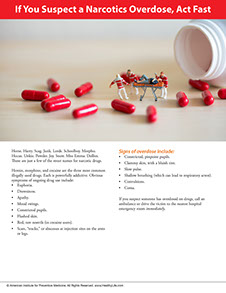
  • If You Suspect A Narcotics Overdose, Act Fast

    Substance Use & Abuse

    Horse. Harry. Scag. Junk. Lords. Schoolboy. Morpho. Hocus. Unkie. Powder. Joy. Snow. Miss Emma. Dollies. These are just a few of the street names for narcotic drugs. Heroin, morphine, and cocaine are the three most common illegally used drugs. Each is powerfully addictive. Obvious symptoms of ongoing drug use include:

    *  Euphoria.

    *  Drowsiness.

    *  Apathy.

    *  Mood swings.

    *  Constricted pupils.

    *  Flushed skin.

    *  Red, raw nostrils (in cocaine users).

    *  Scars, “tracks,” or abscesses at injection sites on the arms or legs.

    Signs of overdose include:

    *  Constricted, pinpoint pupils.

    *  Clammy skin, with a bluish tint.

    *  Slow pulse.

    *  Shallow breathing (which can lead to respiratory arrest).

    *  Convulsions.

    *  Coma.

    If you suspect someone has overdosed on drugs, call an ambulance or drive the victim to the nearest hospital emergency room immediately.

    Page from A Year of Health Hints book by the American Institute for Preventive Medicine. www.HealthyLife.com. All rights reserved.

    © American Institute for Preventive Medicine

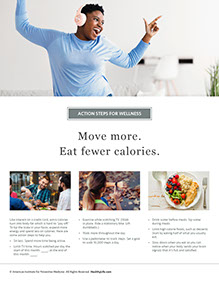
  • Move More. Eat Fewer Calories.

    Weight Control

    Women with headphones on, singing and dancing.

    Like interest on a credit card, extra calories turn into body fat which is hard to “pay off.” To tip the scale in your favor, expend more energy and spend less on calories. Here are some action steps to help you.

    *  Sit less. Spend more time being active.

    *  Limit TV time. Hours watched per day the start of this month: _____; at the end of this month: _____.

    *  Exercise while watching TV. (Walk in place. Ride a stationary bike. Lift dumbbells.)

    *  Walk more throughout the day.

    *  Use a pedometer to track steps. Set a goal to walk 10,000 steps a day.

    *  Drink water before meals. Sip water during meals.

    *  Limit high calorie foods, such as desserts. Start by eating half of what you usually eat.

    *  Slow down when you eat so you can notice when your body sends your brain signals that it’s full and satisfied.

    Page from HealthyLife Weigh book by the American Institute for Preventive Medicine. www.HealthyLife.com. All rights reserved.

    © American Institute for Preventive Medicine

  • Mix-And-Match Training Menu

    Fitness

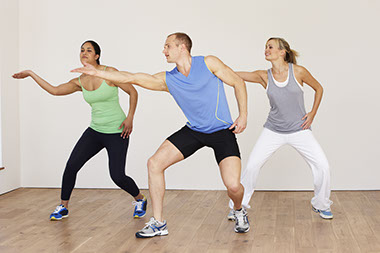
    Aerobic Dancing / Step Aerobics (low to high-impact)

    Aerobic dancing, step aerobics. Low to high impact.

    Body Benefits

    Excellent for cardiovascular health and overall body toning.

    Training Key

    Find an instructor who works in a style and tempo you feel comfortable with.

    Caution

    High-impact aerobics can strain the knees, hips and ankles. Step aerobics is lower-impact but should be avoided by anyone with knee problems.

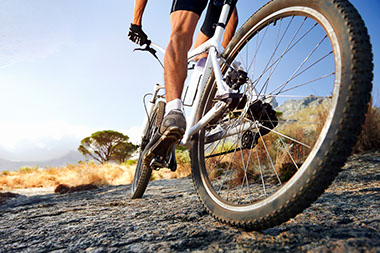
    Bicycling (low-impact)

    Bicycling, low impact training.

    Body Benefits

    Excellent for aerobic endurance and weight control. Develops strong legs and thighs without pounding the feet, knees and ankles.

    Training Key

    Find riding partners to reduce wind resistance; learn to maintain a high pedal tempo (80 to 100 revolutions per minute)

    Caution

    Beginners should learn hand signals and rules of the road and should ride in a traffic-free setting.  Local cycling clubs offer courses on proper signaling and road etiquette.

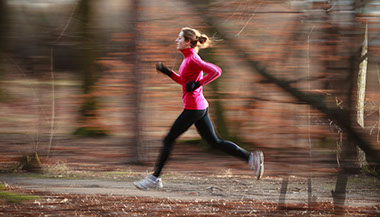
    Running (high-impact)

    Image of runner.

    Body Benefits

    Excellent for leg strength, aerobic fitness and weight control.

    Training Key

    Run at a pace that feels comfortable to you and walk should you feel the need. Whenever possible, seek out a soft training surface such as grass, dirt or a running track.

    Caution

    If you feel any aches or pain in your hips, knees, legs, feet or ankles, stop immediately and take several days off before resuming. If the pain lasts more than a week, see a doctor.

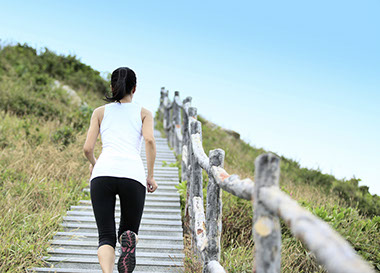
    Stair Climbing (low-impact)

    Image of women climbing oudoor stairs.

    Body Benefits

    Excellent for aerobic fitness, leg and buttock strength and overall toning.

    Training Key

    Short, quick steps work best.

    Caution

    Over striding can strain your knees.

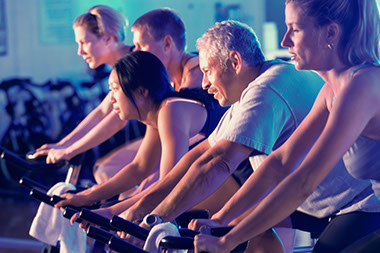
    Stationary Bicycling (low-impact)

    Stationary bicycling, low impact.

    Body Benefits

    Excellent for cardiovascular fitness, weight control and leg strength. Because it develops the quadriceps, it’s a good complement to running.

    Training Key

    Varying the effort helps combat boredom. Use bikes with computerized workouts to add interest to the session.

    Caution

    The exercise bike is most effective when supplemented with other activities.

    Swimming (low-impact)

    Image of swimmer.

    Body Benefits

    Excellent for developing arms and shoulders and great for aerobic endurance. Also good for overall flexibility and fair for weight control. Reduces stress, too.

    Training Key

    Vary your stroke to keep interest. It’s only aerobic if you don’t stop.

    Caution

    Swimming skills take time to perfect. If yours are rusty, start off with a few lessons. Novice swimmers should always swim with a partner or under a lifeguard’s supervision.

    Tennis Racquetball (medium-impact)

    Image of man with racquet and tennis ball.

    Body Benefits

    Excellent for eye-hand coordination, balance and leg and arm toning. Moderately good for aerobic fitness and weight loss.

    Training Key

    Work on developing a smooth, consistent swing. Lessons will help your game improve more rapidly.

    Caution

    Wear shoes with good lateral support to prevent foot and ankle injuries.

    Walking (medium-impact)

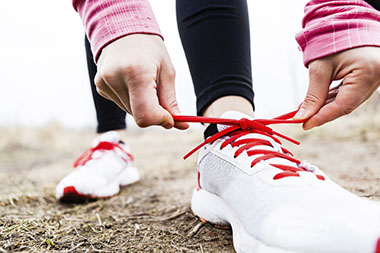
    Image of person lacing up shoes.

    Body Benefits

    Good for leg strength and cardiovascular health.

    Training Key

    Pump your arms faster and your legs will follow suit. Try to fit walking into your daily routine. Find a friend to walk with you.

    Caution

    Make sure your shoes fit and are broken in before taking long walks.

    Weight Training (medium-impact)

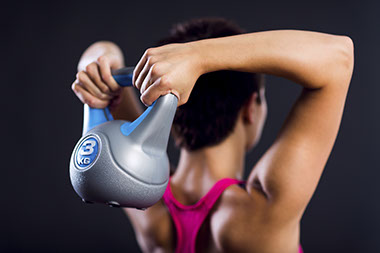
    Image of person with weight behind head.

    Body Benefits

    Excellent for overall muscle, tendon and bone strength; mildly beneficial for the heart. Done properly, weight training can improve your performance in virtually any sport.

    Training Key

    Do between 8 and 12 repetitions of each exercise.

    Caution

    Don’t overdo it! If you use barbells, always have a friend spot you. Take at least 1 day to recover between weight-training sessions.

    Yoga (low-impact)

    Photo of yoga class in session

    Body Benefits

    Excellent for flexibility, relaxation and stress reduction.

    Training Key

    Find a good instructor who can modify yoga to suit your individual needs rather than someone who insists on “classical” yoga positions.

    Caution

    Don’t push. Develop your skills slowly and yoga will give you a lifetime of satisfaction.

    Page image from HealthyLife Weigh book by the American Institute for Preventive Medicine. www.HealthyLife.com. All rights reserved.

    © American Institute for Preventive Medicine