Author: AIPM

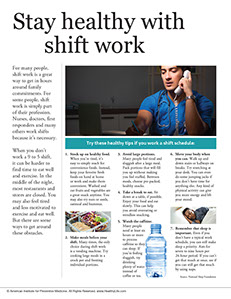
  • Stay Healthy With Shift Work

    WORK LIFE

    Doctor on phone working the night shift.

    For many people, shift work is a great way to get in hours around family commitments. For some people, shift work is simply part of their profession. Nurses, doctors, first responders and many others work shifts because it’s necessary.

    When you don’t work a 9 to 5 shift, it can be harder to find time to eat well and exercise. In the middle of the night, most restaurants and stores are closed. You may also feel tired and less motivated to exercise and eat well. But there are some ways to get around these obstacles.

    Try these healthy tips if you work a shift schedule:

    1.  Stock up on healthy food. When you’re tired, it’s easy to simply reach for convenience foods. Instead, keep your favorite fresh foods on hand at home or work and make them convenient. Washed and cut fruits and vegetables are a great snack anytime. You may also try nuts or seeds, oatmeal and hummus.

    2.  Make meals before your shift. Many times, the only choice during shift work is a vending machine. Try cooking large meals in a crock pot and freezing individual portions.

    3.  Avoid large portions. Many people feel tired and sluggish after a large meal. Pack portions that will fill you up without making you feel stuffed. Between meals, choose pre-packed, healthy snacks.

    4.  Take a break to eat. Sit down at a table, if possible. Enjoy your food and eat slowly. This can help you avoid overeating or mindless snacking.

    5.  Watch the caffeine.  Many people need at least six hours or more to process caffeine so they can sleep. If you’re feeling sluggish, try drinking plenty of water instead of coffee or tea.

    6.  Move your body when you can. Walk up and down stairs or hallways on breaks. Try stretching at your desk. You can even do some jumping jacks if you don’t have time for anything else. Any kind of physical activity can give you more energy and lift your mood.

    7.  Remember that sleep is important. Even if you don’t have a typical work schedule, you can still make sleep a priority. Aim for seven to nine hours per 24-hour period. If you can’t get that much at once, see if you can still get that much by using naps.

    Source: National Sleep Foundation
    © American Institute for Preventive Medicine

  • Slow Cooker Tips For Busy Days

    HEALTHY EATING

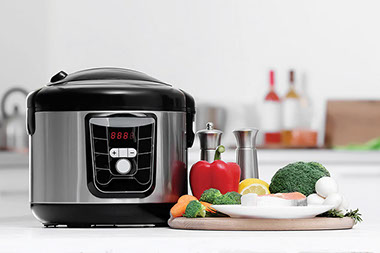
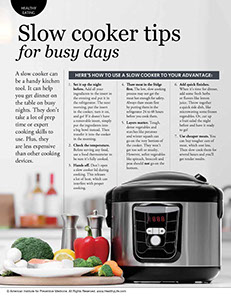
    Slow cooker on counter.

    A slow cooker can be a handy kitchen tool. It can help you get dinner on the table on busy nights. They don’t take a lot of prep time or expert cooking skills to use. Plus, they are less expensive than other cooking devices.

    Here’s how to use a slow cooker to your advantage:

    1.Set it up the night before.Add all your ingredients to the insert in the evening and put it in the refrigerator. The next morning, put the insert in the cooker, turn it on, and go! If it doesn’t have a removable insert, simply put the ingredients into a big bowl instead. Then transfer it into the cooker in the morning.

    2.Check the temperature.Before serving any food, use a food thermometer to be sure it’s fully cooked.

    3.Hands off.Don’t open a slow cooker lid during cooking. This releases a lot of heat, which can interfere with proper cooking.

    4.Thaw meat in the fridge first.The low, slow cooking process may not get the meat hot enough for safety. Always thaw meats first by putting them in the refrigerator 24 to 48 hours before you cook them.

    5.Layers matter.Tough, dense vegetables and starches like potatoes and winter squash can go on the very bottom of the cooker. They won’t get too soft or mushy. However, softer vegetables like spinach, broccoli and peas should not go on the bottom.

    6.Add quick finishes.When it’s time for dinner, add some fresh herbs or flavors like lemon juice. Throw together a quick side dish, like microwaving some frozen vegetables. Or, cut up a fruit salad the night before and have it ready to go!

    7.Use cheaper meats.You can buy tougher cuts of meat, which cost less. Then slow cook them for several hours and you’ll get tender results.

    © American Institute for Preventive Medicine
  • Simple Steps For A Safe Thanksgiving Turkey

    HEALTHY EATING

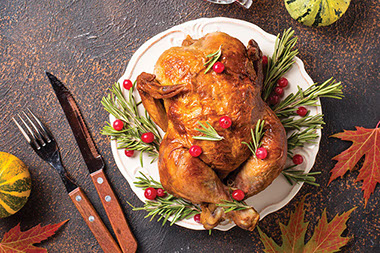
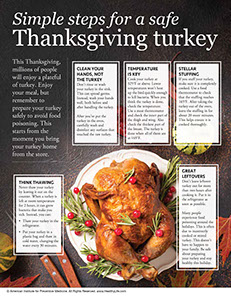
    Cooked turkey on plate.

    This Thanksgiving, millions of people will enjoy a plateful of turkey. Enjoy your meal, but remember to prepare your turkey safely to avoid food poisoning. This starts from the moment you bring your turkey home from the store.

    Think thawing

    Never thaw your turkey by leaving it out on the counter. When a turkey is left at room temperature for 2 hours, it can grow bacteria that make you sick. Instead, you can:

    *  Thaw your turkey in the refrigerator.

    *  Put your turkey in a plastic bag and thaw in cold water, changing the water every 30 minutes.

    Clean your hands, not  the turkey

    Don’t rinse or wash your turkey in the sink. This can spread germs. Instead, wash your hands well, both before and after handling the turkey. After you’ve put the turkey in the oven, carefully wash and disinfect any surfaces that touched the raw turkey.

    Temperature is key

    Cook your turkey at 325°F or above. Lower temperatures won’t heat up the bird quickly enough to kill bacteria. When you think the turkey is done, check the temperature. Use a meat thermometer and check the inner part of the thigh and wing. Also check the thickest part of the breast. The turkey is done when all of them are at 165°F.

    Stellar stuffing

    If you stuff your turkey, make sure it is completely cooked. Use a food thermometer to check that the stuffing reaches 165°F. After taking the turkey out of the oven, leave the stuffing in for about 20 more minutes. This helps ensure it is cooked thoroughly.

    Great leftovers

    Don’t leave leftover turkey out for more than two hours after cooking it. Put it in the refrigerator as soon as possible.

    Many people experience food poisoning around the holidays. This is often due to incorrectly cooked or stored turkey. This doesn’t have to happen to your family. Be safe about preparing your turkey and stay healthy this holiday.

    © American Institute for Preventive Medicine
  • Should You “Wash” Your Food?

    HEALTHY EATING

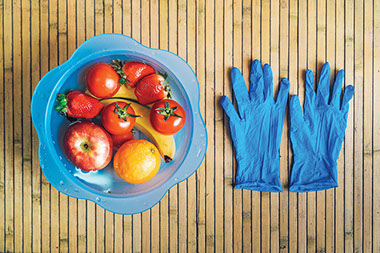
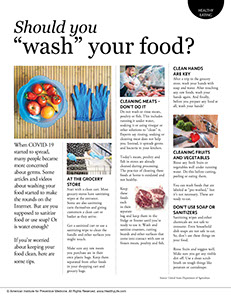
    Bowl of water with fruit and vegetables and a pair of disposable gloves.

    When COVID-19 started to spread, many people became more concerned about germs. Some articles and videos about washing your food started to make the rounds on the Internet. But are you supposed to sanitize food or use soap? Or is water enough?

    If you’re worried about keeping your food clean, here are some tips.

    At the grocery store

    Start with a clean cart. Most grocery stores have sanitizing wipes at the entrance. Some are also sanitizing carts themselves and giving customers a clean cart or basket as they arrive.

    Get a sanitized cart or use a sanitizing wipe to clean the handle and other surfaces you might touch.

    Make sure any raw meats you purchase are in their own plastic bags. Keep them separated from other foods in your shopping cart and grocery bags.

    Cleaning meats – don’t do it

    Do not wash or rinse meats, poultry or fish. This includes running it under water, soaking it or using vinegar or other solutions to “clean” it. Experts say rinsing, soaking or cleaning meat does not help you. Instead, it spreads germs and bacteria in your kitchen.

    Today’s meats, poultry and fish in stores are already cleaned during processing. The practice of cleaning these foods at home is outdated and not healthy.

    Keep these foods each in their separate bag and keep them in the fridge or freezer until you’re ready to use it. Wash and sanitize counters, cutting boards and other surfaces that come into contact with raw or frozen meats, poultry and fish.

    Clean hands are key

    After a trip to the grocery store, wash your hands with soap and water. After touching any raw foods, wash your hands again. And finally, before you prepare any food at all, wash your hands!

    Cleaning fruits and vegetables

    Rinse any fresh fruits or vegetables well under running water. Do this before cutting, peeling or eating them. You can wash foods that are labeled as “pre-washed,” but it’s not necessary. These are ready to eat.

    Don’t use soap or sanitizers

    Sanitizing wipes and other chemicals are not safe to consume. Even household dish soaps are not safe to eat. So, don’t use these things on your food.

    Rinse fruits and veggies well. Make sure you get any visible dirt off. Use a clean scrub brush on tough things like potatoes or cantaloupe.

    Source: United States Department of Agriculture

    © American Institute for Preventive Medicine
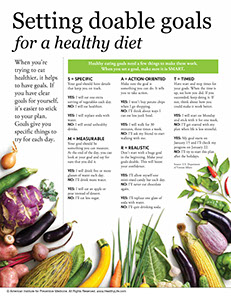
  • Setting Doable Goals For A Healthy Diet

    HEALTHY EATING

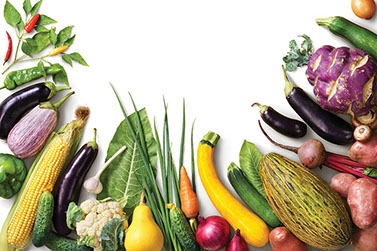
    A variety of vegetables.

    When you’re trying to eat healthier, it helps to have goals. If you have clear goals for yourself, it’s easier to stick to your plan. Goals give you specific things to try for each day.

    Healthy eating goals need a few things to make them work. When you set a goal, make sure it is SMART.

    S = Specific

    Your goal should have details that keep you on track.

    Yes: I will eat one extra serving of vegetables each day.

    No: I will eat healthier.

    Yes: I will replace soda with water.

    No: I will avoid unhealthy drinks.

    M = Measurable

    Your goal should be something you can measure. At the end of the day, you can look at your goal and say for sure that you did it.

    Yes: I will drink five or more glasses of water each day.

    No: I’ll drink more water.

    Yes: I will eat an apple or pear instead of dessert.

    No: I’ll eat less sugar.

    A = Action-oriented

    Make sure the goal is something you can do. It tells you to take action.

    Yes: I won’t buy potato chips when I go shopping.

    No: I’ll think about ways I can eat less junk food.

    Yes: I will walk for 30 minutes, three times a week.

    No: I’ll ask my friend to start walking with me.

    R = Realistic

    Don’t start with a huge goal in the beginning. Make your goals doable. This will boost your confidence.

    Yes: I’ll allow myself one mini-sized candy bar each day.

    No: I’ll never eat chocolate again.

    Yes: I’ll replace one glass of soda with water.

    No: I’ll quit drinking soda.

    T = Timed

    Have start and stop times for your goals. When the time is up, see how you did. If you succeeded, keep doing it. If not, think about how you could make it work better.

    Yes: I will start on Monday and stick with it for one week.

    No: I’ll get started with my plan when life is less stressful.

    Yes: My goal starts on January 15 and I’ll check my progress on January 22.

    No: I’ll try to start this plan after the holidays.

    Source: U.S. Department of Veteran Affairs

    © American Institute for Preventive Medicine
  • See Your Fitness Progress

    BE FIT

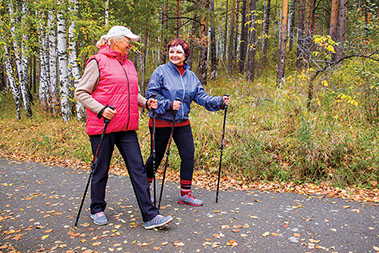
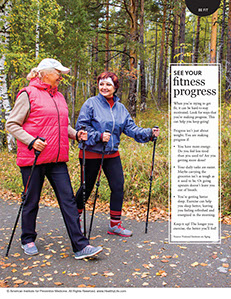
    Two women walking with walking sticks.

    When you’re trying to get fit, it can be hard to stay motivated. Look for ways that you’re making progress. This can help you keep going!

    Progress isn’t just about weight. You are making progress if:

    *  You have more energy. Do you feel less tired than you used to? Are you getting more done?

    *  Your daily tasks are easier. Maybe carrying the groceries isn’t as tough as it used to be. Or going upstairs doesn’t leave you out of breath.

    *  You’re getting better sleep. Exercise can help you sleep better, leaving you feeling refreshed and energized in the morning.

    Keep it up! The longer you exercise, the better you’ll feel!

    Source: National Institute on Aging

    © American Institute for Preventive Medicine
  • Safe Travels

    WELL-BEING

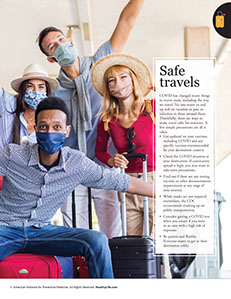
    Group of friends with luggage, wearing face masks, ready to travel.

    COVID has changed many things in recent years, including the way we travel. No one wants to end up sick on vacation or pass an infection to those around them. Thankfully, there are ways to make travel safer for everyone. A few simple precautions are all it takes.

    *  Get updated on your vaccines, including COVID and any specific vaccines recommended by your destination country.

    *  Check the COVID situation at your destination. If community spread is high, you may want to take extra precautions.

    *  Find out if there are any testing, vaccine, or other documentation requirements at any stage of your journey.

    *  While masks are not required everywhere, the CDC recommends masking up on public transportation.

    *  Consider getting a COVID test when you return if you were in an area with a high risk of exposure.

    *  Be patient and flexible. Everyone wants to get to their destination safely.

    © American Institute for Preventive Medicine
  • Recipe: Sweet Potato Cheesecake

    HEALTHY EATING

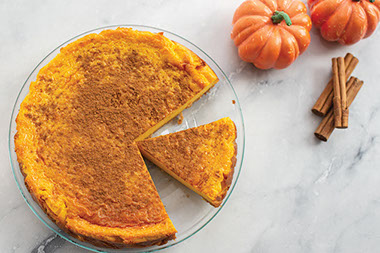
    Sweet potato cheesecake with a couple pieces missing.

    Try this twist on the classic pumpkin pie. The natural sweetness of sweet potatoes means less sugar is needed to enjoy this delicious dessert.

    Ingredients

    1 cup gingersnaps or graham crackers (finely crumbled)

    3 tablespoons butter

    8 ounces cream cheese (light, softened)

    1 cup sweet potatoes (cooked, mashed)

    1/3 cup sugar

    1-1/2 teaspoons pumpkin pie spice

    1 teaspoon grated orange peel

    1 teaspoon vanilla

    5 egg whites

    1 cup milk (evaporated, reduced-fat 2%)

    Directions

    Crust:Combine crumbs and butter. Press mixture into bottom and 1 inch up sides of an 8-inch springform pan. Set aside.

    Filling:

    1.  In a large mixing bowl, beat cream cheese, sweet potatoes, egg whites, sugar, pumpkin pie spice, orange peel, and vanilla until combined. DO NOT OVER BEAT.

    2.  Stir in milk. Carefully pour into prepared pan.

    3.  Bake at 350 degrees for 60-70 minutes until the center appears set.

    4.  Cool on a wire rack for 45 minutes. Cover and chill thoroughly.

    5.  Remove sides of pan.

    6.  Garnish with dessert topping and orange peel.

    Nutrition Information: (14 servings). Per serving: 139 kcals, 6g total fat, 3g saturated fat, 137 mg sodium, 17g carbohydrates, 1 g dietary fiber, 5 g protein.

    Source: U.S. Department of Agriculture

    © American Institute for Preventive Medicine
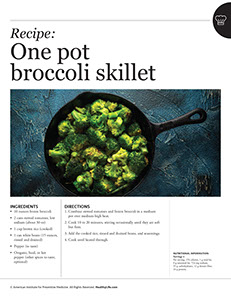
  • One Pot Broccoli Skillet

    HEALTHY EATING

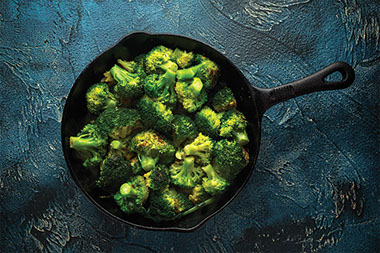
    Large skillet filled with broccoli.

    Ingredients

    *  10 ounces frozen broccoli

    *  2 cans stewed tomatoes, low sodium (about 30 oz)

    *  1 cup brown rice (cooked)

    *  1 can white beans (15 ounces, rinsed and drained)

    *  Pepper (to taste)

    *  Oregano, basil, or hot pepper (other spices to taste, optional)

    Directions

    1.  Combine stewed tomatoes and frozen broccoli in a medium pot over medium-high heat.

    2.  Cook 10 to 20 minutes, stirring occasionally until they are soft but firm.

    3.  Add the cooked rice, rinsed and drained beans, and seasonings.

    4.  Cook until heated through.

    Nutritional Information: Servings 4

    Per serving. 276 calories, 1 g total fat, 0 g saturated fat, 724 mg sodium, 55 g carbohydrates, 12 g dietary fiber, 16 g protein.

    © American Institute for Preventive Medicine